Winter Joint Care: Keeping Your Senior German Shepherd Active in Snow
"Winter is the time for comfort, for good food and warmth, for the touch of a friendly hand and for a talk beside the fire: it is the time for home." — Edith Sitwell
The frost on the garden mums hasn't melted yet, but Rex is already at the back door, nose twitching at the crisp air. He steps gingerly onto the frozen grass, his back legs a little stiffer than they were last July, a common sight when managing senior dog care for a large breed. Watching him navigate the icy patches in the garden reminds us that while his spirit is still a puppy's, his hips tell a different story.
In this guide, we'll cover how to modify winter exercise to protect aging joints and share a counterintuitive warm-up routine that changes everything.
The Shepherd Stoicism: A Blessing and a Curse
Here is the thing about German Shepherds: they are liars.
We say this with the utmost love. But a GSD will run until their pads bleed or their hips lock up because their drive to work—and to please you—overrides their pain receptors. In our years working with pet families, we’ve seen countless owners realize too late that their dog was in pain because the dog never whimpered.
The "Wait and See" Trap
Most people wait for a limp. But with a senior German Shepherd in winter, if you see a limp, you’ve likely missed weeks of subtle signaling. The cold weather constricts blood vessels, reducing circulation to arthritic joints.
Look for these micro-signs instead:
- Hesitation before climbing the garden steps
- A "bunny hop" gait when running in snow
- Licking the carpus (wrist) joints after coming inside
- Taking longer to settle down into a sleeping position
"Snow isn't the enemy of arthritis; inactivity is. The goal is motion without impact."
The "Indoor Warm-Up" (The Step You're Skipping)
This is the unique angle most winter guides miss. They tell you to put a coat on your dog. But putting a coat on a dog with cold, stiff muscles and sending them into 30-degree weather is like trying to start a diesel engine without glow plugs.
You must warm up the engine inside first.
Before you even touch the leash or open the back door, spend 5-10 minutes increasing blood flow. This doesn't mean playing fetch down the hallway (which causes sliding and injury).
- Passive Range of Motion: With the dog lying down, gently bicycle their back legs.
- The "Cookie Stretch": Stand still and use a treat to guide their nose to their hip, then the other hip, stretching the spine laterally.
- Rub Down: Briskly rub the large muscle groups (thighs and shoulders) to physically generate heat.
We had a customer, Sarah, who swore her 12-year-old Shepherd could no longer handle winter walks. After implementing the indoor warm-up, she realized he could handle them fine—he just couldn't handle the shock of the cold on stiff joints.
Snow as Therapy: The Maze Method
Deep snow is a double-edged sword. On one hand, it cushions impact. On the other, trudging through drifts requires high-stepping that can strain the lower back (a weak point for many GSDs).
Don't just open the door.
Create a "Sniffari Maze."
Take a shovel and clear a winding path through your yard or garden. It doesn't need to be paved-clean; leaving an inch of snow is fine. The goal is to create a track where your dog can walk without high-stepping, but the surrounding snow walls encourage them to stay on the path.
This allows for:
- Controlled movement: They follow the path rather than sprinting erratically.
- Mental stimulation: Hide treats along the shoveled track.
- Joint safety: Flat footing prevents the torque on knees that happens when a paw punches through crusty snow.
Winter Activity Impact Table
Here is how different winter activities affect your senior dog's joints:
| Activity | Joint Impact | Mental Stimulation | Recommended Duration |
|---|---|---|---|
| Deep Snow Trudging | High (Risk of strain) | Medium | < 5 minutes |
| Shoveled Path Walking | Low (Safe) | Low | 15-20 minutes |
| "Sniffari" (Scent games) | Very Low | Very High | 20+ minutes |
| Fetch on Ice/Crust | Dangerous (Avoid) | High | 0 minutes |
| Indoor Balance Work | Low | High | 10-15 minutes |
Gear That Actually Matters (It's Not Just Fashion)
We love a dog in a sweater as much as anyone. But for a German Shepherd, whose double coat offers significant insulation, warmth is rarely the primary issue—traction is.
Senior GSDs often suffer from Degenerative Myelopathy or simple muscle atrophy, causing them to drag their rear toes (knuckling).
The Boot Dilemma
Heavy-duty winter boots can actually be worse for seniors. The lack of tactile feedback causes them to lift their legs higher and step awkwardly, throwing off their balance.
The Better Solution:
- Toe Grips: Small rubber rings that go on the nails. They provide traction on ice without altering the gait.
- Musher's Wax: Prevents snowballing between pads (which feels like walking on rocks).
- Back-End Harness: A harness with a handle over the hips allows you to act as a stabilizer on icy patches without carrying them.
"We see the grey muzzle not as a sign of fading, but as a badge of honor. It means a life well-lived and a job well done."
— The PawSculpt Team
Nutrition and The Winter Calorie Myth
There is a pervasive myth that dogs need more food in winter to "keep warm."
For a sled dog in Alaska? Yes. For your senior German Shepherd sleeping by the fireplace? Absolutely not.
In fact, winter weight gain is the single biggest threat to winter pet safety for seniors. Every extra pound of weight places four pounds of pressure on the knee joints.
The "Winter Soup" Trick
Hydration is critical for joint lubrication. But dogs drink less when it's cold. We recommend adding warm (not hot) bone broth to their kibble. It encourages hydration and the warmth is comforting.
According to the American Kennel Club's nutrition guides, maintaining lean body mass is crucial for joint health, especially in colder months when activity levels naturally drop.
Honoring the Change of Pace
It’s hard to watch the dog who used to catch frisbees in mid-air hesitate at a snowbank. We know. We’ve been there.
There is a grief in seeing them slow down. You might find yourself looking at old photos on your phone, comparing the vibrant, jumping dog of five years ago to the one sleeping heavily at your feet.
This is where reframing helps. You aren't losing their personality; you are gaining a new kind of intimacy. The winter walk becomes less about burning energy and more about reading "pee-mail" together in the snow. It’s slower. It’s quieter. But it’s just as meaningful.
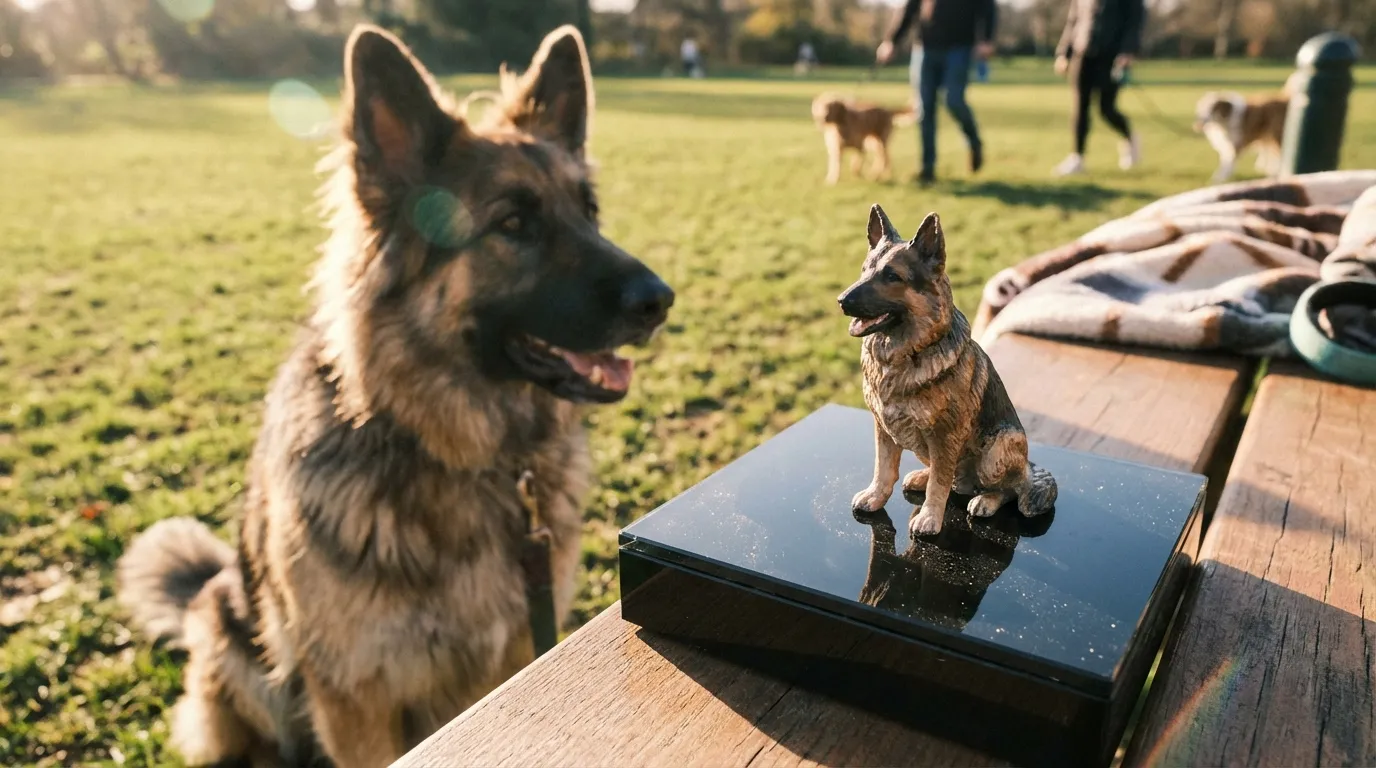
Some families plant memorial gardens to honor this bond. Others create photo books. And increasingly, pet parents are choosing tangible keepsakes like custom figurines that capture their pet's unique personality—not just how they looked, but the specific way they hold their ears or the intelligence in their eyes.
"Grief isn't a problem to be solved. It's a love story that continues after the last chapter."
When to Call the Vet
While stiffness is expected, acute pain is not. If you notice your Shepherd refusing to walk, vocalizing, or if the stiffness doesn't improve after the "indoor warm-up," consult your veterinarian.
Supplements like Glucosamine and Chondroitin are standard, but newer options like Adequan injections or laser therapy can be game-changers for winter mobility. The American Veterinary Medical Association suggests regular screenings for senior pets to catch arthritis progression early.
The Fireplace Finale
Let's go back to that garden scene.
Rex comes back inside, shaking the snow from his coat. You towel him off—a gentle massage he’s come to expect. He circles three times on his orthopedic bed and lets out that long, heavy sigh that signals pure contentment.
He didn't run a marathon today. He didn't herd sheep. But he navigated the winter world with you, his pack leader. And for a German Shepherd, being by your side is the only job that truly matters.
Keep them warm. Keep them moving. But most of all, keep them close.
Frequently Asked Questions
How cold is too cold for a senior German Shepherd?
While German Shepherds are renowned for their hardy double coats, arthritis changes the rules. Generally, if the temperature drops below 20°F (-6°C), you should limit outdoor exposure to short, 10-15 minute bathroom breaks. Remember that damp cold (sleet/rain) is much harder on arthritic joints than dry snow.Do senior dogs really need boots in snow?
This is a common misconception. While boots protect against salt and ice balls, they remove tactile feedback. For a senior dog who might already have proprioception issues (knowing where their feet are), heavy boots can cause tripping. We often recommend Musher's Wax or lightweight rubber toe grips instead, unless the ground is covered in sharp ice or chemical de-icers.Why is my dog stiffer after a winter walk than a summer one?
Cold weather causes vasoconstriction—the narrowing of blood vessels. This reduces blood flow to the joints and muscles, making them feel "tight." Additionally, your dog may be subconsciously tensing their muscles to shiver or stabilize on slippery ground, leading to post-walk soreness.Should I increase my senior dog's food in winter?
likely not. Unless your dog is a working dog spending hours outside, their winter activity level will probably decrease. Adding winter weight is dangerous for senior joints. Monitor their weight closely and consider switching to lower-calorie treats if they are spending more time on the couch.Ready to Celebrate Your Pet?
Every pet has a story worth preserving, especially the loyal guardians who have walked by our side for years. Whether you're honoring a beloved companion who's crossed the rainbow bridge or celebrating your senior German Shepherd's dignified spirit today, a custom PawSculpt figurine captures those details that make your pet one-of-a-kind.
Free instant AI preview • 3D artist preview within 7 days • 5 free revisions