
Making Room on the Shelf: An Anticipatory Goodbye to Our Cavalier in a Multi-Pet Home
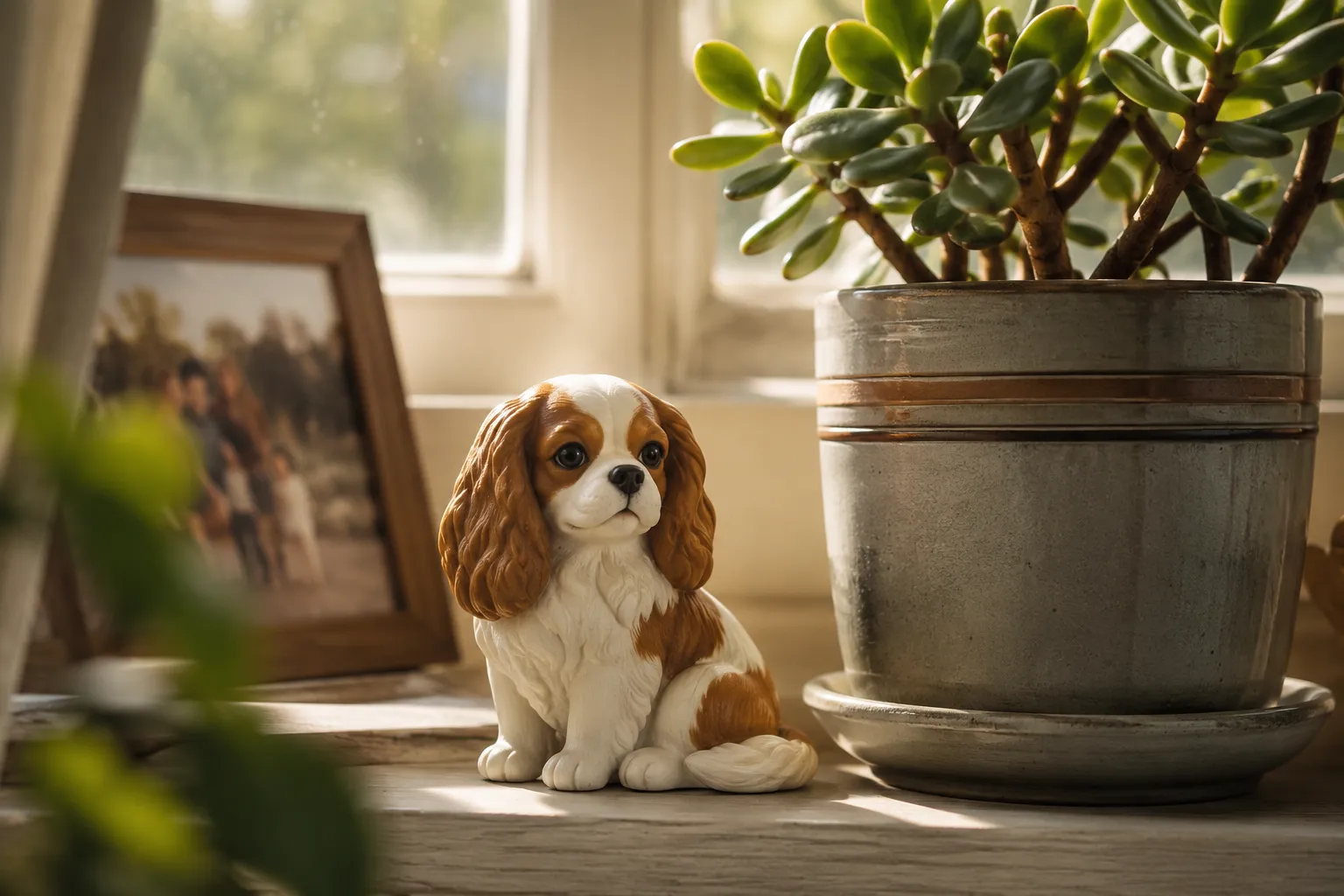
Down the hallway, the click-click of one set of nails on hardwood instead of two. That uneven rhythm is where anticipatory pet grief begins. You're mourning a Cavalier who's still here. Still breathing. Still curled in the afternoon sun.
Anticipatory pet grief is the mourning that starts before a pet dies, and it's especially common when a senior Cavalier King Charles Spaniel declines in a multi-pet household. It's normal, not morbid. Preparing gently through routine changes, memory-making, and small keepsakes helps both you and your remaining animals adjust to a loss you can already see coming.
Quick Takeaways
- Grief before death is real grief — naming it early reduces the guilt that comes later
- Your other pets sense the decline — watch for shifts in sleep, appetite, and vocalizing
- Small rituals beat grand gestures — a weekly photo or paw impression preserves more than you think
- Keepsakes made while they're alive feel different — many families explore memorial pet figurines before the goodbye, not after
What Anticipatory Grief Actually Feels Like (Before You Lose Them)
Here's the part nobody warns you about. The grief starts on an ordinary Tuesday, months before anything happens, when you catch yourself doing the math on how many summers are left.
Anticipatory grief isn't sadness on a schedule. It arrives sideways. You're refilling the water bowl and suddenly your chest tightens, because you noticed the ramp you bought so she wouldn't have to jump onto the couch anymore.
We've talked with a lot of families in this exact spot, and the same confession comes up again and again: the guilt of grieving a pet who is still alive. It feels like a betrayal. Like you're rehearsing a funeral for someone sitting right next to you.
It isn't a betrayal. It's love running ahead of the calendar, trying to brace for impact.
The psychologist's term for this is preparatory or anticipatory loss, and it's well documented in both human and animal-companion bereavement. The Association for Pet Loss and Bereavement treats this pre-loss period as legitimate grief, not a warm-up act. That matters, because most people quietly assume they haven't "earned" the right to feel wrecked yet.
You have. The clock started the day the diagnosis did.
"You aren't rehearsing her death. You're memorizing her while you still can. Those are not the same thing."
The specific guilt of "wishing it would just happen"
This is the one owners almost never say out loud.
Somewhere in a long decline, a thought slips through: I wish this part was over. Then comes the horror at having thought it.
Let's be clear about what that thought actually is. It's not a wish for your dog to die. It's exhaustion with watching them struggle, mixed with dread of the decision you know is coming. Wanting the suffering to end is not the same as wanting them gone, and confusing the two is how good owners torture themselves for months.
Why a Cavalier's Decline Hits a Multi-Pet Home Differently
Cavaliers are, frankly, the glue dogs. Ask around and Cavalier owners will tell you the same thing: this breed doesn't just live in the house, it manages the emotional weather of the house.
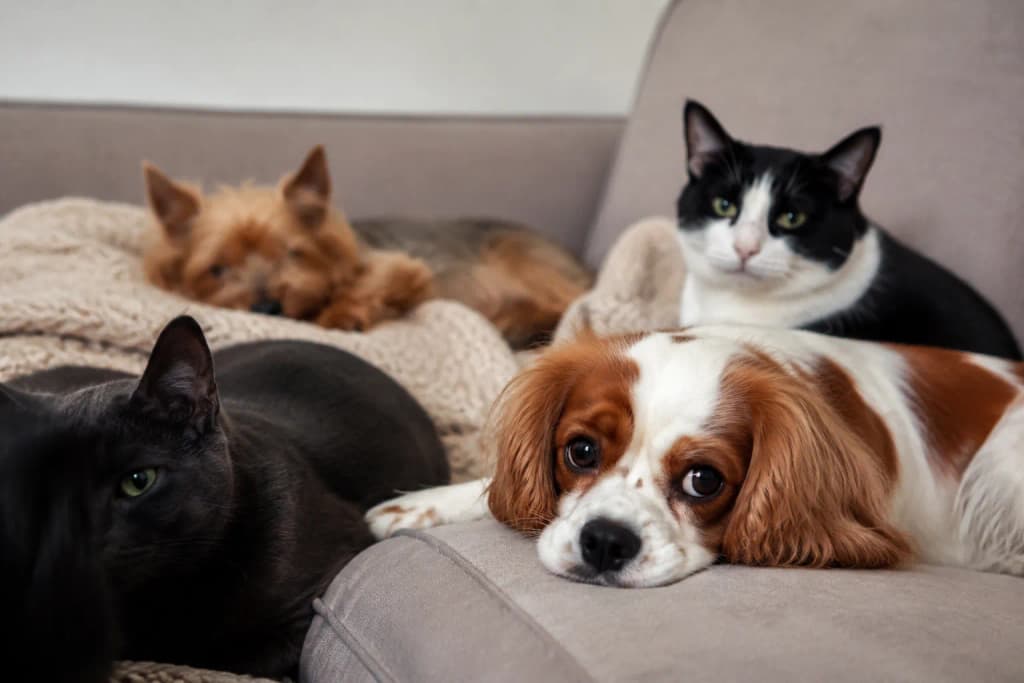
The breed's temperament is genuinely distinct. Per the American Kennel Club's breed profile, Cavaliers are bred for companionship above all, which is why they tend to be the peacekeeper among other pets. They sleep against the anxious cat. They referee the younger dog's zoomies. When that regulator starts to fade, the whole system feels it.
There's a harder medical reality underneath this. Roughly half of Cavaliers develop mitral valve disease by age five, and it's the leading cause of death in the breed. So Cavalier owners often get a long, slow runway of decline rather than a sudden loss. More warning. More time to grieve in advance. More time to second-guess everything.
The math of a multi-pet household loss
In a single-pet home, grief is a straight line. In a multi-pet home, it fractures.
You're not just losing a dog. You're about to renegotiate the entire social order of your animals, and you're doing it while grieving. One customer described it perfectly: she wasn't afraid of the empty house, she was afraid of the reshuffling — who would the cat bond with now, who would sleep where.
That's the overlooked weight of multi-pet household loss. The surviving animals don't read the vet's prognosis. They just wake up one day to a missing member and a changed hierarchy, and they look to you to explain it. You can't.
What the Other Animals Already Know
Watch your other pets closely in the weeks before. They're often ahead of us.
A family we worked with noticed their Beagle stopped stealing the Cavalier's bed weeks before the Cavalier passed. The Beagle just started sleeping beside it instead. Animals register decline through smell and behavior long before we're ready to.
Here's what tends to shift in remaining pets during a slow decline and after the loss. Use it as a watch-list, not a diagnosis.
| Sign in Remaining Pet | When It Shows Up | What Usually Helps |
|---|---|---|
| Searching, going room to room | First 2 weeks after loss | Keep their routine identical; don't rearrange furniture yet |
| Reduced appetite | First 72 hours to 10 days | Hand-feeding, warming food slightly, patience |
| Increased vocalizing at night | First 1-3 weeks | A worn, unwashed item with the lost pet's scent nearby |
| Clinginess or shadowing you | Weeks 1-6 | Short, predictable one-on-one time daily |
| Sudden dominance shifts | 2-8 weeks | Let them sort it out unless there's real conflict |
The counterintuitive move most people get wrong: they wash everything immediately. The bed, the blankets, the toys. It feels like cleaning up, like coping. But for the surviving animals, that scent is the last chapter of the story they're trying to finish. Leave one unwashed item out for a couple of weeks. It's not for you. It's for them.
"We wash the blanket because we can't stand the smell of missing him. The other dog needed that smell to say goodbye."
Making Room on the Shelf: Memory-Making Before Goodbye
The title of this piece is literal. At some point, a lot of us stand at a shelf, or a windowsill, or a mantle, and realize we're quietly making space for how we'll remember them.
Doing that memory work before the loss is not giving up. This is the reframe we push hardest with families in the anticipatory stage: the animals who are grieved in advance are almost always the ones who were loved out loud at the end.
Some concrete things worth doing in the weeks you still have:
- Record the sounds. Not video. Audio. The specific jingle of their collar tags, the sigh they make settling down, the particular bark at the mail carrier. Owners tell us the sounds fade from memory faster than the faces, and they mourn that.
- Take one ordinary photo a week. Not posed. Napping, eating, being unremarkable. Ordinary is what you'll ache for.
- Make a paw impression with air-dry clay from any craft store. Ten minutes, a few dollars.
- Write down three specific quirks you'd never want to forget. The oddly specific ones.
Where a sculpted keepsake fits (and where it doesn't)
Families memorialize in different ways. Some plant a tree. Some do a photo book. Some keep a pawprint on the fridge for years.
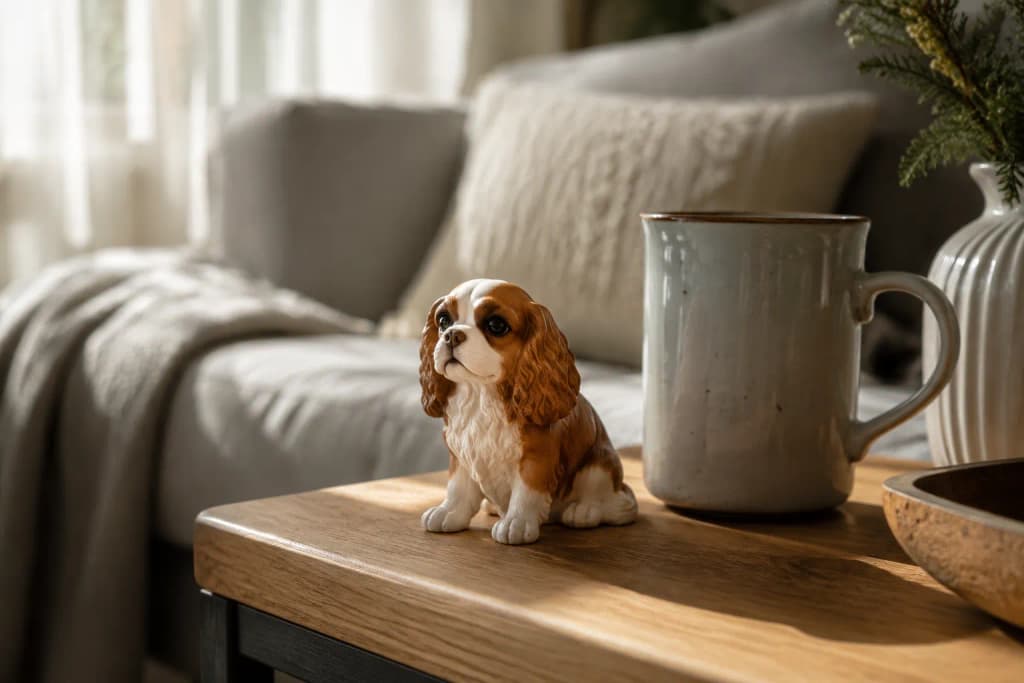
And increasingly, some choose a tangible figure for the shelf. This is where custom pet sculptures come in for a lot of the families we serve at PawSculpt. Our whole philosophy is "a portrait, not a photocopy" — the piece is a sculpted interpretation that captures your Cavalier's posture, that head-tilt, the feathered ears, the expression you know by heart. It's not trying to be a photograph you can hold.
Practically speaking, the process starts digitally: your pet is hand-modeled by our 3D artists, then precision printed in full-color resin so the markings and coat colors are part of the material itself, finished with a protective clear coat. If you're curious about how it actually works, the free instant AI preview on the website lets you see a rough version before you commit to anything.
"Grief needs somewhere to land. We've watched families steady themselves just by having something with weight to hold in both hands."
— The PawSculpt Team
Here's an honest comparison of common memorial paths, because no single option is right for everyone.
| Memorial Option | Effort | Best For | Worth Knowing |
|---|---|---|---|
| Memorial garden or tree | Medium | People who want a living, growing tribute | Ties the memory to one location you can't take with you |
| Photo book | Low-Medium | Storytellers who love context | Beautiful, but stays in a drawer more than you'd expect |
| Paw impression | Low | Anyone, immediately | Fragile; do a backup mold |
| Custom sculpted figurine | Low (you send photos) | Those who want a daily, physical presence | A sculpted interpretation, not a photo clone; plan the timeline ahead |
| Cremation jewelry | Low | Keeping them physically close | Very personal; not for everyone |
A note on timing that trips people up: if a physical keepsake matters to you, understand the calendar before you're in crisis. For our figurines, an artist's 3D preview typically comes within 7 days of the deposit, and delivery usually runs 27 to 40 days in the US after final payment. That's worth knowing now, in the anticipatory stage, rather than trying to make decisions the week of a loss when you can barely think.
A Counter-Point: When Preparing Too Hard Backfires
Now let me argue against a chunk of what I just told you.
There's a real failure mode in anticipatory grief, and it's this: you can spend so much energy bracing for the end that you miss the animal in front of you. We've seen it. Owners so busy recording, photographing, and preparing that the dog's actual final months become a logistics project instead of a companionship.
Second-guessing euthanasia timing lives here too. This is one of the most common regrets we hear, and it cuts both ways. "Did I wait too long and let her suffer?" "Did I do it too soon and steal weeks we could've had?" There is no clean answer, and anyone who promises you one is selling something.
What actually helps more than a perfect decision is a quality-of-life scale you track honestly. Vets often point owners to tools like the HHHHHMM scale (hurt, hunger, hydration, hygiene, happiness, mobility, more good days than bad). It won't make the choice for you. But it turns a swirling gut-feeling into something you can look at, so that later, when the second-guessing comes, you have a record of a decision made with love and eyes open.
We're not vets. For the medical timeline and pain management, your veterinarian is the only right voice. What we can say from thousands of families is that the ones who suffer least afterward are rarely the ones who "did it perfectly." They're the ones who let themselves be present instead of perfect.
So do the memory work. Just don't let it swallow the actual dog.
When You Feel Judged for Grieving "Just a Dog"
One more thing, because it isolates people badly.
Somewhere in this, someone will say something careless. "It was just a dog." "You can always get another." "At least you saw it coming." That last one stings in a specific way for anticipatory grievers, as if the warning was supposed to be a discount on the pain.
If your circle doesn't get it, find one that does. Pet loss support lines and communities exist precisely because this grief is so routinely dismissed. Feeling like you have to hide the depth of your sadness is its own second wound, and you don't have to carry it alone. Many people find that the human-animal bond they're grieving is exactly as significant as it feels, and no one gets to grade it.
The Shelf, Later
Back to that hallway. The uneven click of nails.
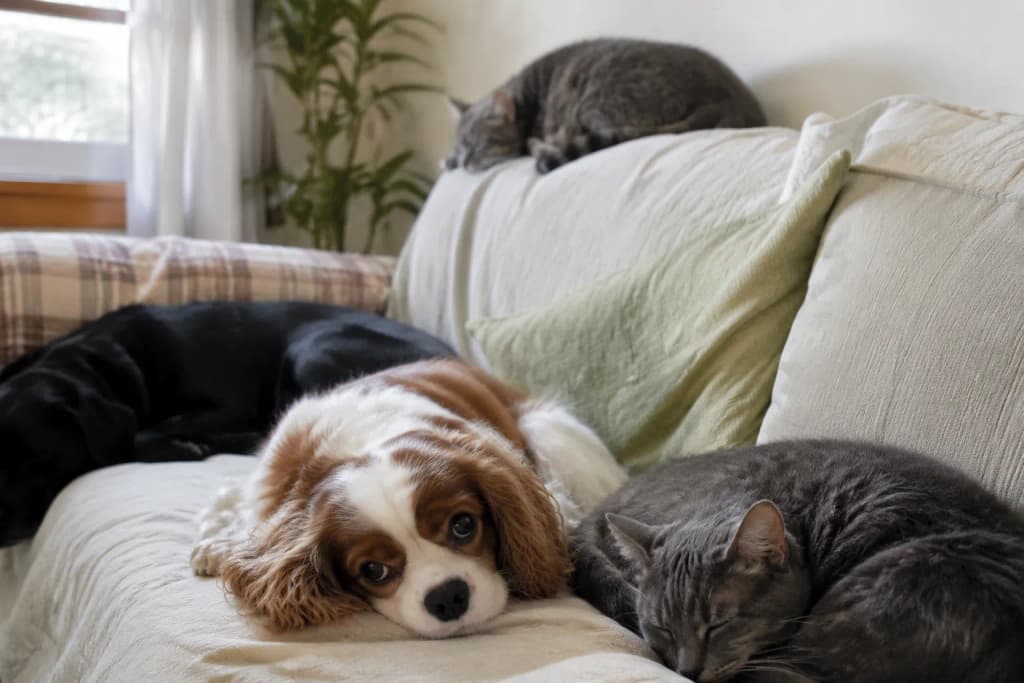
One day, that sound will stop, and the quiet of it will be the loudest thing in your house. The other animals will search the rooms. You'll leave one blanket unwashed. And on the shelf you started clearing months ago, in the space you made while your Cavalier was still warming the sun, you'll put something that holds their shape.
Here's the actionable part, today: pick one memory to preserve this week. Record the collar jingle. Take the napping photo. Press the paw into clay. Not because the end is near, but because the ordinary present is the thing that vanishes first.
Anticipatory grief asks an impossible thing of you. It asks you to love completely and let go simultaneously. You won't do it gracefully. Nobody does. But the fact that you're already making room on the shelf means you're doing the hardest, most loving work there is. You're refusing to let a life this good pass through your hands unremembered.
The nails will go quiet. The love won't.
Frequently Asked Questions
Is anticipatory grief for a pet normal?
Completely. Grieving before your pet dies is a documented form of loss, and it's especially common with slow declines like the mitral valve disease many Cavaliers face. Feeling wrecked months in advance doesn't mean you're being dramatic or giving up. It means love is trying to prepare for something it can't actually prepare for.
How do I help my other pets cope when one is dying?
Keep everything predictable. Same feeding times, same furniture, same walks. Leave one unwashed blanket or toy with the declining pet's scent out for a couple of weeks so the others can process the change. Watch for shifts in appetite, sleep, and vocalizing, and give each remaining animal a little dedicated one-on-one time daily.
Is it wrong to plan a memorial while my pet is still alive?
Not at all, though it can feel that way. Making a paw impression, recording their sounds, or arranging a keepsake while they're still here is a loving act. Families who do this memory work early often report less regret later, and they tend to be more present in the final chapter, not less.
How do I know if I'm choosing the euthanasia timing correctly?
Honestly, there's no perfect moment, and second-guessing it afterward is one of the most common experiences in pet loss. Tracking a quality-of-life scale with your veterinarian turns a swirling gut feeling into something you can look at. The goal isn't a flawless decision. It's a decision made with love and open eyes.
Why does one pet's death disrupt the whole household?
Because pets live in a social order we don't fully see. Losing one member reshuffles bonds, sleeping arrangements, and daily rhythms for everyone left behind. Surviving animals frequently search the house, change their eating habits, or become clingy for weeks while the new hierarchy settles.
Ready to Celebrate Your Pet?
Every pet has a story worth preserving. Whether you're honoring a beloved companion who's crossed the rainbow bridge or facing anticipatory pet grief with a senior Cavalier who's still by your side, a custom PawSculpt figurine — a sculpted portrait, not a photocopy — captures the head-tilt, the posture, and the character that make your pet one-of-a-kind.
Start with a free instant AI preview, review your artist's 3D preview before anything is finalized, and know that every finished piece ships insured, tracked, and carefully packed.