
Cooking Her Favorite Meal Again: Helping Kids Grieve a Beagle, One Still-Life at a Time
"Can we cook her favorite meal one more time?"
A seven-year-old asked her mom that in the home office doorway, still gripping the empty stainless bowl. That question is where a lot of beagle memorial journeys quietly begin, and it's a better starting point than most parents realize.
To help kids grieve a beagle, give them a concrete ritual instead of an explanation. Cooking her favorite meal, setting her bowl in its usual spot, and creating a small memorial "still-life" lets children process loss through their hands. Kids grieve in short bursts, so tangible, repeatable actions comfort them more than long talks.
Quick Takeaways
- Kids grieve in puddles, not waves — expect short bursts, not steady sadness.
- Give them a task, not a lecture — cooking or arranging a memorial helps more than words.
- Name the beagle's quirks out loud — food obsession, howls, the counter-surfing charm.
- Let children help choose a keepsake — many families explore pet memorial figurines together as a shared ritual.
- Don't rush to "fix" it — presence beats explanation every single time.
Why a Beagle's Death Hits Kids Differently
Here's something we've noticed across thousands of memorial orders: beagle families grieve around the kitchen more than any other room. It makes sense once you think about it.
Beagles are governed by their noses and their stomachs. That dog knew the exact second a cheese wrapper crinkled three rooms away. She parked herself under the high chair. She turned every dropped noodle into a celebration.
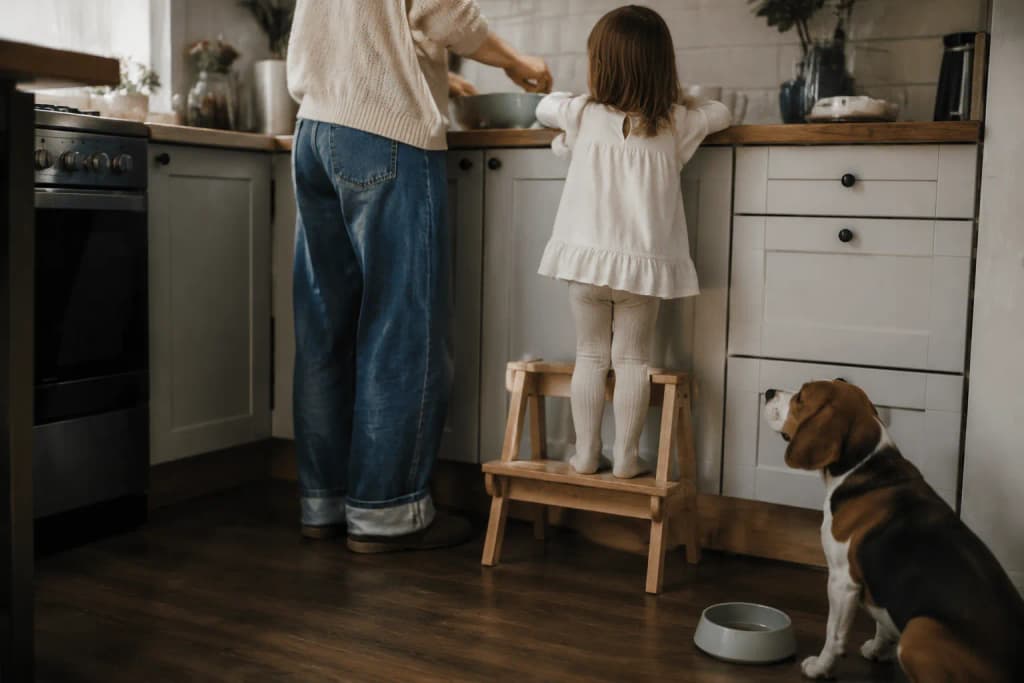
So when a beagle dies, the empty space isn't abstract for a child. It's spatial and specific. It's the gap at the base of the counter where a hopeful brown-and-white face used to appear. It's the corner of the kitchen where the bowl sat, now just clean tile.
Children map their grief onto physical locations far more than adults do. A kid doesn't say "I feel a profound sense of loss." A kid says "her spot is weird now." That's the same sentence. They just speak it in furniture and floor space.
The mistake most well-meaning parents make is trying to move the evidence quickly. Bowl into the cupboard, bed into the trash, leash off the hook, all before the kids get home from school. The intention is mercy. The effect is often the opposite.
"A kid doesn't grieve the whole dog at once. They grieve the empty spot by the counter, one meal at a time."
When the objects vanish overnight, children can't find a foothold. The loss becomes a disappearing act instead of a goodbye. What actually helps is letting the physical world catch up to the emotional one, slowly, with the kids in the room.
The Cooking Ritual: Grief You Can Hold and Stir
This is the part almost no grief guide talks about, and it's the heart of the matter.
Cooking your beagle's favorite meal one last time gives a child something adults spend years learning to do: it lets them love the dog with their hands. There's no wrong way to stir a pot. There's no "big talk" they have to survive. There's just chicken, rice, the smell filling the kitchen, and a shared understanding of who that meal was for.
We worked with a family in Ohio whose two boys, ages six and nine, wouldn't talk about their beagle at all. Their mom described dinner as "a table full of not-talking." Then one evening the younger one asked to make "Daisy's special bowl." They cooked plain chicken and rice, the vet-approved upset-tummy meal Daisy got on her worst days, and the boys ate it themselves at the table. The nine-year-old finally cried. So did their mom. The food did what a week of gentle questions couldn't.
A ritual works because it has a beginning, a middle, and an end. Grief feels bottomless to a child. A recipe has a last step. That container matters more than we give it credit for.
How to Build the Meal Ritual
Keep it simple and let the kids lead. A loose structure that tends to work:
- Let them name the dish. Whatever your beagle went nuts for. The stolen rotisserie chicken. The one carrot she'd actually eat.
- Assign real jobs. Measuring, stirring, setting the bowl down. Hands busy, heart open.
- Set her spot at the table or floor. Some families fill the bowl, some leave it empty. Both are right.
- Say one thing out loud each. Not a speech. "She would've inhaled this in four seconds." That's plenty.
- Decide together what happens to the leftovers. Feeding the birds, composting, eating it themselves. Closure is the point.
The "so what" here is straightforward. A child who participates in a goodbye carries less of the helpless, blindsided feeling that fuels complicated grief later. They got to do something. That memory becomes a small anchor instead of an open wound.
The Guilt Nobody Warns Parents About
Let's name the feeling most parents carry silently after putting a beagle down: the second-guessing.
Was it too soon? Did we wait too long? Beagles are stoic and food-motivated right up to the end. A dog who wags for dinner the night before can make you feel like a monster for choosing the appointment. That doubt is one of grief's cruelest tricks, and it's almost universal among the families we hear from.
If you're carrying this, hear it plainly: the fact that you agonized over timing is the evidence that you loved her well. People who make careless decisions don't lie awake replaying them. The ache you feel is love with nowhere left to go.
And there's a version of this the kids feel too, in their own key. A child might blame themselves in strange, magical ways. "She got sick because I forgot to fill her water once." Listen for it. Say the true thing simply: nothing you did caused this, and nothing you could have done would have stopped it. Children need that sentence more than adults assume.
"We've learned that families don't heal by talking grief away. They heal by giving it something to hold. Kids especially need the anchor."
— The PawSculpt Team
The American Kennel Club's guidance on pet loss and children makes a point worth repeating: kids take their emotional cues from the adults around them. You don't have to hide your tears. Watching you grieve openly, and survive it, teaches them that sadness is safe. That it doesn't swallow you whole.
A Day in the Life: The First Ordinary Morning
The hardest mornings aren't the day of. They're the ordinary ones after.
You come downstairs to start coffee. Your foot does the little sidestep it's done for years, the reflex to avoid the beagle who always beat you to the kitchen. Except the floor is empty, and your body remembers before your brain does. Upstairs, a kid pads to the top of the stairs and calls down, out of habit, "Is she fed yet?" Then goes quiet.
Those muscle-memory moments blindside the whole household for weeks. This is normal, and naming it out loud with your kids strips it of some of its sting. "I did the Daisy-dodge again this morning" gives a child permission to admit they almost called her name too.
Making the Bowl a Keepsake Instead of a Wound
At some point the practical question arrives: what do we do with her things?
There's no universal answer, but here's a comparison of what families tend to choose and what each one asks of you. This isn't a ranking. It's a map.
| Memorial Option | Effort | Best For | What Kids Get From It |
|---|---|---|---|
| Keep the bowl on display | Low | Families who want daily presence | A visible "she was here" |
| Memory box (collar, tag, photos) | Low | Kids who like to revisit privately | A treasure they control |
| Backyard memorial garden | Medium | Families with outdoor space | A place to "visit" her |
| Photo book made together | Medium | Verbal, story-driven kids | Narrative closure |
| A sculpted portrait keepsake | Medium | Households wanting a lasting figure | A face at eye level again |
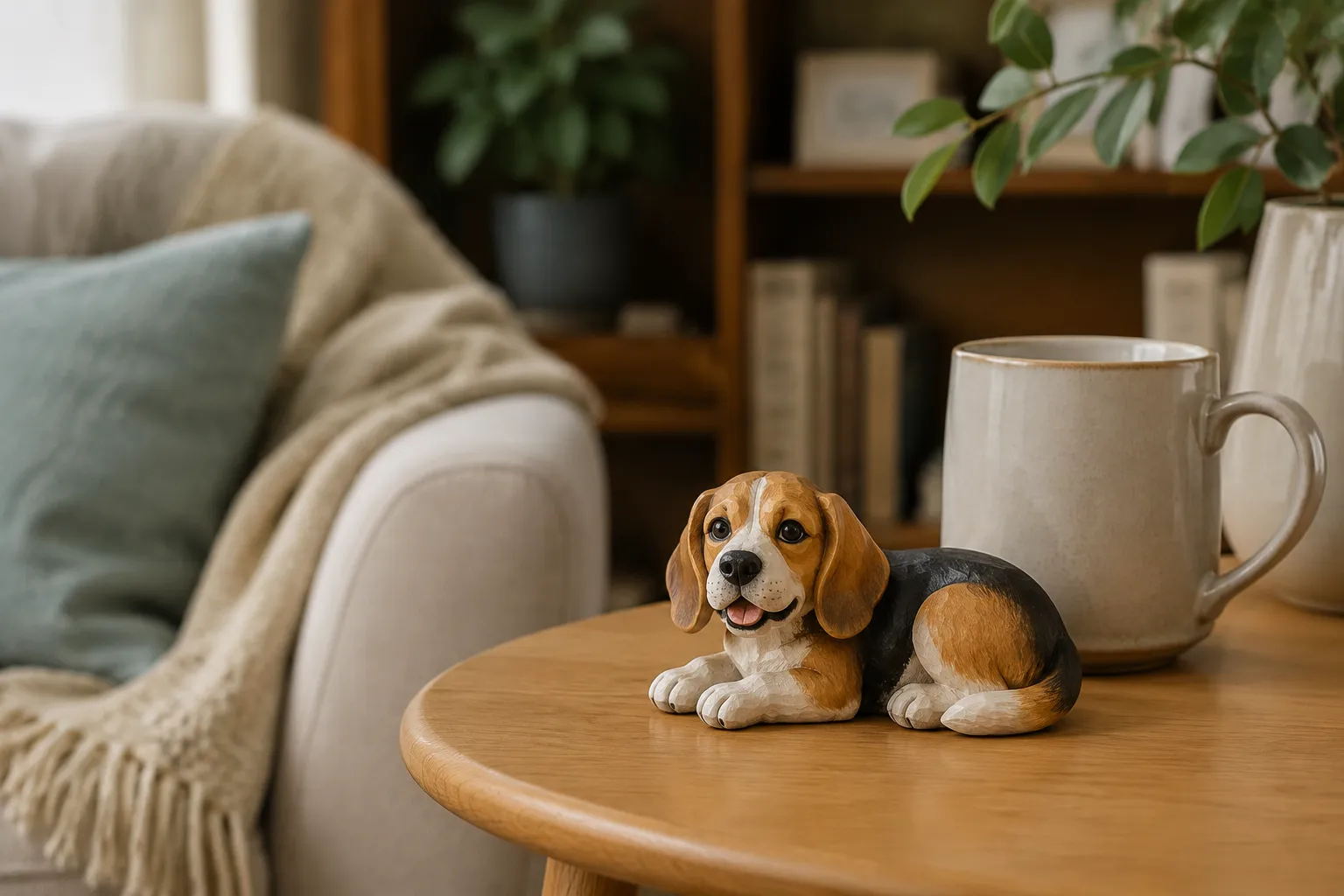
That last row is where a lot of families land when a flat photo doesn't feel like enough. A picture on the fridge is loved but two-dimensional. Some pet parents choose a tangible piece instead, something a child can pick up and set on their nightstand.
This is where studios like PawSculpt fit into the picture. We're a sculpted portrait studio: your beagle is digitally sculpted by 3D artists, then precision printed in full color resin so her markings, that classic tricolor saddle and the freckled muzzle, come through in the material itself. Our line is "a portrait, not a photocopy." It's an artist's interpretation of her character and posture, not a photographic clone. And for a kid, having her at eye level on a shelf, sitting in that alert beagle "what's for dinner" pose, can be quietly enormous.
If you're weighing options, you can explore custom sculpted portraits alongside the free-instant AI preview on the site before deciding anything. Let the kids look with you. Involving them in choosing how she's remembered is itself part of the grieving.
What the Grief Timeline Actually Looks Like for Kids
Adults expect grief to fade on a smooth curve. Kids don't work that way, and knowing the real rhythm saves parents a lot of panic.
Here's the pattern we hear about most often from families, though every child differs and this isn't clinical advice.
| Timeframe | What You Might See | What Helps |
|---|---|---|
| First 72 hours | Shock, odd calm, or big meltdowns | Keep routines steady; the meal ritual fits here |
| Weeks 1–3 | "Puddle" grief: fine, then suddenly not | Follow their lead; don't force conversations |
| Months 1–3 | Random triggers, magical guilt, questions | Answer honestly; short and true beats long |
| Beyond 3 months | Fond memory with occasional pangs | Anniversaries and keepsakes give shape |
The counterintuitive part: a child who seems "over it" in three days is not necessarily fine. Kids dip into grief and then sprint back to normal life because sitting in sadness is developmentally exhausting for them. That sprint back to Legos and cartoons isn't avoidance. It's how they self-regulate. Let them come and go from their grief without commentary.
The Association for Pet Loss and Bereavement offers solid free resources at APLB if your child's grief feels stuck or unusually intense. And if it worries you, a pediatrician or child counselor is the right call. We build keepsakes, not clinical support, and we'd never pretend otherwise.
A Small Word on the Fear of Forgetting
Older kids especially get hit with a specific terror: what if I forget her face? Her voice? The exact weight of her flopping against them on the couch?
This fear is real, it's common, and it deserves a real answer. Tell them memory doesn't work like a photo fading. It works like a well-worn path. The more you walk it, telling her stories, cooking her meal on her birthday, looking at her keepsake, the clearer it stays.
That's the honest case for a physical memorial with kids. Not decoration. It's a landmark that says "she was real, she was here, and you're allowed to keep loving her." A child who can hold something doesn't have to hold their breath against forgetting.
Cooking Her Meal, One Last Ordinary Evening
Circle back to that seven-year-old in the home office doorway, empty bowl in hand.
Her mom said yes. They made the chicken and rice that Friday, the whole family in the kitchen, and they set the bowl in its old spot by the counter. Nobody gave a speech. The younger brother said Daisy would've stolen it off the counter before it cooled. Everyone laughed, and then a couple of them cried, and both were allowed at the same table.
That's the whole secret, really. You don't help a child grieve a beagle by finding the perfect words. You help them by giving grief a shape their hands can hold — a pot to stir, a bowl to fill, a spot to honor, a small keepsake to keep her at eye level long after the food is gone.
Cook her favorite meal again. Let the kids stir. Let the kitchen smell like her one more time. Grief that gets to move through the hands has somewhere to go, and a beagle memorial built out of ordinary, repeatable love is the kind that actually heals.
Frequently Asked Questions
How do I help my child grieve the loss of our beagle?
Give them something to do with their hands rather than a speech to sit through. Cooking your beagle's favorite meal, filling her bowl one more time, or building a small memorial together lets kids move through the loss instead of just talking about it. Follow their lead and keep your answers short and honest.Is it normal for kids to seem fine right after a pet dies?
Completely normal. Children grieve in "puddles," dipping into sadness and then racing back to play because sitting in grief is exhausting for a developing mind. That quick return to cartoons isn't a sign they don't care. It's how they self-regulate. Let them come and go without pressure.Is it normal to feel guilty about the timing of euthanasia?
Yes, and it's one of the most common feelings we hear about. Beagles stay food-motivated and cheerful nearly to the end, which makes the decision agonizing. The doubt you feel afterward is love with nowhere to go. Agonizing over the choice is evidence you did right by her.Should I take away the bowl, bed, and leash right away?
Generally, no. Clearing everything before the kids get home is well-meant but can make the loss feel like a magic trick rather than a goodbye. Let the objects fade out slowly, and involve your children in deciding what to keep, display, or turn into a keepsake.How can a memorial keepsake help children who fear forgetting?
The fear of forgetting a pet's face is real for kids. A physical keepsake, like a sculpted portrait kept at eye level, acts as a landmark that says she was here and it's okay to keep loving her. Memory stays clearer when children can revisit something they hold.Ready to Celebrate Your Pet?
Every pet has a story worth preserving. Whether you're honoring a beloved companion who's crossed the rainbow bridge or celebrating your furry friend's unique personality, a custom PawSculpt figurine — a sculpted portrait, not a photocopy — captures the character that makes your pet one-of-a-kind. For families building a beagle memorial with their kids, a keepsake they helped choose can become the anchor that carries her forward.
Start with a free instant AI preview on the site, review your artist's 3D preview before anything ships, and know that every order arrives insured, tracked, and carefully packed.