
Stop Replaying Your Bengal's Last Video: An Art-History Method for the First Anniversary
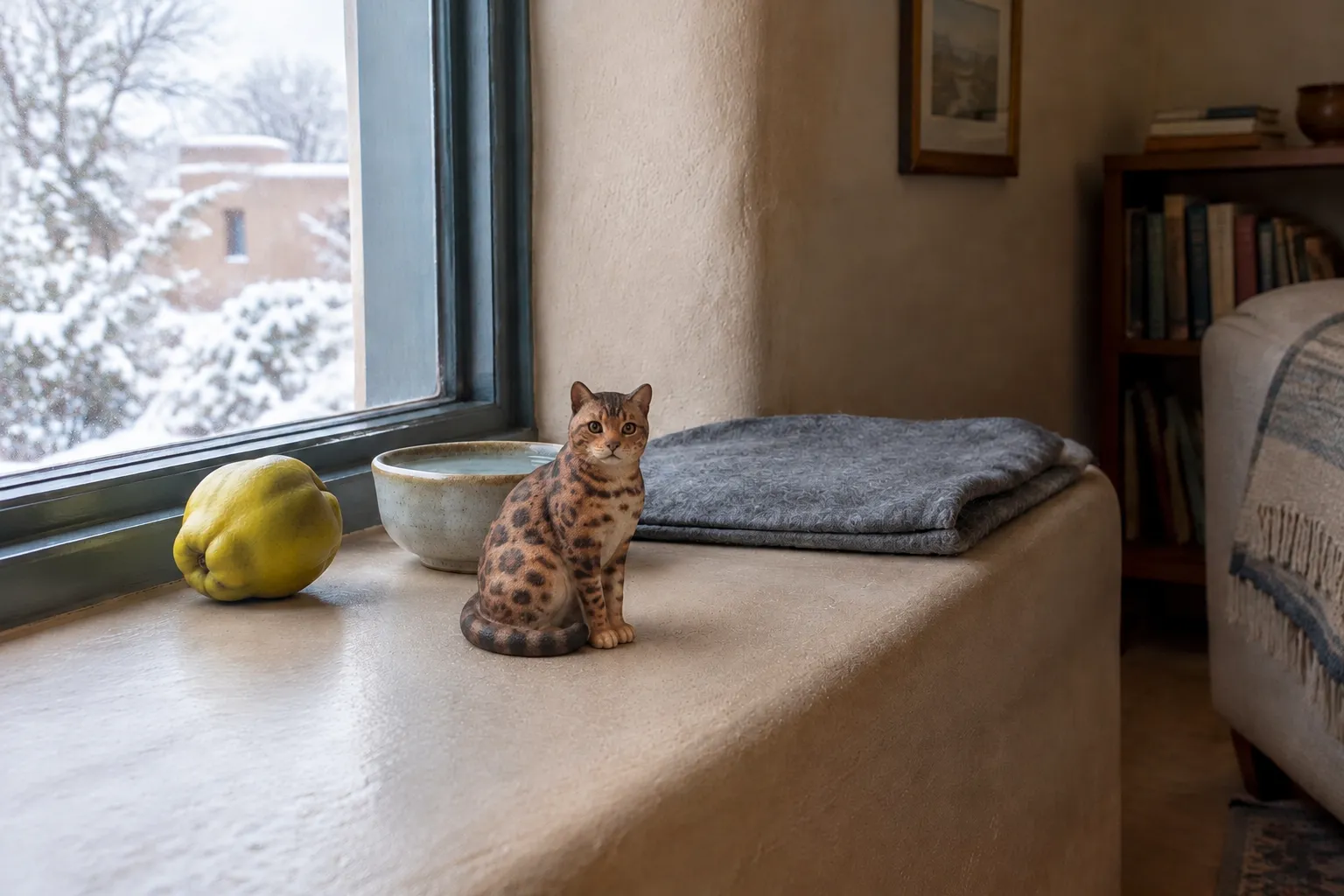
How many times this year have you stopped in the hallway, thumb hovering over your phone, to watch your Bengal's last video one more time? As the first anniversary of losing a Bengal cat comes into view, that clip can start to feel like the only door back.
You don't have to delete the video. Stepping out of the replay loop doesn't mean never watching it again. This method borrows from still-life art. Instead of replaying a moment you can't change, you compose one. Gather a few objects that carry your cat's presence, arrange them with intention, and give the anniversary a place to sit.
Quick Takeaways
- There is no correct way to grieve a cat and no normal timeline, so feeling raw at the one-year mark is not a sign you're doing it wrong.
- Guilt and relief are among the feelings Cornell describes as normal in grief, alongside sadness, anxiety, and tiredness.
- A still-life arrangement turns passive replaying into an active act of remembrance you can return to, change, and share.
- Memorials can be simple: a photograph of your arrangement, a letter, commissioned art, or a sculpted figurine are all valid options.
- If grief is disrupting your sleep or daily routine, free and fee-based pet loss support exists, including helplines and virtual groups.
Why the Last Video Keeps Pulling You Back
A video is a strange object. It's alive and fixed at the same time. Your cat moves, blinks, maybe chirps at a bird outside the window. Then the clip ends. Same frame. Every time.
That may be part of its pull. It's one of the few places your cat still moves at all.
But notice what a loop asks of you. It asks you to watch. Not to do, not to choose, not to add anything. You become an audience to your own loss, and the ending never changes.
Grief, by contrast, can change. The Humane World for Animals guide to coping with the death of a pet puts it plainly: the grief process is not linear. Cornell's veterinary college describes it as a gradual journey that rarely follows a straight path, with no prescribed timeline and responses that vary from person to person (Cornell pet loss resources).
So here's the tension. Your grief may move in loops and spirals and sudden drops. The video moves in one direction, toward one ending. Watching it a hundred times won't make the two line up.
This isn't a case against the video. Keep it. Watch it when you want to. The question is whether it should be the only way you meet your cat this year, on this date.
What the anniversary actually marks
A first anniversary is a calendar fact, not an emotional deadline. Nothing says you should feel "better" by day 365. The Cornell Feline Health Center is direct about this: there is no "normal" timeline for grief.
What the date can mark is a choice. You get to decide how you'll spend it. That's a small thing, but after a loss that felt entirely out of your hands, a small choice can matter.
When Your Cat Died While You Were Traveling
This deserves its own space, because it can change the shape of grief.
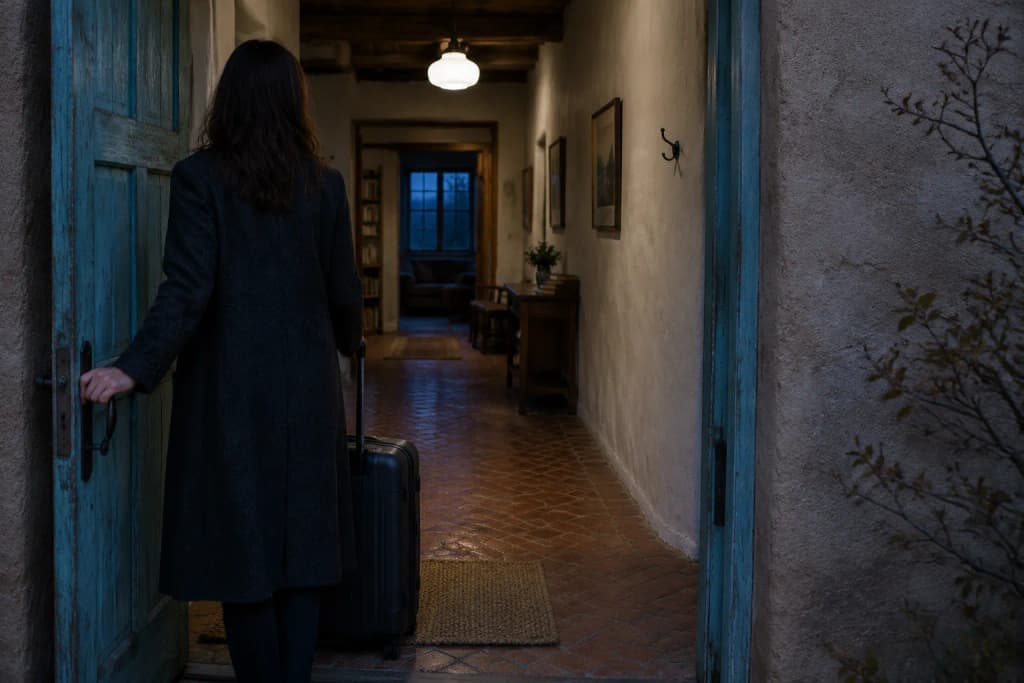
If your cat died while you were away, you may carry a specific kind of ache. You weren't in the room. You might have heard the news by text, or from a sitter, or from a vet's voicemail in an airport. The last time you saw your cat in person may have been an ordinary goodbye at the door. Nothing ceremonial. Just "be good, I'll be back Sunday."
And maybe that last video is from before the trip. Or maybe someone sent it to you while you were gone. Either way, it can start to feel like evidence.
Guilt and relief are both normal
Cornell's Feline Health Center lists sadness, anxiety, tiredness, guilt, and relief as feelings that may appear in grief, and notes that all of them are normal (Cornell Feline Health Center).
Some people may be surprised by relief. You might feel relief that the news came while you were distracted, or relief that you didn't have to watch, and then guilt about the relief.
Here's a philosophical angle worth sitting with. Guilt can carry an assumption of control. It might say, if I had been there, something would be different. But guilt might also point to something else: you saw yourself as responsible for this animal's wellbeing. That sense of responsibility can be love in its working clothes.
The ASPCA's end-of-life care guidance notes that medical test information is often more accurate than what an owner can observe about a pet's health, and that a veterinarian is the best person to advise on end-of-life timing. If questions about what happened are still gnawing at you a year later, a conversation with the vet who was involved may give you facts the video never can.
A writing prompt for the traveler
Cornell's pet loss page mentions writing and art among the ways some people find support. If you weren't there at the end, try writing the goodbye you didn't get to say. Not a letter of apology. A letter of description. What did the house smell like the morning you left? Where was your cat sitting? What did you say?
You're not rewriting history. You're giving the ordinary goodbye its proper weight.
The Still-Life Method: Compose Instead of Replay
Here's the core idea.
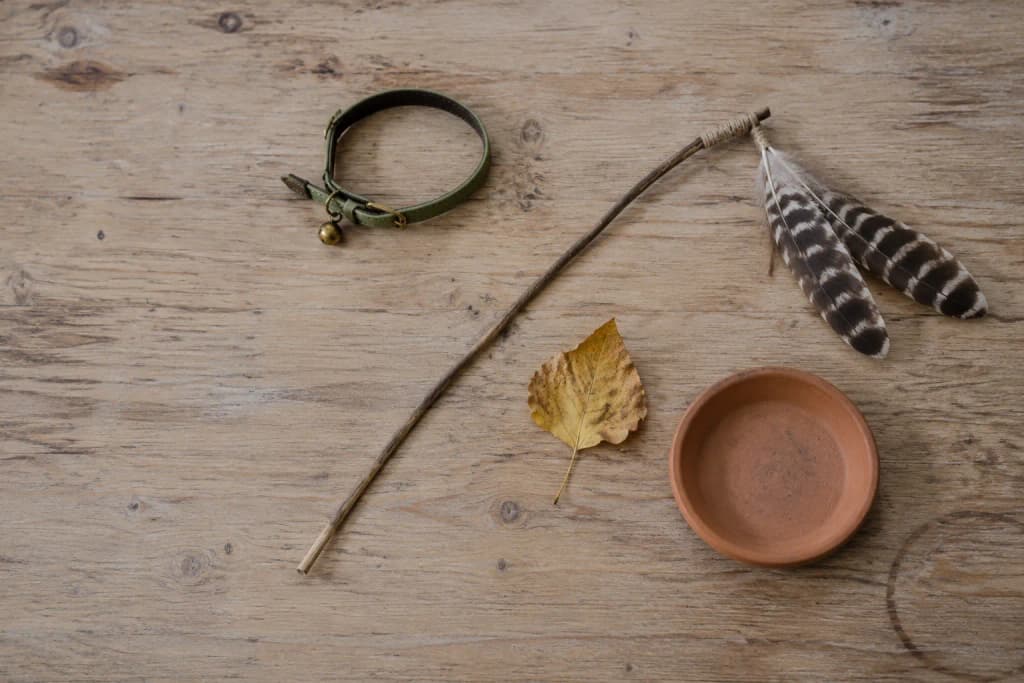
A still life is an arrangement of ordinary objects, chosen and placed with intention. A cup. A piece of fruit. A flower past its peak. The genre's quiet argument is that ordinary things, looked at carefully, can hold meaning.
That's exactly what a cat's belongings do. A feather wand with a bent wire. A collar with one worn spot. The fleece your cat claimed off the back of the couch. None of these objects are precious on their own. Together, arranged on purpose, they become a portrait of a life.
The difference from the video is agency. You choose. You place. You can move things next week. The arrangement can grow with your grief instead of freezing it.
Step 1: Choose three to five objects
Fewer is better. A still life works because of what's left out.
Try to pick across categories:
- Something your cat used. A toy, a brush, a food bowl.
- Something your cat claimed. A blanket, a box, a sweater they slept on.
- Something from nature. A single dried flower, a sprig of catnip, a stone from the garden path they watched.
- Something of yours. A mug you drank from while they sat on your lap. Your travel tag, if the trip is part of the story.
That last category is optional, but it matters for the traveler. Including an object from the trip can place it inside the memorial instead of outside it, as a fact of the story rather than an accusation.
Step 2: Find the light
Pick a spot your cat actually loved. A windowsill. The top of a bookshelf. The corner of the hallway where they waited for you.
Morning or late-afternoon light tends to be soft. Watch how it moves across the spot over a few days. You're not staging a photo shoot. You're learning when this corner looks most like itself.
Step 3: Arrange, then leave it alone
Place the objects. Step back. Move one thing. Step back again.
Then stop. Let it sit for a day before you change anything. Part of what makes a still life work is restraint.
Step 4: Add one written line
A name. A date. A phrase only you understand. Write it on a card and tuck it into the arrangement. Words anchor objects. Without them, a feather wand is just a toy. With a name beside it, it becomes a relic.
Step 5: Return on the anniversary
On the day itself, sit with the arrangement. You can still watch the video. But this time you're watching it next to something you built.
A day with the arrangement
Imagine… you wake on the anniversary and the house still smells faintly of rain from the night before, the same wet-pavement scent that used to drift in when your Bengal sat on the porch rail and sniffed the air. You make coffee and carry it to the windowsill, where the fleece blanket still holds a trace of that warm, dusty, slightly sweet smell that was only ever your cat. The dried flower beside it has gone papery and smells like hay. You sit for ten minutes, say the name out loud once, and then, only then, open the video.
The video is the same. You aren't.
Bengal Cat Memorial Ideas Beyond the Screen
The still-life arrangement is a starting point. Some people want something more permanent, or something they can share with family who loved the cat too. A few directions, none of them better than the others:
Photograph the arrangement. Once you're happy with it, take one careful photo in your favorite light. Print it. This gives you a fixed image you composed, rather than one you happened to capture.
Keep a short memory journal. One line per memory, no pressure to be eloquent. The time they knocked the pen off your desk. The specific sound they made at the door. Writing is one of the forms of remembrance Cornell mentions as helpful for some people.
Commission artwork. A painting, a drawing, a print from a local artist. Art can hold a likeness and an interpretation at the same time, which some people may find closer to how they remember.
Join a remembrance event. Some veterinary centers hold annual remembrance ceremonies for pets that have died. The Ohio State University Veterinary Medical Center's Honoring the Bond program is one example of an institution that formally recognizes the human-animal bond.
A sculpted figurine. If you want your cat to have physical presence in the arrangement again, a three-dimensional portrait is an option. PawSculpt makes custom memorial figurines from reference photos: an artist digitally sculpts the portrait, you review and confirm the artist preview before anything is printed, and five revisions on that preview are included. The figurine is then printed in full-color resin on a Mimaki 3DUJ-553, equipment that supports more than 10 million colors. The color comes from the printer itself rather than from paint applied afterward. Supports are removed, the surface is inspected, and a transparent protective coat is applied for indoor shelf display.
It's worth being clear about what a figurine is and isn't. It's an artistic interpretation, a sculpted portrait rather than a photocopy. It won't be an identical replica of your cat, and it shouldn't try to be. Like a still life, it's a composed object. That's the point.
Where a figurine fits in a still life
If you go this route, think of the figurine as one object among several, not the centerpiece that replaces everything else. A small figurine placed beside the real feather wand and the real dried flower can feel more honest than a large one standing alone. Sizes run from 2.5 to 6 inches. For a windowsill arrangement, the smaller end of that range usually leaves room for the other objects to breathe.
You can also add a nameplate for $9, or include a sculpted toy alongside the cat for $30, which can echo a real toy in the arrangement. A black acrylic base is included, with diamond glass ($29) and black crystal ($39) bases as add-ons. Single-figurine list prices are $429 (2.5-inch), $489 (3-inch), $589 (4-inch), $789 (5-inch), and $999 (6-inch). If you'd like to browse beyond memorial pieces, the custom pet sculptures collection shows the broader range.
The Anxiety About Getting Another Cat
The first anniversary can bring a second question, sometimes from friends, sometimes from inside: are you going to get another one?
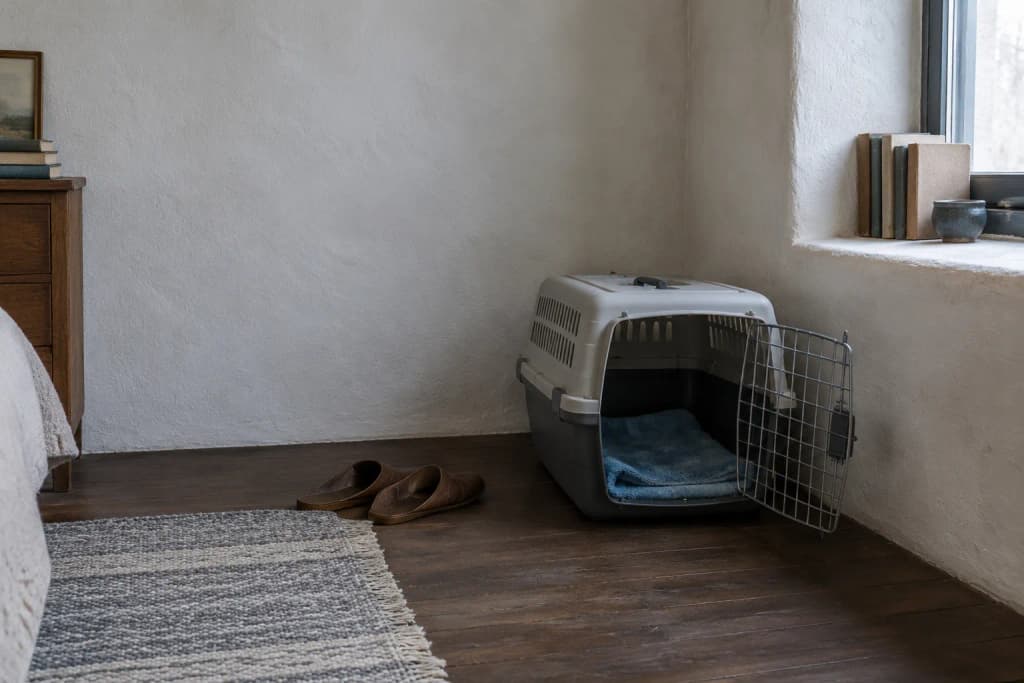
For some people this question carries real anxiety. Some worry that a new cat would mean forgetting. Others worry about going through loss again. Some feel ready and then feel guilty for feeling ready. Some feel nowhere near ready and wonder if something is wrong with them.
Here's what the sources support, and it's a short list: there is no prescribed timeline for grief, and responses vary between people (Cornell pet loss resources). That applies to this decision too. One year is not a signal to adopt. It's not a signal to wait.
Separate the two questions
It can help to split the anxiety into two different questions:
- Am I finished grieving this cat? Maybe not, and you don't need to be. Grief doesn't have to be a gate you pass through before the next thing.
- Do I have room in my life for a new relationship? This is a practical question about your home, your schedule, your travel, your energy.
If travel was part of how you lost your Bengal, that second question may carry extra weight. That's worth taking seriously, not as a reason to never adopt again, but as a reason to plan differently if you do.
The still life as a bridge
The arrangement you build doesn't have to come down if a new cat arrives. A memorial that stays on the shelf might say something you feel to be true: love for one animal doesn't have to cancel out love for another. The old fleece can stay on the windowsill. The new cat might even sleep on it.
Or the arrangement might move to a smaller corner. Or it might become just the figurine, or just the photo. It can change shape without disappearing.
When to Reach for More Support
A still life is a remembrance practice, not treatment. If your grief feels heavier than an arrangement on a windowsill can hold, there are people whose job is to help.
Signs it might be time to talk to someone are personal, but sleep and daily routine are two places loss can show up. Humane World for Animals notes that loss and grief can affect sleep and daily routine, and Cornell's Feline Health Center describes professional grief counseling as an option when loss affects daily functioning or sleep.
Some concrete places to start:
- A pet loss helpline. Tufts University's Cummings School of Veterinary Medicine runs a free pet loss support helpline staffed by veterinary students. It's staffed from 6 to 9 pm Eastern, Monday through Thursday, with 24-hour voicemail. Tufts describes callers as getting the help of a caring, supportive, non-judgmental person.
- Virtual support groups. Lap of Love's pet loss support offers virtual sessions led by certified pet loss coaches, both small-group and one-on-one, with some free and some fee-based options. They also offer anticipatory grief support and support for children.
- Veterinary social work. Programs like Ohio State's Honoring the Bond exist specifically to support owners through pet illness, loss, and grief, including bereavement referrals.
Reaching out isn't a sign the still life failed. It's another way of taking your grief seriously.
Frequently Asked Questions
Is it normal to still feel this much grief at the first anniversary?
Yes. Grief resources from Cornell's veterinary college and Humane World for Animals note there is no prescribed timeline for pet grief, it varies between people, and it is not linear. Feeling raw at one year is not a sign you are grieving wrong.
How do I cope with guilt after my cat died while I was away?
Cornell's Feline Health Center lists guilt and relief among normal grief feelings. Writing the goodbye you did not get to say, or asking your vet about what happened, may help. A pet loss helpline is another option if guilt stays heavy.
What are some Bengal cat memorial ideas that don't rely on video?
Try a still-life arrangement of your cat's toy, blanket, and a dried flower in a favorite spot. You can also photograph it, keep a memory journal, commission artwork, attend a remembrance event, or add a sculpted figurine to the arrangement.
How long does a custom memorial figurine take?
The first artist preview typically arrives within 7 days after complete references are available and the order enters IN_DESIGN. Delivery is 27 to 40 days in the US or 33 to 47 days internationally after final payment.
Can I cancel a figurine order if I change my mind?
A 40% deposit starts the order. A full refund is available before the order enters IN_DESIGN status. Once the artist starts modeling, the deposit becomes non-refundable, so take the time you need before committing.
Is one year the right time to get another cat?
There is no prescribed timeline for grief, so there is no right date either. It may help to separate two questions: whether you are done grieving, and whether you have room in your life now. The memorial can stay either way.
Building Something for the Day Itself
Start with what you already have. A toy, a blanket, a flower, a windowsill. That arrangement alone is enough for the anniversary, and it costs nothing but attention.
If you decide you want your cat to have a sculpted presence among those objects, PawSculpt's memorial figurines begin with your reference photos and an artist's digital sculpt. You see and confirm the artist preview before printing, with five revisions included. A 40% deposit starts the order, and you can get a full refund any time before it enters IN_DESIGN.
Timing matters if you want it by a specific date. The first preview typically arrives within about 7 days once complete references are in and design begins, and delivery is 27 to 40 days in the US or 33 to 47 days internationally after final payment. There's no separate shipping fee at checkout for worldwide delivery, though international customers are responsible for local customs duties, taxes, or import fees.
If the anniversary is closer than that, the still life is still yours to build this week. The figurine can join it later. Memorials don't have to be finished on schedule. Neither does grief.