
Don't Rush to Fill the Bernese-Sized Spot on the Couch: A Ten-Minute Daily Practice
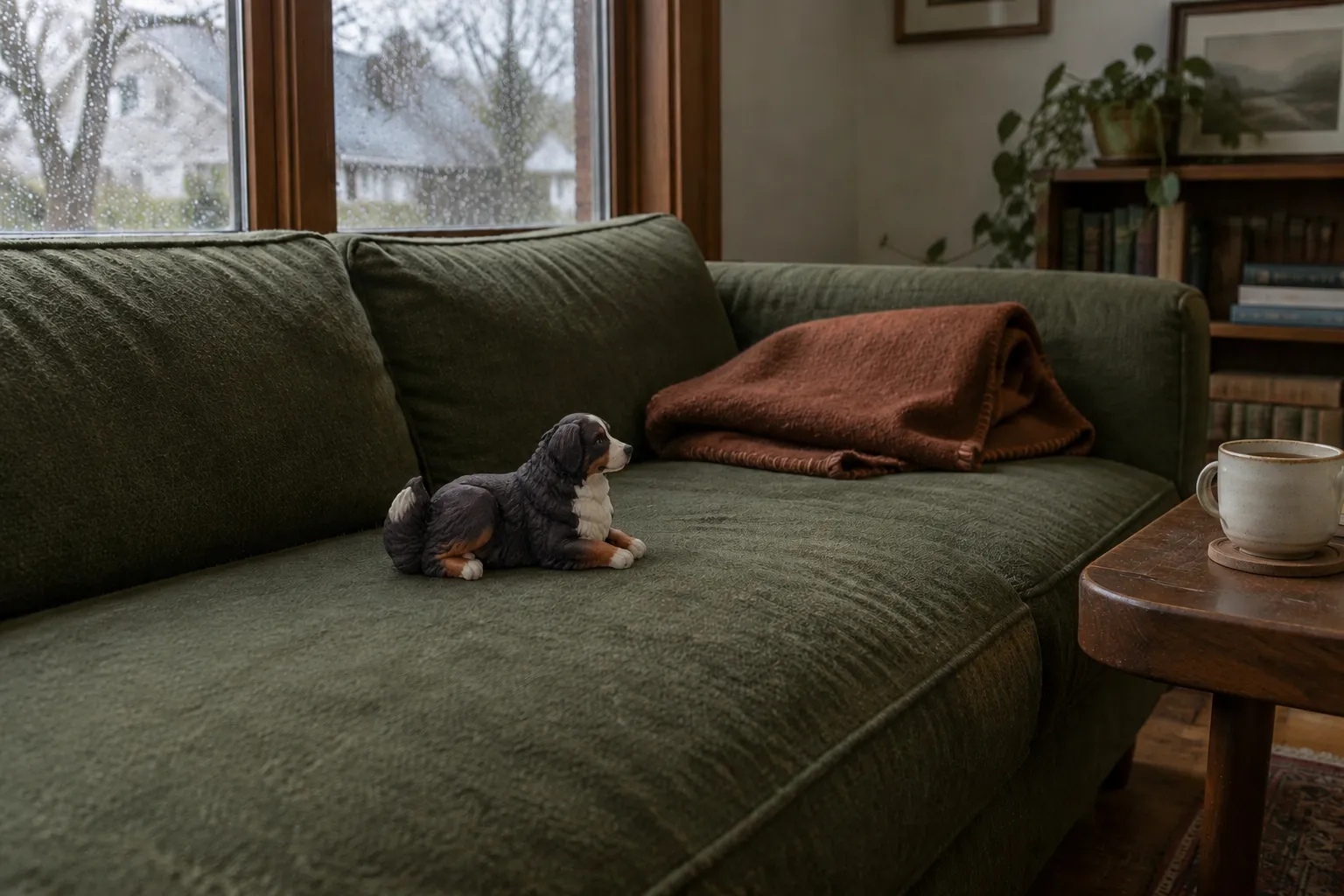
You are kneeling in the garden, pulling the dandelions your old dog used to flatten with a whole body's weight, when you look up through the back window and see the couch cushion still dented in that familiar shape, lit gold by the late sun.
Grieving a senior Bernese Mountain Dog often means living beside the space they left. You don't have to fill it, rearrange it, or replace it on a schedule. A ten-minute daily ritual, sitting with the spot, noticing, and marking one memory, can give grief a place to go while you decide, slowly, what that space becomes.
Quick Takeaways
- Pet grief has no prescribed timeline, so there is no deadline for washing the blanket, flipping the cushion, or moving the couch.
- A short daily ritual in four parts (arrive, look, mark one thing, close) may, for some people, give grief a regular appointment instead of a constant ambush.
- If other dogs share your home, keeping, sharing, or shifting the empty spot are all valid choices, and your veterinarian is the right person for questions about their health.
- Anxiety about a future dog, guilt, and even relief can all be part of grief. A new dog is a new relationship, not a replacement.
- If grief starts to disrupt your sleep or daily life, free helplines, virtual support groups, and grief counselors are there.
The Spot on the Couch Is Not a Vacancy
Look at it for a moment. Not the whole room, just the cushion.
The shallow bowl pressed into the fabric. The few black and rust hairs caught in the weave that the lint roller keeps missing. The way the window light reaches that corner first in the afternoon, as if it still knows where to go.
Someone has probably told you to wash the blanket, flip the cushion, maybe move the couch to the other wall. Maybe that someone is you, at two in the morning. There's a pull toward fixing the room, because a room is easier to fix than a heart.
You don't have to answer that pull today.
Cornell University's College of Veterinary Medicine is clear that pet grief has no prescribed timeline and that it looks different from one person to the next. It describes grief as a gradual path that rarely runs in a straight line. Humane World for Animals says much the same: the grief process is not linear, your grief is normal, and it is okay, even important, to mourn the relationship you had with your pet.
The relationship. Sit with that word.
When a senior dog dies, you don't only lose a dog. You lose the one who heard every key turn in the lock. The one who watched you cook, watched you cry, watched you leave and watched you come home. You lose a witness to years of your ordinary life. Of course the room feels wrong.
If the end came slowly, you may have started grieving long before the last day. The ASPCA calls coping with the impending loss of a pet one of the most difficult experiences a pet parent will face, and grieving before a pet dies is common. If you had to make a decision about timing, you made it alongside the person the ASPCA describes as best placed to advise: your veterinarian. That doesn't erase the ache.
Here is another way to see the cushion. Think of the bond you shared as a kind of unspoken promise, made without words the first day your dog claimed that corner of the couch. I'll stay close. You'll keep me safe. Grief is what that promise feels like when only one of you is left to keep it.
The empty spot isn't a breach of the promise. It's where the promise still lives. That makes it less a vacancy and more a meaningful space, and meaningful spaces don't need to be cleared out in a hurry.
A Ten-Minute Daily Practice for the Empty Spot
This is not a treatment. It isn't a cure, a technique with a success rate, or a stage you need to pass through. It's a small ritual that may give your grief a regular appointment, so that for some people it finds them unannounced in the cereal aisle a little less often.
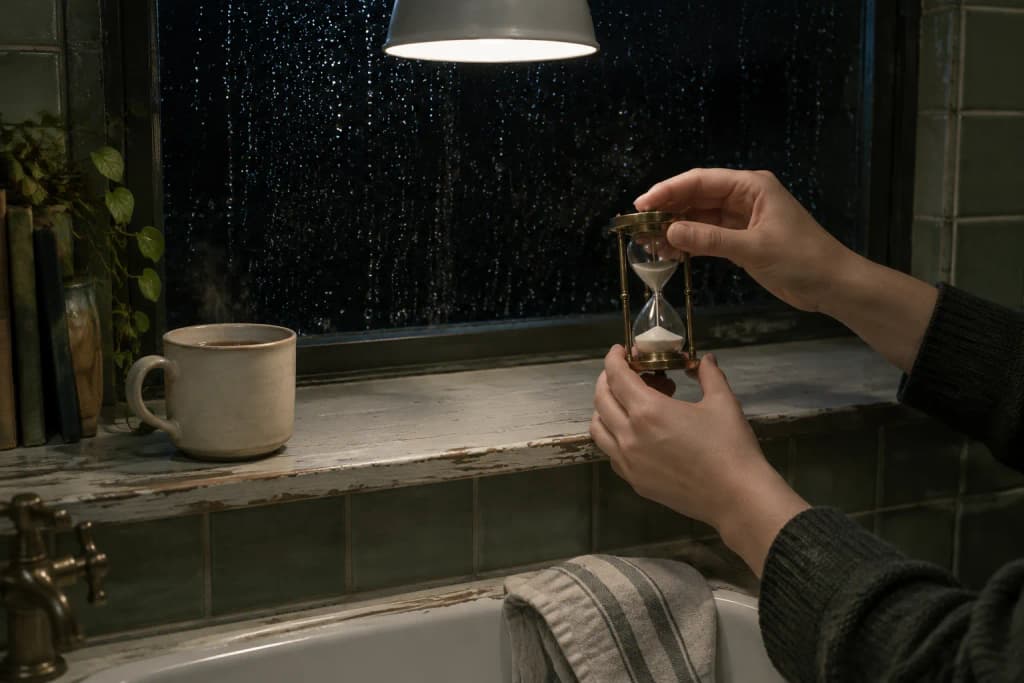
Cornell notes that remembrance, writing, and art are among the things that can help some people with pet loss. Some people. Not everyone. Try this for a week, then keep only what serves you.
Pick a time you can protect. Morning, if your dog was a sunrise companion who leaned against your legs while the coffee brewed. The hour after dinner, if that's when the two of you used to settle in. If evenings have become the hardest part, or sleep has gone ragged, you're not imagining it. Cornell notes that loss can disturb sleep and routine. The ritual can sit right at the point in the day where the routine broke.
Minutes one and two: Arrive
Sit beside the spot, not in it. Leave your phone in another room.
Notice where the light is falling right now. Maybe it's a pale stripe across the arm of the couch. Maybe it's a lamp throwing a warm circle onto the plaid, the red and green gone soft where the blanket folded over itself for years. Look at the shadow the cushion casts. Look at the color of the fabric where the weight used to be, a shade darker, a little flattened.
If you can, say your dog's name out loud. Just once. You're announcing that you've arrived.
Minutes three through five: Look
Let memory come in its own order. You don't have to summon anything.
Maybe it's the way your dog's white chest caught the morning light. Maybe it's the rust-colored eyebrows lifting when you said a certain word. Maybe it's the large chew toy, now sitting untouched at the end of the couch, its color worn pale at one end from years of patient work.
Hard memories may come too. The stiff legs on the stairs. The last weeks. Let them in. You don't have to curate this, and you don't have to make it pretty. Presence means making room for all of it.
Minutes six through eight: Mark one thing
Keep a small notebook on the arm of the couch. Write one sentence. Only one.
Always faced the door. Snored louder in winter. Waited for me at the top of the garden path.
If writing isn't your language, take a single photograph of the spot in today's light. Or make a rough sketch. The point isn't the quality. The point is that each day leaves one mark.
Over weeks, that notebook or camera roll becomes something you didn't have on the first day: a legacy, collected slowly, in your own hand.
Minutes nine and ten: Close the circle
Rest your hand on the cushion. Say something simple. Same time tomorrow. Thank you. I'm still here.
Then stand up and let the rest of the day be the rest of the day.
The closing matters. For some people, an ending may help a ritual feel like a ritual rather than an open door they can't shut. On days you can't manage ten minutes, do two. On days you skip it, skip it. Nobody is keeping score, least of all your dog.
What it can look like on an ordinary day
Imagine a Tuesday in early autumn, when the sun clears the fence at seven and lays a pale stripe across the worn plaid blanket where Otto used to sleep, his head resting on a cushion against the arm of the couch. You sit on the floor beside it with your coffee going cold, and you notice the blanket has faded unevenly, lighter where his shoulder pressed against it for years. You write one line in the notebook, He always faced the door, and close it. Then you touch the cushion, say his name, and leave for work with that stripe of light still glowing on the fabric behind you.
When Other Dogs Still Share the House
Maybe the house isn't empty at all.
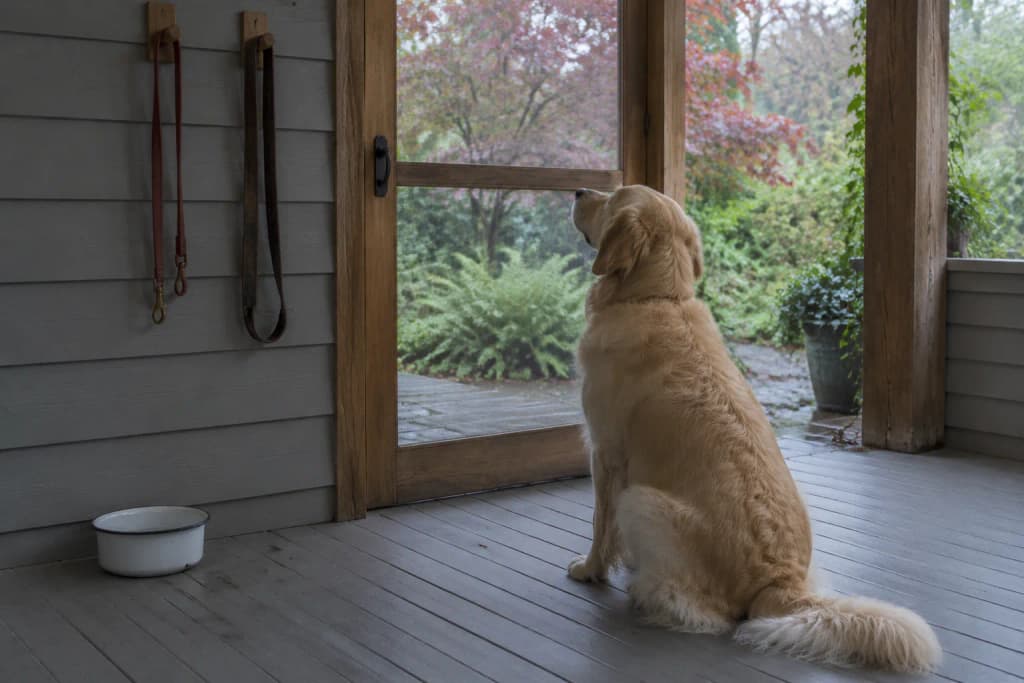
Maybe there's a younger dog thumping a tail against the floorboards, nose pushed into your palm, asking for breakfast as though the world is exactly the same. That can be a mercy and an ache in the very same moment.
You might feel guilty for laughing at them. You might feel a flash of something unkind the first time they hop up onto the old cushion. Both are human. Cornell's Feline Health Center, writing for people who have lost a cat, lists guilt among the normal responses to grief. The species is different. The guilt will probably sound familiar.
With other dogs at home, the spot stops being only symbolic. It becomes a practical question: do you let them have it?
There's no right answer. A few paths people choose:
- Keep it. Fold the blanket, set the chew toy on top, and let the spot rest for a while. Redirect your living dog to their own bed nearby.
- Share it. Let your living dog use the cushion, and move the blanket somewhere it can stay as it is, like a shelf, a chair, or a basket by the window.
- Shift it. Move the ritual itself. Sit on the garden step where your old dog used to sunbathe, and let the couch go back to being a couch.
Any of these can change next month. You're not making a permanent decision. You're making today's decision.
Your living dog can also be part of the practice, if that feels right. The first two minutes might happen with a warm head resting on your knee. Some days that presence will help. Some days you'll want the ten minutes to yourself, and that's allowed too.
If something about your other dog worries you, like their appetite, energy, or habits, be gentle with your own interpretation. You're looking through a lens of grief right now. The ASPCA notes that medical test information is often more accurate than what an owner can observe at home. Your veterinarian is the right person to help you sort out what you're seeing.
The Fear of Loving Another Dog
Here's the thought that may arrive uninvited, maybe in the middle of the ritual: Will I get another dog?
And right behind it: What kind of person thinks about that right now?
The ordinary kind. The kind who loved a dog deeply enough to wonder whether there's room for that love to go somewhere.
The anxiety often pulls in two directions at once. One fear says that bringing a new dog home would be a betrayal, a way of rushing to fill the spot before the cushion has even lost its shape. The other fear says that if you wait too long, you'll close something in yourself that won't open again.
That same idea, that pet grief has no prescribed timeline, cuts both ways. There's no deadline for being sad, and no rule about when a new relationship is permitted. You might know within weeks. You might never feel the pull again. Neither path says anything about how much you loved the dog you lost.
Cornell's Feline Health Center notes that grief may include sadness, anxiety, tiredness, guilt, or relief, and describes all of these as normal. Relief can be the hardest to admit, especially after a long senior decline: the end of medication schedules, the end of carrying a big dog up the stairs, the end of lying awake listening to labored breathing. Feeling lighter isn't disloyalty. It's what happens when a long vigil finally ends.
It may help to separate two things that grief tends to tangle together:
- The space. The cushion, the blanket, the dent in the fabric. That belongs to your dog, and it can stay theirs for as long as you want.
- The love. The way you learned to read a dog's moods, the patience you built, the joy you found in an ordinary walk. That isn't a spot on the couch. It's a capacity your dog grew in you.
A new dog, if one ever comes, wouldn't take the first. They would inherit the second. That is a kind of legacy too: something of your old dog carried forward in how you love whoever comes next.
Part of the fear may also be about the ending itself. Loving a dog means knowing, somewhere, how the story goes. If that thought is keeping you from even imagining the future, know that support exists for that too. Lap of Love Veterinary Hospice, for one, offers anticipatory grief support alongside its pet-loss services.
If you'd like, once a week, let the notebook hold a different question: What would I want to carry forward? You don't need an answer. You're just leaving the door unlatched.
Giving the Space a Lasting Shape
Eventually, the spot may change on its own. The cushion springs back. The blanket gets washed, or doesn't. One day you notice the light landing there and it doesn't knock the wind out of you.
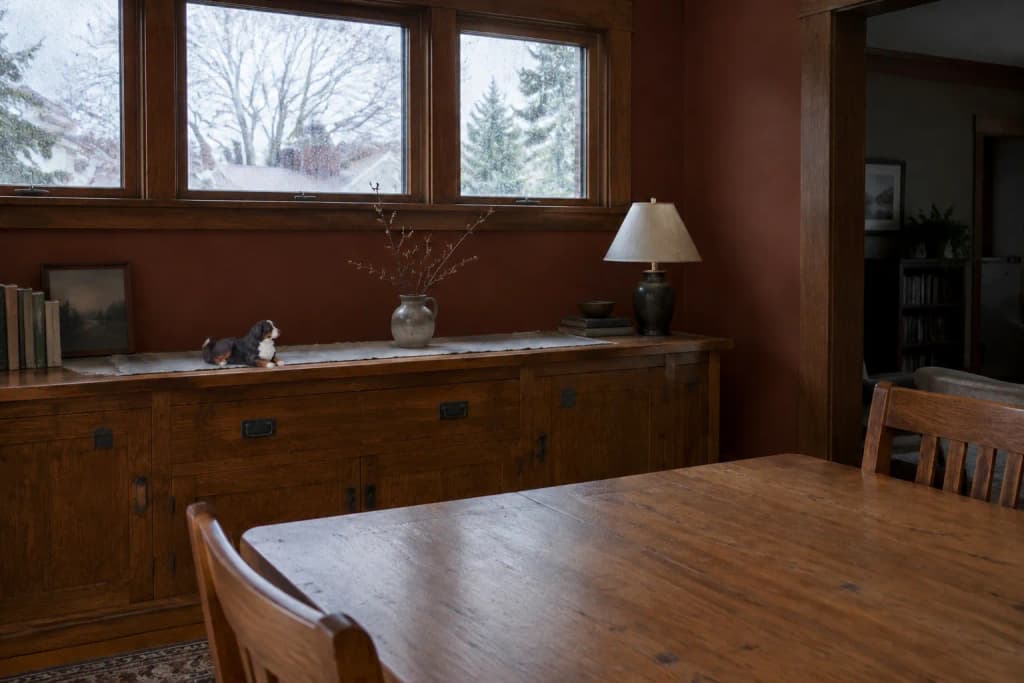
When that day comes, or before it, you might want something that holds the shape your dog left behind. There's no hierarchy here. Some options:
- A photograph of the spot itself, taken in the light you've come to know, printed and framed.
- The notebook, kept on a shelf, one sentence per day, a record of your grief and your dog at once.
- A piece of art, a drawing or painting by you, a friend, or an artist who can work from your photos.
- The blanket, folded and kept, or sewn into something smaller.
- A figurine, a small three-dimensional portrait that can sit on the couch arm or a nearby shelf.
If a figurine appeals to you, a sculpted portrait is one approach. PawSculpt makes custom full-color memorial figurines in resin, 2.5 to 6 inches tall, built on the idea of a sculpted portrait, not a photocopy. An artist reviews your reference photographs and digitally sculpts the portrait, and you see and confirm the artist preview before anything is printed. Five revisions on that preview are included, which leaves room to guide it toward the dog you remember: lying on one side, head on a cushion, eyes half closed against the afternoon.
It's worth being clear about what any portrait like this is. It's an artistic interpretation, not an identical replica. For many people, that's the point. A photograph records a moment. A sculpted portrait tries to hold a presence.
If another dog shares your home, a figurine can include a second pet, so the two of them can share a couch arm in miniature even if they never did in life. You can see examples on the custom pet sculptures page.
Whatever you choose, let it come from the ritual rather than replace it. The keepsake isn't the end of grief. It's one more place for it to rest.
When Grief Needs More Company Than a Couch
Ten minutes with a cushion can hold a lot. It can't hold everything.
If you find that grief is spilling past the edges of the day, keeping you up at night, making it hard to work, or making the house feel unlivable, that's not a sign the ritual failed. It's a sign you deserve more company. Cornell's Feline Health Center notes that professional grief counseling is an option when loss affects daily functioning or sleep.
There are also people whose work is exactly this:
- The Tufts Pet Loss Support Helpline. Tufts University's Cummings School of Veterinary Medicine runs a free pet loss helpline staffed by veterinary students. It's staffed from 6 to 9 pm Eastern, Monday through Thursday, with 24-hour voicemail, and callers are assured a caring, supportive, non-judgmental person on the other end.
- Lap of Love Veterinary Hospice. Professionally certified pet loss coaches lead virtual sessions, some free and some fee-based, in small groups and one-on-one. They also offer support for children, which may matter if young people in your home are grieving too.
- Veterinary social work programs. The Ohio State University Veterinary Medical Center's Honoring the Bond program exists to recognize and honor the human-animal bond, with social workers who support owners through illness, loss, and grief and can offer bereavement referrals. Some veterinary centers also hold annual remembrance ceremonies for pets that have died.
It can feel strange to call a stranger about a dog. It isn't strange to the people answering. Veterinary institutions build these programs because they recognize the bond you're grieving as real and worth honoring.
You can keep the ritual and reach out. One doesn't cancel the other.
Frequently Asked Questions
How long should I wait before moving my dog's blanket or bed?
There's no set rule. Cornell's College of Veterinary Medicine notes that pet grief has no prescribed timeline. Move things when it feels right, in stages if that helps, and keep one piece if you want to.
Is it normal to feel relief after my senior dog died?
Yes. Cornell's Feline Health Center lists sadness, anxiety, tiredness, guilt, and relief as normal parts of grief. Relief after a long decline doesn't mean you loved your dog any less.
Should I get another dog right away for my other dog's sake?
That's your decision, and grief has no deadline in either direction. A new dog is a new relationship, not a replacement. If your living dog's health or habits concern you, ask your veterinarian.
Where can I talk to someone about losing my dog?
Tufts runs a free pet loss helpline staffed Monday through Thursday, 6 to 9 pm Eastern, with 24-hour voicemail. Lap of Love offers free and fee-based virtual support groups led by certified pet loss coaches.
Can a memorial figurine include my living dog too?
Yes. A second pet can be added to a figurine for $179, and an extra pet add-on at $199 is available on 4-inch and larger sizes. Figurines range from 2.5 to 6 inches tall.
How long does a custom memorial figurine take?
The first artist preview typically arrives within 7 days after complete references are in and the order enters IN_DESIGN. Delivery is 27 to 40 days (US) or 33 to 47 days (international) after final payment.
When You're Ready, a Portrait for the Couch Arm
There's no right moment to start, and no obligation to start at all. If you'd like a small, lasting shape for the space your dog left, PawSculpt's pet memorial figurines are one way to hold it.
Here's how it works, plainly. Your reference photographs are reviewed, an artist digitally sculpts the portrait, and you confirm the artist preview before printing, with five revisions included. The approved model is printed in full color on a Mimaki 3DUJ-553, equipment capable of more than 10 million colors. That's a capability of the printer, not a promise about any single figurine. The color is printed into the resin rather than painted on afterward. Supports are removed, the surface is inspected, and a transparent protective coat is applied. Each figurine is made for indoor display, on a shelf or the arm of a well-loved couch.
| Size | Single figurine (USD) |
|---|---|
| 2.5-inch | $429 |
| 3-inch | $489 |
| 4-inch | $589 |
| 5-inch | $789 |
| 6-inch | $999 |
Optional add-ons include a second pet ($179), an extra pet on 4-inch and larger sizes ($199), an extra toy ($30), a nameplate ($9), a diamond glass base ($29), a black crystal base ($39), and rush ($29). A black acrylic base is included.
A 40% deposit starts the order. You can get a full refund any time before the order enters IN_DESIGN, and the deposit becomes non-refundable once the artist starts modeling. The first preview typically arrives within 7 days after complete references are in and the order enters IN_DESIGN. Delivery takes 27 to 40 days in the US or 33 to 47 days internationally after final payment. No separate shipping fee is added at checkout, though international customers are responsible for local customs duties, taxes, or import fees.
If you're thinking of this as a gift for someone grieving this holiday season, the last order-by dates for Christmas 2026 are November 10 for the US and November 3 for international orders, and the preview needs to be confirmed and the balance paid promptly. Orders placed after the cutoff are delivered in January, and the artist preview, which arrives within about 7 days of IN_DESIGN, can be shared as the gift.
Until then, the cushion can stay exactly as it is. Same time tomorrow.