
Beyond the Urn: 6 Reasons to Pair Your Schnauzer's Ashes with a Figurine (Creating a 'Memory Nook')
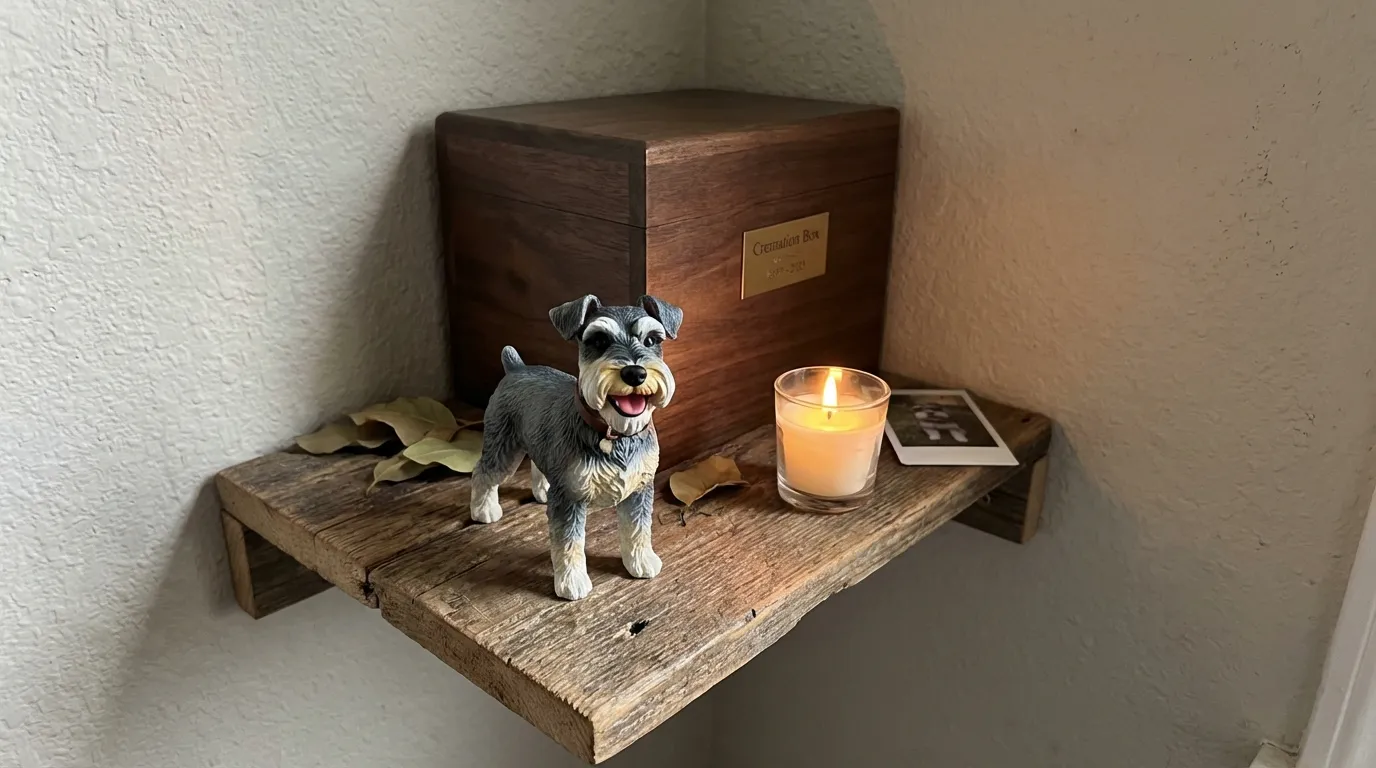
You catch yourself walking toward the kitchen, expecting to hear the familiar click-click-click of terrier nails on hardwood, only to be met by the stillness of an empty hallway. That specific silence is the loudest noise in the world right now, and that wooden box of ashes on the mantle doesn't quite fill the Schnauzer-shaped hole in your life.
Quick Takeaways
- Visual cues trigger healing — A figurine provides the physical presence your brain is desperately scanning for.
- Create a "living" memorial — Move beyond static urns by incorporating items that represent their active life (leashes, toys).
- Schnauzers have specific geometry — Their beard, eyebrows, and stance are distinct; generic statues rarely capture the "Schnauzer attitude."
- Tangible grief anchors — Holding a custom figurine can ground you during panic attacks or waves of intense sorrow.
The Problem with the Urn (and Why You Feel Guilty About It)
Let's be honest about something most people won't say out loud: the urn is weird.
You love your Schnauzer. You wanted them back home. But staring at a box, a tin, or a ceramic jar doesn't remind you of the dog who used to woo-woo at the mailman or burrow under your blankets. It reminds you of the end. It reminds you of the vet's office.
The practical reality of grief is that our brains are hardwired for recognition. For years, your brain has built neural pathways dedicated to recognizing the specific silhouette of your dog—the boxy muzzle, the perky ears, the wiry coat. When you look at a box of ashes, those pathways hit a dead end. This cognitive dissonance is why you might feel a strange disconnect or even guilt that the ashes don't bring you the comfort you expected.
"Grief isn't a problem to be solved. It's a love story that continues after the last chapter."
A "Memory Nook" solves this by shifting the focus from death (the vessel of ashes) to life (the visual representation of the dog). It’s not about disrespecting the remains; it’s about contextualizing them.
Reason 1: The "Schnauzer Stance" Can't Be Generic
If you’ve owned a Schnauzer—Miniature, Standard, or Giant—you know they don't just "stand." They post up. They have a specific center of gravity, a way of locking their front legs when they're stubborn, and a very particular head tilt when they're listening to you open a cheese wrapper.
Generic garden statues or mass-produced memorial stones usually look like "scruffy terrier #4." They lack the architecture of the breed.
When you pair the ashes with a custom figurine, you are restoring the posture of your dog to the room.
Why this matters practically:
Your peripheral vision is sensitive to movement and shape. Placing a figurine that accurately mimics your dog's resting pose near their ashes tricks the brain—in a gentle, comforting way—into registering their presence. It softens the blow of entering the room.
Reason 2: It Gives You Something to Talk To
This sounds irrational, but it’s a standard coping mechanism. You probably talked to your Schnauzer constantly. "Who's a good boy?" "Get out of the trash." "Time for a walk."
When they die, that verbal outlet slams shut. Talking to a wooden box feels clinical and cold. Talking to a visual representation of your dog feels natural.
The "Active Grieving" Technique:
Psychologists often talk about "continuing bonds"—the idea that you don't move on from grief, you move forward with it.
- The Action: Every morning, say "Good morning" to the figurine just as you would the dog.
- The Result: It maintains the ritual. It keeps the relationship active in your mind without the crushing weight of total absence.
Reason 3: The Tactile Gap (Handling the "Empty Hand" Syndrome)
One of the most physically painful parts of losing a pet is "empty hand syndrome." You reach down to scratch behind ears that aren't there. You wake up and your hand searches for fur.
Ashes are heavy, sealed, and often fragile. You can't really "hold" them in a comforting way.
A 3D-printed figurine offers a tactile bridge. While it’s not soft fur, the texture of the print—the ridges representing the Schnauzer’s wiry coat, the beard, the eyebrows—gives your fingers a sensory map to trace.
"We've seen families heal by holding something tangible. Grief needs an anchor."
— The PawSculpt Team
Practical Exercise:
When a wave of grief hits (and we know it comes in waves, often out of nowhere), sit in your designated nook. Hold the figurine. Trace the outline of the ears. This physical grounding technique can lower your heart rate and pull you out of a panic spiral more effectively than just sitting and thinking.
Reason 4: It Allows for a Modular Memorial
An urn is static. It sits there. A Memory Nook with a figurine is dynamic. It allows you to change the narrative of the space based on how you're feeling or the time of year.
Because the figurine represents the dog, not the death, it interacts naturally with other objects.
Seasonal Rotation Ideas:
- Christmas: Put their small Santa hat or a red bow on the figurine (or next to it).
- Birthday: Place their favorite treat or a small cupcake candle by the figurine.
- Spring: Fresh flowers from the garden they used to patrol.
This transforms the space from a shrine of sadness into a living part of your home decor. It integrates their memory into your current life rather than freezing it in the past.
| Memorial Element | Emotional Purpose | Practical Application |
|---|---|---|
| The Urn | Respects the remains | Base or background of the nook |
| The Figurine | Visual recognition | The focal point; the "face" of the memory |
| Collar/Tags | Auditory memory | Drape over the urn or place around the figurine base |
| Favorite Toy | playful memory | Keep one (clean) toy nearby to soften the formality |
| LED Candle | Ritual/Focus | Turn on during difficult evenings for calming ambiance |
Reason 5: Validating the "Beard and Eyebrows" Personality
Schnauzers are known for being "human-like" because of their eyebrows and beards. They have expressions that other dogs simply don't have. They can look judgmental, surprised, grumpy, or ecstatic without moving a muscle.
A generic memorial fails here completely. It cannot capture the specific way your Schnauzer's beard was always messy on the left side, or how one eyebrow was slightly higher than the other.
The Counterintuitive Insight:
You might think seeing their specific face would be too painful. Actually, the opposite is usually true. Seeing a generic terrier is frustrating because it highlights what is missing. Seeing an accurate replica is validating. It acknowledges that this specific individual existed and mattered. It honors the unique "person" inside the dog.
Reason 6: It Helps Explain Loss to Children (and Guests)
If you have children, or even grandchildren visiting, the urn can be a scary or abstract concept. "Fido is in that box" is a hard pill for a five-year-old to swallow.
A Memory Nook with a figurine creates a bridge for conversation.
The Script:
Instead of focusing on the ashes, you focus on the figurine.
- "This is our spot to remember Barnaby. See his beard? Remember how he used to get yogurt in it?"
It invites stories. Guests who see a beautiful figurine are more likely to ask, "Oh, was this him? He looks like a character," rather than awkwardly avoiding the subject of the urn on the mantle. It gives permission to laugh and remember the good times.
How to Build Your Schnauzer Memory Nook (Step-by-Step)
Don't overthink this. You don't need a carpenter. You need a flat surface and intention.
- Select the Location: Avoid high-traffic chaos zones like the kitchen counter. Choose a bookshelf in the living room or a dedicated floating shelf in a hallway. Somewhere you pass daily, but where you can also pause without blocking traffic.
- The Base Layer: Start with a mat or a piece of fabric. Maybe a bandana they wore, or a swatch of their favorite blanket. This defines the space.
- Position the Urn: Place the ashes toward the back or side. They are the foundation, not the headline.
- Position the Figurine: Place the custom figurine front and center. Angling it slightly toward the room's entrance makes it feel like they are greeting you.
- Add the "Life" Object: A collar, a small tennis ball, or their tags.
- Lighting: If possible, a small battery-operated puck light or a nearby lamp ensures the nook doesn't disappear in the evening shadows.
A Note on the "Replacement" Fear
A common hesitation is the fear that getting a figurine feels like trying to "replace" the dog. Let's crush that idea right now.
You aren't replacing them. You are curating their legacy.
Museums don't build statues to replace historical figures; they build them to ensure those figures aren't forgotten. You are the curator of your Schnauzer's museum. You are ensuring that the specific tilt of their head and the alertness in their ears are preserved in three dimensions, not just in fading photographs on your phone.
"We don't move on from grief. We move forward with it."
Frequently Asked Questions
Is it creepy to have a realistic figurine of my deceased pet?
No. It’s actually a very traditional concept updated for modern technology. Think of it less like taxidermy (which preserves the body) and more like a portrait bust (which preserves the image). It is art, created to trigger happy memories rather than morbid ones.How do I choose the right photo for a figurine?
Don't look for the "perfect" show-dog photo. Look for the photo that makes you laugh or say, "That is so him." Maybe it's the way he sat on one hip, or the way his ears flew back when he was happy. The best figurines capture attitude, not just anatomy.Can I put the figurine outside in a garden?
While high-quality resin prints are durable, direct sunlight and harsh weather will eventually degrade almost any material. If you want to place it in a garden, ensure it has a heavy-duty UV-resistant clear coat, but we generally recommend keeping custom memorial pieces indoors where they are safe from the elements.What if I don't have perfect photos of my dog?
You don't need a 360-degree scan. Experienced digital artists can extrapolate a lot from just a few photos. If you have a picture of the face and a separate picture of the body type, along with a description of their quirks ("he had a snaggletooth on the right side"), a good sculptor can combine those into a cohesive whole.Ready to Celebrate Your Pet?
Every pet has a story worth preserving. Whether you're honoring a beloved companion who's crossed the rainbow bridge or celebrating your furry friend's unique personality, a custom PawSculpt figurine captures those details that make your pet one-of-a-kind.
Free instant AI preview • 3D artist preview within 7 days • 5 free revisions