
The 'Senior Dog' Stance: Why You Should Sculpt Your Labrador at Age 12, Not Age 2
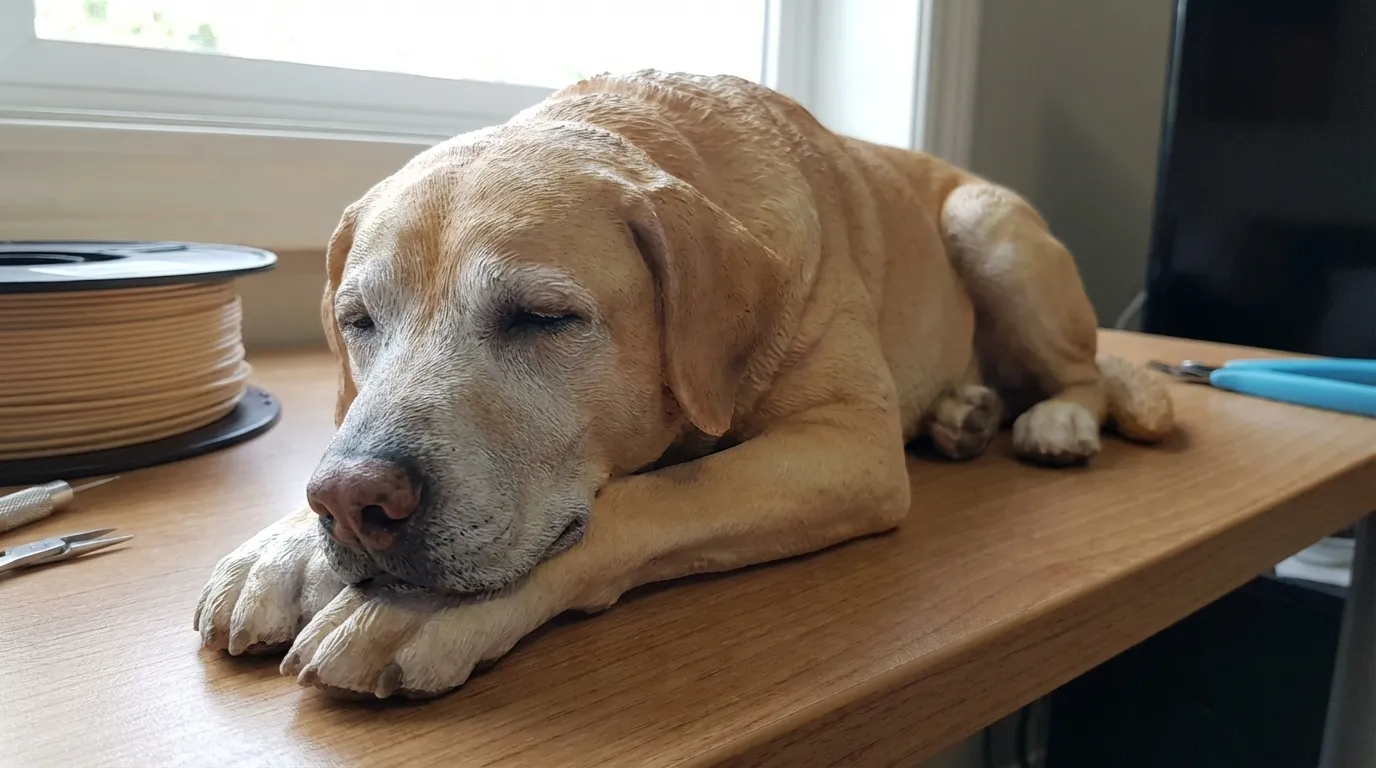
The sun hits the white muzzle first, illuminating the frosted hairs that weren't there five years ago, while the rest of his chocolate coat absorbs the warmth of the late afternoon. He doesn't bolt for the water anymore; instead, he stands at the shoreline, paws sinking slightly into the wet sand, gazing out at the horizon with a quiet, profound dignity that only a senior dog possesses.
Quick Takeaways
- Capture the character, not just the breed — Senior dogs possess unique physical traits (graying muzzles, soulful eyes) that tell their life story.
- The "perfect" age is a myth — While puppy energy is cute, the deep bond visible in an older dog's posture makes for a more emotionally resonant tribute.
- Don't wait for the end — Creating a custom figurine while your pet is still with you transforms the object from a symbol of loss into a celebration of life.
- Focus on the "resting" poses — Older dogs have specific, comfortable ways of lying down or sitting that are immediately recognizable to their owners.
The Art of the "Old Soul" Aesthetic
There is a frantic energy to puppyhood that we all love—the blur of motion, the destructive chewing, the endless retrieving. But if you ask a sculptor or a portrait artist what they prefer to capture, the answer is almost always the senior dog.
Why? Because a twelve-year-old Labrador wears his history on his face.
When we think about memorializing our pets, the instinct is often to freeze them in time at their "peak"—that moment at three or four years old when their coat was glossiest and their eyes were brightest. We want to remember them as strong and capable. But this approach misses the profound beauty of their twilight years.
The "Senior Dog Stance" isn't about frailty. It's about presence. It’s the way an older dog stands with a wider base for balance. It’s the way their ears might droop slightly more, or how they lean into your leg not just for affection, but for support. These aren't flaws to be airbrushed out; they are the physical manifestations of the years of loyalty they have given you.
"Grief isn't a problem to be solved. It's a love story that continues after the last chapter."
In our work, we often receive photos of dogs in their prime, jumping for frisbees. But the figurines that make owners weep (in a good way) are the ones that capture the dog napping in that specific, quirky pretzel shape they only adopted in their later years.
The Texture of Time: Why Gray Muzzles Matter
From a purely artistic standpoint, a senior dog offers a landscape of texture that a puppy simply doesn't have.
In the world of 3D modeling and full-color printing, we look for details that catch the light. A solid black puppy is beautiful, but a senior Black Lab with a "sugar face"—that distinct graying around the muzzle and eyebrows—has dimension.
The Story in the Eyes
Have you noticed how a senior dog's eyes change? The frenetic "what's next?" look softens into a gaze of absolute trust. This is the hardest thing to capture, but the most rewarding. It requires a deep understanding of how light reflects off the eye. In older dogs, the eyes often settle deeper into the face, framed by softening muscles.The "Lumps and Bumps" of Love
We need to talk about the physical imperfections. Maybe it's a small lipoma on the flank, a calloused elbow, or a slightly torn ear from a fence run-in a decade ago.Do not edit these out.
These are the map markers of your journey together. When you run your thumb over a figurine and feel that familiar bump on the shoulder, it triggers a tactile memory that a "perfected" version of your dog never will. It grounds the memory in reality.
| Feature | The "Puppy" Version | The "Senior" Reality | Emotional Impact |
|---|---|---|---|
| Coat Color | Uniform, glossy, vibrant | Variegated, frosted, matte | Shows the passage of time and wisdom |
| Muscle Tone | Taut, athletic, poised to run | Softer, relaxed, settled | Evokes feelings of comfort and safety |
| Posture | Alert, head high, ears pricked | Grounded, head level, ears soft | Represents the deep bond of trust |
| Eyes | Bright, eager, seeking play | Deep, soulful, seeking connection | Reflects a lifetime of shared understanding |
The Counterintuitive Truth About "Memorials" for Living Pets
Here is the thing most people get wrong: they wait.
They wait until the collar is hanging on the hook and the bed is empty before they think about a tribute. And while post-loss memorials are vital for healing, there is a specific, bittersweet joy in sculpting your dog while they are still here to sniff the box when it arrives.
We call this the "Living Tribute."
Celebrating your senior dog now, at age 12, allows you to involve them in the process. You can take the specific reference photos needed—getting down on the floor to capture the exact curve of their tail when they sleep, or the way their paw tucks under their chin. You aren't scrambling through old, blurry phone photos later, wishing you had a shot of their left side.
"We've seen families heal by holding something tangible. Grief needs an anchor."
— The PawSculpt Team
More importantly, it changes the energy of the object. Instead of the figurine arriving as a symbol of death, it arrives as a celebration of life. It sits on the mantle while your dog sleeps on the rug below. It becomes a part of the home, a testament to the fact that they are still the heart of the family, even if they can't climb the stairs as fast as they used to.
Capturing the "Resting State"
If you own a Labrador, you know they have two modes: "Go" and "Coma."
For a senior dog, the "Coma" mode is where the magic happens. This is where we see the "Senior Dog Stance" transition into the "Senior Dog Slump."
We often advise clients to choose a pose that represents how they spend 90% of their time now, not how they spent 10% of their time five years ago.
The "Frog Dog" Sploot
Senior hips are tight. Many older dogs, especially Labs and Bully breeds, lay with their back legs kicked out behind them to relieve pressure. It looks silly, but it's deeply endearing. A figurine in this pose captures their vulnerability.The Chin Rest
This is the classic. The head heavy on the paws, eyes looking up. It represents the slowing down of their world. They don't need to patrol the perimeter anymore; they just need to know where you are.The "Lean"
If you choose a standing pose, consider the "Lean." You know this one—where they press their entire body weight against your shins. While we can't sculpt you into the piece (usually), we can sculpt the dog with that slight list to the side, that shifting of weight that implies they are looking for their human anchor.Why 3D Printing Wins for Senior Textures
You might wonder why the method of creation matters. Why not a painting? Why not a traditional clay sculpture?
The answer lies in the voxel.
Our process uses full-color 3D printing technology. This isn't just about shape; it's about color depth. When we print a senior dog's coat, the white hairs aren't just painted on top of a black base. The machine lays down microscopic droplets of resin, mixing colors in 3D space.
This means the gray muzzle has a gradient that looks organic, not applied. The cloudiness in an old eye has depth. The texture of a rough paw pad feels different than the smoothness of the ear.
"The best gifts don't just sit on a shelf—they start conversations and spark memories."
Traditional hand-painting often struggles with the chaotic, salt-and-pepper reality of a senior coat. It can look too uniform. But digital sculpting combined with high-fidelity printing captures the "messiness" of aging fur perfectly. It honors the reality of the dog, rather than an idealized version.
The Emotional Nuance of Anticipatory Grief
We need to acknowledge the elephant in the room. If you are reading an article about senior dog tributes, you are likely feeling "anticipatory grief."
It’s that sharp pang you feel even when they are right there, wagging their tail. It’s the fear of the empty space before the space is actually empty.
This is normal. In fact, it's a sign of a healthy attachment.
Creating a tangible representation of your pet during this phase can be incredibly grounding. It gives you a task—something productive to do with that anxious energy. Taking the photos, choosing the pose, discussing the details—it allows you to channel your fear of loss into an act of creation.
And when the time finally comes, as it inevitably must, you aren't left scrambling. You already have the anchor. You have the physical reminder of their solid, heavy, comforting presence.
Taking the Right Reference Photos for a Senior Dog
If you decide to capture your dog in their golden years, here is how to get the best reference material for the sculptors:
- Get on their level: Do not shoot from above. Lie on the floor. We need to see the world from their perspective.
- Natural light is key: Flash washes out gray hair. Use window light or go outside on an overcast day.
- Focus on the transitions: Take close-ups of where the color changes—where the brown turns to gray on the face, or where the white patch on the chest fades into the coat.
- Don't force a pose: Wait for them to settle. The best senior photos are candid. Catch them when they are dozing in a sunbeam.
Your dog at age 12 is a masterpiece of loyalty, survival, and love. They have earned every gray hair and every slow step. Don't try to rewind the clock. Honor the time it tells.
Frequently Asked Questions
Why should I choose a senior pose over a puppy pose?
Senior poses tend to capture the deep personality and "soul" of the dog that developed over years of companionship. While puppies are cute, the gray muzzle and relaxed, settled posture of a senior dog often trigger a stronger, more comforting emotional connection for the owner.Can you include my dog's specific lumps or scars?
Absolutely, and we often recommend it. Those physical traits—a torn ear, a fatty lump, a specific scar—are unique identifiers of your dog's life journey. Including them adds a tactile reality to the figurine that a "perfected" version lacks.What if I don't have high-quality photos of my pet?
While high-resolution photos are ideal, our digital sculptors have years of experience working with less-than-perfect images. We can combine your specific photos with our anatomical knowledge of the breed to reconstruct a faithful likeness. We focus on capturing the key markings and silhouette.Is it weird to get a memorial figurine while my pet is still alive?
It is becoming increasingly common. Many pet parents find comfort in having a "Living Tribute." It allows you to appreciate the artwork together and removes the emotional difficulty of trying to organize a memorial immediately after a loss.Ready to Celebrate Your Pet?
Every pet has a story worth preserving, written in the gray of their muzzle and the warmth of their gaze. Whether you're honoring a beloved companion who's crossed the rainbow bridge or celebrating your furry friend's unique personality right now, a custom PawSculpt figurine captures those details that make your pet one-of-a-kind.
Free instant AI preview • 3D artist preview within 7 days • 5 free revisions