The Complete Guide to Capturing Your Calico's Chaos: From Coat to Lasting Color
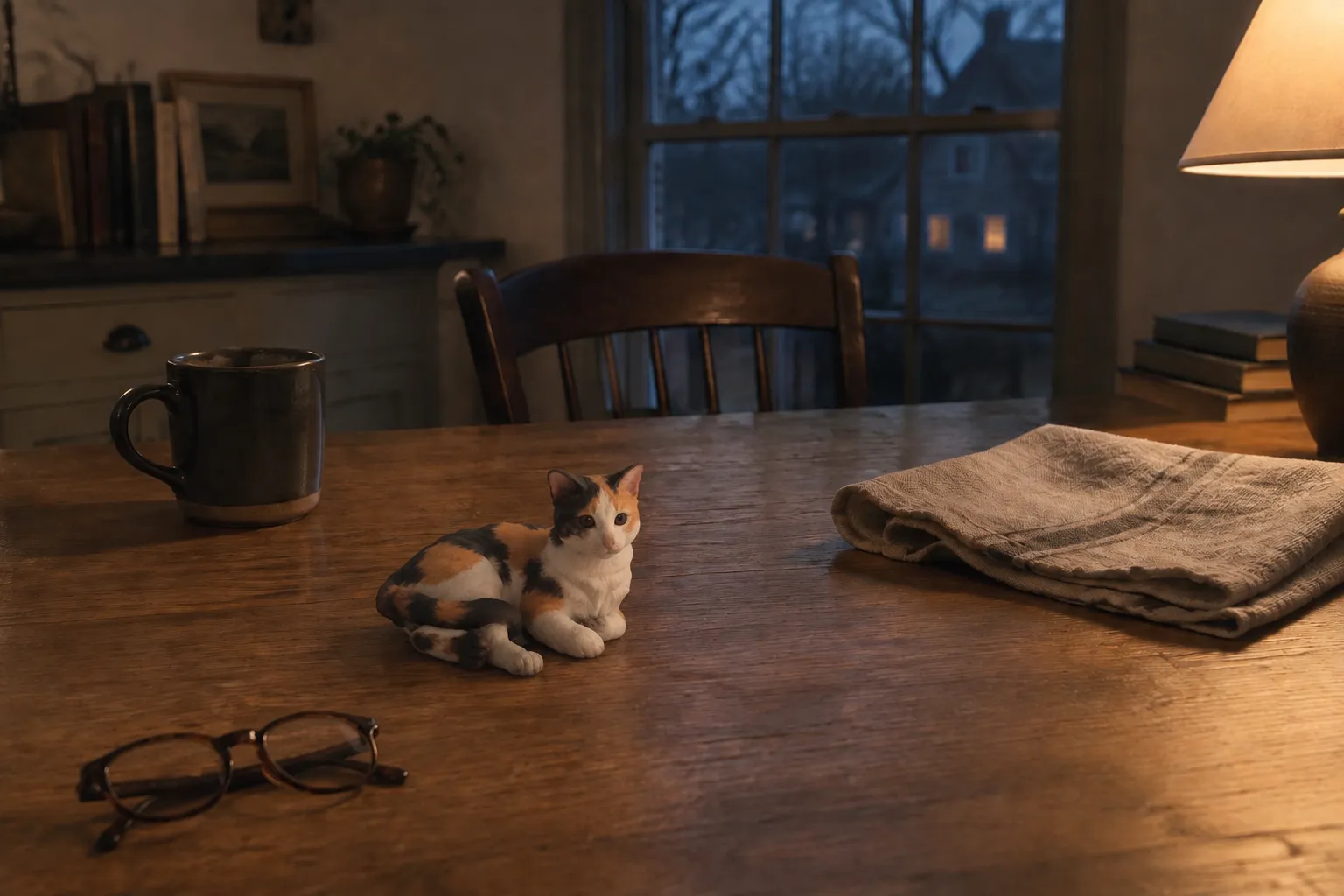
You carry the box downstairs because the basement is where the light stays soft all day, where nothing fades too fast, where the shelf you built for exactly this moment waits half-empty. The calico cat figurine in your hands weighs almost nothing. The cat it remembers weighed everything.
A calico cat figurine captures the one coat pattern no two cats share: the scattered map of orange, black, and white that makes your cat unrepeatable. A sculpted portrait reads that chaos as design, translating each patch into a full-color 3D printed resin form you confirm before it is ever made.
Quick Takeaways
- A calico's patchwork is genetically random, which is exactly why a thoughtful sculpted portrait matters more than it would for a solid-colored pet.
- PawSculpt figurines are digitally sculpted, then printed in full color on a Mimaki 3DUJ-553, which supports more than 10 million colors as an equipment capability.
- You confirm the artist preview before anything is printed, with 5 revisions included to get the patches where they belong.
- A transparent protective coat is applied after inspection; treat the result as an indoor shelf keepsake, not something to leave in the elements.
- Figurines run 2.5 to 6 inches, priced from $429 to $999, with worldwide delivery and no separate shipping fee at checkout.
Why a Calico Is the Hardest Coat to Honor — and the Most Worth It
Walk through any room where a calico once lived and you'll notice something about the corners. The patch of windowsill warmed by the afternoon. The exact spot on the rug. These cats claim space the way their coats claim color — unevenly, deliberately, with a logic only they understood.
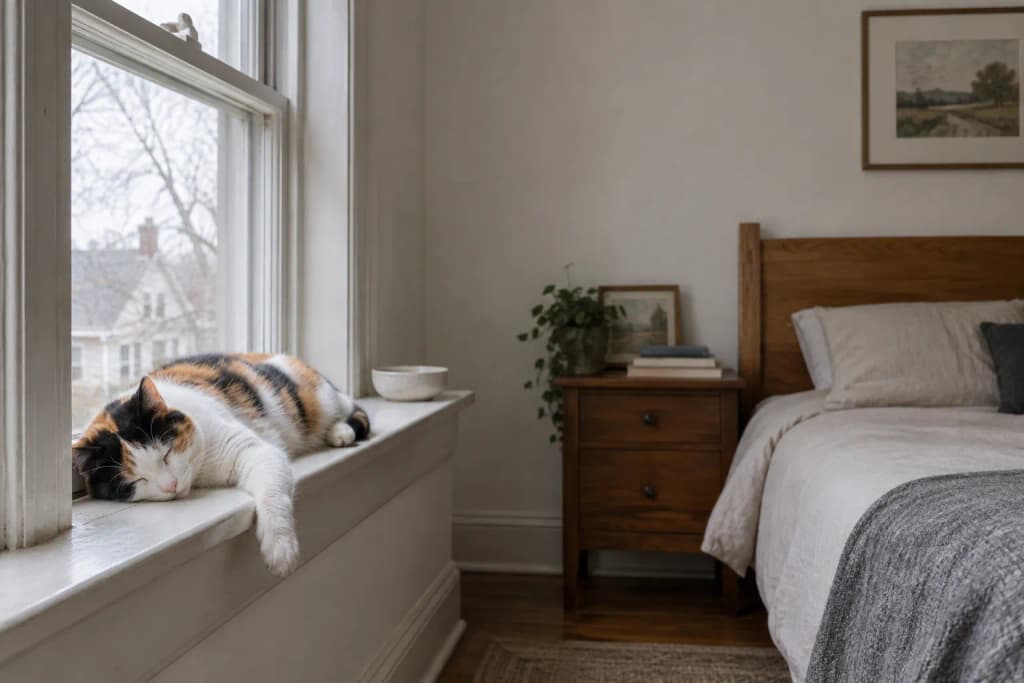
A calico coat pattern is not a design anyone drew. It's the outcome of how color settles into fur while a kitten is still forming, which means the border between one orange patch and the next black one lands differently on every single cat. One has a black mask over the left eye. Another wears a white blaze down the chest like a split decision. The tail bands in a sequence that will never repeat on another animal, anywhere.
This is the quiet problem with honoring a calico. A photograph flattens the patchwork into a single flat plane. A solid keepsake — a silhouette, an engraving — throws the color away entirely, and for a calico, the color is the cat. You're left holding an image that gets most of it right and the one essential thing wrong.
What a sculpted portrait does differently is treat the chaos as information. The random map becomes the reference. Where a patch starts, where it stops, how a splash of orange interrupts a field of white near the shoulder — these aren't obstacles to smooth over. They're the entire point. The goal is not to tidy your cat into a generic tabby shape. It's to carry forward the specific, unrepeatable arrangement that made strangers stop and say what kind of cat is that?
How a Full-Color Portrait Actually Gets Made
There's a lot of mythology around 3D printing, most of it borrowed from factory floors and desktop hobby machines. The process behind a custom cat sculpture here is narrower and more deliberate than that reputation suggests, so it's worth walking through what actually happens.
It begins with your reference photographs. An artist reviews them — and for a calico, this review carries more weight than it would for almost any other pet. The artist is reading the geography of the coat: which side carries the orange, how the patches wrap around the body, where white breaks the pattern. The more angles you provide, the more accurately that map can be reconstructed. A calico photographed only from the front hides half its story.
From those references, the artist digitally sculpts the portrait. This is not a photo pressed onto a shape. It's a three-dimensional model built to interpret your cat's form and coat — a sculpted portrait, not a photocopy. The sitting pose, the tilt of the head, the way the tail curls, all of it is shaped in the digital model before anything physical exists.
Then comes the part that protects you from disappointment: you confirm the artist preview before printing. Nothing goes to the printer until you've looked at the model and agreed that the patches sit where they belong. The first preview typically arrives within about seven days after your complete references are in and the order enters the design stage. If the orange on the right flank should reach a little higher, or the white bib needs more width, you say so. Five revisions are included for exactly this back-and-forth.
Once you approve, the model is printed in full color on a Mimaki 3DUJ-553. This is where the color lives. The equipment supports more than 10 million colors — a capability of the machine, not a promise that any single order exhausts that range — and color is built into the print itself rather than brushed on afterward. For a calico, that integration matters. The orange isn't a coat applied over a base. It's part of the material.
After printing, the supports are removed — the small structures that hold detail in place during printing — and the surface is inspected. Finally, a transparent protective coat is applied over the finished figurine.
That's the whole workflow. No hand painting. No separate coloring pass. The color and the form arrive together, which is the honest reason this approach suits a patchwork coat so well.
Myth vs. Reality
Myth: "A 3D printed figurine is basically a photo wrapped around a plastic shape."
Reality: The portrait is digitally sculpted as a three-dimensional model and interpreted by an artist, then printed in full color. It's a sculpted interpretation of your cat, not an image laminated onto a form.
Myth: "The color is painted on, so a complex calico pattern will look approximate."
Reality: Color is printed into the resin on the Mimaki 3DUJ-553 rather than applied by hand. You also confirm the patch placement in the artist preview before printing, with 5 revisions included.
Myth: "What I approve and what I receive might be two different things."
Reality: The approved model is the one that gets printed. You confirm the preview first, which is the whole point of the preview step — no printing happens until you sign off.
What "Lasting Color" Really Means — and What It Doesn't
The phrase 3D print color permanence gets thrown around loosely, so let's be precise about what's actually true here and what isn't.
Because the color is printed into the resin rather than brushed onto a surface, it isn't sitting as a separate layer waiting to chip or flake the way a painted finish might. After inspection, a transparent protective coat goes over the figurine. Together, these are the reasons a printed-in-color portrait holds up well as an indoor display piece.
Here's the honest boundary, though. This is an indoor shelf keepsake. It belongs in that soft basement light, on the mantel, inside a glass cabinet — the sacred space you clear for it. It is not a lawn ornament. It is not built for water, weather, or harsh direct conditions, and the responsible thing is to treat it as the display object it is rather than testing its limits. The protective coat and the integrated color are what matter for a figurine that lives indoors and gets looked at, not handled hard.
If you're choosing a keepsake precisely because you want your calico's specific orange-and-black map to stay vivid on a shelf for the long haul, printed-in color is a meaningful advantage over anything applied as a topcoat. Just keep your expectations anchored to indoor display. That's the setting this is made for.
Choosing the Size, the Pose, and the Small Decisions That Carry Weight
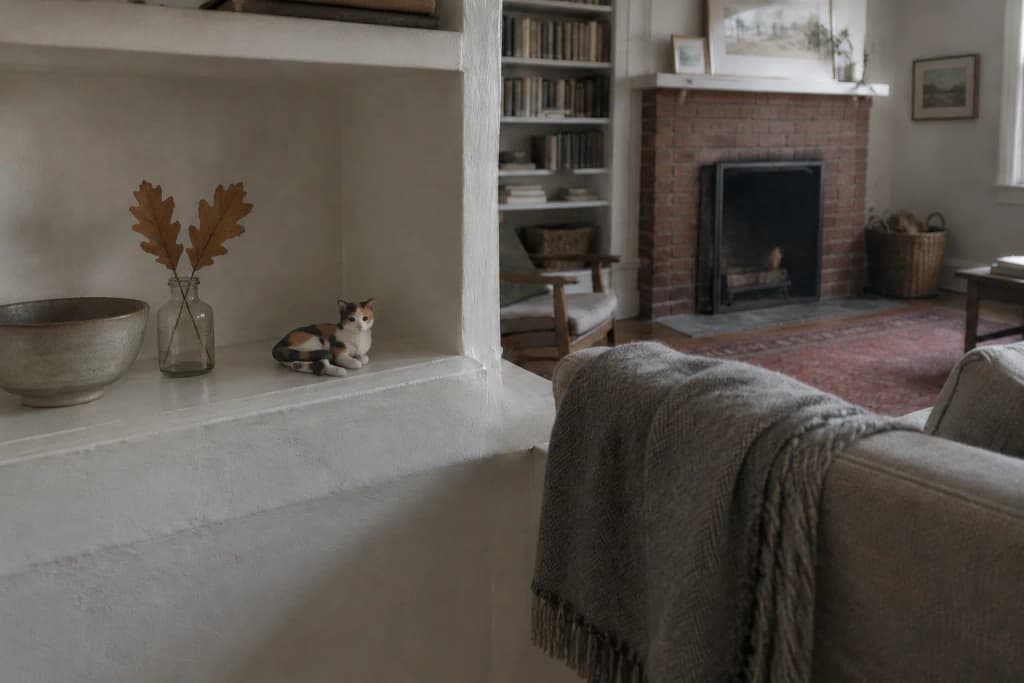
Size is the first real decision, and it's less about budget than about presence. A smaller figurine asks to be approached — it rewards the person who steps close to the shelf. A larger one commands the room from across it, filling a corner that has felt wrong since the cat stopped filling it.
Here's the full range, so you can decide with the actual numbers in front of you:
| Size | Single figurine | Set of 12 |
|---|---|---|
| 2.5-inch | $429 | $4,499 |
| 3-inch | $489 | $4,999 |
| 4-inch | $589 | $5,999 |
| 5-inch | $789 | $7,999 |
| 6-inch | $999 | $9,999 |
For a calico specifically, there's a practical argument for going a size up from your first instinct. More surface area means the patch pattern reads more clearly — the small breaks of white, the exact edge where orange meets black. On a 2.5-inch figurine those transitions are still there, but a 4-inch or larger piece lets the geography breathe.
The pose carries its own weight. A cat sitting upright with its tail curled around its paws, head tilted — the posture the cover of this guide imagines — holds a particular stillness, the pose of a cat deciding whether you're worth acknowledging. Think about the pose that was your cat. The loaf. The alert sit. The lean. That gesture is as much the portrait as the coat.
Then there are the small decisions. A nameplate is $9 — a simple engraving of the name you called across the house for years. The figurine arrives on a black acrylic base, which is included; if you'd rather, a diamond glass base is $29 or a black crystal base is $39. An extra toy — the tufted thing your cat actually loved — is $30, and it anchors the figurine in a specific memory rather than a generic pose.
If your calico shared the house with another pet, a second pet is $179, which turns a single portrait into a record of a bond. For 4-inch and larger figurines, an additional pet is $199. These aren't upsells so much as ways of telling the truth about who your cat actually lived with.
A rush option is available for $29 if timing matters, which brings us to the part that tends to sneak up on people.
Timing, Deposits, and the Decisions You Can Still Undo
Commissioning a portrait is a sequence of moments where you remain in control, and it helps to know exactly where those moments are.
You begin with a 40% deposit. This is fully refundable right up until the order enters the server-recorded design stage — the point where the artist starts modeling. That's the line. Before an artist picks up your references and begins shaping the model, you can step back and receive a full refund. Once modeling begins, the deposit becomes non-refundable, because real creative work is now underway. Knowing where that line sits means you never cross it by accident.
Once your portrait is approved and the balance is paid, delivery runs 27 to 40 days for U.S. addresses and 33 to 47 days internationally, measured from final payment. There's no separate shipping fee added at checkout for worldwide delivery. International customers remain responsible for their own local customs duties, taxes, or import fees — that's outside the studio's hands, and worth budgeting for if you're ordering from abroad.
If you're thinking of this as a holiday gift, the calendar is firm. For Christmas 2026, the last order-by date is November 10, 2026 for U.S. orders and November 3, 2026 internationally. To make those windows work, you'll need to confirm the preview and pay the balance promptly once it's ready — the dates assume you don't leave the preview sitting in your inbox.
Miss the cutoff and the world doesn't end. Orders placed afterward are delivered in January, and here's the gentle workaround: because the artist preview typically arrives within about seven days of the order entering the design stage, you can share that preview itself as the gift. The person opening it on the holiday sees exactly how their cat will be rendered, with the finished piece arriving shortly after. A full account of these stages lives on the PawSculpt FAQ page if you want the details before you commit.
When a Figurine Is the Right Keepsake — and When It Isn't
Let's be fair about this, because a sculpted portrait isn't the only way to keep a calico's presence in a room, and pretending otherwise would be a disservice.
A photograph holds a single real moment — the actual light, the actual day. If what you want is proof that a specific afternoon happened, a framed print does that in a way nothing sculpted can. Written words hold the parts no image reaches: the sound of the specific meow, the habit of waking you at 5 a.m., the ridiculous nickname. A memory book or a letter to your cat can carry what a figure never will.
What a figurine offers that these don't is dimension and permanence of form. It occupies the shelf as a physical presence — something that holds the corner, something your hand reaches toward. For a calico in particular, it's one of the few keepsakes that preserves the full coat map in color and in three dimensions at once. A photo flattens it. A silhouette discards it. A sculpted portrait keeps both the shape and the scatter of patches together.
The most thoughtful approach, honestly, often isn't choosing one. It's letting the photograph hold the moment, the writing hold the voice, and the figurine hold the form — each doing what it does best. A portrait becomes a kind of ritual object on the shelf, the thing you tidy around, the small fixed point the room organizes itself toward. It won't bring the cat back. Nothing does. But it gives the absence a shape that's easier to live beside.
Frequently Asked Questions
Can a 3D printed figurine really capture a complex calico coat?
Yes. The artist reads the patch pattern from your reference photos and builds it into a digitally sculpted model, which is then printed in full color. Because you confirm the patch placement in the preview before printing, the random map of orange, black, and white can be matched before anything is made.
Is the color painted on or part of the print?
The color is printed into the resin on a Mimaki 3DUJ-553, which supports more than 10 million colors as an equipment capability. There is no hand painting involved — the color and the form arrive together in the print itself.
What if the patches are in the wrong place on the preview?
You confirm the artist preview before anything goes to the printer, and 5 revisions are included. If a patch sits too high, too low, or the proportions of orange to white need adjusting, you request the change until the model reflects your cat.
How long does delivery take?
Delivery runs 27 to 40 days for U.S. addresses and 33 to 47 days internationally, measured from final payment. There is no separate shipping fee added at checkout for worldwide delivery, though international customers remain responsible for local customs duties, taxes, or import fees.
Is my deposit refundable?
The 40% deposit is fully refundable before the order enters the server-recorded design status. Once the artist begins modeling, the deposit becomes non-refundable, since the creative work is underway at that point.
Can I give this as a Christmas 2026 gift?
Order by November 10, 2026 for U.S. delivery or November 3, 2026 internationally, and confirm the preview and pay the balance promptly. Orders placed after the cutoff are delivered in January, and the artist preview — typically within about seven days of the order entering design — can be shared as the gift itself.
Keep the Map Your Cat Drew
The patchwork your calico wore was never going to repeat on another animal. That's the whole reason it deserves to be kept in color, in three dimensions, in a form you've approved down to the placement of each patch. When you're ready to begin, you can start a custom cat sculpture with PawSculpt and see the artist preview before a single decision becomes permanent — or reach out with your questions first if you'd rather talk through your photos before you commit.