
The Complete Guide to Caring for Your Boxer Figurine After It Arrives
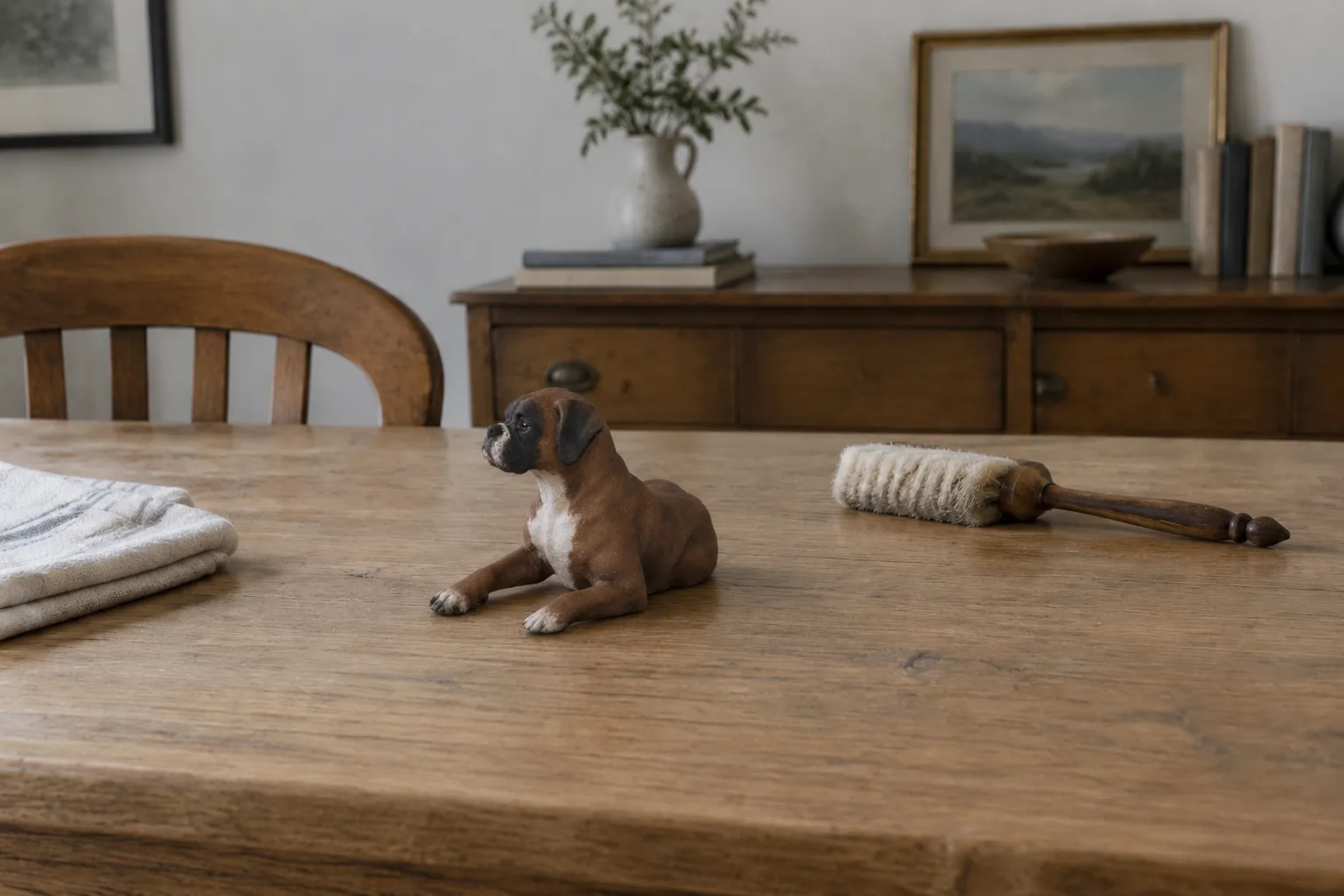
The rate at which plastics deteriorate roughly doubles for every 5°C rise in temperature — and halves for a corresponding drop. That single physical relationship, documented by the Canadian Conservation Institute, is the most useful thing you can know about pet figurine care after delivery. Where you set your Boxer's figurine matters more than how often you dust it.
To care for a resin Boxer figurine, keep it indoors, cool, and out of direct sunlight, since UV and heat drive yellowing and embrittlement. Dust it with a dry, soft microfiber cloth or a small brush rather than solvents or water-based cleaners. Handle it by the base, and store it away from windows and heat sources.
Quick Takeaways
- Light and heat are the two variables that matter most. UV exposure breaks down cured resin, and deterioration roughly doubles per 5°C rise in temperature (CCI; Raise3D).
- Dry cleaning beats wet cleaning. For plastics, dry brushing or vacuuming is preferred over solvents or water-based cleaners (CCI).
- A short-coat breed like a Boxer has an advantage in sculpted form — fewer deep fur channels means fewer places for dust to settle.
- The transparent protective coat is a barrier, not a shield against everything. A clear coat with UV inhibitors slows yellowing and fade but does not stop physics (AmeraLabs).
- Placement is a one-time decision with long-term payoff. Choose a cool, dim, stable spot once and the figurine largely takes care of itself.
Why Placement Decides Almost Everything
Before you think about cloths or brushes, think about geography. A resin figurine's longevity is governed mostly by three environmental factors: UV exposure, heat, and moisture (Raise3D). Get those right and routine maintenance becomes trivial. Get them wrong and no amount of dusting will help.
Start with the mechanism. UV light breaks the polymer chains inside cured resin, which leads to yellowing, embrittlement, and surface chalking (Raise3D). Multiple resin manufacturers describe the same chain of events: prolonged exposure to direct sunlight or even strong indoor light can trigger photochemical reactions that shift color (JLC3DP). Oxidation of unsaturated bonds gradually turns surfaces yellow over time (JLC3DP). Heat, moisture, and oxygen accelerate that aging (3DSPRO).
Now layer in temperature. The CCI's doubling rule means a figurine on a warm windowsill above a radiator is aging measurably faster than the same figurine on an interior bookshelf. You cannot see the difference on any single day. Over years, you can.
Here is the practical translation, arranged from best to worst:
| Placement condition | Effect on a resin figurine |
|---|---|
| Cool, dark, out of direct sunlight | Improves long-term durability (CCI) |
| Indoors, away from direct UV | Standard resin prints are expected to last years (Raise3D) |
| Direct sunlight | Colors and finishes fade faster than in indoor display (Raise3D) |
| Warm location | Deterioration rate roughly doubles per 5°C rise (CCI) |
Common Mistake → Better Move. The mistake: displaying the figurine on a sunny windowsill because the light "shows it off." The better move: place it on an interior shelf, a mantel away from the fireplace's heat, or inside a glass cabinet across the room from the window. You still see it every day; it simply ages slower.
If your fawn Boxer's figurine sits on a wooden shelf beside a window — a common instinct, since that is where the light is — angle the display so the figurine catches ambient room light rather than a direct beam. The difference between "near a window" and "in the window's direct sun" is the difference the sources keep pointing to.
The Short-Coat Advantage: What a Boxer Figurine Needs
A sculpted portrait of a short-coat breed behaves differently in the dust department than a long-haired dog would. This is worth understanding because it shapes your entire cleaning routine.
A Boxer's coat is tight and smooth. When an artist digitally sculpts that coat and it's printed in full color, the surface stays relatively continuous — the sculpted planes of the shoulders, the clean line of the muzzle, the smooth curve of the chest. There are fewer deep undercuts and narrow fur channels where dust wedges itself. Run a fingertip along a smooth-coated sculpt and you feel broad, even surfaces rather than the fine grooves you'd find on a sculpted Pomeranian or a Collie.
That matters for two reasons.
First, dust removal is faster and gentler. On a smooth sculpt, a single pass with a dry microfiber cloth lifts most surface dust. You are not forced to poke into tight crevices, which is where accidental pressure and scratching tend to happen.
Second, you rely less on any tool that could stress the surface. The CCI recommends dry brushing or vacuuming over solvents and water-based cleaners for plastics. A Boxer's broad, smooth planes are ideal for the cloth-first approach.
The few detailed zones on a Boxer sculpt — the perked ears, the folds around a gentle head-tilt, the seam where the jaw meets the neck — are the only places a small, soft brush earns its keep. A soft brush reaches those recesses without the drag of a cloth. Keep the brush motions light. You are dislodging dust, not scrubbing.
Your Actual Cleaning Routine, Step by Step
Cleaning a resin figurine is less about frequency and more about method. Here is the sequence, ordered deliberately.
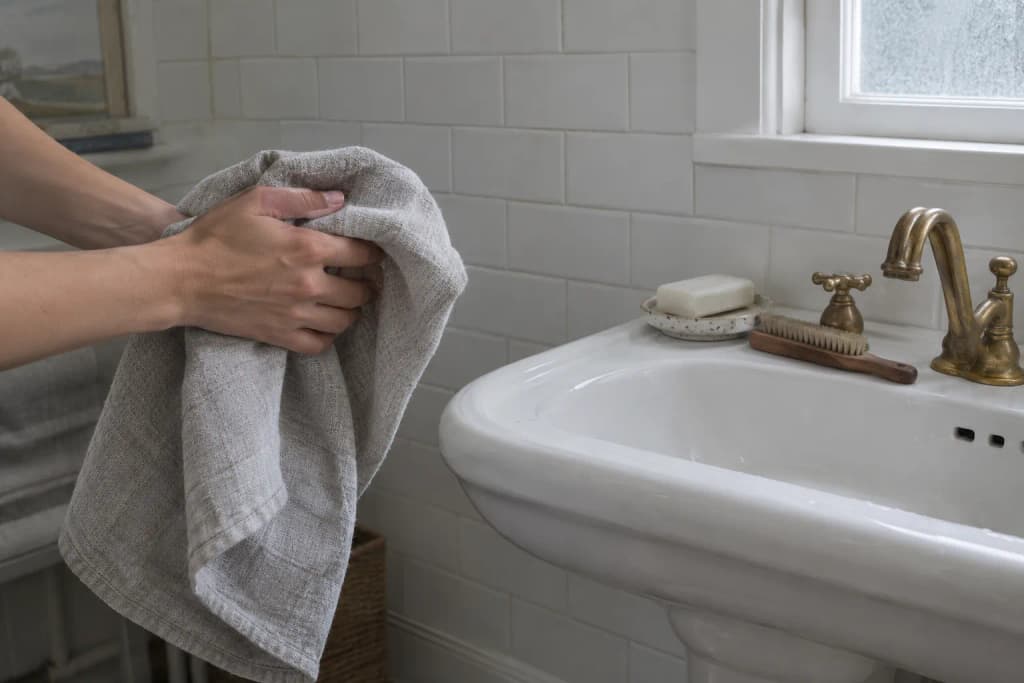
- Wash and dry your hands first. Oils transfer to smooth resin surfaces. Handling with clean, dry hands reduces what you'll later need to clean off.
- Handle by the base whenever possible. The included black acrylic base — or an upgraded diamond glass base or black crystal base if you chose one — gives you a stable grip point. Lifting from the base keeps fingerprints off the sculpted body and reduces the chance of stressing thin details like ears.
- Dry-dust with a soft microfiber cloth. Use light, single-direction strokes across the broad surfaces: the back, the flanks, the chest. Microfiber lifts dust rather than pushing it around. The cloth should glide; if it catches, you're pressing too hard.
- Switch to a small, soft brush for the recesses. Ears, the head-tilt fold, around a nameplate if you added one, and any seam between forms. Short, gentle flicks. Let the bristles do the reaching.
- Inspect under normal room light. Turn the figurine slowly. You're checking that dust is gone and confirming the surface still looks even. This is also when you'd notice any change worth watching over time.
That's the whole routine. No water, no sprays, no polishing compounds.
Common Mistake → Better Move. The mistake: reaching for a damp cloth or an all-purpose cleaner when the figurine looks dull. The better move: the dullness is almost always dust, not the finish — dry-dust first and reassess. The CCI specifically prefers dry methods over solvents and water-based cleaners for plastics, because liquids introduce risk without clear benefit here.
How often is often enough?
There is no researched schedule to cite, so treat frequency as a judgment call, not a rule. A figurine in a low-traffic, enclosed cabinet needs attention rarely. One on an open shelf in a busy room collects dust faster and benefits from a quick pass more regularly. Let visible dust be your trigger rather than the calendar.
What the Protective Coat Does — and What It Doesn't
Every PawSculpt figurine finishes with a transparent protective coat applied after support removal and surface inspection. Understanding what this layer does helps you set realistic expectations for care.
A clear protective coating with UV inhibitors slows yellowing and guards against sunlight (Raise3D). A clear UV-protective lacquer also helps protect resin prints from further UV damage and can extend both color stability and mechanical durability (AmeraLabs). So the coat is genuinely working in your favor.
But the sources are equally clear about limits. The coat slows yellowing; it does not make a piece immune to UV, heat, or moisture. Colors and finishes still fade faster in direct sunlight than in indoor display (Raise3D). The coat is one line of defense — the second line is you, choosing where the figurine lives.
Think of it as a cause-and-effect chain:
- UV and heat → drive yellowing and embrittlement (Raise3D, CCI)
- The transparent coat with UV inhibitors → slows that process (AmeraLabs, Raise3D)
- Cool, dark, sunlight-free placement → improves long-term durability further (CCI)
Each link compounds the last. The coat buys you time; smart placement multiplies it.
To be plain about the boundary: the sources support "slows" and "extends," not "prevents" or "forever." No honest care guide can promise a resin display piece is waterproof, fade-proof, or permanent. What the evidence supports is that indoor resin prints kept away from direct UV are expected to last years (Raise3D) — and that your placement choices meaningfully influence which end of "years" you land on.
Storing or Moving the Figurine Safely
Display is one scenario; storage and transport are another. Whether you're packing for a move, rotating a seasonal display, or setting the piece aside, the same environmental logic applies — just concentrated.
For storage, the CCI's guidance points one direction: keep plastic objects cool, dark, and out of direct sunlight. A closed box on an interior closet shelf beats a bin in a hot attic or a damp basement. Complete storage in a cool, dry place also supports resin durability generally (JLC3DP). Heat and moisture are the enemies; a stable, mild indoor environment is the friend.
Wrap the figurine in the same soft microfiber you use for dusting, or in acid-free tissue if you have it. The wrap prevents surface abrasion during handling and keeps casual dust off. Cradle the body; support any thin elements like the ears so nothing bears weight at a single stress point.
For moving between rooms or homes, hold the base with one hand and support the body from underneath with the other. Resin can become brittle as it ages under UV (Raise3D), so a piece that has been on display for a long time deserves a gentler grip than a brand-new one. Cold surfaces feel more rigid in the hand; that rigidity is exactly why you avoid sudden knocks and pressure on protruding details.
Common Mistake → Better Move. The mistake: storing the figurine in a garage, attic, or car — convenient spaces that swing hot and humid. The better move: choose an interior, climate-stable spot. Those temperature swings are precisely what the CCI's doubling rule warns against, and heat plus moisture accelerate aging on top of that (3DSPRO).
Fitting a Figurine Into the Bigger Picture of Remembering a Pet
A figurine is one way to keep a Boxer named Rocky present in your home — but it isn't the only one, and a good care guide should say so. Photographs, framed prints, written notes about a dog's habits, a favorite collar, or a small shadow box each hold memory differently. Some people want something they can pick up and turn in their hands; the weight and dimensional form of a sculpted portrait answer that specific want. Others are drawn to flat, framed images. Neither is more correct.

Where a figurine has a particular pull is in its three-dimensionality. A photo captures a fawn Boxer's alert expression from one angle at one instant. A sculpted portrait interprets the whole animal — the upright sit, the gentle head-tilt, the perked ears — into a form you can view from every side. It is an artistic interpretation rendered in three dimensions, not a photocopy of a single frame and not a photo-exact replica.
If you're weighing a figurine against or alongside other keepsakes, the care realities above are part of the honest math. A framed photo behind UV glass and a resin figurine on an interior shelf both benefit from the same principle: keep it out of direct sun. The medium changes; the physics of light damage doesn't.
For readers considering a sculpted piece specifically, PawSculpt figurines are printed in full color on a Mimaki 3DUJ-553, whose equipment supports more than 10 million colors — a capability that helps an artist render a fawn Boxer's specific coat tones rather than approximating them. That's a reason the medium can suit a particular dog; it isn't a promise about any single order's output.
Frequently Asked Questions
How do I clean a resin Boxer figurine without damaging it?
Dust it dry. Use a soft microfiber cloth on the broad surfaces — back, flanks, chest — and a small soft brush for the ears and folds. The CCI recommends dry brushing over solvents or water-based cleaners for plastics, so skip liquids entirely.
Will my resin pet figurine turn yellow over time?
It can. UV exposure, heat, and oxidation are the main drivers of resin yellowing (3DSPRO, JLC3DP). The transparent protective coat with UV inhibitors slows the process (Raise3D, AmeraLabs), and keeping the figurine cool, dark, and out of direct sunlight slows it further (CCI).
Where is the best place to display a pet figurine?
Indoors, cool, and out of direct sunlight. Colors and finishes fade faster in direct sun than in indoor display (Raise3D), and deterioration roughly doubles for each 5°C rise in temperature (CCI). An interior shelf or a glass cabinet away from the window is ideal.
Does the protective coat make the figurine waterproof or permanent?
No. The clear coat slows yellowing and fade and supports durability (AmeraLabs, Raise3D), but the sources support "slows," not "prevents." It isn't waterproof or fade-proof, and your placement choices still influence how well the piece ages.
How should I store a figurine when it's not on display?
Keep it cool, dark, and dry, wrapped in soft microfiber or acid-free tissue. Avoid attics, garages, and cars, where heat and humidity swings accelerate aging (CCI, 3DSPRO).
Is a short-coat breed easier to care for as a figurine?
In sculpted form, yes, in one respect: a Boxer's tight coat translates to smoother surfaces with fewer deep fur channels, so dust lifts with a quick microfiber pass and less crevice-brushing is required.
Thinking About a Sculpted Boxer Portrait for Rocky
If this care guide has you considering a sculpted piece — either on its own or alongside photographs and other keepsakes — the process is worth understanding before you decide. At PawSculpt, an artist reviews your reference photos and digitally sculpts the portrait; you confirm the artist preview before anything is printed. The first preview typically arrives within seven days after complete references are provided and the order enters design, and five revisions are included so the sitting pose, the head-tilt, and the ear set match your Boxer. Only after you approve does the model print in full color on the Mimaki 3DUJ-553, with supports removed, the surface inspected, and the transparent protective coat applied.
A single figurine ranges from $429 for 2.5 inches to $999 for 6 inches, with a 40% deposit to begin. You can add a nameplate reading "Rocky" for $9, or choose a diamond glass base ($29) or black crystal base ($39) over the included black acrylic base. There's no separate shipping fee at checkout for worldwide delivery, though international customers remain responsible for local customs, duties, and import fees.
Two dates matter if this is a holiday gift: order by November 10, 2026 for US Christmas delivery and November 3, 2026 for international. Orders placed after those cutoffs are delivered in January — and since the artist preview arrives within about a week of entering design, the preview itself can be shared as the gift in the meantime.
You can start a custom pet sculpture, review the details on the PawSculpt FAQ, or reach out with a question before committing. Whatever you choose to keep — a figurine, a framed photo, or something more personal — the care principles hold: keep it cool, keep it out of direct sun, and handle it with clean, dry hands.