Caring for Your Samoyed Sculpt After Delivery: Fluffy Coats, Poses, and Accessory Fixes
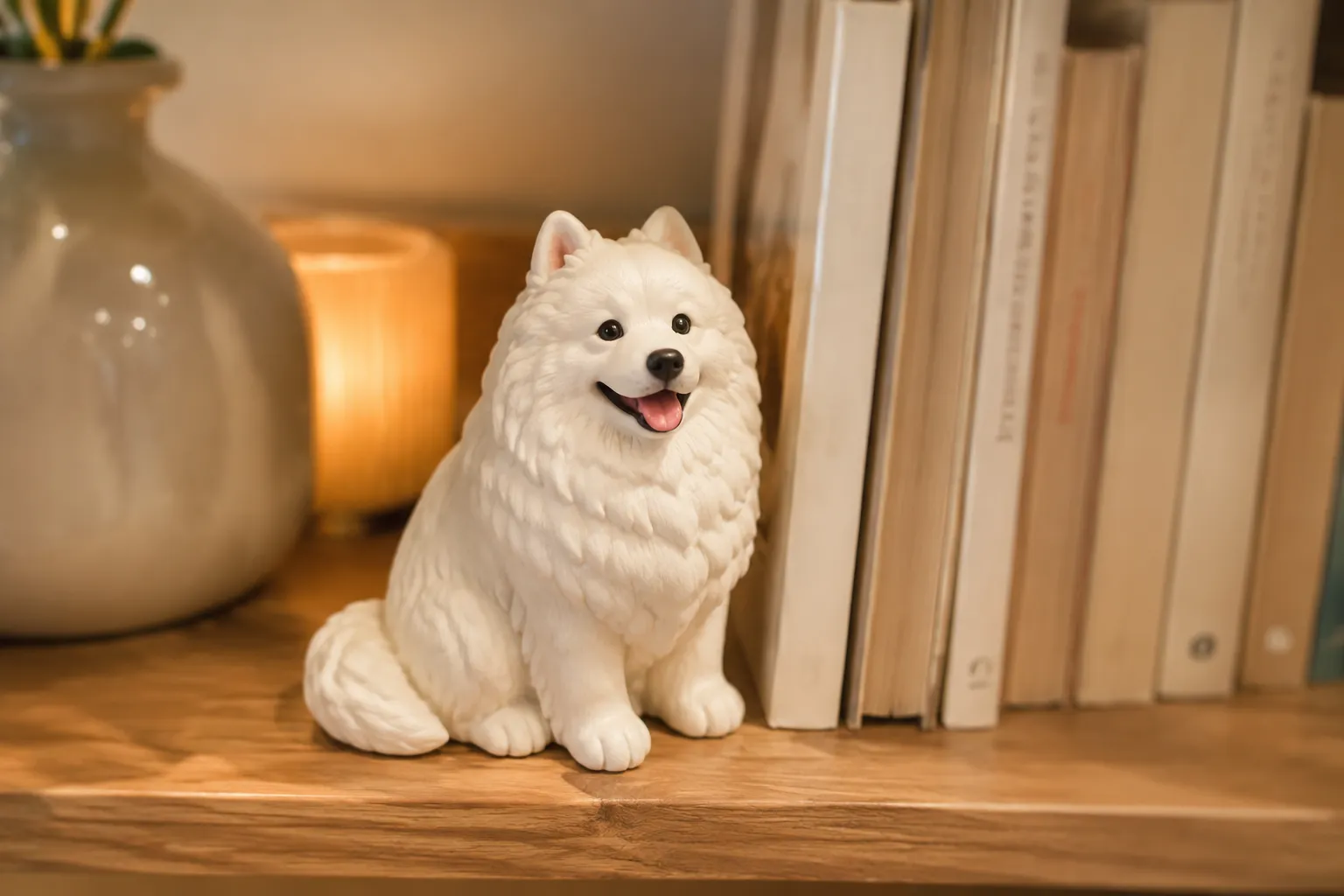
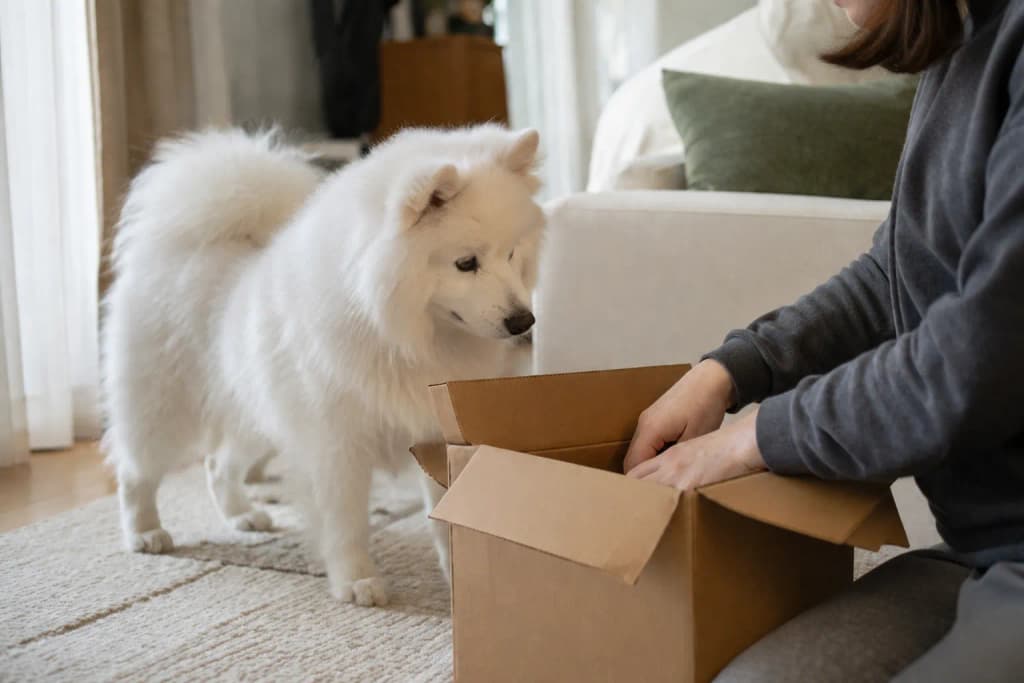
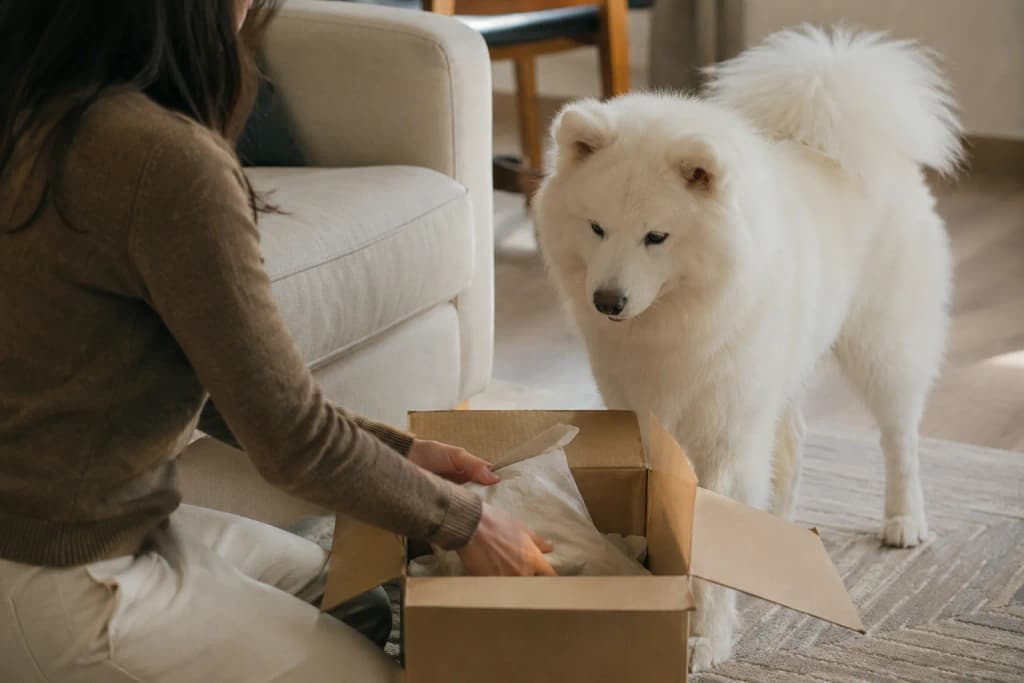
A packing box, one flap curled open. Gray attic dust settling into the deep white ruff. Your Samoyed figurine, still faintly warm from the window light. Turns out samoyed figurine care really starts the moment you decide where the little guy lives.
Caring for a Samoyed figurine means keeping its full-color resin out of direct sun, dusting the deep coat texture with a soft dry brush, and lifting it by the base to protect delicate poses. Because these sculpts are 3D printed with color embedded inside the resin, gentle and consistent upkeep preserves both the markings and the fragile fluff for years.
Quick Takeaways
- Keep it out of direct sunlight — UV and heat do far more long-term damage than dust ever will.
- Dust the coat weekly with a soft dry brush — long-coat sculpt detail traps particles fast and deep.
- Lift by the base, never the tail or legs — thin printed sections are always the first to snap.
- Know how your sculpt is built before you clean it — a quick look at how custom pet sculptures hold up in full-color resin makes upkeep obvious.
Why a Samoyed Is the Hardest Coat You'll Ever Own in Resin
Here's something nobody tells you when that box arrives. Of all the breeds we've watched come through as sculpts, the Samoyed is quietly the most demanding to keep looking right.
Think about what makes a Sammy a Sammy. That standing double coat. The mane around the neck that puffs like a storm cloud. The tail that curls up and over the back in a plume. According to the American Kennel Club's Samoyed profile, that coat is built to survive Siberian cold, which means it's dense, layered, and full of texture.
Now translate all that into a small object sitting on your shelf.
The white shows every speck. The deep fur channels catch dust like a filter. And those beautiful fluffy extensions, the ruff and the tail, are physically the thinnest, most exposed parts of the print. Beauty and fragility living in the exact same place.
So if you've been feeling like your sculpt needs more attention than your friend's short-haired Lab figurine, you're not imagining it. You're just noticing what the coat actually asks for.
"The fluff that makes a Samoyed melt your heart is the same fluff that catches every dust mote in the room. Care for the coat, and you care for the whole dog."
That's the mindset shift. You're not maintaining a generic figurine. You're maintaining a coat that happens to be made of resin.
The First 48 Hours: Placement Beats Cleaning Every Time
Most people open the box and immediately think about how to clean the thing. That's backwards.
The single biggest decision you'll make for your Samoyed sculpt happens in the first two days, and it has nothing to do with cleaning. It's where you put it.
Full-color resin is UV-sensitive. The color sits inside the material, printed voxel by voxel (a voxel is just a 3D pixel, a tiny cube of colored resin). That's wonderful for depth and richness. But like almost any pigment, prolonged ultraviolet exposure can slowly shift or dull the tone over years. A sunny windowsill is the worst spot you can pick, however tempting the lighting looks.
Heat is the second quiet killer. Resin sculpts are cured solid, but sustained warmth near a radiator, a heat vent, or that sun-baked window can encourage the thinnest sections to relax and droop over a long stretch of time. A drooping tail plume is heartbreaking and almost entirely preventable.
We had one customer email us worried her Sammy's tail looked "sleepier" than when it arrived. Turned out it had spent a summer above a west-facing radiator. The fix for next time was simple: move it.
Here's what actually works for placement:
- A north-facing shelf or an interior wall away from window glare
- Room-temperature spots with no vents or heat sources within a couple feet
- A closed display cabinet if you have curious cats or a dusty home
- Away from the bathroom, where humidity swings are constant
The counterintuitive part? A slightly dimmer, cooler corner will keep your figurine looking new for years longer than a bright showcase spot. Your eyes love the light. The resin doesn't.
Dusting the Fluff Without Wrecking the Long-Coat Sculpt Detail
Now the part everyone worries about. That gorgeous textured coat is a dust magnet, and cleaning it feels risky.
Good instinct. It is risky if you do the obvious thing.
The mistake most people make is grabbing a damp cloth and wiping. On a smooth surface, sure. On a Samoyed's deep fur texture, a wipe does two bad things. It pushes dust deeper into the fur channels instead of lifting it out. And on the tiny raised ridges of the coat, repeated wiping can create micro-scratches that catch light and give the white a dull, cloudy look under a lamp.
What works far better is dry, and gentle, and boring.
- Start with a soft dry brush. A clean makeup brush, a soft artist's brush, or a dedicated soft-bristle detail brush. Flick lightly along the direction of the sculpted fur, not against it.
- Follow with a puff of air. A rubber blower bulb (the kind photographers use for camera lenses) blasts dust out of the deep channels without touching the surface at all. Canned air works too, but hold it a good distance back and keep it upright.
- Only if something's actually stuck, lightly dampen a soft brush with distilled water, work the one spot, then dry-brush it again. Distilled, because tap water minerals can leave a faint white film on white resin. Ironic, but true.
The clear coat on your sculpt is your friend here. That thin protective varnish (the only manual step in the whole process, applied for sheen and protection) is what lets you dust confidently. It's a shield over the color. Treat it kindly and it does its job for a long time.
Here's a simple rhythm that keeps a Samoyed sculpt looking crisp without turning into a chore.
| Task | How Often | Why It Matters |
|---|---|---|
| Soft dry-brush the coat | Weekly | Stops dust from packing into fur channels |
| Air-blower the deep ruff and tail | Every 2 weeks | Reaches spots a brush can't |
| Full gentle inspection under a lamp | Monthly | Catches early dulling or stress marks |
| Distilled-water spot clean | Only as needed | Removes stuck grime without minerals |
| Reposition to check for heat/sun exposure | Seasonally | Prevents slow warping and color shift |
Notice there's no weekly deep wash on that list. Restraint is the whole strategy. A Samoyed sculpt asks for frequent light attention, never heavy scrubbing.
"Every whisker and every wisp of coat is a decision the sculptor made. Our job is to keep the ones that make you say 'that's her.'"
— The PawSculpt Team
When Poses and Accessories Need a Fix
Let's talk about the moment your stomach drops. The little collar tag came loose. The tail brushed the shelf edge and now there's a hairline you didn't notice before. Maybe a paw looks slightly off after a move.
First, breathe. You're in extremely common company here. Thin, expressive parts are exactly where minor accidents happen, and they're usually fixable.
Understanding why these spots are vulnerable helps you handle them. During printing, the sculpt is built up in ultra-thin layers (often in the 25 to 50 micron range, roughly the thickness of a sheet of paper split many times over). Delicate features like a raised tail or a separate accessory are the thinnest cross-sections, so they carry the least material and take the most stress from handling.
Here's a quick field guide to the fixes people ask us about most.
| Issue | Do This | Skip This |
|---|---|---|
| Loose accessory (tag, tiny charm) | Tiny dot of clear-drying craft glue, hold 60 seconds | Super glue floods and clouds resin |
| Hairline stress mark on tail | Leave it, or ask the studio about options | DIY sanding removes the clear coat |
| Dust cloud dulling the white | Dry brush, then air blower | Wet wiping, which scratches |
| Slight warp near a heat source | Move it immediately, assess after a week | Trying to bend it back by force |
| Base feels unstable | Felt pad or museum putty under the base | Gluing it to furniture |
A few honest notes on those.
For a fully detached piece, a pinhead of clear-drying PVA or a gel-type craft adhesive is your safest bet. Apply it to the smaller surface, press, and hold. Avoid thin runny super glues on resin. They wick into texture, dry white, and leave a frosted halo (we call that "bloom") that's tough to reverse.
For a small crack or a snapped thin section, resist the urge to sand or file. That clear protective layer is doing real work, and sanding through it exposes bare resin that dulls and grays. This is genuinely a case where less is more. If it's a piece you cherish, reach out to whoever made it before you experiment.
For wobble, a strip of museum putty under the base is the unsung hero of figurine maintenance. It grips gently, releases cleanly, and saves your sculpt from the number one cause of damage we see: the accidental knock.
Counter-Point: Maybe You're Overthinking This
Time for some honesty, because a care guide that only says "be careful, be careful, be careful" isn't being straight with you.
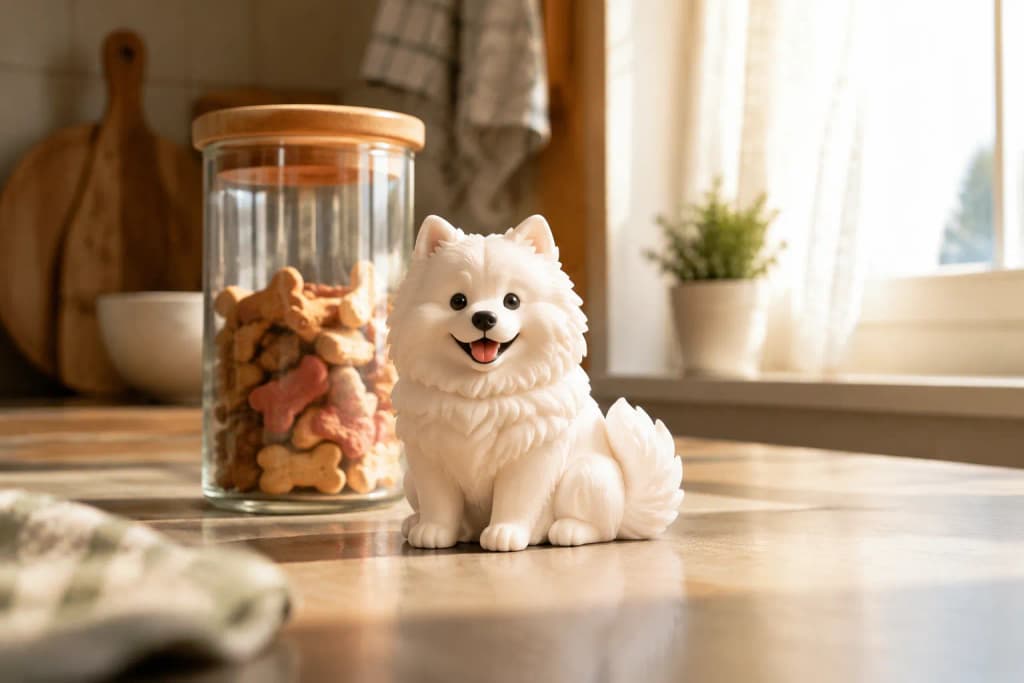
Here's the other side. These sculpts are tougher than they look.
UV-cured photopolymer resin is a genuinely durable material once it's fully hardened. It won't rot, fade in a week, or crumble if you look at it wrong. The clear coat adds a real protective margin. For a figurine sitting quietly on a shelf in a normal home, the truth is it needs very little from you.
So if you've read this far feeling anxious that you might break something priceless, ease up. The weekly dusting takes ninety seconds. The placement rule is a one-time decision. The rest is just knowing what not to do in a panic moment.
The families who have the most trouble are almost never the relaxed ones. They're the over-cleaners. The ones who wipe daily, reposition constantly, or reach for harsh cleaners at the first speck. Ironically, leaving your Samoyed sculpt mostly alone in a good spot is the single best care routine there is.
Confident, not fussy. That's the sweet spot.
What to Expect From a Full-Color 3D Printed Samoyed
Understanding how your sculpt was made isn't trivia. It's the foundation of every care decision you make. So here's the shop-floor version, plain English.
From Your Photos to a Digital Sculpt
It starts with your reference photos. A master 3D artist studies them and hand-models your dog in digital sculpting software, building the form on screen. This is where a Samoyed's coat flow, the direction and layering of that thick fur, gets shaped into the geometry. Good reference photos matter enormously here: clear shots from multiple angles, natural light, and at least one image that shows how the coat actually falls.
This stage is why we say a portrait, not a photocopy. The artist captures your dog's posture, expression, and unique markings as a charming sculpted interpretation. Not a cloned scan. Character over pixel-perfect mimicry.
Precision 3D Printing in Full Color
Once the digital sculpt is approved, it's precision 3D printed in full color. The pigment is embedded directly into the resin as it prints, layer by layer, rather than applied afterward. That's the key fact behind all your care choices: the color is part of the material, not a coating on top of it.
Orientation on the print bed is a real craft decision. Angle the model well and supports (the temporary scaffolding that holds overhangs during printing) land in hidden areas, leaving the visible coat clean. Angle it poorly and you risk support scars on the ruff. Larger sculpts are often hollowed with small drain holes so resin doesn't pool and cure unevenly inside, which keeps the piece lighter and less prone to stress.
Post-Processing and the Clear Coat
After printing comes washing, curing under UV light to fully harden the resin, and careful support removal. The final touch is a clear protective coat applied for sheen and durability. That's the only manual finishing step. No brushes of color, no painting stage. The vibrant coat you see came straight out of the printer, sealed under that clear layer you're now protecting with your weekly dusting.
If you want the full detail on how the studio approaches 3D pet sculptures, it's worth reading through their process. On timing, expect a free instant AI preview on the website, an artist's 3D preview within about 7 days of a deposit, and delivery typically in 27 to 40 days in the US (33 to 47 days internationally) after final payment. Shipping arrives insured, tracked, and carefully packed.
Knowing all this, the fine grain and subtle layer texture on your sculpt stops looking like a flaw. It's the honest fingerprint of full-color additive manufacturing. Authentic, not plastic-perfect.
A Small Thing You'll Be Glad You Did
Go back to that attic box for a second.
The reason a Samoyed sculpt ends up dusty and half-forgotten is almost never neglect. It's usually the opposite. People are so worried about damaging something they love that they tuck it somewhere "safe" and safe becomes out of sight.
Don't do that. The best place for your figurine is out where you'll walk past it, glance over, and feel that little pull of recognition. That's the whole point of samoyed figurine care: not preservation for its own sake, but keeping that daily moment of there she is alive and clear.
Pick the cool corner. Keep the soft brush nearby. Lift by the base. Leave the rest alone.
Do that, and the white stays white, the plume stays proud, and years from now you'll still catch the light hitting that fluffy coat exactly the way it did the day the box arrived. Not tucked in an attic. Right where you can see it.
Frequently Asked Questions
How do I clean a Samoyed figurine without damaging the fur detail?
Go dry first. A soft brush flicked gently along the direction of the sculpted fur lifts most dust, and a rubber air blower clears the deep ruff and tail channels a brush can't reach. Save any damp cleaning for stuck-on spots only, and use distilled water so you don't leave a mineral film on the white.
Will my full-color resin figurine fade over time?
Not quickly, and not at all if you're smart about placement. The color is embedded inside the resin, which is durable, but like most pigments it's UV-sensitive over the long haul. Keep it out of direct sun and away from heat vents, and the coat holds its richness for many years.
Can I fix a loose accessory or small break myself?
Small detached pieces, like a tag or charm, usually reattach fine with a pinhead of clear-drying craft glue held for a minute. For hairline cracks or snapped thin sections, don't sand or file them, since that removes the protective clear coat and exposes bare resin. For treasured pieces, contact the studio before experimenting.
Why does my sculpt have fine texture or faint layer lines?
That's the honest signature of full-color 3D printing. The sculpt is built in ultra-thin layers with color printed directly into the resin, then sealed under a clear protective coat. The subtle grain means it's authentic additive manufacturing, not a mass-molded plastic toy.
Is a Samoyed really harder to care for than other breeds as a figurine?
A little, yes. The white shows every speck, the dense coat texture traps dust, and the fluffy ruff and tail are the thinnest, most exposed parts of the print. None of it is difficult, though. It just rewards frequent light dusting over occasional heavy cleaning.
Ready to Celebrate Your Pet?
Every pet has a story worth preserving. Whether you're honoring a beloved companion who's crossed the rainbow bridge or celebrating your furry friend's unique personality, a custom PawSculpt figurine — a sculpted portrait, not a photocopy — captures the character that makes your pet one-of-a-kind. And with a little easy samoyed figurine care, that keepsake stays vivid for years.
Visit pawsculpt.com to learn more about our sculpting process, free AI and artist previews, and shipping that arrives insured, tracked, and carefully packed.