The Silence of the Tennis Ball: Navigating the First Week Without Your Retriever
Behavioral ecologists note that Golden Retrievers are among the most neotenic of dog breeds, meaning they retain puppy-like attachment behaviors and physical traits well into their senior years. Standing in the hallway, this scientific fact hits harder than any sentiment; the floorboards are clear of the slobbery toys that usually tripped you, and the space behind your knees feels unnervingly empty without your shadow pressing against it. This physical absence is often the sharpest edge of pet loss grief.
Quick Takeaways
- Phantom sensory cues — hearing nails clicking or feeling a wet nose — are a normal neurological response to habit.
- The "Retriever Shadow" — the sudden lack of a constant follower requires a conscious, often painful, adjustment of your physical movements.
- Immediate routine changes — like altering your morning walk route — can reduce acute pain triggers during the first week without dog.
- Tangible anchors — holding a physical object, like PawSculpt's custom figurines, helps ground anxiety when your hands feel empty.
The Biology of the Bond
We often talk about heartbreak metaphorically, but the first week after losing a Retriever is a physiological event. Your brain has spent years, perhaps over a decade, receiving massive hits of oxytocin—the bonding hormone—every time you looked into those soulful brown eyes or stroked that golden fur.
When that stimulus is abruptly removed, your body goes into a state of chemical withdrawal. This is why you might feel physically ill, exhausted, or unable to focus. It's not "just sadness." It is a systemic shock.
In our work with grieving families, we’ve noticed that Retriever owners specifically struggle with proprioceptive grief. Because these dogs are "leaners"—constantly pressing their weight against your legs or sitting on your feet—your body has literally learned to balance differently to accommodate them. When they are gone, you might find yourself physically off-balance, bracing for a weight that isn't there.
"Grief isn't a problem to be solved. It's a love story that continues after the last chapter."
The Specifics of Retriever Loss
Every dog is special, but the loss of a Retriever brings a unique set of silences. These are dogs bred to work with humans, to carry things, and to be involved in every aspect of family life. They are rarely passive observers.
The Empty Mouth
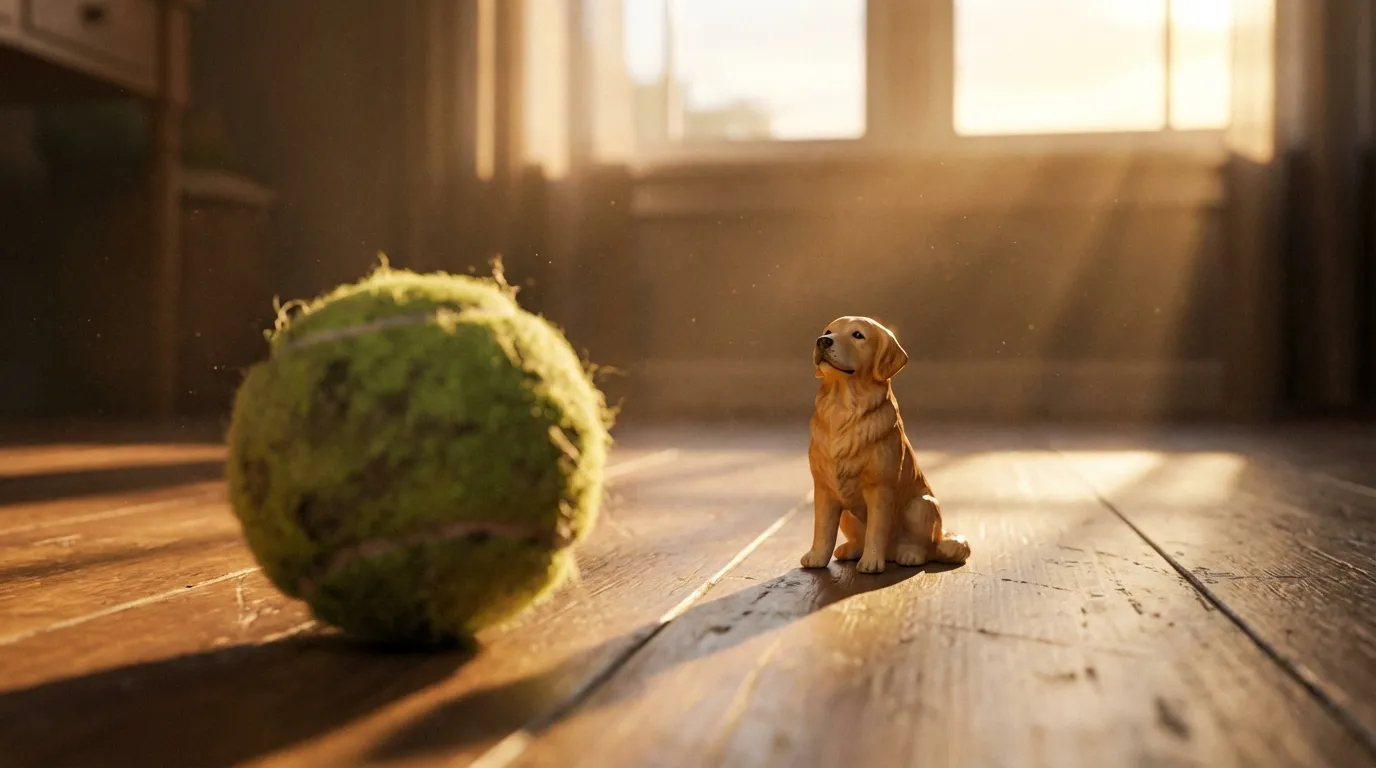
One of the most jarring aspects of the first week is the stillness of objects. Retrievers interact with the world through their mouths. You are likely used to being greeted with a shoe, a pillow, or a tennis ball.The absence of this ritual—the "gift" brought to the door—can make coming home the hardest part of the day. You might find yourself staring at the basket of toys, waiting for one to move. This is the moment to be gentle with yourself. It is not foolish to miss the slobber; it is a testament to a communication style that was unique to the two of you.
The Shadow Effect
Retrievers are often jokingly called "Velcro dogs." They follow you to the bathroom. They supervise your cooking. They lay under your desk while you work.The counterintuitive insight here is that privacy feels like isolation. For years, you likely craved a moment of peace without a wet nose nudging your elbow. Now, that privacy feels echoing and vast. The silence in the house isn't just a lack of noise; it's a lack of presence.
Navigating the Emotional Minefield
Here is the truth that few pet loss guides will tell you: It is normal to feel relief, and it is normal to feel guilty about that relief.
If your golden retriever memorial period comes after a long battle with cancer, hip dysplasia, or cognitive decline, the last few months were likely grueling. You may have been lifting a 70-pound dog up the stairs, managing incontinence, or waking up every two hours to check on them.
When that caretaking duty ends, there is an immediate physical unburdening. You might sleep through the night for the first time in months. You might leave the house without anxiety.
And then, the guilt hits. You might think, How can I be relieved that my best friend is gone?
Please hear this: You are not relieved that they are gone. You are relieved that they are no longer suffering, and that you are no longer helpless to stop it. That wave of relief doesn't make you a bad person. It makes you someone who loved them enough to prioritize their comfort over your own need to keep them close.
"We've seen families heal by holding something tangible. Grief needs an anchor, especially when your hands are used to soft fur."
— The PawSculpt Team
Practical Strategies for the First 168 Hours
The first week is about survival. It is not about "moving on." Here is a breakdown of what to expect and how to cope.
| Phase | What You Might Feel | Suggested Coping Strategy |
|---|---|---|
| Hours 0-24 | Shock, numbness, phantom sounds (hearing them bark). | Do not make major decisions. Keep one unwashed blanket in a sealed bag to preserve their scent. |
| Hours 24-72 | "The Re-entry." Waking up and remembering they are gone. High anxiety. | Change your morning routine. If you walked at 7 AM, walk at 8 AM or go to a different park. |
| Days 3-5 | Physical exhaustion. The "quiet" becomes loud. | Create a small memorial space. Light a candle. Talk to them out loud—it helps process the trauma. |
| Days 5-7 | The "Second Wave" of sadness. Fear of forgetting specific details. | Write down the quirks. The way they snored. The specific spot they liked scratched. |
The "Shrine" Dilemma
Should you put the bowl away? Should you leave the leash on the hook?There is no right answer, but we recommend a transitional approach. Immediate removal of everything can feel like erasure, which triggers panic. Leaving everything exactly as it was can trigger fresh grief every time you walk into a room.
Try moving the bed to a corner instead of the center of the room. Wash the food bowl but leave it on the counter. Small steps allow your brain to adjust to the new reality without the shock of a total purge.
Creating Tangible Memories
As the initial shock fades, the fear of forgetting sets in. Retrievers have such distinct physical traits—the "zipper" of fur down their nose, the crimped hair behind their ears, the specific pattern of their tail feathers.
Photos are wonderful, but they are flat. Many families find comfort in three-dimensional tributes. This is where we have seen the profound impact of technology meeting art. At PawSculpt, we don't just make generic dog statues. We use advanced full-color 3D printing technology to create custom figurines that mirror your specific dog.
Our process starts with digital sculpting by master 3D artists who study your photos to capture the precise way your Retriever sat or the unique tilt of their head. We then use premium UV-resistant resin to print the figurine in full color—meaning the gray on the muzzle and the honey-gold of the ears are printed directly into the material, not painted on top. It creates a smoothness and a depth of color that feels more "alive" than traditional hand-painted miniatures.
Having a custom figurine on your desk gives you a focal point for your memories—a place to direct that love that has nowhere else to go.
Helping Surviving Pets
If you have other dogs, you are likely navigating their grief alongside your own. Retrievers are often the social glue of a pack. Without them, the dynamic shifts instantly.
According to the American Kennel Club, surviving pets may exhibit signs of depression, such as loss of appetite or lethargy. They may also "search" the house.
Do not rush to get a replacement. This is a common mistake. The surviving dog needs time to re-establish their hierarchy and routine just as much as you do. Comfort them, stick to a schedule, and allow the new normal to settle before introducing a puppy.
"The silence isn't empty. It's full of the love you're still carrying."
Moving Forward, Not Moving On
The tennis ball under the couch will eventually just be a tennis ball, not a landmine of sorrow. The hallway will eventually just be a hallway.
But for this first week, allow yourself to mourn the specific, heavy, golden presence that filled your life. You are navigating a world that has lost one of its brightest lights. It is okay to stumble in the dark for a little while.
Your Retriever spent their life watching you, learning you, and loving you. The greatest tribute you can pay them is to be as kind to yourself as they were to you.
Frequently Asked Questions
How long does the intense grief last after losing a dog?
Acute grief typically lasts for one to two months, though this varies wildly by individual. You may find that the "fog" lifts after a few weeks, only to be hit by a wave of sadness months later. This is normal. Grief is not linear; it is circular.Is it normal to hear my deceased dog walking around?
Absolutely. These are known as phantom sensory experiences. Your brain has spent years filtering the background noise of your home to include the sound of nails on the floor or panting. It takes time for your neurological pathways to "unlearn" these patterns. It is not a sign that you are losing your mind; it is a sign of how deeply your life was intertwined.Should I let my other dog see the body?
If circumstances allow, yes. Veterinary behaviorists often suggest that allowing surviving pets to sniff the body helps them understand the finality of the situation. It can prevent the distress of them constantly searching the house for their missing companion.When is the right time to get a memorial figurine?
There is no "right" time. Some pet parents order a custom figurine immediately because they need a physical representation of their pet to look at and talk to. Others wait months until they can bear to look through photos without overwhelming pain. Trust your gut—you will know when you are ready to celebrate their memory.Ready to Celebrate Your Pet?
Every pet has a story worth preserving. Whether you're honoring a beloved companion who's crossed the rainbow bridge or celebrating your furry friend's unique personality, a custom PawSculpt figurine captures those details that make your pet one-of-a-kind.
Free instant AI preview • 3D artist preview within 7 days • 5 free revisions