
Five Years Later: How My Dachshund's Bed Became a Portal to Reintegration
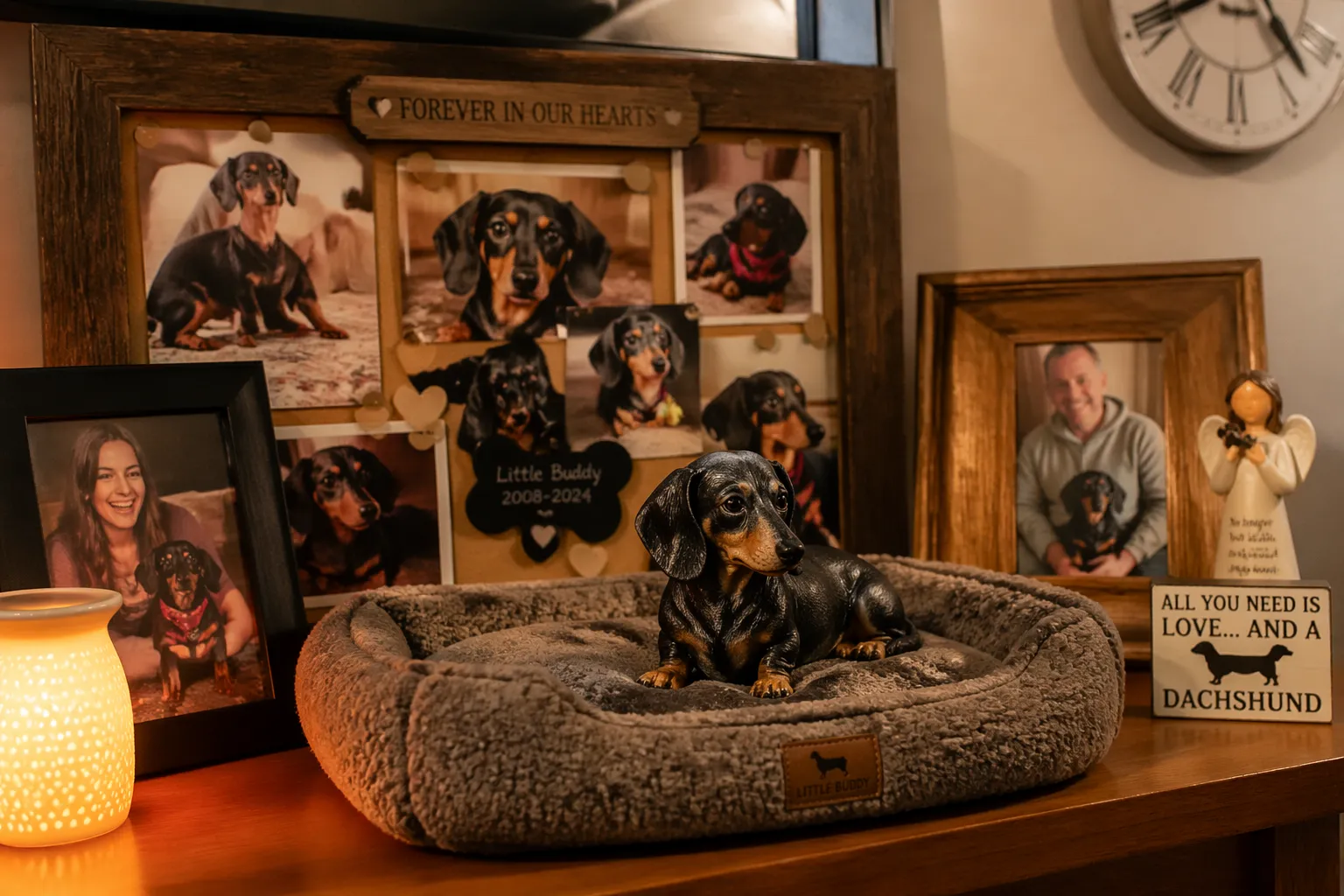
Your shoe scuffs gravel on the walking trail, and for one second the missing jingle of tags hits harder than the whole day; that tiny sound-gap is pet loss grief in real life—ordinary, ambushing, and weirdly physical.
Quick Takeaways
- Stop trying to “move on” — build one repeatable ritual that keeps love integrated.
- Use the bed on purpose — turn it into a memorial anchor, not a guilt trap.
- Name mixed emotions directly — relief, regret, and fear of forgetting can coexist.
- Choose one tangible keepsake — explore custom pet figurines at PawSculpt if touch helps memory stay real.
Why a Dachshund's Bed Can Matter More Than a Photo in Long-Term Healing
Here’s the part most articles skip: long-term healing rarely happens through big gestures. It happens through objects that still carry your pet’s role in the room.
A photo is visual. That matters. But a bed is spatial. It tells your nervous system, “This is where that soul rested. This is where the house arranged itself around them.” That’s why a dachshund bed, especially years later, can feel less like leftover fabric and more like a portal. Not magic in the movie sense. More like a threshold your body recognizes before your mind catches up.
We’ve seen this with pet families for years. A leash hanging by the door, the dent in the couch cushion, the ceramic water bowl that no one can quite put away. The object becomes a soundboard for memory. You hear toenails in the hallway that aren’t there. You still expect the snort, the scratch, the little demand-bark from under a blanket. Sound is often the last thing grief releases.
And dachshunds? Their routines tend to be loud in specific ways. The low bark at a squirrel. The burrowing rustle. The tiny huff when they settle in. Their absence has an acoustics problem. That’s why reintegration after family pet loss doesn’t just mean “feeling better.” It means learning how to live in a house with altered sound.
The overlooked truth: the goal isn't closure
We’ll be real—closure is one of the least useful words in memorial content.
What most people actually want isn’t closure. It’s reintegration. A way to bring the bond back into daily life without getting flattened every time a memory surfaces. That’s different. It’s less about ending grief and more about giving grief a job.
A family we worked with kept their dachshund’s bed in a sunny corner for almost five years. Not because they were stuck. Because every spring, when light hit that fabric the same way, they sat there for ten minutes and told one story out loud. That ritual did more for them than any pressure to “finally put things away.”
"Reintegration starts when memory gets a place to live, not a deadline to meet."
Why the bed becomes charged
Objects become emotionally charged for three reasons:
- Repetition — your dog used it every day
- Body memory — you remember the weight, warmth, and routine around it
- Role memory — the object reminds you who you were with them
That third one is big. The bed doesn’t just represent your dachshund. It represents you as their person. The one who tucked in blankets, heard the nighttime circling, checked if they were breathing after they finally fell asleep.
That’s why tossing the bed can feel like erasing a sacred contract.
And keeping it can feel complicated too.
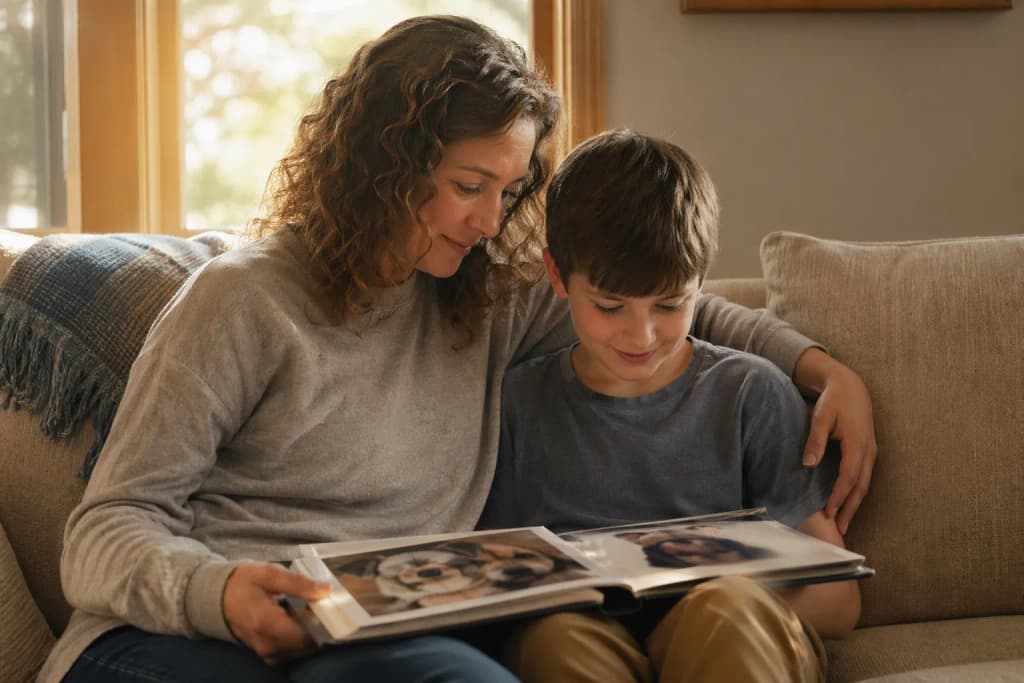
Pet Loss Grief Five Years Later: What Reintegration Actually Looks Like
Most people expect grief to fade in a neat line. It doesn’t. What usually happens is this: the daily pain softens, then one tiny trigger punches through the floorboards. A squeaky toy sound in a store. A neighbor’s long-backed dog trotting by. The hush after dinner, when your house used to have one extra rhythm in it.
That doesn’t mean you’re back at the beginning. It means memory is still alive in your sensory system.
The difference between being stuck and being connected
This matters because people judge themselves harshly around year three, four, five. They start thinking, “Why am I still doing this?” especially if they’ve kept a bed, collar, or favorite blanket.
Here’s the straight answer: ongoing connection is not the same as being unable to function.
If the object helps you remember, reflect, pray, talk, or feel gratitude, that’s connection.
If the object prevents you from entering a room, sleeping, socializing, or caring for yourself, that may mean the grief needs more support.
There’s no shame in either. But they’re not the same thing, and too many articles lump them together.
The Association for Pet Loss and Bereavement has helpful support resources if your grief feels persistent, isolating, or heavier than you can carry alone. That kind of support isn’t dramatic. It’s practical. Sometimes you need another human to say, “Yes, this is real.”
A counterintuitive insight: some healing starts when you stop hiding the memorial object
This one surprises people. The mistake most families make is trying to store the object safely before they’ve given it meaning.
They box the bed in a closet because it hurts to see it. Understandable. But then the bed becomes an unresolved charge source. Every time they spot the closet door, the unfinished grief hums in the background.
What often helps more is this:
- Clean the bed gently
- Choose a deliberate location
- Pair it with one ritual
- Decide what role it has now
That role could be:
- a seasonal remembrance corner
- a reading nook memorial
- a place to sit and say goodnight
- a display space alongside ashes, a collar, or a figurine
- a private sacred space no guests need explained
One customer told us she moved her dachshund’s bed from the laundry room shelf to her bedroom window bench. That single shift changed the emotional tone completely. In storage, it felt abandoned. In view, it felt honored.
What grief reintegration can look like over time
This table gives a more honest picture than the usual “stages” language.
| Timeframe | What often happens | Common sound trigger | What actually helps |
|---|---|---|---|
| First 2 weeks | Shock, routine disruption, scanning rooms automatically | Phantom tag jingles, scratching sounds | Keep one grounding ritual morning and night |
| 1-3 months | Intense habit grief, guilt loops, house feels acoustically wrong | Food bowl noises, door sounds, hallway clicks | Remove pressure to make permanent decisions |
| 3-12 months | Memory becomes less constant but more trigger-based | Hearing similar barks outside | Create a dedicated memorial spot |
| 1-3 years | Social support fades, private grief can deepen | Holiday quiet, bedtime hush | Tell stories aloud with family or friends |
| 3-5+ years | Bond shifts from raw pain to legacy work | Seasonal echoes of old routines | Turn objects into intentional reintegration tools |
The “so what” here is simple: if you still feel waves years later, that is not proof you failed healing. It may be proof you loved in a daily, embodied way.
The Emotions People Whisper About After Family Pet Loss
Let’s get to the stuff people feel but don’t always admit out loud.
Relief mixed with grief is normal—and brutal
If your dachshund was elderly, in pain, losing mobility, or waking all night, you may have felt a moment of relief when their suffering ended. Then the guilt came in swinging.
That relief does not make you cold. It means part of your nervous system unclenched after months of vigilance. You were carrying medication schedules, appetite checks, stairs logistics, nighttime monitoring, vet updates. When that ends, the body notices before the heart consents.
One family described the first uninterrupted night of sleep after euthanasia as “the worst best sleep we ever had.” That sentence is heartbreaking because it’s true. Two things can be true at once: you miss them terribly, and you’re relieved they are no longer struggling.
If you’re second-guessing euthanasia timing, the AVMA’s guidance on euthanasia and end-of-life decisions can help frame those choices with compassion and realism. We’re not vets, and for medical questions your veterinarian is the right voice. But emotionally, here’s what we can tell you from years around grieving families: second-guessing is common because love always imagines one more possible day.
"Relief after suffering ends isn't betrayal. It's compassion colliding with absence."
Fear of forgetting is often stronger at year five than week five
Early grief is loud. Late grief is quieter—and that can scare people more.
In the first month, you remember everything: the snore, the smell of their ears, the way they launched themselves under blankets like a tiny submarine. Five years later, what panics you isn’t pain. It’s the thought that the exact bark pitch is getting fuzzy.
That’s where a lot of memorial advice misses the mark. It tells you to declutter your grief. Honestly? Sometimes what you need is to thicken memory, not reduce it.
Try this within the next week:
- Record a voice memo telling three hyper-specific stories
- Write down five sounds you associate with your dog
- List their weird habits, not their best qualities
- Ask family members for one memory each you’ve forgotten
You’re not building an archive for the internet. You’re preserving the rhythm of a soul-bond.
Feeling judged by others can freeze grief in place
This one comes up all the time. Someone at work says, “It’s been years.” A relative compares your grief to “just a dog.” A friend doesn’t understand why the bed is still there.
That kind of judgment makes people hide their rituals. And hidden grief often gets sharper, not softer.
The practical move is to prepare one sentence and stop overexplaining. Something like:
- “That bed is part of our memorial space.”
- “Keeping it helps our family remember well.”
- “We’re not stuck. We’re honoring him.”
Short. Clear. Done.
Shame about grief intensity usually means the bond was daily, not dramatic
People tend to think only “big” dogs or extraordinary stories justify deep mourning. Not true. Intensity often comes from repetition.
A dachshund that followed you room to room, barked at the mail slot, burrowed into your knees during TV, and insisted on the same bedtime pattern every night was woven into the architecture of your day. That’s why the ache can be oddly persistent. They weren’t occasional joy. They were part of your timing.
And timing is sacred stuff.
Turning a Dachshund Memorial Into a Ritual, Not a Shrine That Keeps You Stuck
There’s a difference between a ritual and a static shrine. A shrine can become frozen. A ritual moves energy.
That’s the spiritual side of reintegration that doesn’t get enough practical talk. Your dog’s spirit doesn’t need a museum of untouched sadness. What helps most people is a living practice—small, repeatable, real.
The three-part memorial method we’ve seen work best
After thousands of pet families have come through our orbit, here’s the pattern we trust most:
- Choose one anchor object
- Pair it with one recurring action
- Give it one sentence of meaning
For example:
- Anchor object: the dachshund bed
- Recurring action: light a candle every Sunday evening
- Sentence of meaning: “This is where we return to gratitude, not just pain.”
That sentence matters more than you think. It tells your brain what the ritual is for.
Without meaning, the object can become a random grief tripwire.
With meaning, it becomes a memorial circuit.
What to place with the bed
You do not need a dozen items. In fact, less usually works better.
A strong memorial setup might include:
- the bed
- a collar or tag
- one printed photo
- a small written note or prayer
- one tangible keepsake, such as ashes, a paw print, or a figurine
That’s enough. The goal is presence, not clutter.
Some families also choose a custom 3D pet sculpture because it gives form back to memory in a very specific way. We’ve watched people reach toward a figurine instinctively during hard anniversaries—not because they’re pretending their dog is still physically here, but because touch can settle grief faster than thought can.
If that kind of memorial helps you, PawSculpt creates digitally sculpted pet figurines that are then precision 3D printed in full-color resin, with markings reproduced directly in the material and protected by a clear coat. The texture is authentic to 3D printing, not unnaturally slick, which a lot of families actually appreciate—it feels real, not over-polished. If you want to explore that option, their memorial keepsakes for pets page is the right place to start.
Personal Aside
We’re not huge fans of memorial setups that look perfect in photos but don’t get used in real life. The ones that help most usually have a lived-in honesty: a slightly folded blanket, a note tucked under a frame, a candle someone actually lights.
The sound ritual almost nobody talks about
Because this article is about what others miss, let’s talk sound.
Visual memorials are common. Audio rituals are wildly underused.
Try one of these:
- Play the same soft song during your memorial moment each week
- Read a letter to your dog out loud once a month
- Keep a 30-second audio note describing the sounds of life with them
- On anniversaries, sit by the bed and listen—not for supernatural proof, just for the room itself
Why this works: grief lives in the body, and the body tracks rhythm. If your dachshund’s life had a soundtrack, healing often needs one too.
"The memorials that help most don't erase absence—they give absence a gentle rhythm."
— The PawSculpt Team
A memorial options table that tells the truth
Not every family wants the same kind of remembrance. Good. You shouldn’t.
| Memorial option | Best for | Emotional effect | Watch-out |
|---|---|---|---|
| Keeping the bed as a ritual anchor | Daily bond, strong home routines | Deep grounding, sensory memory | Can feel heavy if left undefined |
| Photo album or printed book | Storytelling families | Builds narrative and shared memory | Less tactile in acute grief moments |
| Garden or tree planting | Outdoor, seasonal rituals | Strong legacy feeling | Harder in apartments or harsh climates |
| Ashes or paw print display | Traditional memorial preference | Clear symbolic presence | Can feel formal for some households |
| Full-color custom figurine | Families needing a tangible visual anchor | Reintroduces form and personality | Best when chosen intentionally, not impulsively |
That last column matters. Every memorial tool can help—or become emotionally noisy—depending on how you use it.
Grief Reintegration in the Home: What to Do With the Bed, Room by Room
This is where we get practical. Because “honor their memory” sounds nice, but it doesn’t answer the 7:15 p.m. question: what do I actually do with this bed now?
If the bed is still in its original spot
This can be comforting, but after years it may also create a low-grade emotional freeze.
Try a 30-day test:
- Leave the bed in place
- Add one intentional element: photo, note, candle, or figurine
- Use the space for a 3-minute ritual twice a week
- At day 30, ask: does this feel alive or stuck?
If it feels alive, keep going.
If it feels stuck, change the role—not necessarily the object.
A customer once moved her dachshund’s bed three feet, just three feet, from the kitchen doorway to the adjacent bookcase nook. Same room. Totally different feeling. In the old spot, she braced for him not to be there. In the new one, she remembered him.
If the bed is in storage
Storage is sometimes necessary, especially early on. But five years later, a stored bed often means unfinished negotiation with memory.
Open the box during daylight. Not at midnight when you’re already wrecked.
- Touch it for 30 seconds
- Say one memory out loud
- Decide yes, no, or later
- If later, schedule the next date immediately
That last step is the one people skip. “Later” without a date turns into emotional debt.
If you want to repurpose it
This is a solid option, and no, it’s not disrespectful.
You can:
- use fabric from the bed in a shadow box
- place it beneath a shelf display
- fold part of it into a reading chair nook
- save a section in a memory chest and donate the rest if appropriate
The counterintuitive truth? Partial preservation often works better than total preservation.
Why? Because keeping every single item can make your memorial static. Keeping the most charged part lets the meaning stay focused.
If there are kids in the home
Children often interact with pet grief through routine and object use, not formal talks.
So let them participate in the memorial space. Ask:
- “What sound do you miss most?”
- “Where should the bed go now?”
- “What should we say when we sit here?”
That gives them agency. And it teaches something important: grief isn’t only about loss. It’s about relationship continuing in a new form.
If another pet is in the house
Be thoughtful here. The remaining pet may investigate the bed, sleep in it, avoid it, or act totally indifferent.
Don’t force symbolism onto them.
This guide can help:
| Remaining pet behavior | What it may mean | Best response |
|---|---|---|
| Sleeps in the bed immediately | Seeking familiar scent or comfort | Allow it if it feels okay to you |
| Avoids the area completely | Stress, confusion, changed household energy | Move the bed to a calmer spot |
| Sniffs, circles, then leaves | Normal checking behavior | No intervention needed |
| Guards the bed | Resource value or emotional change | Supervise and redirect if tension rises |
| Seems distressed near it | Association with illness or disruption | Remove temporarily and reassess |
If your remaining pet shows major behavioral changes, talk with your vet. For grief behavior guidance, the ASPCA’s pet care resources are a good starting point. We’re speaking from memorial experience, not medical authority.
Why Tangible Memorials Help the Nervous System More Than Abstract Advice
A lot of grief advice lives in your head. Journal. Reframe. Reflect. Fine. Useful, sometimes. But pet loss grief is often body-first.
You reach down with no dog there.
You still listen for nails on hardwood.
You wake at the hour they used to need medication.
Your body is running a relationship script after the visible partner is gone.
That’s why tangible memorials can help more than purely verbal ones. They give the body somewhere to put the bond.
Memory needs shape, not just sentiment
This is especially true if you’re scared of forgetting details. A generic memorial object won’t always do the job. The more specific the piece, the more effectively it can support memory reintegration.
That’s where families often gravitate toward personalized pet figurines or paw prints rather than generic décor. Specificity matters. Your dachshund’s chest marking, ear tilt, blanket pose, curious side-eye—those details tell the truth of who they were.
One order that stuck with us involved a family who wanted their dachshund captured in that classic half-curled burrow posture, ears slightly back, one front paw tucked under. Not a “perfect” show-dog pose. Their pose. That figurine became part of the bed memorial because it restored not just appearance, but attitude.
And attitude is memory gold.
What to expect from a custom figurine memorial
If you’re considering a figurine, you deserve the real story, not fluffy marketing.
A good memorial figurine should:
- reflect your pet’s actual markings
- preserve familiar facial expression and posture
- look intentional up close, not generic at a distance
- feel durable enough for long-term display
- avoid pretending to be something it isn’t
PawSculpt uses advanced full-color 3D printing technology to produce custom pet figurines in full-color resin. The color is part of the material itself, printed voxel-by-voxel, not applied later as a surface layer. After printing, a clear protective coat is added for sheen and durability. That means what you get is vivid, dimensional, and honest to the medium—with fine natural print texture instead of an artificially flawless finish.
That honesty matters more than people think. In memorial work, authenticity beats perfection.
If you want to browse how that looks in practice, PawSculpt’s 3D pet sculptures page gives the clearest overview without forcing you into a decision before you’re ready.
What photos work best for a dachshund memorial figurine
This is one area where insider knowledge makes a big difference. The first issue in dog figurines usually isn’t the body—it’s the ears and eyes. Especially with dachshunds. Their expression can shift wildly based on ear set and camera angle.
Here’s what helps most:
| Photo type | Why it matters | Best tip |
|---|---|---|
| Eye-level face shot | Captures expression and muzzle shape | Use natural daylight, no heavy filter |
| Side profile | Shows back length, chest, and ear drape | Get full body, not cropped |
| Top-down standing pose | Helps with proportions | Keep all four paws visible |
| Favorite resting pose | Preserves personality | Include blanket or bed if meaningful |
| Close-up of markings | Confirms color transitions | Photograph both sides if asymmetrical |
Avoid blurry zoom shots from across the yard. And avoid only puppy pictures unless you specifically want a puppy memorial version. People often submit the “cutest” images rather than the most accurate ones. Cute is great. Accurate heals better.
Why some families wait years before choosing a keepsake
This is more common than people realize. Not everyone can make memorial decisions in the first month. Some need the acute grief to settle first. Some finally act when they realize memory details are starting to blur. Some reach a birthday, gotcha day, or five-year mark and think, “Okay. Now I’m ready.”
That delay doesn’t reduce the meaning. Sometimes it sharpens it.
Waiting can actually produce a better result because:
- you know which details matter most
- you’re choosing from care, not panic
- the memorial becomes part of reintegration, not just aftermath
Building a Sacred Space That Supports Long-Term Healing, Not Permanent Sorrow
Let’s finish the hard practical part with the spiritual one.
A sacred space for your dog doesn’t need incense, special language, or a room no one uses. It just needs intention. The point is to create a place where your love can continue to have form.
The five-minute weekly ritual
If you do nothing else from this article, do this.
Pick one day. Same time each week if possible.
- One minute — notice the sounds in the room
- One minute — say your dog’s name out loud
- One minute — tell one story, even a tiny one
- One minute — thank them for one concrete thing
- One minute — ask what part of their spirit you want to carry this week
That last step is the reintegration move. Maybe it’s bravery. Maybe comic stubbornness. Maybe devotion. Maybe the way they always came back to the same lap, same blanket, same person.
You’re not pretending their spirit is giving instructions from beyond. You’re identifying the legacy trait your bond awakened in you.
That’s how grief becomes usable.
"Your pet's legacy isn't only what you remember. It's what you practice because they were here."
What not to do
We’ve seen a few patterns that tend to backfire:
- Don’t force yourself to discard the bed to prove progress
- Don’t build a huge memorial setup you won’t actually use
- Don’t let guilt make every ritual heavy
- Don’t choose generic symbols if what you miss is specificity
- Don’t wait for the perfect emotional state to begin
And honestly, don’t let outsiders decide what your timeline should look like.
The reintegration checklist
If you want this in plain English, here’s your roadmap for the next two weeks:
- Choose the bed’s role: keep, move, repurpose, or partially preserve
- Add one companion item: collar, photo, note, or figurine
- Write one sentence of meaning
- Create one 3-5 minute sound-based ritual
- Record three memories before more details fade
- Tell one trusted person exactly what helps
- Get support if grief is disrupting daily functioning
That’s enough. Really.
Five Years Later, the Bed Isn't the Problem—It's the Invitation
Five years later, that dachshund bed on the edge of the room may still catch your eye for the same reason the missing tag jingle catches your ear on a trail: your bond was built through repetition, and repetition leaves tracks.
The question isn’t whether you should still care. You do. The better question is what that object is asking from you now.
Maybe it’s asking to come out of storage.
Maybe it needs a new place by a window.
Maybe it wants one photo, one candle, one story every Sunday.
Maybe it’s ready to sit beside a more tangible memorial—ashes, a paw print, or a full-color figurine that gives your memory something solid to rest against.
That’s long-term healing in the real world. Not erasing the sacred imprint. Not performing recovery for other people. Just taking the love that once had a moving body and giving it a living ritual.
So this week, don’t make a grand decision. Make a small honest one. Touch the bed. Listen to the room. Name what you miss most. Then choose one act that turns remembrance into grief reintegration.
Because sometimes the portal isn’t there to pull you backward.
It’s there to walk you back into your life—with them still part of it.
Frequently Asked Questions
How long can pet loss grief last?
A long time—sometimes much longer than people expect. If your dog was woven into your routines, your pet loss grief may surface for years through habits, sounds, or seasonal triggers.
That doesn’t automatically mean you’re stuck. It often means your bond was deeply embodied. If grief is making daily life hard to manage, support from a pet loss counselor or support group can really help.
Is it normal to keep my dog's bed years after they died?
Yes, absolutely. The key question isn’t how long you’ve kept it; it’s what role it plays now.
If the bed supports a ritual, a memorial space, or a comforting sense of presence, it can be part of healthy healing. If it leaves you frozen or unable to function, it may be time to redefine how you’re using it.
What is grief reintegration after pet loss?
Grief reintegration means bringing the bond into your current life in a usable way. Not pretending nothing changed, and not trying to delete the attachment.
That can look like a weekly ritual, a sacred space in your home, a written memory practice, or a tangible memorial that helps your nervous system settle when grief spikes.
Can a custom figurine actually help with a pet memorial?
For a lot of families, yes. A figurine can help because it restores shape, markings, and posture—details that photos don’t always hold in the same tactile way.
The best memorial figurines are specific, not generic. If you’re considering one, use accurate photos and think about the pose that most feels like your dog, not just the most polished image.
Is it normal to feel relief after euthanasia?
Yes. It’s more common than people admit. If your pet was suffering, part of you may have felt relief that their pain ended and that the constant caregiving vigilance stopped.
That reaction doesn’t cancel your grief. It sits beside it. And for many loving owners, that emotional mix is one of the hardest parts to say out loud.
Ready to Celebrate Your Pet?
Every pet has a story worth preserving. Whether you're honoring a beloved companion who's crossed the rainbow bridge or celebrating your furry friend's unique personality, a custom PawSculpt figurine captures those details that make your pet one-of-a-kind.
If your pet loss grief feels tied to the sounds, routines, and little physical spaces your dog once filled, a tangible memorial can help turn memory into presence instead of just absence.
Visit pawsculpt.com to learn more about our process and guarantees