DIY 3D Scan vs Studio Sculpt: What Really Happens After You Order a Shiba Inu Figurine
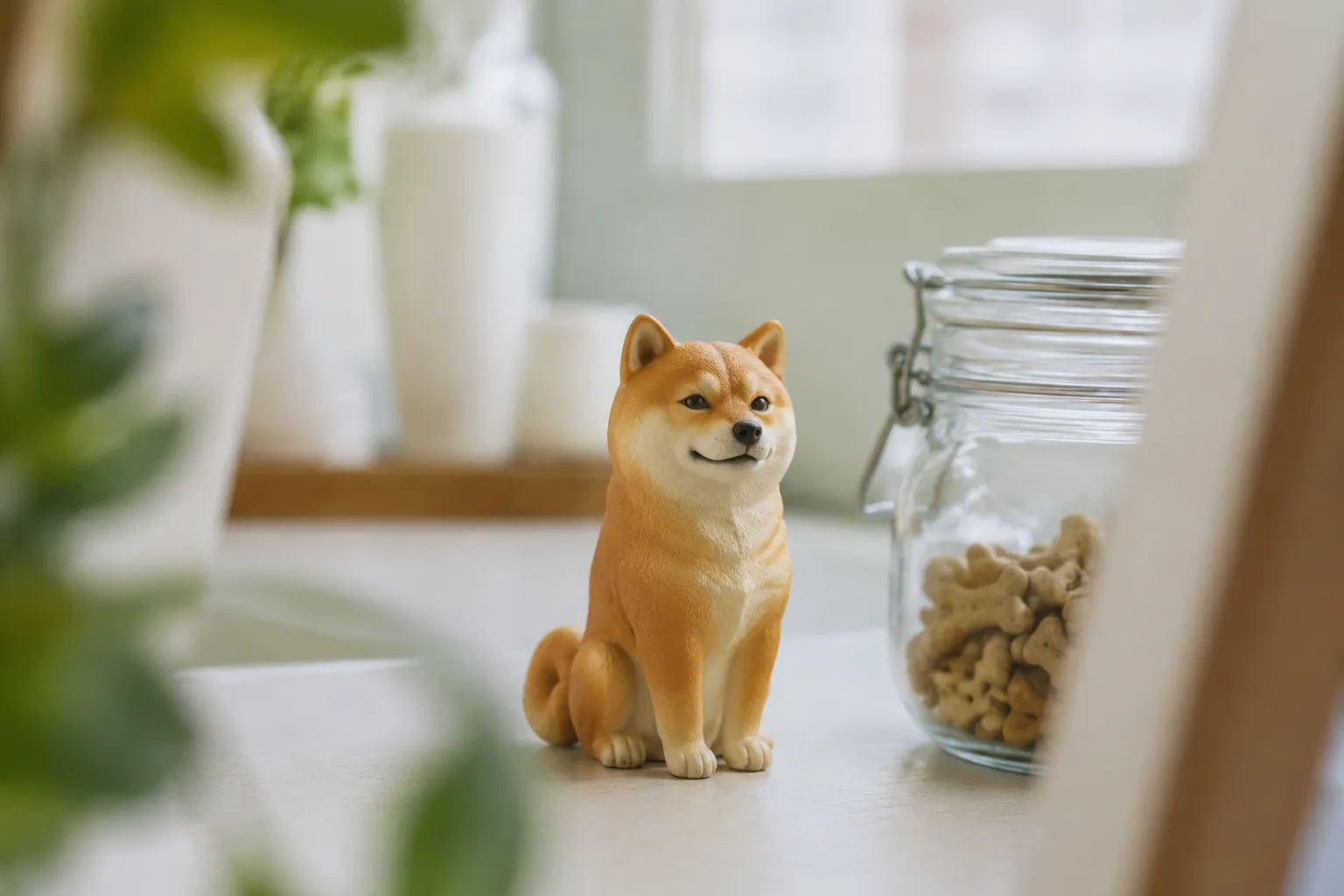
Two years ago, capturing your Shiba Inu meant a phone photo and a shrug. Now you can DIY 3D scan a pet from your living room floor, phone orbiting a dozing dog, mapping every curl of that tail into a digital mesh in under three minutes.
A DIY 3D scan captures raw geometry fast but chokes on fur, movement, and dark markings, while a studio sculpt puts a master 3D artist between your Shiba Inu and the final figurine before anything is 3D printed. The scan trades accuracy for speed, which is why most custom figurine production timelines run several weeks, not several minutes.
Quick Takeaways
- DIY scans excel at shape, fail at fur — soft, moving coats confuse the sensors that map flat surfaces.
- Studio sculpting is interpretation, not capture — an artist reads posture and expression a scanner can't see.
- The Shiba's curled tail and double coat are exactly where cheap scans break down first.
- Budget matters, so compare honestly before you commit — the trade-offs are laid out in our guide to custom pet portraits.
- A production timeline is a feature, not a delay — the weeks buy you correction, not just printing.
What a DIY 3D Scan Actually Captures (and Where It Quietly Fails)
Here is the mental model that clears up most confusion: a 3D scan is a measurement, not a portrait. It records where surfaces are in space. Nothing more.
Point your phone's LiDAR sensor or a scanning app at a solid object, a mug, a shoe, a garden gnome, and it does beautiful work. Hard edges, matte surfaces, no motion. The sensor bounces light off the object, times the return, and builds a cloud of points that software stitches into a mesh.
Now put a Shiba Inu in front of it.
The trouble starts with the coat. A Shiba carries a double coat, a dense insulating undercoat beneath a stiffer outer layer. To a depth sensor, fur is not a surface. It's thousands of tiny, semi-transparent filaments that scatter light in every direction. The scanner reads that scatter as noise and either smooths it into a vague plastic blob or fills it with jagged spikes.
We've reviewed a lot of customer-submitted scans over the years. The pattern is consistent. The nose comes out sharp. The paws come out sharp. The ruff around the neck, the feathering on the tail, the softest and most Shiba parts, come out mushy.
The three technical failures nobody warns you about
Most DIY-scan tutorials skip the failure modes. Here are the ones that actually sink a pet scan:
- Motion blur in three dimensions. A scan takes 20 to 90 seconds of the subject holding still. Dogs breathe. Dogs blink. Dogs decide mid-scan that the phone is a threat and stand up. Each movement shifts the geometry, and the software either drops frames or welds two poses into one impossible shape.
- Dark-fur light absorption. Black and deep-sesame markings absorb the sensor's light instead of reflecting it. The scanner gets no return signal, so it guesses. On a red Shiba this is manageable. On a black-and-tan, the mask around the muzzle can simply vanish into a hole.
- Concavity collapse. The tight curl of a Shiba's tail, where the tail tucks against the back, creates a shadowed pocket the sensor can't see into. It bridges the gap with flat geometry, and that gorgeous corkscrew becomes a fused lump.
So what? Because if you're scanning to print a keepsake, these are precisely the features that make the figurine read as your dog and not a generic red dog. The scanner is strongest where breeds look alike and weakest where they look individual.
The Studio Sculpt Path: What Happens After You Hit Order
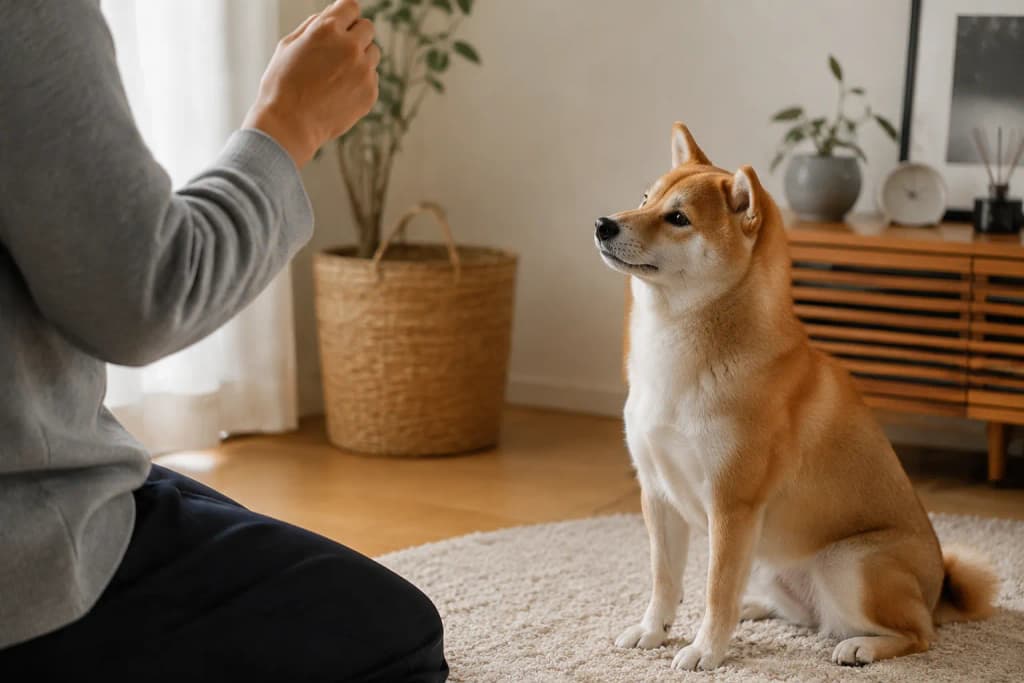
A studio sculpt inverts the whole process. Instead of a machine measuring your dog, a human interprets it.
At PawSculpt, the workflow starts with you uploading photos, not a scan. A master 3D artist studies those images the way a portrait painter studies a sitter: how the ears set, whether the tail curls left or right, the specific tilt this particular Shiba does when it's mildly annoyed with you. Then they build the form digitally, sculpting in software rather than capturing with a sensor.
This is the key distinction the comparison articles miss. A scan can only reproduce what was in front of the lens at that second. A sculpt can reconcile ten photos into one truer likeness, correcting the squint in one shot with the alert ears from another.
"A scanner records the second the shutter closed. A sculptor records the dog you actually live with."
Once the digital model is approved, it goes to full-color 3D printing. This is worth understanding clearly, because it's where most people carry a wrong assumption. The color is not applied afterward. The printer builds the figurine in full-color resin, laying down pigment voxel by voxel as the form itself is created. Your Shiba's red coat, the cream urajiro (the pale markings on the cheeks, chest, and legs), the dark points, all of it is printed into the material.
The only manual step comes at the end: a clear protective coat for durability and a soft sheen. No brushes. No acrylics touching the surface. The result carries a fine natural print grain under the varnish, which is honestly part of its charm. It looks made, not mass-produced.
The PawSculpt approach in one line
"We don't copy a dog. We read one. The scan sees a shape; the sculptor sees the animal that shape belongs to."
— The PawSculpt Team
DIY Scan vs Studio Sculpt: The Honest Comparison
Neither option is universally "better." They produce different things at different price points for different needs. Here's the side-by-side we wish existed before people spent money learning it the hard way.
| Factor | DIY 3D Scan | Studio Sculpt |
|---|---|---|
| What it captures | Raw surface geometry, one moment | Character, posture, corrected likeness |
| Fur & double coat | Smoothed or spiky | Interpreted as texture |
| Curled tail / dark markings | Frequent collapse | Rendered deliberately |
| Speed | Minutes to scan | Weeks, including preview and revisions |
| Cost | Low (your time + app) | Higher (skilled artist + printing) |
| Best for | Hobbyists, experiments, static objects | Keepsakes you want to look like the dog |
The uncomfortable truth for the DIY camp: a scan is cheap because you're supplying the labor and absorbing the failure rate. The uncomfortable truth for the studio camp: you're paying for judgment you can't see, which makes the value hard to feel until the piece arrives.
The Custom Figurine Production Timeline, Stage by Stage
People ask why a figurine "takes so long" when a scan takes ninety seconds. The answer is that the weeks aren't printing time. They're correction time. And correction is the entire point.
Here's how a studio custom figurine production timeline generally breaks down. Exact windows vary by studio, so treat these as the shape of the process, not a contract.
| Stage | What Happens | Typical Window |
|---|---|---|
| Instant AI preview | Free on-site preview of a rough concept | Immediate |
| Deposit + digital sculpt | Artist builds the 3D model from your photos | 3D preview within 7 days of deposit |
| Review & revisions | You check likeness; artist adjusts | Varies with feedback |
| Full-color 3D printing | Form and color printed together in resin | Part of production |
| Clear coat + insured shipping | Protective finish, then carefully packed | Delivery ~27–40 days US, 33–47 international after final payment |
Notice where the time actually goes. The preview-and-revision loop is the stage a DIY scan skips entirely, and it's the stage that decides whether the tail curls the right way. When you scan at home, there is no one to tell you the mask came out wrong until the printed object is in your hand.
A family we worked with sent in photos of a rescue Shiba with one folded ear tip, a small injury from before they adopted him. The scan-and-print services they'd tried kept "cleaning it up" into a perfect ear. They didn't want perfect. They wanted him. The revision stage is where that fold got put back.
"They kept fixing his crooked ear. We didn't want it fixed. That ear was the whole reason we recognized him across a shelter room."
The Shiba Inu Is a Worst-Case Subject for Scanning
If you're going to test a scanning method's limits, the Shiba is the breed that finds them. It combines nearly every feature that scanners handle poorly. This is why a Shiba figurine is a genuinely useful test case, and why generic "how to 3D scan your pet" advice falls apart on this breed specifically.
According to the American Kennel Club's Shiba Inu breed profile, the breed's defining traits include that thick double coat, the curled tail carried over the back, and sharp color contrast between the red or sesame coat and the cream urajiro. Every one of those is a scanning stress point.
- The double coat confuses depth sensors, as covered above.
- The curled tail creates the concavity collapse that fuses the curl into a mass.
- The color contrast is where dark-fur absorption erases the very markings that define the breed's face.
For a smooth-coated dog with uniform coloring, a Boxer, say, a home scan gets a lot closer. For a Shiba, the gap between scan and sculpt is at its widest. If you own the breed and you're weighing the two paths, weigh them knowing your dog is the hard case, not the easy one.
Counter-Point: When the DIY Scan Is Actually the Right Call
We'd be selling you something dishonest if we pretended studio sculpting wins every time. It doesn't.
If your goal is to learn 3D scanning, to experiment, to make a rough desk toy, or to capture a static object like a favorite bone or bed, a DIY scan is the smart, cheap, satisfying choice. The technology is genuinely impressive and getting better every release cycle. There's real joy in circling your dog with a phone and watching a mesh appear.
And here's a nuance most comparison pieces won't admit: a mediocre studio sculpt can be worse than a decent scan. Not every "custom" service employs skilled 3D artists. Some just clean up a scan and call it sculpting. So the real question isn't "scan or sculpt." It's "is there genuine human judgment in this process, and can I see proof of it before I pay in full?"
A studio that shows you an artist's 3D preview before production is proving that judgment exists. A service that goes straight from your upload to a shipping label is quietly running a dressed-up scan. Ask which one you're buying.
If you decide the interpreted route fits, our custom dog figurines page walks through what the sculpting stage looks like in practice. But if a scan serves your actual need, use the scan and keep your money. That's the honest answer.
What Photos Give the Sculptor the Best Chance
Since the studio path runs on photos, not scans, the quality of your input decides the ceiling of your output. This is the one place your effort matters most, and it costs nothing.
| Photo Element | What Works | Why It Matters |
|---|---|---|
| Angles | 3–5 shots: front, both profiles, three-quarter | Lets the artist triangulate true shape |
| Lighting | Soft, even daylight; no harsh flash | Preserves dark markings scanners lose |
| Expression | The pet's characteristic look | Expression is the likeness, not just the shape |
| Distance | Fill the frame, stay in focus | Detail can't be sculpted from a blur |
| The tail | One clear shot of the curl | The Shiba's signature is easy to guess wrong |
The mistake most people make is submitting five photos taken from the same spot on the same couch. Five copies of one angle give the artist one angle. Move around your dog. Get low. The three-quarter view from slightly below tends to capture a Shiba's alert, faintly smug expression better than a straight-on shot ever does.
The Texture You Can't Scan or Print
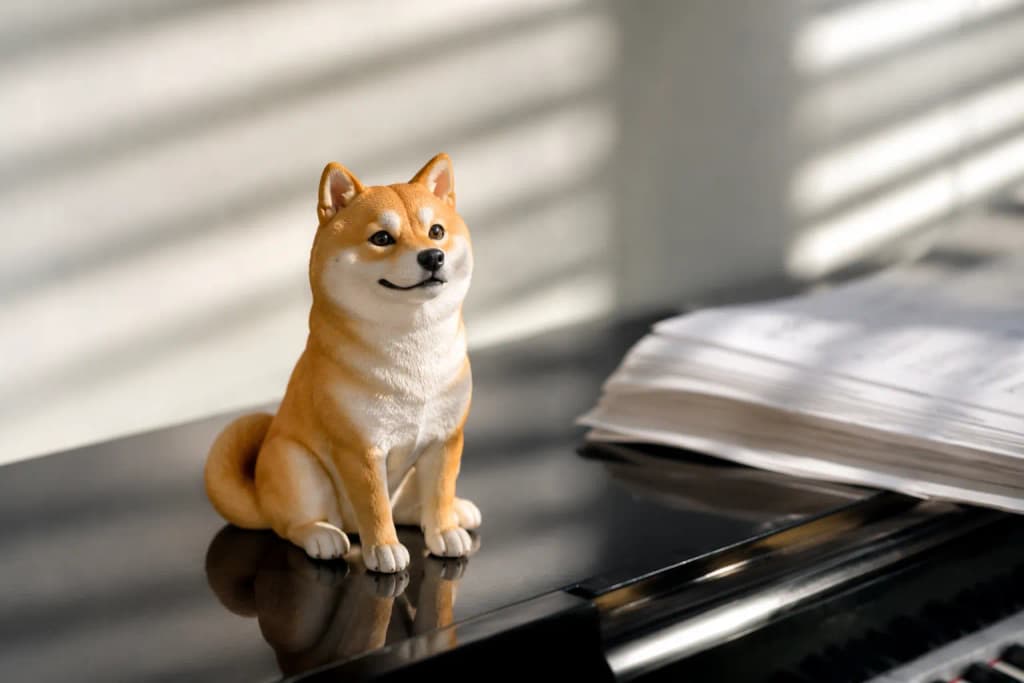
Here's the thing worth sitting with. Whichever path you choose, the finished object will never hold the warmth of the real coat under your hand, that specific density of a Shiba's fur when you bury your fingers in the ruff on a cold morning. No figurine claims to.
What a good sculpted portrait does hold is the shape of a memory in something you can pick up. The weight of resin in your palm. The cool smooth varnish over the fine printed grain. The curl of a tail set exactly the way your dog set it. A scan captures a body. A sculpt captures a bearing, the way this one animal occupied space.
That's the line PawSculpt keeps coming back to: a portrait, not a photocopy. The value isn't in fooling your eye. It's in reminding your hand.
Frequently Asked Questions
Can I 3D scan my dog at home for a figurine?
You can, and the tech is genuinely fun to play with. Just set expectations. Home LiDAR and app-based scanners do well on hard, still objects and struggle badly with fur, dark coats, and any movement. For a Shiba specifically, the double coat and curled tail are where most home scans fall apart.
Why does a custom figurine take weeks when a scan takes minutes?
Because the time isn't spent printing, it's spent correcting. The process includes an instant AI preview, then a digital sculpt with an artist's 3D preview within about seven days of deposit, then your review and revisions, then full-color printing and a clear protective coat. Delivery typically runs 27 to 40 days in the US and 33 to 47 internationally after final payment. Those weeks are what a scan skips.
Is a studio sculpt more accurate than a DIY 3D scan?
For living pets, usually yes, though "accurate" is the wrong word. A scan reproduces one frozen instant, flaws and all. A skilled artist reconciles multiple photos into a likeness that reads as your actual pet. The catch: only if there's real human sculpting involved, so confirm the studio shows you an artist preview.
What photos work best for a custom pet portrait?
Three to five in-focus shots from different angles, front, both profiles, and a three-quarter view, taken in soft natural light. Avoid harsh flash, which flattens dark markings. Include one clear photo of the tail and one that shows your pet's characteristic expression, since expression carries most of the likeness.
Are these figurines hand-painted?
No. The color is printed directly into full-color resin as the form is built, pigment placed alongside the geometry rather than brushed on top. The only manual step is a clear protective coat for durability and sheen. That's why the surface keeps a subtle, authentic printed texture rather than a flat painted look.
Ready to Celebrate Your Pet?
Every pet has a story worth preserving. Whether you're honoring a beloved companion who's crossed the rainbow bridge or celebrating your Shiba Inu's stubborn, glorious personality, a custom PawSculpt figurine, a sculpted portrait, not a photocopy, captures the character that makes your pet one-of-a-kind. Skip the DIY 3D scan guesswork and start with a real artist reading your pet's photos.
Start with a free instant AI preview, then an artist's 3D preview before production. Every order ships insured, tracked, and carefully packed.