
The Science of Solace: How a Ferret Figurine triggers the Release of Oxytocin
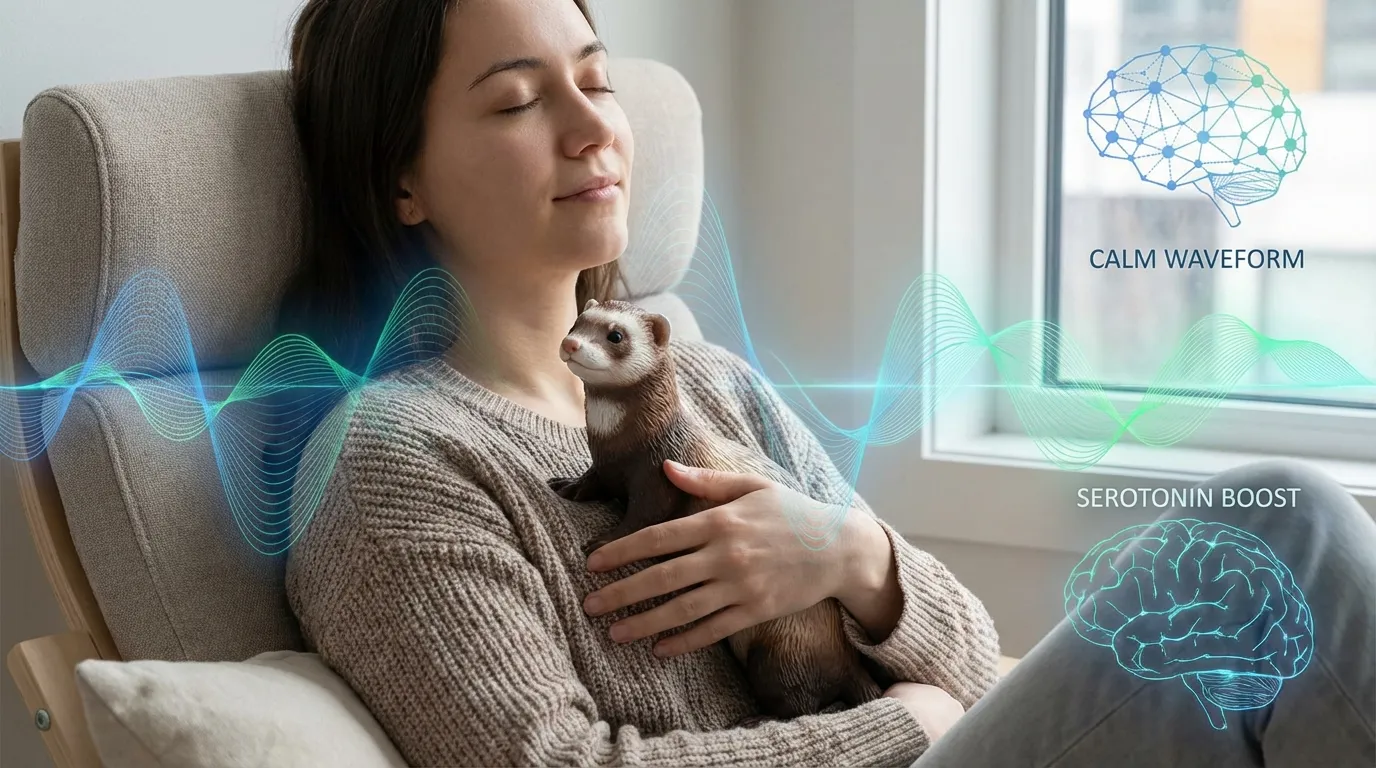
Your hand instinctively drifts toward the hammock in the corner of the cage, fingers anticipating that distinct, warm weight of a sleeping ferret. But your knuckles brush against cold fabric instead, and the sudden lack of resistance sends a physical jolt through your chest. It’s in these micro-moments—the muscle memory of reaching for them—that the loss feels heaviest, proving that grief isn't just an emotion, but a biological craving for a connection that’s no longer there.
Quick Takeaways
- Touch triggers healing — Holding a physical object can lower cortisol and simulate the chemical comfort of pet ownership.
- Grief has a shape — Our brains map the specific curvature and weight of our pets, making generic memorials feel "wrong."
- Small pets, big void — The loss of a ferret often carries "disenfranchised grief," making tangible anchors even more vital.
- Preserving the unique pattern — Advanced custom pet figurines use full-color 3D technology to capture specific markings that photos flatten.
The Biology of the "Empty Hands"
We often talk about grief as a sadness of the heart, but for ferret owners, it is profoundly a sadness of the hands. Ferrets are not "observe from a distance" pets. They are tactile, kinetic energy wrapped in fur. They are draped over shoulders, tucked into hoodies, or sleeping in a pile of warm laundry.
When that constant physical contact ceases, your body enters a state of withdrawal.
Research into the human-animal bond shows that stroking a pet releases oxytocin—the "love hormone"—in both the human and the animal. This chemical floods your system, lowering blood pressure and reducing anxiety. When your ferret passes, that oxytocin loop is severed abruptly.
"Grief is the unspent love gathering in the corners of your eyes, the lump in your throat, and the hollow part of your chest."
This is why a two-dimensional photograph, while beautiful, often fails to soothe the deepest ache. Your eyes see the memory, but your hands are still searching. This is where the concept of a "transitional object" comes into play. Psychologists have long utilized comfort objects to help humans navigate separation; a three-dimensional representation of your pet can serve as a physical anchor, tricking the brain just enough to release a micro-dose of oxytocin and allow the nervous system to settle.
The Architecture of a Ferret
As artists and digital sculptors, we look at animals differently. We don't just see a "ferret." We see the unique architecture of their joy.
A ferret isn't built like a cat or a dog. They possess a fluid, serpentine grace—a "noodle" quality that is incredibly difficult to capture but essential to remember. When we digitally sculpt a memorial piece, we aren't just looking at the color of the fur; we are looking at the gesture.
- The Arch: The specific way they curved their spine when they were excited (the "war dance").
- The Slump: The absolute liquidity of a ferret in deep sleep, where they seem to have no bones at all.
- The Mask: The bandit markings that gave them their mischievous expression.
Why Texture Matters in Memory
Standard manufacturing often fails ferret owners because it relies on generic molds. They paint a standard "weasel" shape with brown paint. But your ferret didn't look like a generic weasel.At PawSculpt, we utilize full-color 3D printing technology. We don't paint on top of the resin; the color is built into the material, voxel by voxel (think of a voxel as a 3D pixel). This allows us to replicate the gradient of a sable coat or the subtle cream undertones of a champagne ferret with a realism that hand-painting simply cannot achieve. The result is a piece that interacts with light the way fur does—absorbing and reflecting it to create depth.
Navigating "Disenfranchised Grief"
There is a unique pain reserved for owners of "small" pets. You may have already encountered it: the well-meaning friend who says, "It was just a ferret," or the coworker who asks when you're getting a "real" pet.
Psychologists call this disenfranchised grief—sorrow that isn't acknowledged or validated by society.
"The size of the grief doesn't correspond to the size of the empty cage."
This isolation can make the grieving process longer and harder. You might feel foolish for mourning a creature that fit in a shoebox. You might feel guilty for the relief you felt when a long battle with insulinoma or adrenal disease ended, and then immediately feel shame for that relief.
This is why tangible memorials are acts of rebellion. By commissioning a custom figurine, you are physically validating your loss. You are making the invisible visible. You are saying, This life mattered. This bond was real.
| Memorial Type | Sensory Engagement | Longevity | Emotional Impact |
|---|---|---|---|
| Digital Photo | Visual only | Indefinite | High nostalgia, low comfort |
| Plush Toy | Tactile (Soft) | Low (wear & tear) | Good for hugging, lacks realism |
| Custom Figurine | Visual + Tactile (Shape) | Lifetime | High grounding + validation |
| Urn/Ashes | Conceptual | Lifetime | Somber, emphasizes death |
The Art of "Grounding" with a Figurine
We've learned from thousands of pet parents that a figurine shouldn't just sit on a high shelf gathering dust. It is a tool for grounding.
Grounding is a therapeutic technique used to pull a person out of a panic attack or a spiral of grief and back into the present moment. Here is a ritual many of our clients find helpful during the acute stages of loss:
- Place the figurine in a spot where your ferret used to spend time (not hidden away).
- When the wave of grief hits, pick up the figurine.
- Trace the contours of the ears or the curve of the tail with your thumb.
- Acknowledge the memory: "I remember how soft his ears were," or "I miss the sound of his dooking."
This simple physical action bridges the gap between the memory in your head and the reality of the room. It gives your hands something to do with the love they are trying to give.
A Note on Guilt and Moving On
Many ferret owners hesitate to get a memorial because they fear it means they are "stuck" in the past, or conversely, that getting a "replacement" object means they are moving on too fast."We've seen families heal by holding something tangible. Grief needs an anchor, otherwise, it just drifts."
— The PawSculpt Team
The truth is, a custom figurine isn't about replacing the pet. It's about externalizing the memory. When the memory is safely captured in a physical object—the exact pattern of their mask, the pink of their nose—you don't have to carry the burden of "remembering every detail" in your mind constantly. You can relax, knowing their image is preserved, allowing you to grieve more naturally.
Why 3D Precision Matters for Ferrets
Ferrets have incredibly specific markings. A "panda" ferret isn't just black and white; the distribution of the white on the head is like a fingerprint. A "blaze" has a specific white stripe that defines their face.
Traditional sculpting methods (clay, hand-painting) struggle with these organic, chaotic patterns. The brushstrokes can look artificial.
Our process starts with digital sculpting by master artists who understand anatomy. We model the ferret in a virtual space. Then, we use PolyJet-style full-color resin printing. This technology allows us to print the pattern directly as the object is created. We don't wait for paint to dry because there is no paint. The result is a seamless, vibrant reproduction of your ferret's unique coat, protected by a simple clear coat for longevity.
This precision is what triggers the "recognition" in your brain. It’s not just a ferret. It’s your ferret.
Frequently Asked Questions
Why does holding a memorial object help with grief?
Grief is a physical experience, not just a mental one. Your body is accustomed to the sensory input of your pet. Holding a physical object can stimulate the release of oxytocin and lower cortisol levels, providing a biological sense of comfort that mimics the soothing effect of petting an animal. It serves as a "transitional object" to help the brain process the absence of the pet.How do you capture a ferret's specific markings without painting?
We use advanced full-color 3D printing technology. The color is integrated into the resin material itself, voxel by voxel, during the printing process. This allows for complex, organic fur patterns and gradients—like the subtle shift from cream to sable—that hand-painting often struggles to replicate accurately.Is it normal to feel this much grief for a ferret?
Absolutely. This is often called "disenfranchised grief." Ferrets are highly interactive, bonded animals that require significant daily care. The depth of your grief is a reflection of the depth of your bond, not the size of the animal. Your feelings are valid and shared by the entire ferret community.What photos do I need for a custom ferret figurine?
We recommend clear photos showing your ferret's face (front and profile), the specific markings on their back, and their tail. Photos taken in natural light are best to capture the true coat color. However, our digital artists are skilled at reconstructing details from imperfect photos if that's all you have.Ready to Celebrate Your Pet?
Every pet has a story worth preserving. Whether you're honoring a beloved companion who's crossed the rainbow bridge or celebrating your furry friend's unique personality, a custom PawSculpt figurine captures those details that make your ferret one-of-a-kind.
Free instant AI preview • 3D artist preview within 7 days • 5 free revisions