
The Rabbit Hole of Grief: Structuring a Memorial Nook for Your Holland Lop
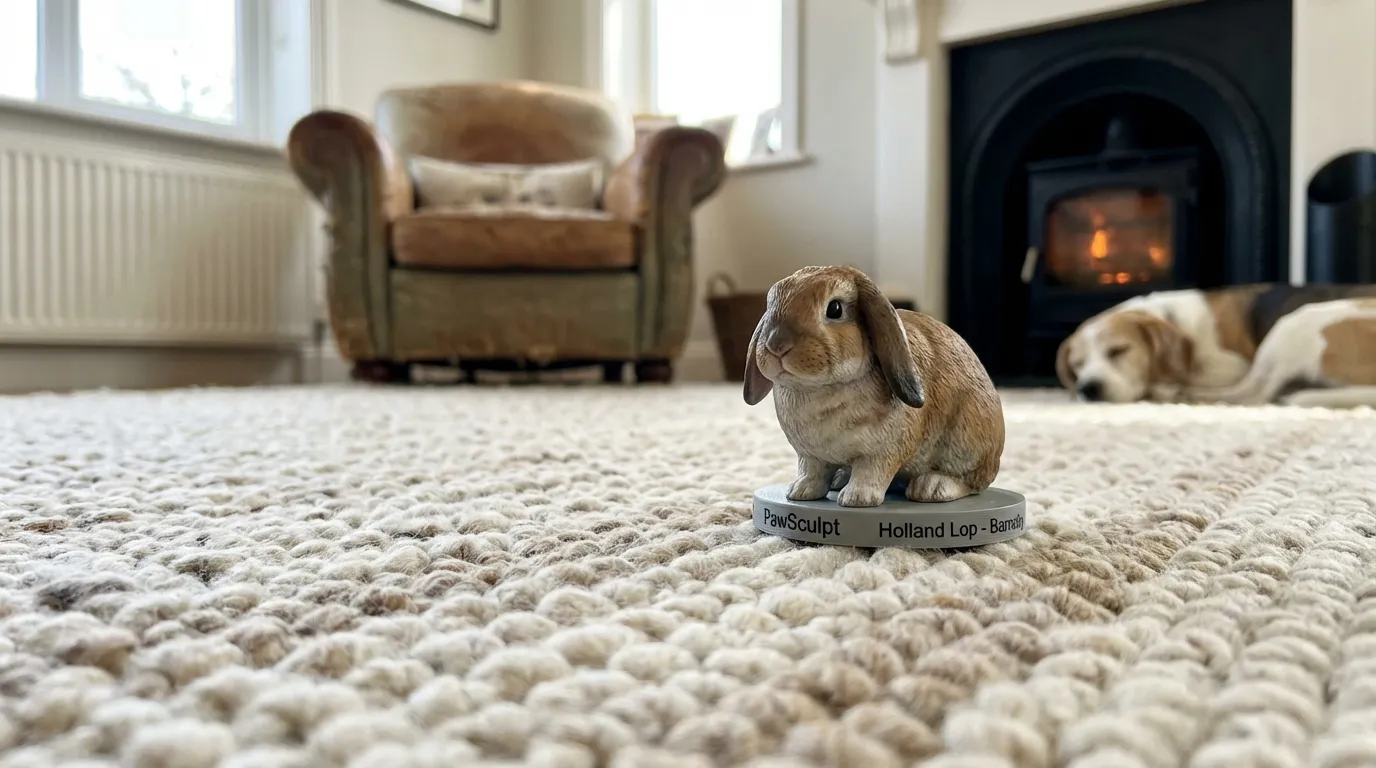
You’re standing in the garage, staring at a half-empty bag of Timothy hay, the sweet, grassy smell hitting you harder than you expected. It’s been three days since your Holland Lop passed, yet you can’t bring yourself to throw away the bedding or the chew toys, because that feels like throwing away the last physical evidence that they existed.
Quick Takeaways
- Action over rumination — Grief in rabbits is silent; your memorial process shouldn't be.
- The "3-Day Rule" — Wait 72 hours before permanently dismantling their enclosure to process the change.
- Tactile grounding — Keep one item (like a soft fleece blanket) unwashed in a sealed bag for scent preservation.
- Permanent anchors — Create a dedicated physical space using a custom figurine to direct your grief toward something tangible.
The unique silence of a rabbit home
When a dog dies, the house is too quiet because there are no barking or nail clicks. When a rabbit dies, the silence is different. It’s a visual silence. You look at the corner where the x-pen used to be, and the absence of that twitching nose or the soft thump of a hop is deafening.
Most general pet loss guides don't account for the specific nature of rabbit ownership. Rabbits are prey animals; they hide illness until the very end. This often leaves Holland Lop owners with a specific, searing type of guilt—the feeling that you missed a sign, that you should have known.
"Grief isn't a problem to be solved. It's a love story that continues after the last chapter."
We need to address this immediately: You didn't fail. They are biologically wired to deceive you about their pain. The practical way to handle this guilt isn't to suppress it, but to externalize it into a space that honors their memory.
Phase 1: The Physical Triage
The first week is about logistics that feel like emotional landmines. The practical approach is to sort, not purge. You need a system, or you will end up keeping a bag of litter for three years "just in case."
The "Keep, Donate, Toss" Protocol
Grab three opaque bins. Do not use clear plastic; seeing the items constantly will trigger anxiety loops.- The "Anchor" Bin (Keep): This is for sentimental items only. The favorite wooden chew block with their teeth marks. The specific ceramic bowl they threw around. The fleece liner they groomed.
- The "Legacy" Bin (Donate): Unopened food, hay, unused bedding, and sanitized hard plastic toys. Local rabbit rescues are desperate for these supplies. Donating them transforms your loss into survival for another bun.
- The "Release" Bin (Toss): Heavily chewed litter boxes, used hay, open bags of pellets (which spoil).
Counterintuitive Insight: Do not clean the "Anchor" items immediately. Put them in the bin as-is. You might want to smell that hay-and-fur scent six months from now. If you wash it all away today, you can't get it back.
| Item Category | Action | Why? |
|---|---|---|
| Opened Food/Hay | Compost/Toss | Spoils quickly; not safe for other pets. |
| Hard Toys/Hideouts | Sanitize & Donate | Durable items help shelters save money. |
| Soft Bedding (Used) | Toss | Hygiene risk; holds odors you might not want later. |
| Soft Bedding (Favorite) | Seal in Ziploc | Preserves the specific scent of your bun. |
| Medical Supplies | Check w/ Vet | Some rescues can legally accept certain unopened supplies. |
Phase 2: Constructing the Memorial Nook
A "shrine" sounds religious and daunting. A "nook" is manageable. You need a physical location to direct your thoughts. When you feel that wave of sadness, you need a place to go, look, and acknowledge it, rather than letting it consume your whole living room.
Location Matters
Don't put this in a high-traffic area where you'll knock it over with groceries. Also, avoid the exact spot where their cage was—that emphasizes the emptiness. Choose a bookshelf at eye level or a small side table in a quiet corner.The Centerpiece Strategy
A memorial nook needs a focal point. Without one, it’s just a collection of clutter.For Holland Lops specifically, their silhouette is iconic—the crown of the head, the lopped ears framing the face. Photos are flat. They capture the look, but not the presence. This is where three-dimensional objects bridge the gap.
Many rabbit owners find solace in a custom figurine that replicates their bun's specific markings—the broken pattern spots, the specific shade of tort, or the unique ear lay. Having a 3D representation allows you to run your finger over the "fur" texture, grounding you in the present moment while honoring the past.
The Sensory Elements
Rabbits are tactile creatures. Your memorial should be too.- Touch: Include a small patch of their favorite blanket or a piece of soft faux fur.
- Smell: Dried lavender or chamomile. These are safe, rabbit-friendly herbs that likely remind you of their treats.
- Sight: A framed photo is standard, but try to find a candid one—mid-binky or mid-yawn—rather than a posed portrait.
Phase 3: The "Ghost" Routine
Here is the part nobody talks about: The phantom routine. You wake up and your body automatically moves to the fridge to get greens. You walk carefully to avoid stepping on a bun that isn't there.
The Fix: You have to rewrite the neural pathway.
When you catch yourself reaching for the kale, don't just stop and feel sad. Redirect that energy. Walk to your memorial nook. Light a small LED candle (safer than real flame). Say their name out loud. Acknowledge the change.
"I am reaching for greens because I loved caring for you. I don't need to do that today, but I remember."
It sounds clinical, but it works. You are acknowledging the impulse without letting the grief spiral.
"We've seen families heal by holding something tangible. Grief needs an anchor."
— The PawSculpt Team
Dealing with the "Just a Rabbit" Crowd
You will likely encounter people who say, "It was just a rabbit. Get another one."
This is isolation fuel. It makes you feel stupid for grieving this hard. But here is the reality: Rabbits require an immense amount of specialized care, patience, and trust-building. The bond you form with a prey animal who learned to trust you is arguably deeper than with a predator animal like a dog or cat. You earned that love.
The Script:
When someone minimizes your loss, do not argue. Use this line:
"Rabbits are high-maintenance, intelligent exotics. The bond is different, and the loss is significant to me."
Then, disengage. You do not owe them an explanation of your grief.
The Timeline of "Moving On"
There is no standard timeline, but there are common phases.
- Weeks 1-2: The "Phantom" Phase. You hear them drinking from the water bottle. You see shadows.
- Month 1: The "Quiet" Phase. The routine is gone. The house feels empty. This is usually when the reality sets in.
- Month 3-6: The "Integration" Phase. You can look at photos and smile instead of cry.
A Note on Bonding: If you have a surviving bonded partner, their grief is the priority. They may stop eating. They may search the house. Keep the routine strict for them. They need stability more than they need your tears. If you are considering a new friend for the survivor, wait until you are ready, not just when you think the rabbit is lonely. A stressed human makes for a stressed bonding date.
Frequently Asked Questions
How long do rabbits grieve the loss of a partner?
Rabbits bond for life, so their grief can be profound. Visible signs like lethargy, loss of appetite, or searching behavior typically last 2 to 4 weeks, but can go longer. It is critical to monitor their eating habits closely during this time, as grief can trigger GI stasis.Is it morbid to keep my rabbit's fur?
Absolutely not. Many owners keep a lock of fur clipped during the final vet visit, or collect shed fur from a brush. It is a tactile reminder of their softness. Placing it in a small glass vial or a clear ornament is a beautiful way to preserve it without it getting dusty.Should I get another rabbit immediately for my surviving bun?
This is a delicate balance. While rabbits are social, rushing into a new bond while you are an emotional wreck can backfire. Wait until the survivor is eating and acting normal again (usually a few weeks). You need to be calm to handle the stress of bonding dates.Why does losing a rabbit feel different than a dog?
Rabbits are fragile. We spend their whole lives protecting them from invisible threats (stasis, predators, fright). When they die, the "protector" instinct in us feels like it failed, leading to a unique mix of grief and responsibility that dog owners might not experience in the same way.Ready to Celebrate Your Pet?
Every pet has a story worth preserving. Whether you're honoring a beloved companion who's crossed the rainbow bridge or celebrating your furry friend's unique personality, a custom PawSculpt figurine captures those details that make your pet one-of-a-kind.
Free instant AI preview • 3D artist preview within 7 days • 5 free revisions
Moving Forward, Not Moving On
You don't "move on" from a Holland Lop who trusted you enough to sleep with their eyes closed. You move forward with them tucked into your history.
The goal of the memorial nook, the sorting of the bins, and the structuring of your grief isn't to erase the pain. It's to give the love a place to live. When you look at that shelf, at the small jar of fur or the custom figurine standing guard, you aren't looking at an ending. You're looking at the evidence that you were chosen by a creature who didn't trust easily, but trusted you.