
Stop Hiding Grief: Why Your Golden Retriever Memorial Belongs in the Living Room
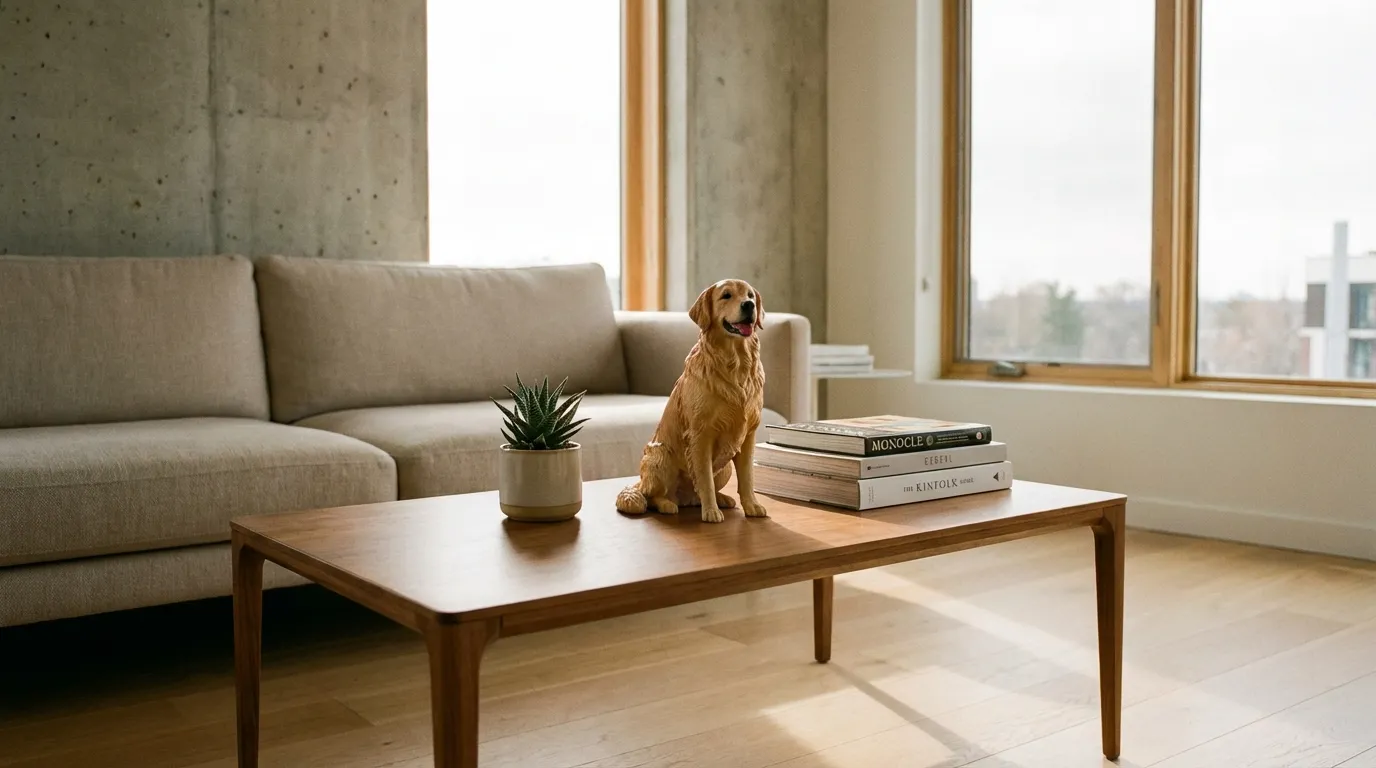
Do you find yourself staring at that specific patch of sunlight on the living room rug, waiting for a golden tail to thump against the floorboards? It’s a silence that screams, isn't it? When you lose a dog that took up so much physical and emotional space, the emptiness of the room feels heavier than the presence ever did, leaving you wondering how to navigate a Golden Retriever memorial without turning your home into a shrine of sadness.
Quick Takeaways
- Grief needs visibility — Hiding memorials in bedrooms reinforces the idea that sadness is shameful.
- Integration over isolation — Placing tributes in high-traffic areas helps normalize the loss.
- Tangible anchors work — Holding a physical object can lower cortisol levels during grief spikes.
- Customization matters — Generic statues fail to capture the specific soul of your dog; custom figurines bridge that gap.
- Relief is normal — It is okay to feel relief that caretaking has ended; this does not negate your love.
The "Hidden Shrine" Phenomenon: Why We Tuck Grief Away
We need to talk about the hallway closet. Or the top shelf of the bookcase in the spare bedroom. Or that drawer where the collar and the final vet paperwork sit, untouched.
In our work with thousands of grieving families, we’ve noticed a pervasive pattern: the "Hidden Shrine." Immediately after the loss, we feel an intense need to keep everything. But as weeks turn into months, well-meaning friends or societal pressure whisper that it's time to "move on." We start to feel self-conscious about the dog bed that’s still in the corner or the leash hanging by the door.
So, we move the memories. We tuck the ashes away. We put the photos in a box. We sanitize our living spaces of the grief, trying to make the living room look like a "normal" home again.
But here is the counterintuitive truth: Hiding the physical evidence of your dog actually prolongs the sharpest phase of grief.
When you remove every trigger from your main living space, you create a disconnect between your internal reality (which is still mourning) and your external environment (which looks untouched). This cognitive dissonance is exhausting. Every time you walk into a "sanitized" living room, your brain has to work overtime to suppress the memory of where your Golden used to lay.
"We sanitize our living spaces of the grief, trying to make the living room look like a 'normal' home again."
By integrating a Golden Retriever memorial directly into your daily living space, you aren't refusing to move on. You are acknowledging that the love you shared happened here, in the center of your life, not in a closet.
The Specific Weight of a Golden Absence
Losing a Golden Retriever hits differently. We aren't saying other breeds are loved less, but we are acknowledging the specific physics of a Golden. They are large, physical dogs. They are "leaners." They are "Velcro dogs."
If you had a Golden, you didn't just have a pet; you had a shadow. You had 70 pounds of warm fur resting on your feet while you did dishes. You had a wet nose nudging your elbow every time you sat on the couch.
When that physical mass is suddenly gone, the sensory deprivation is extreme.
The "Velcro Void"
Our bodies possess "muscle memory" of our pets. You might find yourself:- Stepping over a spot on the floor that is now empty.
- Reaching down blindly to scratch a head that isn't there.
- Bracing yourself for a greeting when you unlock the front door.
This is why generic memorials often fail for Golden owners. A flat photograph, while beautiful, doesn't occupy space. It doesn't cast a shadow. It doesn't catch the light. Your brain is craving 3D presence because your relationship was defined by physical touch and proximity.
The Taboo Emotion: Relief (And the Guilt That Follows)
We need to pause here and address something that almost no one talks about at the dog park or in sympathy cards.
The relief.
If your Golden battled cancer, hip dysplasia, or old age, the final months were likely a grueling regimen of lifting them into cars, managing medications, cleaning accidents, and watching them fade. It was a labor of love, but it was labor.
When they pass, there is often an immediate, involuntary wave of relief. The suffering—theirs and yours—is over. You can sleep through the night. You don't have to worry about the stairs.
And then, the guilt crushes you.
You might think, How can I feel relieved? Does this mean I didn't love them enough? am I a terrible person?
We hear this from grieving owners constantly. Please hear us: Relief is not the absence of love. It is the absence of stress. You are grieving the dog you loved while being relieved that the trauma of their decline has ended. These two emotions can, and do, coexist.
Acknowledging this complexity is why we believe memorials shouldn't just be somber reminders of death. They should be celebrations of the vibrant life that existed before the decline.
Why Your Memorial Belongs on the Coffee Table
The modern approach to pet loss is shifting away from somber urns and toward "integrated aesthetic memorials." This isn't about disrespect; it's about design psychology.
If your memorial looks like a tombstone, your brain registers "death" every time you see it. If your memorial looks like art, your brain registers "beauty" and "memory."
The Psychology of Transitional Objects
In psychology, a "transitional object" is something that provides psychological comfort during a period of stress. For children, it's a blanket. For grieving adults, it can be a tangible representation of the loved one.Studies on grief suggest that "continuing bonds"—maintaining a connection with the deceased rather than severing it—is a healthier way to process loss. A physical object in the living room serves as an anchor for these bonds.
| Memorial Placement | Psychological Signal | Emotional Impact |
|---|---|---|
| Hidden (Closet/Drawer) | "Shame," "Move on," "Forget" | Increases anxiety, feeling of betrayal |
| Bedroom Shrine | "Private grief," "Separation" | Isolates grief to specific times of day |
| Living Room (Central) | "Integration," "Family member," "Life" | Normalizes the loss, invites conversation |
| Entryway | "Greeting," "Presence" | Acknowledges the routine of coming home |
Designing for Connection, Not Depression
So, how do you put a memorial in the living room without it feeling morbid?- Choose Art over Artifacts: Instead of a box of ashes (which is abstract), choose a representation of the dog. A custom figurine, a painting, or a framed collar shadow box.
- The "Life" Corner: Place the memorial near living things. A houseplant, a window with a view, or a candle. This associates the memory with life and light, not stagnation.
- Tactile Elements: Ensure the memorial is touchable. Glass cases create distance. You want something you can brush your hand against as you walk by, mimicking the interaction you had with your dog.
The Role of Tangible Art in Healing
This is where the difference between a photograph and a sculpture becomes profound. We are visual creatures, but grief is often tactile.
At PawSculpt, we’ve seen a fascinating shift. People are moving away from traditional taxidermy (which many find uncanny or unsettling) and generic "angel dog" statues (which don't look like their dog). They are moving toward hyper-realistic, digitally crafted representations.
Why 3D Printing Resonates with Golden Owners
Golden Retrievers have distinct coats. The feathering on the legs, the crimping behind the ears, the way the gold transitions to cream on the underbelly.Traditional hand-painting often fails here. Paint sits on top of a surface, often looking thick or artificial.
Our process uses full-color 3D printing technology. This means the color is not painted on; it is built into the resin itself, voxel by voxel (think of a voxel as a 3D pixel). This allows for:
- Subsurface Scattering: Just like real fur or skin, the light penetrates slightly, giving it a natural glow rather than a plastic shine.
- Complex Gradients: We can replicate the subtle shift from the dark "saddle" of a Golden's back to the lighter feathers on their tail without harsh brush strokes.
- Texture: The print captures the texture of the fur digitally, so it feels organic to the eye.
"We've seen families heal by holding something tangible. Grief needs an anchor."
— The PawSculpt Team
When you place a custom figurine on your coffee table, you aren't looking at a generic dog. You are looking at your dog's specific markings, their unique sitting posture, the way one ear might have flopped more than the other. It becomes a catalyst for storytelling rather than silence.
Navigating Social Awkwardness
One of the reasons people hide their grief is fear of judgment. We worry that visitors will see a memorial and feel uncomfortable, or worse, think we are "crazy dog people" who can't let go.
Here is the secret: You set the tone.
If you treat the memorial as a tragic secret, visitors will follow your lead. If you treat it as a beautiful piece of art that honors a family member, they will respect it.
Scripting the Conversation:
Visitor:* "Oh, is this a statue of Barnaby?"
You (The old way):* "Yeah, sorry, I know it's sad, I just miss him."
You (The empowered way):* "Yes! Isn't the detail amazing? It captures exactly how he used to look at me when he wanted a treat. It makes me smile every time I see it."
By framing the object as a source of joy and a tribute to a personality, you give permission for others to share happy memories too.
Practical Steps to Create a "Living" Memorial
If you are ready to bring your grief out of the shadows and into the living room, here is a practical guide to doing it tastefully and meaningfully.
1. Select the Anchor Piece
This is the focal point. It could be a high-quality photo book, a custom 3D portrait, or a beautiful ceramic bowl. The key is quality. If it’s going in your main living space, it should look intentional, not cluttered.
2. The Rule of Three
In design, odd numbers are more pleasing to the eye. Group your memorial items in threes:
- Item 1: The representation (Figurine or Photo).
- Item 2: The organic element (Succulent, flower vase, or candle).
- Item 3: The personal artifact (Collar, tag, or favorite small toy).
3. Location, Location, Location
Avoid the "shrine in the corner." Place it where life happens.
- The Bookshelf: Nestled among your favorite novels.
- The Mantle: Center stage, surrounded by family photos.
- The Side Table: Right next to "their" spot on the couch.
4. Rotate the Memories
You don't have to keep the same display forever. Some of our community members change the photos seasonally—showing their Golden in the snow during winter, and at the beach during summer. This keeps the memory dynamic and active.
Moving Forward Without Leaving Them Behind
There is a misconception that "closure" means closing the door. We don't believe in that. We believe in integration.
You don't "get over" the loss of a Golden Retriever. You grow around it. The grief that currently feels like a boulder blocking your path will eventually become a stone in your pocket—still there, still heavy, but something you can carry with you.
Bringing their memory into your living room is a declaration. It says that their absence is as significant as their presence was. It says that you are not afraid to remember.
"Grief isn't a problem to be solved. It's a love story that continues after the last chapter."
So, clear a space on the mantle. Open the blinds to let the sun hit that spot on the rug. And don't be afraid to let your home tell the story of the love that lived there.
Frequently Asked Questions
Is it healthy to keep pet ashes in the living room?
Yes. Psychology supports the concept of "continuing bonds." Keeping a memorial in a shared living space helps integrate the loss into your daily life, normalizing the grief rather than treating it as a dark secret to be hidden away. If it brings you comfort, it belongs there.How long does the intense grief for a dog last?
There is no standard timeline. Acute grief often lasts for the first few months, but "grief bursts" can happen years later. Because Golden Retrievers are often constant companions, the disruption to your daily routine can make the grieving process feel longer compared to pets that were less dependent or interactive.What is the difference between a custom figurine and a generic statue?
A generic statue represents a breed; a custom figurine represents your dog. Generic items are mass-produced molds. Custom pieces, like ours, are digitally sculpted by artists looking at your specific photos, then 3D printed to capture your dog's unique asymmetrical ears, specific coat patterns, and that one-of-a-kind expression.How do I choose the best photo for a custom pet memorial?
For the best result, look for photos taken in natural daylight (outdoors or near a window) which shows the true color of the fur. We usually need a few angles—front, side, and back—to get the markings right, but the most important photo is the one that captures their "soul"—that specific look in their eyes that you want to remember.Why do I feel guilty about getting a new dog?
This is the "loyalty conflict." It’s the fear that loving a new dog somehow overwrites the love for the one you lost. It helps to reframe this: Your Golden taught you how to love a dog. Getting another dog is actually a tribute to them—it means the relationship was so positive that you want to experience it again.Ready to Celebrate Your Pet?
Every pet has a story worth preserving. Whether you're honoring a beloved companion who's crossed the rainbow bridge or celebrating your furry friend's unique personality, a Golden Retriever memorial from PawSculpt captures those details that make your pet one-of-a-kind.
Free instant AI preview • 3D artist preview within 7 days • 5 free revisions