
Why You Shouldn't Rush to Donate the Bedding: The Scent of Grief
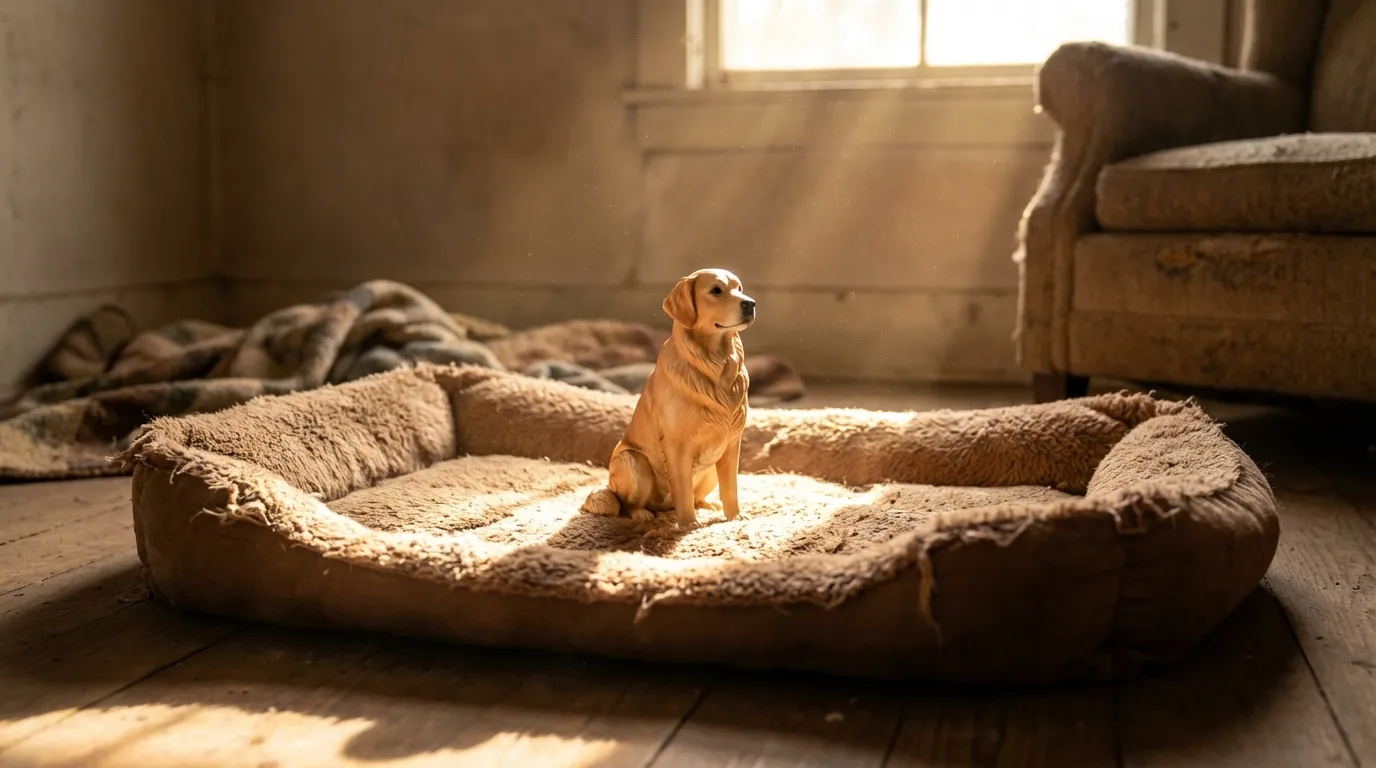
You wake up and your hand automatically drifts over the side of the mattress, fingers seeking the coarse texture of fur that isn't there. In the corner, the plaid dog bed sits empty, a physical anchor to the pet loss grief washing over you, and the impulse to scrub everything clean battles with the desperate need to bury your face in that worn fabric one last time.
Quick Takeaways
- Olfactory memory is biological — Scent bypasses your brain's logic center and hits the emotional core directly.
- The "cleaning panic" is a stress response — The urge to purge belongings immediately is often cortisol-driven, not a rational choice.
- Preservation allows gradual detachment — Sealing a piece of bedding in a bag can ease the neurological shock of loss.
- Tangible anchors help transition — Replacing soft bedding with permanent memorials like custom figurines helps the brain process absence.
The Neuroscience of Why You Can't Let Go
You might feel like you're "going crazy" because you're standing in the middle of your living room, hugging a blanket that smells like wet fur and earth, unable to put it in the washing machine. But what you are experiencing isn't just sentimentality; it is a profound biological reaction.The olfactory bulb has a direct line to the amygdala and hippocampus.
Unlike touch or sight, which are processed through the thalamus (the brain's relay station) before reaching the emotional centers, scent takes a shortcut. It is the only sense that bypasses the logical processing center. When you smell your dog's bedding, your brain isn't just recalling a memory; it is chemically reactivating the emotional presence of your pet.
Removing that scent too quickly creates a form of sensory dissonance. Your brain knows the pet is gone, but your environment still holds their chemical signature. This dissonance is actually helpful in the early stages of grief—it acts as a buffer, preventing the full weight of the absence from crushing you all at once.
"Grief isn't a problem to be solved. It's a love story that continues after the last chapter."
The "Cleaning Panic": Cortisol vs. Attachment
There is a counterintuitive phenomenon we often see in grieving pet owners. Within 48 hours of the loss, a wave of "cleaning panic" sets in. You might feel an intense, almost manic urge to vacuum every rug, wash every bowl, and donate the bedding immediately.This is your brain trying to control the uncontrollable.
When cortisol (stress hormone) levels spike during the trauma of loss, the brain seeks a task it can complete. You couldn't save them, but you can clean this room. However, this is often followed by a crash of regret.
The Emotional Whiplash of Relief and Guilt
Here is the uncomfortable truth that few people talk about: cleaning up might bring a fleeting sense of relief. The visual reminders of their illness or old age are gone. But that relief is almost instantly replaced by a crushing wave of guilt. You feel like you're erasing them.
This cycle—panic, cleaning, relief, guilt—is exhausting. If you rush to donate the bedding, you deny yourself the physical evidence that allows your brain to down-regulate that cortisol naturally over time.
Visualizing the Detachment Process
It helps to view the removal of their belongings not as a chore, but as a neurological weaning process.| Approach | Psychological Impact | Biological Response |
|---|---|---|
| The "Clean Sweep" | High risk of regret and "erasure" trauma. | Sudden drop in oxytocin; spike in cortisol due to environmental shock. |
| The Shrine Method | Can prolong the "denial" phase of grief. | Stagnation; the brain struggles to build new neural pathways for the "new normal." |
| Gradual Weaning | Allows for processing at your own pace. | Gentle reduction in attachment triggers; facilitates healthy neuroplasticity. |
Practical Steps for Scent Preservation
You don't have to keep the giant, dirty dog bed in the center of the room forever. But you also don't have to lose the scent today.The Ziploc Method
Take a small piece of their favorite blanket, or even a bandana they wore. Fold it and place it inside a high-quality, airtight freezer bag. Squeeze the air out and seal it.
- Why this works: It gives you an "emergency brake." When the grief becomes overwhelming, you can open the bag for a brief sensory connection. Knowing the scent is safe allows you to wash or donate the larger, bulkier items without feeling like you've lost everything.
The Gradual Relocation
Instead of moving the bed from the living room to the trash, move it to a spare room or a corner of the bedroom.
- Why this works: It breaks the habit loop. You stop looking at the empty spot in the living room, but your brain knows the object still exists in the house. This reduces the anxiety of separation.
"We've seen families heal by holding something tangible. Grief needs an anchor."
— The PawSculpt Team
Replacing Soft Grief with Hard Memories
Eventually, the scent will fade. This is a natural, albeit painful, part of the process. The biology of holding onto pet belongings shifts from needing the smell (a primal connection) to needing a form (a visual connection).This is often when people seek out more permanent tributes. While soft items like bedding are comforting, they are impermanent. They degrade. Transitioning from preserving a fading scent to honoring them with a permanent object can be a healthy step in "externalizing" your grief.
Some families plant memorial gardens. Others create photo books. And increasingly, pet parents are choosing tangible keepsakes like custom figurines that capture their pet's unique personality—the way they sat, the specific pattern of their coat, or that goofy grin. These objects serve as a new focal point, allowing you to direct your love toward something that won't fade or need to be washed.
When You Are Finally Ready
There is no timeline. Biology dictates that acute grief typically begins to soften around the six-week mark, as the brain's neuroplasticity begins to rewire your daily habits. But for many, it takes months.When you are ready to part with the bedding, consider these options to mitigate the guilt:
- The Shelter Donation: Many shelters specifically need used towels and blankets. Knowing their bed is comforting another frightened dog can transform the feeling of "throwing away" into an act of legacy.
- The Burial: If you have a yard, burying a small piece of the bedding with their ashes (or on its own) can feel like a proper closing ceremony.
- The Repurpose: If the bed has a removable cover, wash it and sew it into a small pillow or a pouch for their collar.
The Empty Corner
You might look at that empty corner in the bedroom differently now. It's not a void where your dog used to be. It's a space that is healing.Don't let anyone rush you. If you need to sleep with that blanket for another week, or another month, do it. Your brain is doing the hard work of rewiring a world without your best friend in it. Give it the time, and the scent, it needs to adjust.
Frequently Asked Questions
Is it unhealthy to keep my deceased pet's bedding?
No, it is not unhealthy. Psychologically, keeping the bedding serves as a "transitional object" that helps bridge the gap between presence and absence. It allows your brain to process the loss in doses rather than all at once. It only becomes a concern if it prevents you from functioning in daily life or maintaining hygiene for an extended period (typically past 6-12 months).How long does a dog's scent last on bedding?
Without preservation, the specific scent of your pet will begin to fade within 2-4 weeks due to air exposure and the natural breakdown of oils. However, storing a piece of fabric in an airtight container or vacuum-sealed bag can preserve the scent for months or even years, giving you a sensory connection you can revisit when you feel strong enough.Why do I feel guilty about washing my dog's blanket?
Guilt comes from the profound feeling of "erasing" evidence of their existence. Washing the blanket removes the biological signature (scent, fur, dirt) that your brain recognizes as "them." This is a normal part of the grieving process known as secondary loss—you aren't just losing the pet, you are losing the sensory details of them.What should I do if I already threw everything away in a panic?
Forgive yourself. The "cleaning panic" is a common fight-or-flight response to trauma. If the physical items are gone, focus on other sensory memories—photos, videos with sound, or visiting their favorite walking spots. You can also create new physical anchors, like a custom memorial or a framed collar, to serve as a focal point for your memory.Ready to Celebrate Your Pet?
Every pet has a story worth preserving. Whether you're honoring a beloved companion who's crossed the rainbow bridge or celebrating your furry friend's unique personality, a custom PawSculpt figurine captures those details that make your pet one-of-a-kind.
Free instant AI preview • 3D artist preview within 7 days • 5 free revisions