The Shadow on the Bed: Coping with the Loss of a Great Dane
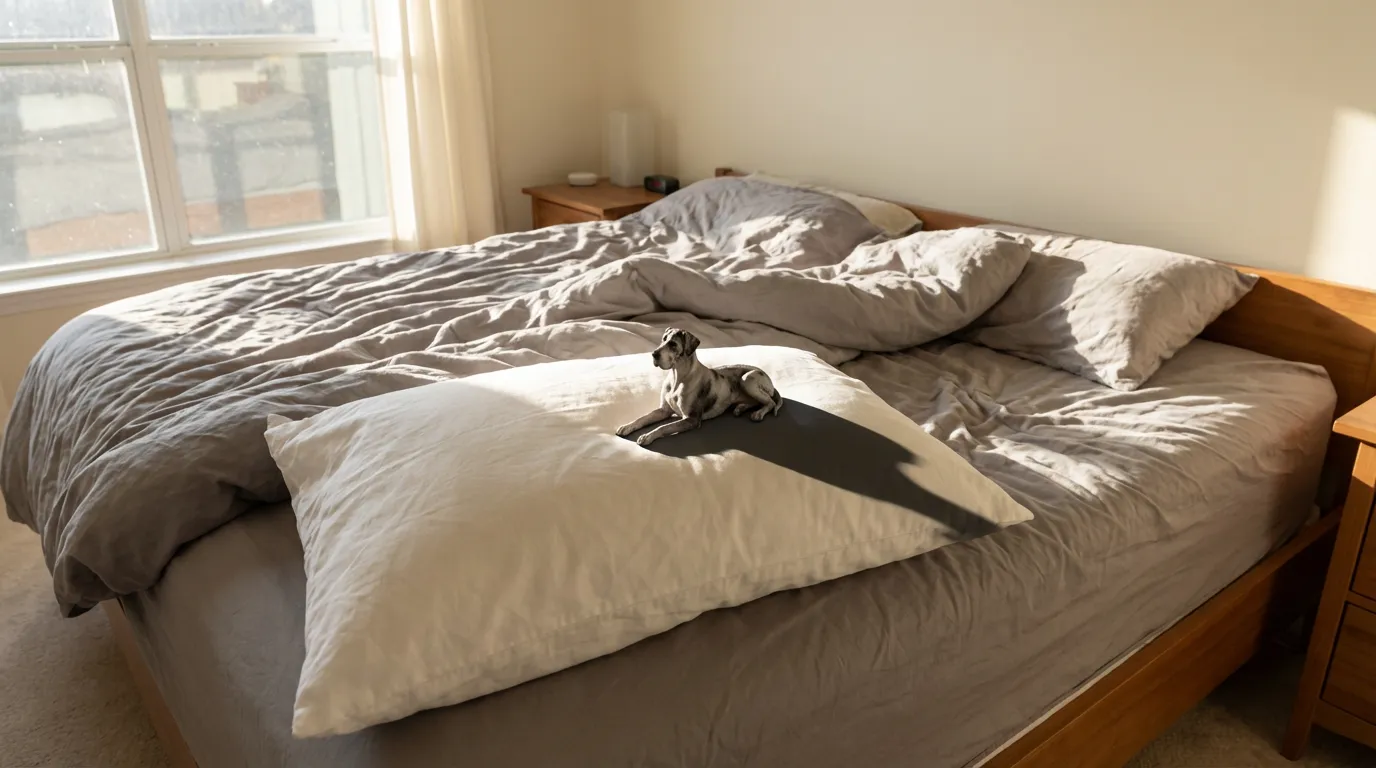
The mattress doesn't just feel empty; it feels physically unbalanced, like the gravity in the room has shifted now that 150 pounds of warmth is gone. You still walk wide around the kitchen island, bracing for a tail whip that never comes, your body remembering the sheer scale of the space they occupied even when your mind knows they aren't there.
Quick Takeaways
- Physical void is real — The loss of a giant breed creates a literal spatial emptiness that smaller dog owners may not understand.
- "Relief" is normal — Caring for a mobility-impaired giant dog is physically exhausting; feeling relief when the struggle ends doesn't negate your love.
- Prepare for the "big" questions — Strangers will ask where your "horse" is; have a rehearsed script ready to protect your peace.
- Anchor your grief — Tangible memorials, like PawSculpt’s custom figurines, help give physical form to a love that feels too big to contain.
The Silence of a Giant
When you lose a Chihuahua, you miss a presence. When you lose a Great Dane, you lose a landmark.
We need to talk about the specific, heavy silence that follows the death of a giant breed. Most pet loss guides talk about the emotional bond, and that is certainly true, but they rarely address the physics of losing a Dane. Their size dictated the flow of your entire household. You didn't just live with them; you navigated around them.
The unique angle of giant breed grief is the sudden surplus of space. It’s the empty spot on the sofa that looks big enough to park a car in. It’s the silence of not hearing those heavy paws thudding down the hallway—a sound that used to vibrate the floorboards.
One family we worked with described it perfectly: "It felt like the walls moved outward." This spatial grief is disorienting. Your proprioception—your body's sense of itself in space—has been calibrated to a giant obstacle for years. When that obstacle is gone, you might feel physically dizzy or unmoored.
"Grief isn't a problem to be solved. It's a love story that continues after the last chapter."
The Physical Toll of the Final Days (And the Guilt of Relief)
Here is the hard truth that few Great Dane owners admit out loud: The end is physically punishing.
Lifting a 140-pound dog who can no longer stand is a feat of strength that takes a toll on your back, your knees, and your sleep. You may have spent the last few months acting as a humancrutch, using slings to help them outside, or sleeping on the floor because they couldn't climb onto the bed they loved.
When they pass, there is often an immediate, crushing wave of relief. And then, almost instantly, comes the guilt.
You might think, I’m glad I don’t have to lift the harness today. Then you hate yourself for thinking it.
Please hear this: That relief is not about them dying. It is about the cessation of suffering—theirs and yours. Caregiver burnout is real, and with giant breeds, it is physical. You aren't a bad owner for enjoying a full night's sleep or for your back finally stopping its spasms. You are a human who pushed their physical limits out of love.
Managing the "Guilt-Relief" Cycle
| Emotion | Why It Happens | How to Reframe It |
|---|---|---|
| Physical Relief | Your body is recovering from heavy lifting and chronic stress. | "My body is resting so I can grieve properly." |
| Financial Relief | Giant breeds have giant vet bills and food costs. | "I spent what was needed when it mattered. Now resources have shifted." |
| Time Relief | Caretaking consumed your schedule. | "I have time now to honor their memory, not just manage their illness." |
The "Big Dog" Identity Crisis
Owning a Great Dane isn't just about having a pet; it's a lifestyle. You were the person with the "miniature horse." You were the one stopped on every walk by tourists wanting photos. You were the ambassador for the "gentle giant."
When that is gone, you might feel a strange loss of identity. Who are you on a walk without that massive leash in your hand?
This leads to a specific type of isolation. You might find yourself avoiding your usual walking routes not just because of the memories, but because you don't have the energy to explain to the neighborhood why you're walking alone.
The Counterintuitive Insight:
Most people think getting back to the routine helps. But with a Great Dane, sometimes breaking the routine is better. If walking the old route triggers questions from strangers that you aren't ready to answer, drive to a new park. Walk at a different time. You don't owe the neighborhood an explanation of your loss until you are ready to give it.
Tangible Anchors for a Big Love
Because Danes are so large, their absence feels massive. Often, our minds struggle to process that something so substantial is simply... gone. This is where tangible grief anchors become vital.
We've found that Great Dane owners, more than almost any other breed, seek out physical representations of their dogs. A photo often feels too flat. It lacks the dimension, the muscle, the unique way they sat with their hips rolled to the side.
Some families plant trees—oaks or redwoods that will grow to match the scale of the dog they lost. Others keep the collar, though a Dane's collar is so large it can feel overwhelming to look at.
This is where custom figurines often bridge the gap. There is something grounding about being able to see the specific curve of their jowls or the unique harlequin markings in 3D. It’s not about replacing them—nothing could. It’s about having a focal point for your memory that occupies physical space, just like they did.
"We've seen families heal by holding something tangible. Grief needs an anchor, especially when the loss feels as big as the room itself."
— The PawSculpt Team
Navigating the "Replacement" Question
"Are you going to get another one?"
People will ask this shockingly fast. With giant breeds, the question is complicated. Great Danes have heartbreakingly short lifespans (often 6-8 years). If you are a "Dane person," you know the deal: you sign up for a huge love and a quick heartbreak.
But jumping back in isn't just an emotional decision; it's a logistical one. Can you handle the puppy phase again? The chewing of drywall? The rapid growth?
The 6-Month Rule:
Consider waiting at least six months. Not just for grief, but to let your home "reset." Fix the scratches on the door frame. Replace the rug that was worn down. Allow yourself to live in a house that isn't dictated by the needs of a giant animal.
If and when you do get another, it won't be a replacement. It will be a successor.
When the House Feels Too Big
The silence we mentioned earlier? It changes over time. At first, it's deafening. Later, it becomes a dull hum.
Here are a few specific strategies for coping with the empty space:
- Rearrange the furniture. Close the gap where the dog bed used to be. Don't leave the "shrine" of empty floor space forever. It keeps your brain in a state of expecting them to be there.
- Wash the walls. Danes are notorious for "slingers"—drool that ends up in impossible places. Cleaning it off feels like erasing them, we know. But leaving it up can keep you stuck in the final, messy days of caretaking rather than the happy years of their prime.
- Donate the big stuff. Shelters are desperate for XXL crates and beds. Most donations are for small or medium dogs. Your Dane's equipment could be the reason a mastiff or saint bernard at a shelter gets a comfortable night's sleep.
Frequently Asked Questions
Why does losing a Great Dane feel harder than other pets?
It's a combination of their "velcro" personality and their physical imposition. Danes lean on you, sit on you, and physically occupy your personal space. When that contact is gone, your body physically misses the weight and pressure, creating a unique sensory deprivation.Is it normal to feel relief after my giant breed dog passes?
Absolutely. The physical demands of caring for a 100lb+ dog with mobility issues are immense. The relief you feel is the body's natural reaction to the cessation of intense caregiving stress. It coexists with your grief; it does not replace your love.How do I handle strangers asking where my dog is?
This is one of the hardest parts of losing a noticeable dog. It’s okay to be brief. A simple, "He passed away, thanks for asking," while keeping walking is sufficient. You don't owe strangers a conversation that ruins your morning.What should I do with their large items like crates and beds?
Take your time. When you're ready, look for giant-breed specific rescues. General shelters often don't have space for Great Dane-sized crates, but breed-specific rescues treat them like gold dust. Knowing their bed is comforting another giant can be healing.Ready to Celebrate Your Pet?
Every pet has a story worth preserving, but a Great Dane leaves a legacy that feels larger than life. Whether you're honoring a beloved gentle giant who has crossed the rainbow bridge or celebrating your current couch-hog, a custom PawSculpt figurine captures the unique stature and soul that makes your Dane unforgettable.
Free instant AI preview • 3D artist preview within 7 days • 5 free revisions