
Grieving Alone in a Studio Apartment: When Your Sphynx Cat Was Your Only Family
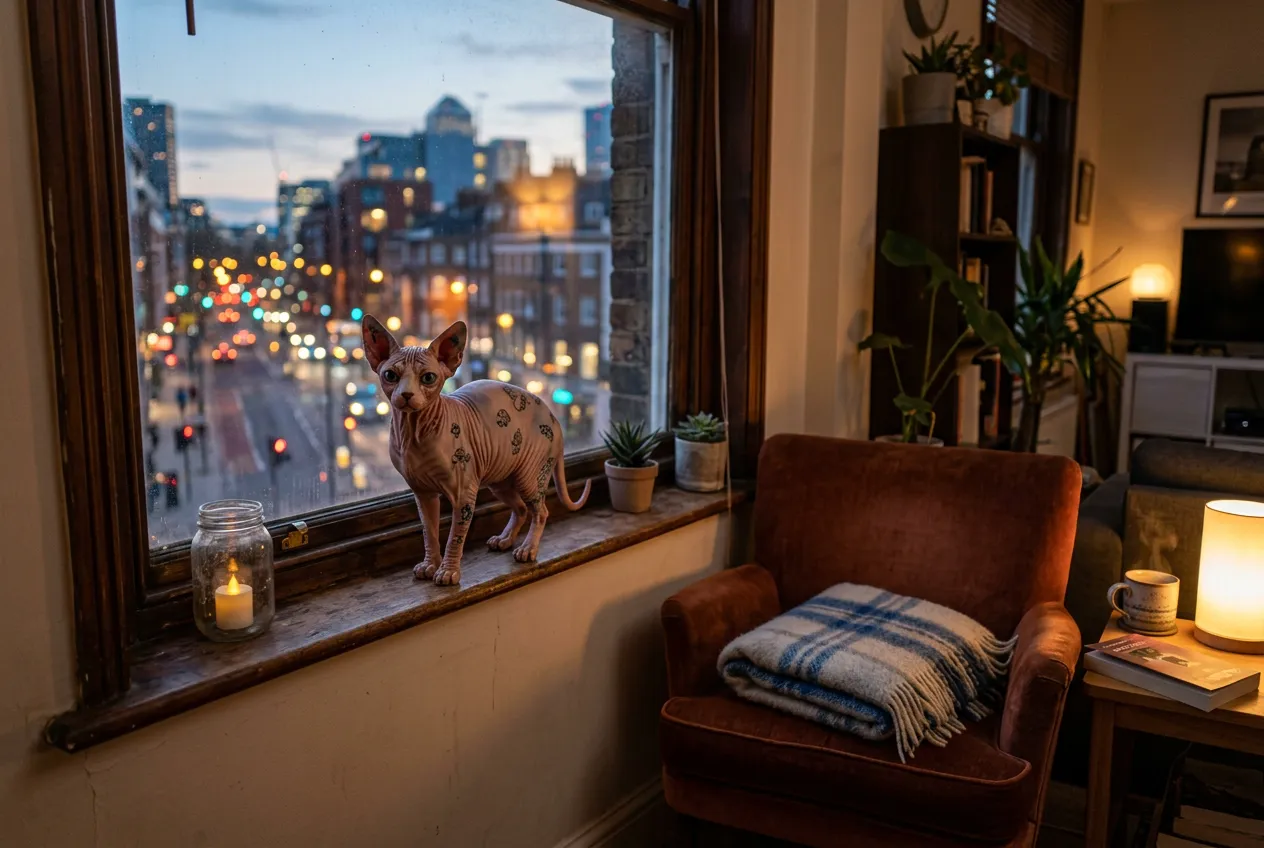
The click of the automatic feeder at 6 AM still echoes through your studio—except now there's no soft thud of paws hitting hardwood, no raspy purr vibrating against your shin while you fumble for the coffee maker.
Quick Takeaways
- Living alone amplifies pet grief — the absence fills every corner of a small space, making avoidance impossible and forcing you to confront loss moment by moment
- Sphynx cats create unique attachment patterns — their heat-seeking behavior and constant physical contact means losing them feels like losing your primary source of touch and warmth
- Guilt about relief is neurologically normal — your brain releases cortisol during caregiving stress, so feeling lighter after their suffering ends doesn't diminish your love
- Tangible memorials help solo grievers — when there's no one to reminisce with, physical keepsakes like custom figurines become conversation partners that validate your grief
- The 3-week mark hits differently when you're alone — this is when most people stop checking in, but for solo grievers, it's often when the reality fully settles
You're reading articles about "normal" pet grief, but they all assume you have someone. A partner to cry with at 2 AM. Kids who ask questions that give you permission to talk about your cat. Coworkers who knew Sphinx's name and asked how she was doing.
But when you live alone, grief doesn't just visit. It moves in.
The Neuroscience of Solitary Attachment
Here's what the pet loss articles don't tell you: your brain literally rewired itself around your Sphynx cat's presence. This isn't poetic language—it's neuroscience.
Sphynx cats are notorious heat-seekers. They don't just sit near you; they burrow under your shirt, sleep on your neck, follow you from room to room in a 400-square-foot studio. For someone living alone, this constant physical contact triggers oxytocin release dozens of times per day. Your nervous system learned to regulate itself through their warmth.
When that contact disappears, you're not just sad. You're experiencing touch starvation on top of grief.
Most people don't realize they're touch-starved because they get incidental contact—handshakes, shoulder bumps on the subway, hugs from family. But if your Sphynx was your primary source of physical touch? Your cortisol levels are probably elevated, your sleep architecture is disrupted, and your body is literally in withdrawal.
This explains why the grief feels so physical. The tightness in your chest isn't metaphorical—it's your autonomic nervous system trying to find the regulatory pattern it lost.
What Your Body Is Actually Experiencing
| Physical Symptom | Neurological Cause | What Actually Helps |
|---|---|---|
| Phantom sensations (feeling them jump on bed) | Mirror neurons still firing expected patterns | Acknowledge it out loud: "I know you're not here" |
| Insomnia or sleeping 12+ hours | Disrupted circadian rhythm (they were your alarm clock) | Maintain their feeding schedule for yourself |
| Chest tightness, shallow breathing | Elevated cortisol from loss of co-regulation | Weighted blanket at their usual sleeping spot |
| Inability to focus at work | Hippocampus prioritizing grief processing over new information | Give yourself 3 weeks before expecting normal productivity |
The mistake most solo grievers make is thinking they should "get over" these physical symptoms quickly. But your body needs time to recalibrate its baseline. For someone who lived alone with a Sphynx, that recalibration takes longer because there's no other source of physical comfort to buffer the transition.
The Sound of Absence
Studio apartments are small enough that you could hear everything. The scratch of claws on the bathroom tile. The wheeze of their breathing when they slept on your pillow. The specific thump of them jumping from the kitchen counter.
Now you hear the refrigerator hum you never noticed before. The upstairs neighbor's footsteps. The traffic outside.
Silence isn't actually silent when you live alone with grief. It's full of the sounds that should be there.
One of our customers described it perfectly: "I kept thinking my hearing was going bad because the apartment felt so quiet. Then I realized—I'd spent three years with a cat who snored, purred, and chirped constantly. My brain was listening for her, and the absence was louder than any noise."
This is auditory grief, and it's particularly intense for Sphynx owners because these cats are vocal. They don't just meow—they trill, chirp, yowl, and carry on full conversations. If you lived alone, their voice was probably the sound you heard most often in your home.
The Phantom Sound Phenomenon
Your auditory cortex doesn't immediately accept that those sounds are gone. For weeks or months, you'll "hear" them:
- The food bowl rattling at 5 AM
- Their specific meow when they wanted under the blankets
- The patter of feet following you to the bathroom
- The raspy purr that meant they were settling in for the night
This isn't your mind playing tricks. It's pattern completion—your brain filling in expected sensory data. The same mechanism that lets you understand a sentence with missing words makes you "hear" sounds that defined your daily rhythm.
Don't fight it. These phantom sounds are your brain's way of processing the loss. They'll fade naturally as new patterns establish themselves.
When Relief and Grief Collide
Let's talk about the feeling no one admits to: relief.
If your Sphynx had health issues—kidney disease, heart problems, cancer—the final months were probably exhausting. Subcutaneous fluids every other day. Medications crushed into food. Monitoring their breathing while you tried to sleep. Making the decision about euthanasia alone, without anyone to confirm you were doing the right thing.
And then they're gone, and you feel... lighter.
Followed immediately by crushing guilt.
Here's what's actually happening: cognitive dissonance. Your brain is trying to hold two true things simultaneously—you loved them desperately AND you're relieved their suffering (and your caretaking burden) is over. These aren't contradictory feelings. They're both valid responses to a complex situation.
The guilt comes from a cultural narrative that says "real love" means wanting to keep them alive at any cost. But that's not how attachment works. Secure attachment includes the ability to let go when holding on causes more harm.
"The relief you feel doesn't erase the love. It proves it—you prioritized their peace over your need to keep them close."
The Euthanasia Decision When You're Alone
Making the call to euthanize without a partner, family member, or roommate to validate your choice is one of the loneliest experiences in pet ownership. You're the only one who saw the decline. The only one who knows they stopped purring three days ago. The only one who noticed they were hiding under the bed more.
Second-guessing is not a sign you made the wrong choice. It's a sign you made a hard choice alone, without external validation. Your brain is searching for certainty in a situation where certainty doesn't exist.
What helps: Write down the specific observations that led to your decision. Not "they seemed uncomfortable" but "they stopped grooming, hadn't eaten in 36 hours, and cried when I touched their abdomen." When the guilt spirals start, read that list. You made the decision based on evidence, not emotion.
The Practical Loneliness No One Mentions
Grief guides talk about emotional loneliness—missing your pet's companionship. But when you live alone, there's a practical loneliness that's just as hard.
No one to confirm your memories. Did your Sphynx really do that weird thing where they'd only drink water if you turned the faucet on for them? Or are you romanticizing? When you live with others, shared memories get reinforced through retelling. When you live alone, your memories exist only in your head, and that makes them feel fragile.
No one to witness your grief. You can cry in the shower for twenty minutes and no one knows. You can skip meals for two days and no one notices. This sounds like freedom, but it's actually isolating—your grief has no external validation. It exists only inside you, which makes it feel both more intense and less real.
No one to stop you from making grief-driven decisions. Like adopting another cat immediately. Or getting rid of all their things in one manic purge. Or keeping everything exactly as it was for months. When you live alone, there's no one to gently suggest you're not thinking clearly.
The Comparison Trap
You're probably seeing friends post about their pets on social media. Maybe someone just got a new kitten. Maybe someone's celebrating their cat's 15th birthday.
And you feel jealous. Followed by shame for feeling jealous.
This is normal. Grief doesn't make you a better person—it makes you raw. Seeing others have what you lost triggers a primal response. The shame comes from thinking you "should" be happy for them.
You don't have to be happy for them right now. You can mute their posts. You can skip the group chat when they're sharing pet photos. You can protect yourself without apologizing.
Creating Structure in the Void
When you lived with your Sphynx, your day had structure. Wake up, feed them, play before work, come home to them, evening routine, bedtime with them on your chest.
Now every part of that structure is gone, and you're floating.
Your brain craves routine during grief. Not because routine makes you feel better, but because it gives your overwhelmed nervous system something predictable to hold onto.
Here's what actually works for solo grievers:
Keep their schedule for yourself. If you fed them at 7 AM and 7 PM, eat your own meals at those times. If you had a 15-minute play session before bed, use that time for something physical—stretching, a walk around the block, anything that honors the rhythm without trying to replace them.
Maintain the spatial patterns. If they slept on the left side of your bed, keep sleeping on the right. If they sat on the bathroom counter while you got ready, keep that space clear. This isn't about shrine-building—it's about giving your spatial memory time to adjust gradually instead of forcing an abrupt change.
Talk out loud. This feels ridiculous when you live alone, but it's neurologically important. When you had your Sphynx, you probably narrated your day to them ("Okay, time to make dinner," "Let's see what's on TV"). That external verbalization helped you process thoughts and make decisions. Keep doing it. Your brain needs the auditory feedback.
The 3-Week Cliff
Most people will check in on you for the first week, maybe two. Then they assume you're "better" and stop asking.
But for solo grievers, week three is often when it gets worse, not better. The initial shock has worn off. The distraction of logistics (vet bills, cremation decisions) is done. And now you're just... alone with it.
This is when people start worrying they're "not grieving right" because they're not improving on the expected timeline. But there is no expected timeline when you're processing loss without a support system.
If you're in week three and feeling worse than week one, you're not broken. You're experiencing the reality that grief isn't linear, and it's especially non-linear when you're doing it solo.
The Things You Can't Say Out loud
There are thoughts that feel too dark, too selfish, too "wrong" to admit. But they're common enough that we need to name them:
"I'm angry at them for dying." Especially if they were young, or if the illness came on suddenly. Anger is a normal grief stage, but when you live alone, there's no one to redirect it toward, so it just sits in your chest.
"I wish I'd never gotten a pet." Not because you didn't love them, but because this pain feels unbearable, and part of you thinks avoiding attachment would have been easier. This thought doesn't mean you regret them—it means you're in survival mode.
"I'm jealous of people whose pets are still alive." Even your friends. Even strangers on the internet. This doesn't make you a bad person. It makes you someone in pain who wants the pain to stop.
"I feel guilty for laughing." You watched a funny video and forgot for thirty seconds that they're gone. Then the memory crashed back and you felt like you betrayed them. But joy and grief can coexist. Your Sphynx wouldn't want you to stop laughing forever.
"I'm afraid I'm forgetting them already." You can't remember the exact pitch of their purr. You're not sure if their favorite spot was the left or right side of the couch. Memory is fallible, and that's terrifying when memories are all you have left.
The Isolation Spiral
When you live alone with grief, it's easy to stop reaching out. You don't want to burden friends. You're tired of explaining. You assume no one understands anyway.
But isolation makes grief heavier. Not because talking about it makes it go away, but because carrying it entirely alone exhausts you faster.
You don't need people who understand. You need people who will sit with you while you don't understand it yourself.
Tangible Memory When You're the Only Witness
This is where physical memorials become more than sentimental—they become evidence that your relationship was real.
When you live alone, there's no one else who knew your Sphynx's personality. No one who remembers the specific way they'd tap your face with their paw when they wanted attention. No one who can confirm that yes, they really did have that one crooked whisker.
Photos help, but they're flat. They don't capture the weight of them in your lap or the texture of their skin.
This is why families increasingly turn to custom figurines—not as a replacement, but as a three-dimensional anchor for memories that exist only in one person's head. When you can hold something that captures their unique markings, their ear shape, the way they held their tail, it validates that those details mattered. That they mattered.
Our team has worked with hundreds of solo pet owners, and there's a pattern: the figurine becomes a conversation starter with yourself. You notice details in the sculpture that trigger memories you'd forgotten. The slight tilt of their head. The specific shade of pink in their ears. These details give you permission to remember out loud, even when there's no one else in the room.
What Makes a Memorial Meaningful for Solo Grievers
| Memorial Type | Emotional Function | Best For |
|---|---|---|
| Photo album/digital frame | Captures moments, but can feel passive | People who want to revisit specific memories |
| Cremation jewelry | Keeps them physically close, portable | Those who need constant proximity |
| Custom figurine | Three-dimensional validation of their unique features | Solo grievers who need tangible proof of their pet's existence |
| Memorial garden/plant | Living tribute, requires ongoing care | People who find comfort in nurturing |
| Donation in their name | Transforms grief into action | Those who process through helping others |
The "right" memorial is the one that matches how you process loss. If you're someone who needs to do something, a garden or donation works. If you need to hold something, jewelry or a figurine works. If you need to see them, photos work.
For solo grievers, we've noticed that three-dimensional memorials (figurines, clay paw prints, preserved whiskers in resin) tend to provide more comfort than two-dimensional ones. The theory: when you're the only person who experienced your pet in 3D space, having a 3D memorial helps your brain accept that they were real, not imagined.
Rebuilding Your Identity as a Solo Person
You probably didn't realize how much of your identity was tied to being "a Sphynx owner" until you weren't anymore.
The Instagram account you made for them. The way you'd explain why you were always cold ("My cat steals all my body heat"). The inside jokes with other Sphynx owners about sweaters and sunburn. The way you'd plan your day around their needs.
Grief isn't just losing them. It's losing the version of yourself that existed in relationship to them.
When you live alone, this identity shift is more jarring because there's no other role to fall back into. You're not "the parent who also has a cat"—you were "the person with a Sphynx." Now you're just... a person in a studio apartment.
This is why people sometimes rush to get another pet. Not because they're "over" the first one, but because they're trying to reclaim that identity. But here's the thing: you can't step into the same river twice. Even if you got another Sphynx tomorrow, you'd be a different owner because grief changed you.
The Question Everyone Asks
"Are you going to get another cat?"
This question, asked with good intentions, can feel like a knife. Because the subtext is: "Are you going to replace them so you can move on?"
But you don't owe anyone a timeline. Some people adopt again within weeks and that's valid. Some people wait years and that's valid. Some people decide they're done with pet ownership and that's valid too.
What's not valid is letting other people's expectations dictate your healing.
If you're feeling pressure to "move on" by getting another pet, ask yourself: Am I ready, or am I just tired of being sad? There's no wrong answer, but there is a difference.
The Practical Realities of Solo Grief
Let's talk about the stuff that feels too mundane to mention but actually matters:
The vet bills you're still paying off. Every time you see the charge on your credit card, it's a reminder. This is normal. Money and grief are intertwined, especially when you're managing finances alone.
Their stuff everywhere. The litter box. The food bowls. The heating pad. The special brush for their sensitive skin. You know you "should" put it away, but you're not ready. That's fine. There's no deadline.
The automatic feeder that still goes off. The pet camera that sends you notifications. The subscription boxes that keep arriving. These logistical loose ends feel overwhelming when you're already overwhelmed.
The smell fading from their bedding. This one hits hard. You've been sleeping with their blanket because it still smelled like them, and now it doesn't. This feels like losing them again.
A Practical Timeline (Not a Prescription)
| Timeframe | What's Happening | What Actually Helps |
|---|---|---|
| Days 1-3 | Shock, autopilot, logistics | Let people bring you food. Don't make big decisions. |
| Week 1-2 | Acute grief, crying jags, insomnia | Keep their routine for yourself. Talk out loud. |
| Week 3-4 | Reality settling in, others stop checking in | Reach out first. Join online grief groups. |
| Month 2-3 | Waves of grief, guilt about "moving on" | Start small changes (move one item, not everything). |
| Month 4-6 | New normal emerging, but still raw | Consider a memorial. Acknowledge progress without forcing it. |
This isn't a prescription—grief doesn't follow a schedule. But when you're alone, having a rough map helps you know you're not lost.
What We Wish We Knew Sooner
Our team has worked with thousands of grieving pet owners, many of them living alone. Here's what they tell us they wish they'd known:
The grief comes in waves, not stages. You'll have a good day, then a terrible day, then an okay day. This isn't regression—it's how grief works.
You don't have to earn your grief. It doesn't matter if they were "only" three years old or if you "only" had them for six months. Loss is loss.
Talking to their photo isn't weird. It's a coping mechanism. Your brain needs to externalize thoughts, and when you live alone, their photo becomes the listener.
The guilt about euthanasia timing never fully goes away. But it does get quieter. You learn to live with the uncertainty.
Other people will forget faster than you do. This isn't cruelty—it's just that they didn't live with your Sphynx. They didn't build their day around them. Your grief timeline is longer because your attachment was deeper.
You're allowed to keep their ashes forever. Or scatter them next week. Or turn them into jewelry. Or bury them. There's no "right" way.
Getting another pet doesn't mean you've moved on. And not getting another pet doesn't mean you loved them more. These decisions are independent of your grief.
"Grief isn't a problem to solve. It's a love story that continues after the last chapter."
The Long Game: Six Months and Beyond
Most grief resources focus on the first few weeks. But when you live alone, the long-term adjustment is where the real work happens.
Six months out, you'll probably notice:
- You can talk about them without crying (most of the time)
- You've rearranged the apartment and it doesn't feel like betrayal
- You've stopped checking their favorite spots when you come home
- You can see other Sphynx cats without your chest tightening
But you'll also notice:
- Random triggers still hit hard (a specific song, a smell, a time of day)
- You still talk to them sometimes
- You still miss them, just differently
- You're not "over it" and maybe never will be
This is normal. Grief doesn't have an expiration date. It just changes shape.
Building a New Relationship With Their Memory
Eventually, your relationship with your Sphynx shifts from "I had a cat" to "I have memories of a cat." This isn't moving on—it's integration.
You'll find yourself telling stories about them without crying. You'll see something they would have loved and smile instead of ache. You'll make decisions based on what they taught you about yourself.
This is when physical memorials become most valuable. Not in the acute grief phase when everything hurts, but in the long-term phase when you're building a new relationship with their memory. A figurine on your desk becomes a daily reminder that they were real, they mattered, and they changed you.
When Grief Becomes Complicated
Most grief, even intense grief, is normal. But sometimes grief gets stuck, especially when you're processing it alone without external feedback.
Signs you might need professional support:
- You're unable to function at work for more than a month
- You're having intrusive thoughts about harming yourself
- You're isolating to the point of not leaving the apartment for days
- You're using substances to numb the grief
- You're experiencing panic attacks or severe anxiety
- You can't sleep or you're sleeping 14+ hours a day for weeks
Complicated grief is real, and it's more common in people who live alone because there's no one to notice when you're spiraling. If you're reading this list and recognizing yourself, please reach out to a therapist who specializes in pet loss or complicated grief.
Resources that actually help:
- Association for Pet Loss and Bereavement has support groups and hotlines
- Psychology Today's therapist finder lets you filter for "pet loss" specialization
- Online grief groups (Reddit's r/petloss, Facebook groups for specific breeds) provide 24/7 community
You're not weak for needing help. You're smart for recognizing when grief is bigger than you can carry alone.
The Permission You're Looking For
You don't need permission to grieve as long as you need to. You don't need permission to get another cat or to never get another cat. You don't need permission to keep their ashes on your bookshelf or to scatter them in the park.
But if you're looking for permission anyway, here it is:
You're allowed to still be sad six months later. A year later. Five years later. Grief doesn't follow a schedule, and anyone who tells you otherwise hasn't experienced real loss.
You're allowed to spend money on a memorial. Whether that's a custom figurine, a tattoo, a donation, or a bench with their name on it. Your grief, your choice.
You're allowed to talk about them. Even if it makes other people uncomfortable. Even if they've been gone for years. They were part of your life, and pretending they weren't doesn't help anyone.
You're allowed to have bad days. Days when you can't stop crying. Days when you're angry at the universe. Days when you regret ever getting a pet because this pain feels unbearable.
You're allowed to have good days. Days when you laugh and forget for a while. Days when you feel light. Days when you're grateful for the time you had instead of devastated by the time you lost.
Both are true. Both are allowed.
Moving Forward (Not Moving On)
The goal isn't to "get over" your Sphynx. The goal is to learn to carry their absence without it crushing you.
When you live alone, this process is slower and lonelier. But it's also more honest. You can't perform grief for anyone else. You can't pretend to be "better" to make others comfortable. You have to sit with it, in your studio apartment, in the silence that used to be filled with purring.
And eventually—not quickly, but eventually—you'll notice the silence doesn't hurt quite as much. You'll hear the refrigerator hum and it won't remind you of what's missing. You'll wake up at 6 AM and the automatic feeder won't echo through the apartment because you finally unplugged it.
You'll still miss them. But you'll also be okay.
The click of the automatic feeder at 6 AM used to mean your day was starting. Now it means you survived another night. And some days, that's enough.
Frequently Asked Questions
How long does grief last when you live alone with a pet?
There's no fixed timeline, and anyone who gives you one is lying. Solo grievers often experience longer acute grief phases—typically 3-6 months—because there's no external support system to buffer the loss. You're processing everything alone, which means your brain has to do all the regulatory work without co-regulation from others.
Grief shifts from acute (can't function, crying daily) to integrated (miss them but can function) over time. But you may always miss them. That's not pathological—that's love.
Is it normal to feel relief after my Sphynx cat died?
Absolutely normal, especially if they had health issues requiring intensive care. Relief and grief coexist—you can be relieved their suffering ended while devastated by the loss. This is cognitive dissonance, not a lack of love.
The guilt that follows relief is one of grief's cruelest tricks. Your brain is trying to hold two true things simultaneously, and it feels like betrayal. But prioritizing their peace over your need to keep them close is the ultimate act of love.
Should I get another cat right away?
There's no universal answer. Some people adopt within weeks and that's valid—they process grief through nurturing. Others wait months or years and that's equally valid—they need time to integrate the loss before opening their heart again.
The question to ask yourself: Am I ready for a new relationship, or am I trying to escape grief? Both answers are okay, but they lead to different decisions. If you're adopting to fill the void, you might end up resenting the new cat for not being your Sphynx. If you're adopting because you genuinely have love to give, that's different.
Why does grief feel worse at the 3-week mark?
Week three is when the initial shock wears off, the logistics are handled (vet bills paid, ashes received), and other people stop checking in. For solo grievers, this is when the permanent reality settles in—they're really gone, and you're really alone.
This often makes grief feel more intense than the first week, which can be scary. You think you should be "better" by now. But grief isn't linear, and the 3-week mark is often when the real processing begins.
What type of memorial helps most when you live alone?
Three-dimensional memorials—custom figurines, clay paw prints, preserved whiskers in resin—tend to help solo grievers more than two-dimensional ones like photos. The theory: when you're the only person who experienced your pet in 3D space, having a 3D memorial helps your brain accept that they were real, not imagined.
Photos are valuable for capturing moments, but they're flat. A figurine you can hold, rotate, and place in your space provides tangible proof of your pet's existence when you're the only witness to their life. It validates that the details you remember—the ear shape, the tail curve, the specific markings—actually mattered.
How do I handle people who don't understand my grief?
You don't owe anyone an explanation for your grief timeline. People who haven't experienced pet loss, especially solo pet loss, often don't understand the depth of attachment. They might say things like "It was just a cat" or "You can get another one."
These comments come from discomfort, not cruelty. But you don't have to educate them. You can simply say, "I appreciate your concern, but I need to process this my own way." Then find communities—online or in-person—where people understand. The Association for Pet Loss and Bereavement has support groups specifically for this.
Ready to Honor Your Sphynx's Memory?
When you're the only person who knew your cat's unique personality—the way they'd tap your face at 6 AM, the specific pitch of their purr, the warmth of their skin against yours—preserving those details becomes more than sentimental. It becomes proof that your relationship was real.
A custom figurine captures the physical details that exist only in your memory: the exact curve of their ears, the specific shade of their skin, the way they held their tail. When you're grieving alone in a studio apartment, having something tangible to hold makes the memories feel less fragile.
Visit pawsculpt.com to see how our full-color 3D printing technology captures every unique detail of your Sphynx cat