
Building a Memory Garden Where Your Dachshund Loved to Dig: A Healing Ritual That Grows
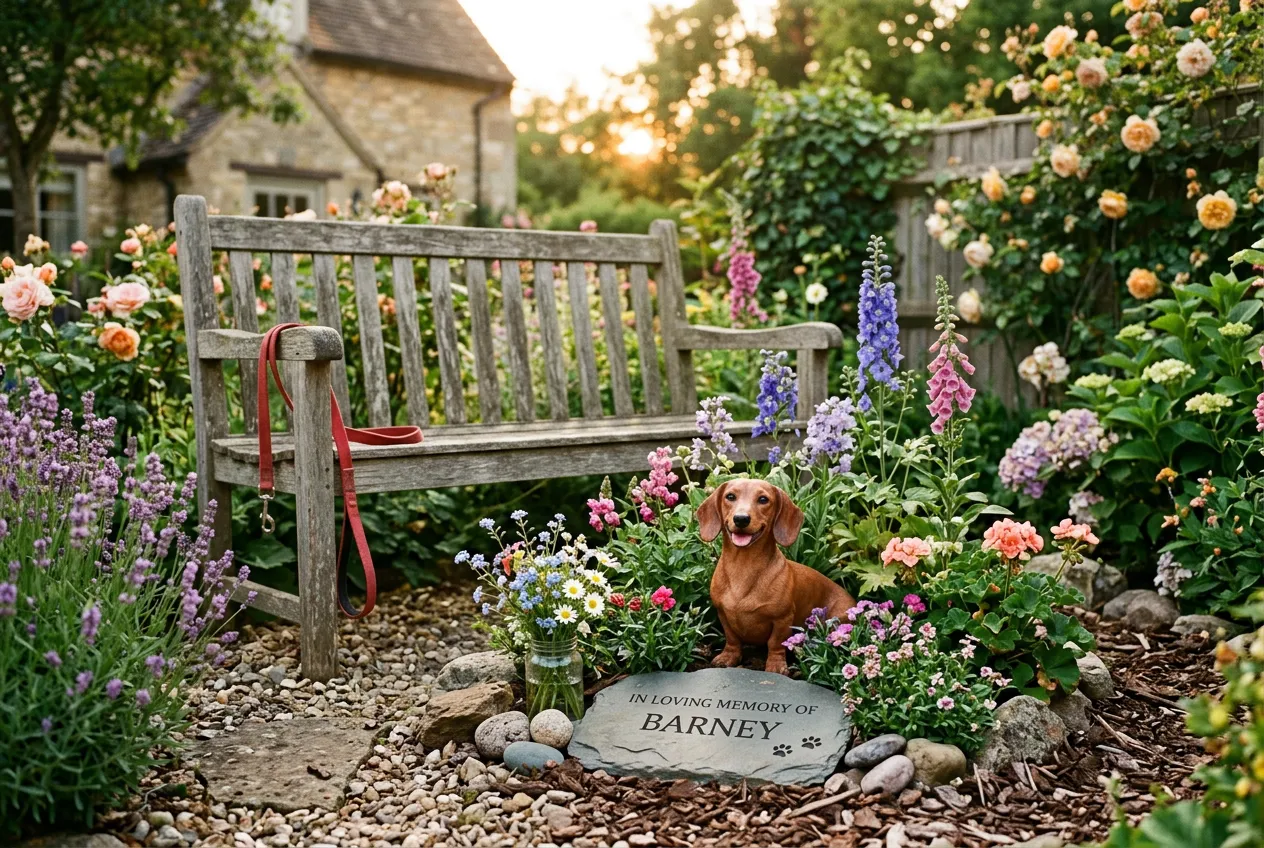
Three years ago, your bedroom smelled like warm dirt and dachshund — that copper-penny, sun-baked scent she carried in after excavating half the backyard. This morning, you woke up and the pillow beside you just smelled like cotton. You're here because you want to build a pet memorial garden for your dachshund, right there in the torn-up earth she left behind. Good. That ground has been waiting for you.
Quick Takeaways
- Transform your dachshund's old digging spots into living memorial zones — the disrupted soil is already primed for planting
- Choose plants that grow low and spread wide — they mirror a dachshund's ground-level view of the world
- Build the garden in stages, not all at once — grief and gardens both need seasons to take shape
- Anchor the space with a tangible keepsake like a custom pet figurine that can weather outdoor conditions alongside your plants
- Include a "dig zone" in the garden's design — honoring the behavior you once scolded becomes a surprisingly powerful healing act
Why a Dachshund's Garden Is Different From Any Other Dog Memorial Garden
Here's what every generic "dog memorial garden ideas" article misses: dachshunds don't just dig. They architect. They reshape terrain. They leave behind craters and tunnels and little mounded hills that look absurd until you realize—that was their art. Their life's work. And now you're staring at those gouged-out patches of yard, and everyone's telling you to fill them in, level the ground, start fresh.
Don't.
Those holes are a map of where your dog felt most alive. And if you're going to build a healing ritual after pet loss, you might as well build it on honest ground.
The counterintuitive truth? The mess your dachshund left behind is the foundation of your memorial garden, not the obstacle to it. Most guides will tell you to start with a blank slate. We're telling you to start with the holes. The uneven ground. The patches where grass stopped growing because a determined little body kept returning to the same spot, over and over, driven by 600 years of breeding that said dig here, something matters beneath the surface.
Something still matters beneath the surface. You're about to plant it.
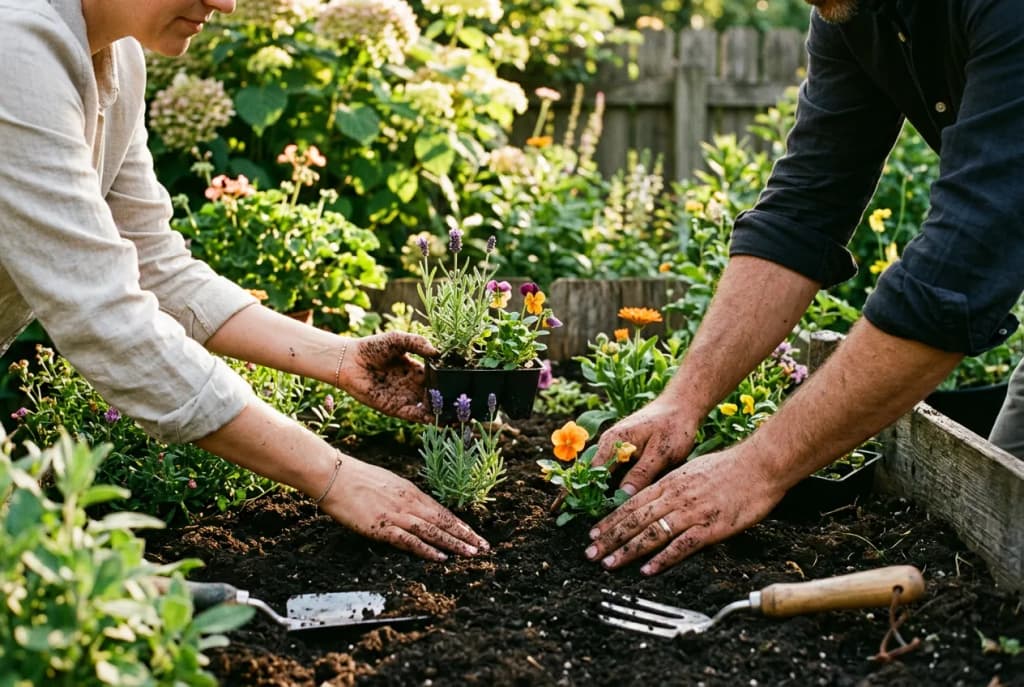
The Psychology of Why Digging Grounds Become Sacred Space
Your brain is doing something right now that psychologists call place attachment—a bond between a person and a specific physical location that carries emotional significance. It's the same mechanism that makes your childhood bedroom feel different from a hotel room, even if the hotel is nicer. The attachment isn't about aesthetics. It's about accumulated meaning.
When your dachshund dug in the same corner of the yard every afternoon, she wasn't just exercising instinct. She was encoding that space with repeated behavior, and your brain was watching, filing it away. The golden afternoon light hitting her copper coat. The rhythmic scratch-scratch-scratch of her paws. The way she'd look back at you, dirt on her nose, with that specific dachshund expression that somehow communicated both pride and mild defiance.
That spot in your yard now carries what environmental psychologists call a "memory trace"—a physical location so saturated with emotional experience that simply standing in it activates the same neural pathways as the original moment. Your hippocampus doesn't fully distinguish between remembering her digging there and watching her dig there. The brain lights up in similar patterns either way.
This is why walking past that corner of the yard hits you like a wall. And it's also why transforming it—not erasing it, transforming it—can become one of the most neurologically powerful grief rituals available to you.
"A garden doesn't ask you to be done grieving. It just asks you to show up and tend what's growing."
Here's the thing most people won't tell you about grief gardens: they work partly because they demand routine. Cortisol—your body's primary stress hormone—thrives on unpredictability. Grief is chaos. It shows up at 6 AM when you almost step on a squeaky toy. It blindsides you at the hardware store when you pass the pet aisle. But a garden creates a predictable rhythm: water, weed, observe, repeat. That rhythm doesn't cure grief. But it gives your nervous system something steady to hold onto when everything else feels like free fall.
Mapping Your Dachshund's Territory: A Step-by-Step Dog Memorial Garden Plan
Before you buy a single plant, spend a week just looking.
Walk the yard at different times of day. Morning light, specifically, will show you things you've missed—the way shadows fall differently across the places she dug versus the untouched grass. The slight color variation in disturbed soil. If she had favorite tunneling routes along fence lines (and if she was a dachshund, she did), you'll notice them as faint depressions, like rivers seen from the air.
Mark these spots. Use small stones, garden flags, even popsicle sticks. You're creating a map of her movement patterns—what animal behaviorists call a "home range" within the territory. This map becomes your garden's blueprint.
The Three Zones of a Dachshund Memorial Garden
| Zone | Description | What to Plant/Place | Why It Matters |
|---|---|---|---|
| The Dig Zone | Her primary excavation spots | Low groundcovers, creeping thyme, or left partly open with decorative stones | Honors her instinct; keeps the "character" of the ground she shaped |
| The Patrol Path | Routes she walked repeatedly (usually along fences or house perimeter) | Stepping stones, dwarf lavender borders, moss between pavers | Creates a walkable path for you that mirrors her daily circuit |
| The Rest Spot | Where she sunbathed or lay after digging | A flat memorial stone, a bench, or a weatherproof pet figurine | Gives you a place to sit and be present in the space |
Notice we're not imposing a design on the yard. We're reading the design she already left and translating it into plants and stone. That's a critical difference, and it's why this approach feels so much more personal than buying a generic "pet memorial garden kit" online.
Day-in-the-Life: What This Actually Looks Like on a Tuesday Morning
It's 7:15 AM. You step outside with your coffee, and instead of that gut-punch of staring at an empty yard, your eyes land on the creeping thyme spreading across what used to be Hole #1—the big one by the fence post. The tiny purple flowers are catching the early light. You bend down (carefully, because coffee) and pull two weeds near the stepping stones that trace her old patrol route along the back fence. Thirty seconds of work. Maybe a minute. But your hands touched the ground she touched, and something in your chest loosens by exactly one degree. You go back inside. The day continues. But something was tended.
That's the ritual. That's all it has to be.
Choosing Plants That Honor a Ground-Level Life
Most garden guides recommend tall, dramatic plantings—ornamental grasses, climbing roses, flowering trees. And those are beautiful. But they're designed for the human eye, not the dachshund eye.
Your dog lived her entire life within 9 inches of the ground. She experienced the world nose-first, at soil level, where the smells are richest and the light filters sideways through stems rather than falling from above. A dachshund memorial garden should reflect that perspective.
This means choosing plants that stay low, spread wide, and—here's the part most gardening blogs skip—plants that have strong scents at ground level. Your dachshund's world was olfactory. Honoring that means planting things that smell as powerfully as they look.
Best Low-Growing, Fragrant Plants for a Dachshund Memorial Garden
- Creeping thyme (Thymus serpyllum): Grows 2-4 inches tall, releases scent when stepped on, tolerates foot traffic. Perfect for filling old dig holes with something living and fragrant.
- Chamomile (Chamaemelum nobile): Apple-scented, daisy-like flowers close to the ground. A natural "carpet" plant that thrives in the slightly acidic, loosened soil dachshunds leave behind.
- Sweet woodruff (Galium odoratum): Shade-tolerant, vanilla-scented when dried. Ideal if her favorite digging spot was under a tree.
- Corsican mint (Mentha requienii): Barely 1 inch tall, intensely fragrant, spreads to fill gaps. A living, breathing ground cover that transforms bare patches into emerald green.
- Woolly thyme (Thymus pseudolanuginosus): Soft, fuzzy texture. We mention this one specifically because running your fingers through it is tactile in the same way stroking a dachshund's ear is tactile—and your hands will need something to do out there.
A note on toxicity: If you have other pets, always cross-reference any plant with the ASPCA's toxic plant database before planting. Most of the herbs listed above are considered non-toxic to dogs, but cultivars vary and your specific situation matters.
The "Dig Zone" Controversy
We're going to say something that sounds strange: leave part of your garden as open dirt.
Not neglected dirt. Intentional dirt. A small area—maybe 18 inches square—bordered with stones, where the earth is loose and exposed. Where, if another dog ever visits, they could dig. Where you can push your own hands into the soil on the hard days and feel the grit under your fingernails and remember that your dog touched this same earth, rearranged these same particles, and felt joy doing it.
Most memorial garden guides are obsessed with coverage. Every inch planted, mulched, or paved. But a dachshund memorial garden without exposed earth is like a library without books. It's missing the point.
The dig zone serves another purpose too. It becomes a place to literally plant something new each year on her birthday, or the anniversary of her passing, or just a random Thursday when you found a seedling at the farmer's market and thought of her. Over the years, the dig zone slowly fills in—not because you're covering up her memory, but because you're adding to it. Layer by layer. Season by season.
"Grief doesn't shrink. Your life just grows around it—the way a garden grows around a stone."
The Emotions Nobody Warns You About When You Start Building
You're going to hit a wall. Not a gardening wall. An emotional one.
It might happen when you're on your knees in the dirt, pulling rocks out of her old tunneling spot, and you find a small piece of something—a chewed-up stick, a fragment of a buried toy—and suddenly you can't breathe. Or it might happen three weeks in, when the creeping thyme starts to fill a hole she dug, and you feel this irrational fury that something is covering her work. Or it might not happen during the building at all. It might happen after. When the garden is beautiful and established and you realize—with a cold clarity that catches you off guard—that she will never see it.
These reactions are neurologically normal. Your brain formed what attachment researchers call a "proximity-seeking bond" with your dachshund. That bond doesn't dissolve because the attachment figure is gone. It keeps firing, keeps reaching, keeps scanning for the missing piece. When you're physically in the space where that bond was strongest—her yard, her dirt, her territory—the seeking behavior intensifies. Your nervous system is essentially running a search program for someone who won't be found.
And here's the part that's rarely talked about openly: some of you feel guilty about the garden itself.
Not guilty about your dog. Guilty because building the garden feels good. Because you're experiencing moments of genuine pleasure—choosing plants, arranging stones, watching things grow—and pleasure feels like betrayal when you're supposed to be grieving. The cognitive dissonance is real: How can I enjoy this? This exists because she died. If she were alive, I wouldn't need a memorial garden. I'd just have a dog and a wrecked yard, and that would be enough.
If you're feeling that—the guilt tangled up with the satisfaction—know that this is one of grief's cruelest paradoxes. Finding meaning in loss doesn't mean the loss was meaningful. It means you are. You're the one assigning meaning. You're the one kneeling in the dirt. You're the one who decided that those holes in the yard weren't damage to be repaired but a story to be continued.
That's not betrayal. That's the deepest kind of loyalty.
"We've seen families begin healing the moment they stop trying to 'get over' their pet and start building something to grow alongside their grief."
— The PawSculpt Team
Anchoring the Garden: Physical Objects That Hold Memory in Place
Plants shift. They bloom and fade, grow and die back with the seasons. That impermanence is part of what makes a living memorial so powerful—it mirrors the natural cycle of life. But most people also need something permanent in the garden. Something that doesn't change with the weather. Something you can touch in January, when the garden is dormant and the ground is frozen and grief is loudest in the cold.
Here's a comparison of common memorial anchors, with honest assessments:
| Memorial Object | Durability | Emotional Impact | Cost Range | Considerations |
|---|---|---|---|---|
| Engraved stone/plaque | Very high (decades) | Moderate — traditional, familiar | $30–$150 | Can feel generic; limited personalization |
| Wind chime | Moderate (weather-dependent) | High when triggered by wind | $20–$80 | Sound can be comforting or triggering; neighbor considerations |
| Buried urn/ashes | Permanent | Very high — physically present | $40–$200 | Can complicate future moves; check local regulations |
| Custom 3D-printed figurine | High (UV-resistant resin) | Very high — captures individual likeness | Varies (visit website) | Weatherproof options available; most personalized option |
| Photo-embedded garden stone | Moderate (photo fades over time) | Moderate-high | $25–$100 | UV exposure degrades image; best in shaded spots |
| Memorial plant/tree | Variable (species-dependent) | High — grows and changes | $15–$300 | Living thing requires ongoing care; can die (another loss) |
We'll be real—we're biased toward tangible, three-dimensional keepsakes because we've watched how people interact with them. A flat photo or an engraved name is meaningful, but there's something different about an object that has dimension. That has the slope of a specific back, the tilt of a particular head, the exact pattern of brindle or dapple that belonged to one dog and no other.
PawSculpt's full-color 3D printing process captures those details in UV-resistant resin, where the color is embedded directly in the material itself—not a surface coating that chips or fades. The result is a figurine that looks like a tiny, impossibly detailed version of your actual dog, right down to the fur pattern and expression. Some families place these in the garden year-round. Others bring them inside during harsh winters and set them back out in spring, creating their own small seasonal ritual.
(If you're curious about how the process works or what photos you'd need, PawSculpt's website walks you through everything.)
But here's what matters more than what you choose: place it at dachshund height. Not on a pedestal. Not elevated on a shelf-like structure. On the ground. In the dirt. At the level where she lived. This is a design choice that most people overlook, and it completely changes the feeling of the space. When you visit the garden and crouch down to her level to see the figurine, the stones, the low-growing thyme—you're re-entering her world for a moment. You're seeing the yard the way she saw it. And that shift in perspective is worth more than the most expensive monument placed at human eye level.
Building in Stages: Why Your Memorial Garden Should Take a Full Year
The urge is to build it all at once. To spend a single raw weekend transforming the yard, channeling all that restless grief energy into labor. And honestly? If that's what you need right now, do it. There are no rules.
But if you can stand it, consider building the garden across four seasons. Here's why:
Grief researchers talk about a concept called "oscillation"—the natural back-and-forth between confronting loss and taking breaks from it. This isn't avoidance. It's your brain's built-in recovery mechanism, cycling between processing the pain and restoring itself with normal life activities. A garden built in stages naturally supports this oscillation pattern. You work on it when you need to feel close to her. You step away when you need to feel normal. Neither state is the "right" one.
A Seasonal Building Timeline
Spring (Weeks 1-6): The Mapping Phase
Walk the yard. Mark her spots. Clear debris—but only debris, not the earth she moved. Begin amending the soil in dig zones with compost. Plant the first groundcovers. This phase is about contact with the ground, not aesthetics.
Summer (Weeks 7-18): The Path Phase
Lay stepping stones along her patrol routes. Install low border plants. Place your permanent memorial object—stone, figurine, or marker. Spend time sitting in the garden, not just working in it. Bring a book. Bring your coffee. Let the space become yours again, not just hers.
Fall (Weeks 19-30): The Scent Phase
Plant late-season fragrant herbs. Add dried lavender bundles near the memorial anchor. As the garden begins its dormant cycle, you'll notice which plants are thriving and which aren't—let the garden edit itself. Remove what's failing without guilt. (A metaphor will probably occur to you here. Let it.)
Winter (Weeks 31-52): The Stillness Phase
This is the season most memorial garden guides ignore entirely, because there's "nothing to do." But winter is when the garden teaches you the most about grief. Everything looks dead. The ground is hard. The colors are gone. And yet—the roots are still there, still alive beneath the surface, waiting. You know this intellectually. But standing in the dormant garden and feeling it is different. It's the physical experience of understanding that something can look completely gone and still be completely present. That's the lesson. That's the whole thing.
By the time spring returns—her second spring gone—the garden comes back. Changed. Fuller. Different from what you planned, because gardens never follow plans exactly. And you'll be different too. Not "healed." Not "moved on." Just... expanded. Carrying the same love in a body that's learned, slowly, how to carry it while still moving forward.
The Sounds, the Light, the Small Additions That Complete the Space
A garden is more than plants and stones. It's an environment. And the details that seem minor are often the ones that transform a nice flower bed into a genuine sanctuary.
Light matters enormously. If her favorite digging time was late afternoon (common for dachshunds, who tend to be most active in the golden hours), consider how the light falls across your garden at that same time. Position your memorial object where it catches that light. The visual effect—warm amber hitting a figurine or stone at 5 PM—will become one of the most emotionally anchoring elements of the entire space. You'll start looking for it. You'll notice when the angle changes with the seasons. It becomes a clock, marking time in the gentlest possible way.
Sound is trickier. Some people find wind chimes comforting. Others find them unbearable—too random, too startling. A small water feature (even a simple recirculating bowl fountain) creates white noise that serves a dual purpose: it softens the silence of a yard that used to have a barking, snuffling, digging dog in it, and it masks neighborhood sounds that might pull you out of the contemplative space. But this is deeply personal. Trust your own nervous system on this one.
Small annual additions keep the garden alive as a practice, not just a place:
- A new plant on her birthday
- A painted rock from a grandchild
- A small flag or ribbon on the anniversary of her passing
- Seasonal decorations that make you smile (a tiny Santa hat on the figurine in December—absolutely no one is judging you)
These additions are important because they combat one of the most frightening feelings in grief: the fear of forgetting. Many pet owners—more than will admit it—lie awake terrified that they'll forget the exact shade of their dog's eyes, the specific weight of her in their lap, the sound of her nails on the kitchen floor. A garden you keep adding to is a garden that proves you haven't forgotten. Each new element is evidence. Tangible, growing, rooted-in-the-ground evidence that she is still shaping your choices, still influencing how you move through the world.
You're not forgetting. You're composting. Taking the raw material of love and loss and turning it into something that feeds new growth.
When Other People Don't Understand (And What to Do About It)
Someone will say it. Maybe they already have.
"It was just a dog."
Or the gentler version: "Maybe it's time to move on." Or the well-meaning but devastating: "Have you thought about getting another one?"
The American Kennel Club recognizes that the bond between humans and dogs can be as psychologically significant as human-to-human bonds—sometimes more so, because the relationship is uncomplicated by the power dynamics, miscommunications, and conditional expectations that characterize many human connections. Your dachshund didn't care about your job title. Didn't keep score. Didn't withhold affection because you said the wrong thing at dinner. The purity of that bond is precisely why its absence hits so hard, and why people who haven't experienced it sometimes underestimate its weight.
You don't owe anyone an explanation for your grief. You don't have to justify why you're building a memorial garden for a dog. You don't have to defend the time, money, or emotional energy you're investing. If someone in your life is dismissing your loss, that says something about their capacity for empathy—not about the legitimacy of your pain.
But we'll also say this: isolation is a real risk during pet grief. The shame of being "too sad" about "just a pet" can drive people underground. They stop mentioning the dog. They hide the garden project. They grieve in private, which sounds noble but often just means they grieve alone—and unwitnessed grief has a way of calcifying into something harder and heavier than it needs to be.
If you can, find your people. Online communities for dachshund owners. Pet loss support groups (many veterinary hospitals run them). Even one friend who gets it. Show them photos of the garden. Tell them why you planted chamomile in that specific spot. Let someone else hold the story with you.
What Your Remaining Pets Might Be Telling You
If you have other animals in the household, watch them around the garden.
Dogs, in particular, respond to scent-saturated environments. Your dachshund's digging spots still carry her scent signature in the soil—researchers estimate that organic scent compounds can persist in earth for months to years depending on soil composition and climate. Your other dogs may sniff those areas more intensely. They may lie down in the garden. They may dig in the dig zone you left open.
Let them. This isn't destruction. It's investigation. It's their version of remembering.
Cats, for what it's worth, tend to be more indifferent to memorial gardens—but they're excellent at claiming the warm, flat memorial stones as sunbathing spots. Which, honestly, is a kind of tribute in itself.
A Morning Six Months From Now
You're going to wake up one morning—maybe not tomorrow, maybe not next month, but eventually—and your first thought won't be about her.
It'll be about the garden.
You'll wonder if the creeping thyme has reached the edge of the stepping stones yet. You'll remember you wanted to pick up that dwarf lavender from the nursery. You'll think about whether the morning light is hitting the memorial figurine from the right angle now that the sun's shifted.
And then you'll realize: you were thinking about her. The whole time. You were thinking about her through the garden, the way light passes through a prism and comes out changed but still made of the same substance. The grief didn't disappear. It just found somewhere to live that isn't only in your chest at 2 AM.
The garden grew. You grew around it.
And the holes she dug—those beautiful, stubborn, perfectly dachshund-shaped holes—became the places where everything new took root.
She's still digging, in a way. Still turning up the earth. Still making room for something to grow.
Frequently Asked Questions
How do I start a pet memorial garden for my dachshund?
Begin by mapping your dachshund's favorite spots—where they dug, where they patrolled, where they rested in the sun. Use these locations as your garden's natural blueprint rather than imposing a generic design. Plant low-growing groundcovers in the dig zones, lay stepping stones along their patrol routes, and place a permanent memorial object at their favorite resting spot. Starting with observation rather than action gives the garden authenticity that pre-made kits can't match.
What plants work best in a dog memorial garden?
Focus on low-growing, fragrant species that reflect a dachshund's ground-level experience: creeping thyme, chamomile, sweet woodruff, Corsican mint, and woolly thyme. These plants stay under 4 inches tall, release scent when touched or stepped on, and thrive in the loosened, slightly disturbed soil that digging dogs leave behind. Always cross-reference with the ASPCA's toxic plant database if other animals use the yard.
Is it normal to feel guilty about enjoying the memorial garden?
Absolutely. Many pet owners experience a disorienting mix of satisfaction and guilt—enjoying the creative process of building something beautiful while feeling like that enjoyment somehow dishonors their loss. This is a well-documented form of cognitive dissonance in grief. Finding meaning and even pleasure in a memorial project doesn't diminish your love. It's evidence of it.
How long does grief after losing a pet last?
There's no expiration date. Grief researchers describe a process of oscillation—your mind naturally moves between confronting the loss and engaging with everyday life. A memorial garden built across a full year supports this rhythm, giving you a physical place to process when you need it and permission to step away when you don't. The grief doesn't end, but it does change shape over time.
Can a custom pet figurine survive outdoors in a garden?
UV-resistant resin figurines, like those produced through PawSculpt's full-color 3D printing process, are designed with durability in mind. The color is embedded directly in the resin material, not applied as a surface layer, which helps it resist fading. Some families keep figurines outdoors year-round; others bring them inside during harsh winters. Visit pawsculpt.com for specific material and care details.
Should I fill in my dog's old digging holes before planting?
Not necessarily—and this might be the most important design decision you make. Consider keeping at least one dig spot as an intentional "dig zone," bordered with decorative stones and left as open earth. This honors your dachshund's instinct and gives you a place to add new plantings over time. The holes she dug aren't damage. They're the most personal feature your garden will ever have.
Honor Your Dachshund's Unique Spirit
Your dachshund was one of a kind—from the exact pattern of their coat to the way they tilted their head before launching into a fresh excavation project. A custom PawSculpt figurine captures those irreplaceable details in full-color resin, creating a pet memorial garden centerpiece that holds their likeness with the same stubbornness they held onto their favorite digging spot.
Visit pawsculpt.com to explore the process, see examples, and learn how your favorite photos become a lasting tribute