
The Survivor's Guilt: Helping the Bonded Pair Left Behind
I stood in the garage, the heavy bag of kibble balanced on my knee, staring at the two stainless steel bowls on the rubber mat. My hand automatically reached for the scoop, ready to measure out two portions, before the realization hit me like a physical blow to the chest. I only needed to fill one.
Quick Takeaways
- Maintain the routine — Animals rely on predictability to feel safe during chaotic transitions.
- Don't wash everything immediately — Scent is a primary comfort source; keep the lost pet’s blanket unwashed for a few weeks.
- Watch for medical declines — Stress depresses the immune system; a grieving pet is physically vulnerable.
- Create a tangible anchor — A physical memorial, like PawSculpt's custom 3D figurines, can help ground the energy in the home.
The Biology of the Broken Pack
When we talk about pet loss bonded pair dynamics, we often project human emotions onto our animals. We imagine they are sitting around reminiscing about the good old days. But for animals, the absence of a companion is a visceral, biological disruption. It’s a breach in security.
In our years working with pet families, we’ve learned that the survivor isn't just sad; they are often terrified. Their pack structure has dissolved. The one who watched the door while they slept, or the one who initiated play, is gone.
The Counterintuitive Insight: Most owners try to fix this anxiety by smothering the surviving pet with extra affection. While well-intentioned, this can sometimes backfire. If you are anxious and hovering, your pet reads that energy as, "Something is wrong, my leader is worried, I should be worried too."
Instead of constant comforting, focus on leadership through routine. Feed them at the exact same time. Walk the same route. Show them that the world is still turning, even if their specific world has shrunk.
"Grief in animals isn't just emotional; it is a biological alarm bell ringing that the pack is vulnerable."
Decoding the Silence: Is it Grief or Illness?
It is agonizing to watch a pet withdraw. You might see your dog pacing the hallway at night, or your cat staring at the wall where a litter box used to be. But here is the danger zone: assuming every behavior is emotional.
Stress releases cortisol. High cortisol levels over time suppress the immune system. We have seen too many heartbroken owners assume their surviving cat is just "sad" when they are actually developing a stress-induced urinary blockage or hepatic lipidosis from not eating.
Symptom Checker: Grief vs. Medical Emergency
| Behavior | Likely Grief/Stress | Potential Medical Issue |
|---|---|---|
| Appetite | Eats slower, leaves some food, but still interested in high-value treats. | Refuses food entirely for 24+ hours (Emergency). |
| Sleep | Sleeps more than usual, or is restless at night (pacing). | Lethargic, unresponsive, difficult to rouse. |
| Vocalization | Howling, whining, or "searching" cries. | Grunting, crying while using the bathroom, or silence due to pain. |
| Interaction | Clingy or slightly withdrawn, but responds to voice. | Hiding in unusual spots (closets, under beds) and refusing to come out. |
If you notice cat depression symptoms like hiding or refusing food, do not wait. A vet visit rules out physical pain, which looks remarkably like grief. According to the American Society for the Prevention of Cruelty to Animals (ASPCA), changes in social structure can trigger significant behavioral shifts that require monitoring.
The Guilt of the "Second Best"
This is the part nobody talks about. It’s the shadow side of pet loss that we hear in whispered confessions from our customers.
Sometimes, the pet who died was the "heart pet"—the soulmate. The survivor might be the "difficult" one, the aloof cat, or the reactive dog. And in the depths of your grief, you might catch yourself thinking: Why couldn't it have been the other way around?
Or perhaps you feel a wave of relief because the pet who passed required intensive, exhausting care, and the survivor is low-maintenance.
Please hear us: This guilt is a liar. It is a normal psychological response to trauma and exhaustion. You are not a bad person for feeling disconnected from the surviving pet while you grieve the primary bond.
"We've seen families heal by holding something tangible. Grief needs an anchor, and sometimes the surviving pet needs that anchor just as much as the human does."
— The PawSculpt Team
Anchoring the Memory
Animals live in a sensory world. While we rely on photos, they rely on scent and presence.
One mistake many grieving owners make is "erasing" the lost pet too quickly to spare themselves pain. They wash the bedding, hide the toys, and scrub the floors. For the survivor, this is disorienting. It’s as if their companion didn't just die, but never existed.
- Keep a "Scent Blanket": Seal one unwashed blanket in a Ziploc bag. When the survivor is particularly anxious, bring it out for a few minutes.
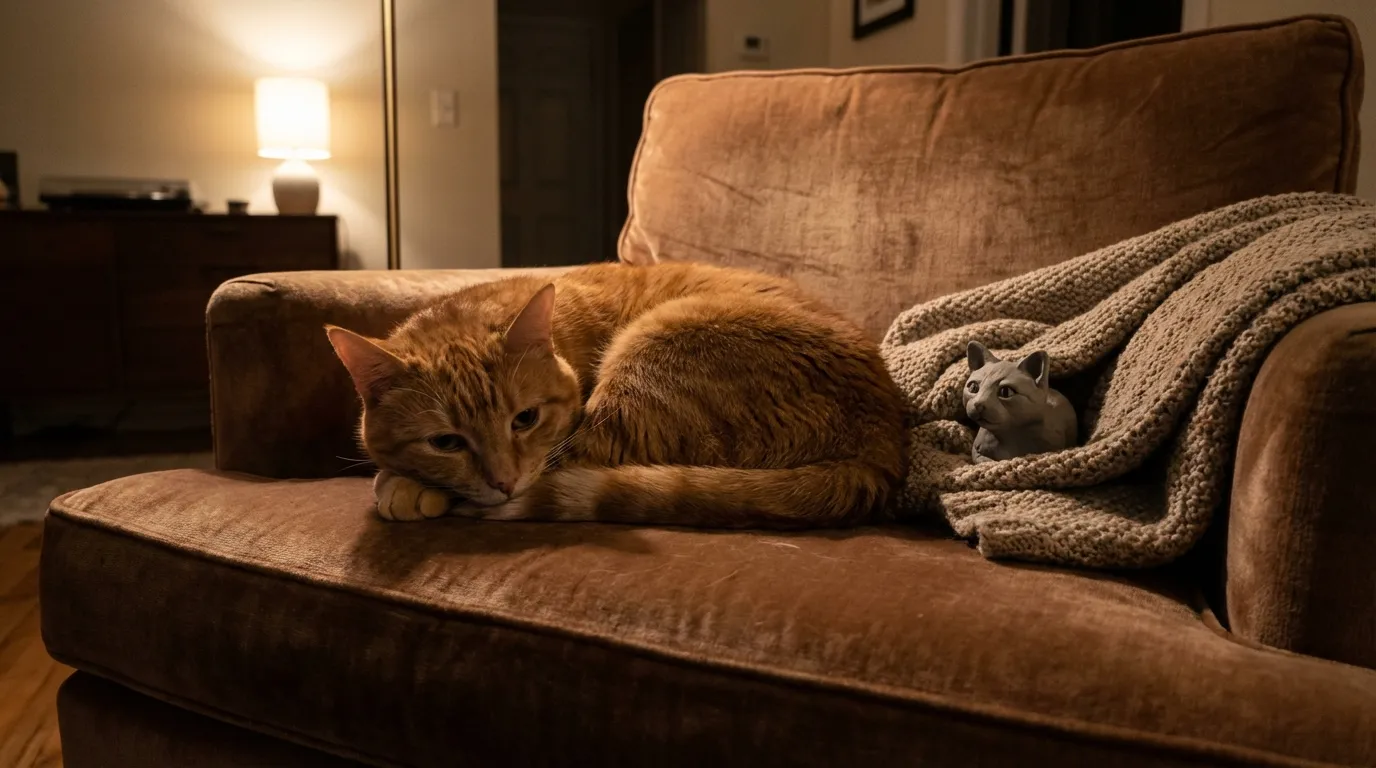
- Visual Anchors: We’ve had customers tell us that placing a custom figurine on the shelf where the pets used to sit together became a strange comfort. While dogs don't understand 3D printing, they understand your reaction to it. If you look at a spot and feel peace rather than panic, your dog feels that shift in your heart rate.
Our full-color 3D printing technology captures the specific markings—the white sock on the left paw, the notch in the ear—that made your pet unique. These aren't generic statues; they are digitally sculpted by master artists and then printed in resin to preserve the physical presence of the one you lost.
The "New Normal" Timeline
"When should I get another pet?"
This is the most common question we get. The answer is frustratingly vague: Not yet.
Bringing a bouncy puppy or a kitten into a home where a senior pet is grieving is rarely the comfort you think it will be. The surviving pet is tired. They are processing a new hierarchy. Throwing a chaotic element into that mix often leads to aggression or further withdrawal.
The 3-Month Rule:
Give the household at least three months to settle. Let the survivor establish who they are as a "single dog" or "only cat." You might be surprised to find their personality changes. The shy dog might become more confident without the alpha around. The aloof cat might become a lap cat.
Honor who they are becoming before asking them to accept a new sibling.
"Your surviving pet is not a replacement for the one you lost. They are a different chapter in the same book of love."
Moving Forward Together
Back in the garage, I didn't pour the second bowl. I poured one. I walked into the kitchen and set it down. My dog, who had been waiting by the door, looked at the single bowl, then up at me. He didn't eat immediately. He waited, checking the space beside him.
I sat on the floor next to him—something I hadn't done in years. I didn't try to hug him. I just sat there, guarding his flank while he ate.
Helping surviving pet navigate grief is really about navigating it together. It’s about acknowledging the empty space without letting it consume the entire room. It’s about patience, observation, and the courage to build a new routine, one bowl of food at a time.
Frequently Asked Questions
How long does a bonded pet grieve?
Just like humans, every animal is different. We typically see an acute adjustment period of 2 to 6 weeks. However, subtle behavioral changes can last much longer. If your pet is eating and engaging with you, they are coping. If they remain lethargic for more than a month, it's time for a vet checkup to rule out underlying issues.Should I let my surviving pet see the deceased body?
If possible, yes. Animals understand death through scent. Allowing the surviving pet to sniff the body of their companion can provide closure. It stops the "searching" behavior where they pace the house looking for their friend. It’s a hard moment for you, but often a clarifying one for them.Will my surviving dog be lonely as an only pet?
We often project our own loneliness onto them. While they miss the specific bond, dogs are adaptable. Many actually thrive getting 100% of the resources and attention. Before assuming they are lonely and need a new friend, try increasing your one-on-one play and training time.Can I get a custom figurine of both pets together?
Absolutely. Many families choose to memorialize the bond by creating a set. Because our process involves digital sculpting followed by high-precision 3D printing, we can create a composition that shows them together, or create a memorial piece for the lost pet that sits alongside a figurine of the living one.Ready to Celebrate Your Pet?
Every pet has a story worth preserving, and the bond between two companions is one of the most beautiful stories of all. Whether you're honoring a beloved companion who's crossed the rainbow bridge or celebrating the survivor who is still by your side, a custom PawSculpt figurine captures those details that make your pets one-of-a-kind.
Free instant AI preview • 3D artist preview within 7 days • 5 free revisions