Why Your Guinea Pig Deserves Art: Elevating Small Pets Beyond the Backyard Burial
A 2019 study published in Veterinary Record revealed that owners of "pocket pets" display attachment levels statistically identical to dog and cat owners, yet they receive less than half the social support during bereavement. You’re standing at the reception desk of the vet’s office, the fluorescent lights humming overhead, clutching a cardboard box that feels impossibly light. The receptionist offers a sympathetic smile, but you can see the confusion in the eyes of the dog owner behind you—confusion that such profound grief could exist for a creature that lived entirely within four square feet.
Quick Takeaways
- Grief is not size-dependent — The brain processes the loss of a dependent attachment figure identically, regardless of species or weight.
- Rituals aid neuroplasticity — Creating a permanent physical memorial helps the brain re-map neural pathways from "caregiver" to "survivor."
- Visuals trigger memory recall — A scientifically accurate visual representation triggers the hippocampus more effectively than abstract memorials.
- Art validates the bond — Commissioning custom 3D printed figurines serves as a tangible rejection of the societal stigma that small pets are "disposable."
The Psychology of Disenfranchised Grief
Here is the brutal reality that most articles on pet loss won't tell you: You are likely suffering from disenfranchised grief. In clinical psychology, this term describes grief that is not acknowledged or socially sanctioned by society. When a dog dies, your boss understands why you need a personal day. When a guinea pig dies, you are often met with an awkward silence or, worse, the suggestion that you can "just get another one for $40."
This lack of external validation creates a phenomenon known as cognitive dissonance. Your internal experience is one of devastation—your cortisol levels are spiking, your sleep is disrupted, and your routine is shattered. Yet, the external feedback from the world tells you this event is minor. This clash between your reality and society's reaction creates a secondary layer of pain: shame.
"Grief isn't measured in ounces. The heart doesn't know the difference between a Great Dane and a Guinea Pig."
We see this constantly. A customer recently told us she waited three months to order a memorial because she felt "silly" spending money on a rodent. That shame is a lie. The bond you formed was biological. Guinea pigs are highly vocal, social creatures. Every time your pig "wheeked" for vegetables, and you responded, your brain released oxytocin—the bonding hormone. Over years, you built a neural feedback loop of care and response. When that loop is severed, the neurological withdrawal is real, valid, and profound.
The Biological Specificity of the Bond
Why does the house feel so quiet? It’s not just the absence of noise; it’s the absence of specific frequency communication.
Unlike cats or dogs, guinea pigs are prey animals. Biologically, trust from a prey animal is harder to earn and, therefore, psychologically more rewarding for the human cortex. When a creature that is hardwired to fear everything chooses to fall asleep on your chest, it triggers a unique "chosen" response in the human attachment system.
The "Fragility Paradox"
There is also a counterintuitive aspect to this grief: the fragility of their lives. Because small pets are prone to rapid health declines, hyper-vigilant owners often develop an intense "protective attachment." You were their entire world, their doctor, their chef, and their protector. This intense dependency creates a psychological weight that, when lifted, leaves a void much heavier than the animal itself.
Comparative Grief Factors
| Attachment Factor | Dog/Cat Dynamic | Small Pet (Guinea Pig) Dynamic |
|---|---|---|
| Dependency | High (walks, food) | Absolute (cage environment, total diet) |
| Vocalization | Barking/Meowing (Alert/Demand) | Wheeking/Purring (Social/Anticipatory) |
| Physical Touch | Petting, sleeping nearby | Holding, hand-feeding (Intimate focus) |
| Social Validation | High (Society validates loss) | Low (Society views as "starter pet") |
Moving Beyond the Backyard Burial
For decades, the "shoe box in the backyard" was the default funeral rite for small pets. While there is a pastoral sweetness to this, psychology suggests it may not be the most effective method for closure for adult owners.
The backyard burial reinforces the idea of impermanence. It hides the pet away. It mimics the societal urge to "move on" quickly. Furthermore, for renters or those who move frequently, leaving a physical body behind can trigger a resurgence of separation anxiety years later.
We need to pivot toward object permanence.
In grief therapy, "linking objects" are physical items that connect the bereaved to the deceased. For a dog, this might be a leash or a collar. But guinea pig accessories—plastic igloos, water bottles—are often utilitarian and aesthetically unpleasing. They don't look like "memorials"; they look like clutter. This is where the transition from equipment to art becomes vital for mental health.
"We've seen families heal by holding something tangible. Grief needs an anchor."
— The PawSculpt Team
The Cognitive Role of Accurate Representation
Memory is reconstructive, not reproductive. Every time you recall a memory, your brain slightly alters it. Over time, without a visual anchor, the specific details—the exact shade of ginger on the rosette, the asymmetry of a white patch—begin to fade. This fading can induce panic in grieving pet owners, a phenomenon called fear of forgetting.
This is where generic memorials fail. A generic "angel guinea pig" statue from a garden store is a symbol, but it is not your pig. It does not trigger the hippocampus (memory center) the way a specific visual match does.
Why Precision Matters
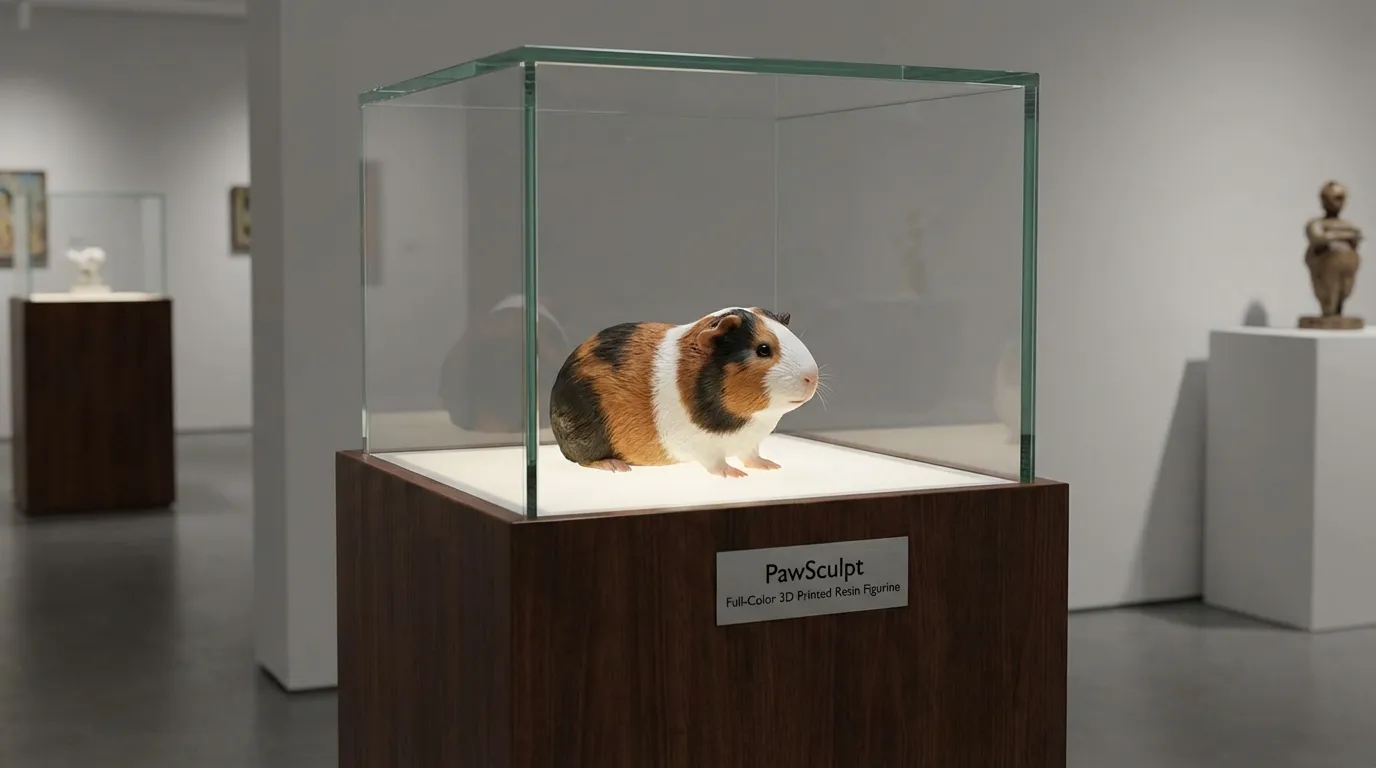
At PawSculpt, we utilize full-color 3D printing technology (specifically PolyJet or similar voxel-based processes). We don't mention this to brag about tech, but to explain the biological impact.- Voxel-Level Color: The color isn't painted on; it is structural. This allows for the recreation of complex fur patterns like brindle, roan, or agouti that are nearly impossible to capture with a brush.
- Texture and Form: Digital sculpting allows us to capture the specific posture. Was your pig a "pancaker" (flat and relaxed) or a "periscoper" (always standing up looking for treats)?
When you look at a representation that mimics the exact posture and markings of your pet, your brain receives a "hit" of recognition. This doesn't stop the grief, but it grounds it. It gives the love a place to land.
Creating a Sensory Memorial Space
Instead of hiding the memory, elevate it. Integrating a memorial into your living space is a way of claiming the validity of your pet's life. This is about environmental psychology—curating your home to reflect your values, which include the love you held for your small friend.
- The Anchor: A custom figurine serves as the focal point.
- The Tactile Element: A lock of fur or a favorite wooden chew toy (the teeth marks are a visceral reminder of their existence).
- The Living Element: A small succulent or air plant (representing continuing life).
Memorial Options Comparison
| Memorial Type | Emotional Impact | Longevity | Portability |
|---|---|---|---|
| Backyard Burial | High (Ceremonial) | Low (Weather/Moving) | None |
| Photo Book | Medium (Visual) | High | High |
| Generic Statue | Low (Impersonal) | High | High |
| Custom Figurine | Very High (recognition) | Lifetime | High |
Addressing the Guilt of "Moving On"
There is a specific guilt that guinea pig owners feel when they feel relief. Guinea pigs are fragile. Their end-of-life care often involves syringe feeding every two hours, managing gut stasis, and constant temperature monitoring. It is exhausting.
When they pass, you might feel a wave of relief that the caretaking crisis is over. This is normal. It is not a betrayal of love; it is the biological response of your parasympathetic nervous system finally stepping down from "fight or flight" mode.
However, that relief often curdles into guilt. You might think, "I shouldn't be happy they are gone." You aren't happy they are gone; you are relieved they are no longer suffering, and that you are no longer helpless to stop it.
Art and memorials help bridge this gap. They allow you to keep the presence of the pet without the burden of the illness. You can look at a figurine of your guinea pig in their prime—healthy, round, and bright-eyed—and overwrite the traumatic memories of their final days.
"A memorial doesn't mean you're stuck in the past. It means you're bringing the love with you into the future."
Frequently Asked Questions
Is it normal to grieve a guinea pig as much as a dog?
Absolutely. The American Veterinary Medical Association and grief counselors recognize that the human-animal bond is not defined by species. Your grief is a reflection of the daily time, care, and emotional investment you shared. Do not let anyone minimize your loss based on the animal's weight.How do I preserve my guinea pig's memory if I rent my home?
This is a common challenge. We strongly advise against backyard burial for renters. Instead, consider cremation (many vets offer services for small pets) or a strictly artistic memorial. A custom figurine or a framed paw print allows you to create a sacred space that is portable, ensuring you never have to "leave them behind" if you move.What photos are best for a custom 3D guinea pig figurine?
Because guinea pigs have such unique "rosettes" (swirls in fur) and color patches, we need angles that show the map of their coat. A top-down photo is critical for the back pattern. Side profiles help us get the "bean" shape right. If they had a specific expression—like a lifted chin when begging—try to find photos of that.How does the color get onto the figurine?
We do not use paint. We use advanced full-color 3D printing technology. The color is built directly into the resin, layer by microscopic layer (voxel). This allows us to achieve gradients, like the soft fade from white to ginger on a nose, that hand-painting often struggles to replicate realistically.Ready to Celebrate Your Pet?
Your guinea pig wasn't "just a rodent"—they were a personality, a companion, and a family member. They deserve a tribute that captures the specific tilt of their head and the unique map of their fur. A custom PawSculpt figurine preserves those details forever, giving you a tangible reminder of the love that never fades.
Free instant AI preview • 3D artist preview within 7 days • 5 free revisions