
Holiday Grief: 5 Ways to Include Your Late Boxer in Christmas Decor (Without Saddening the Guests)
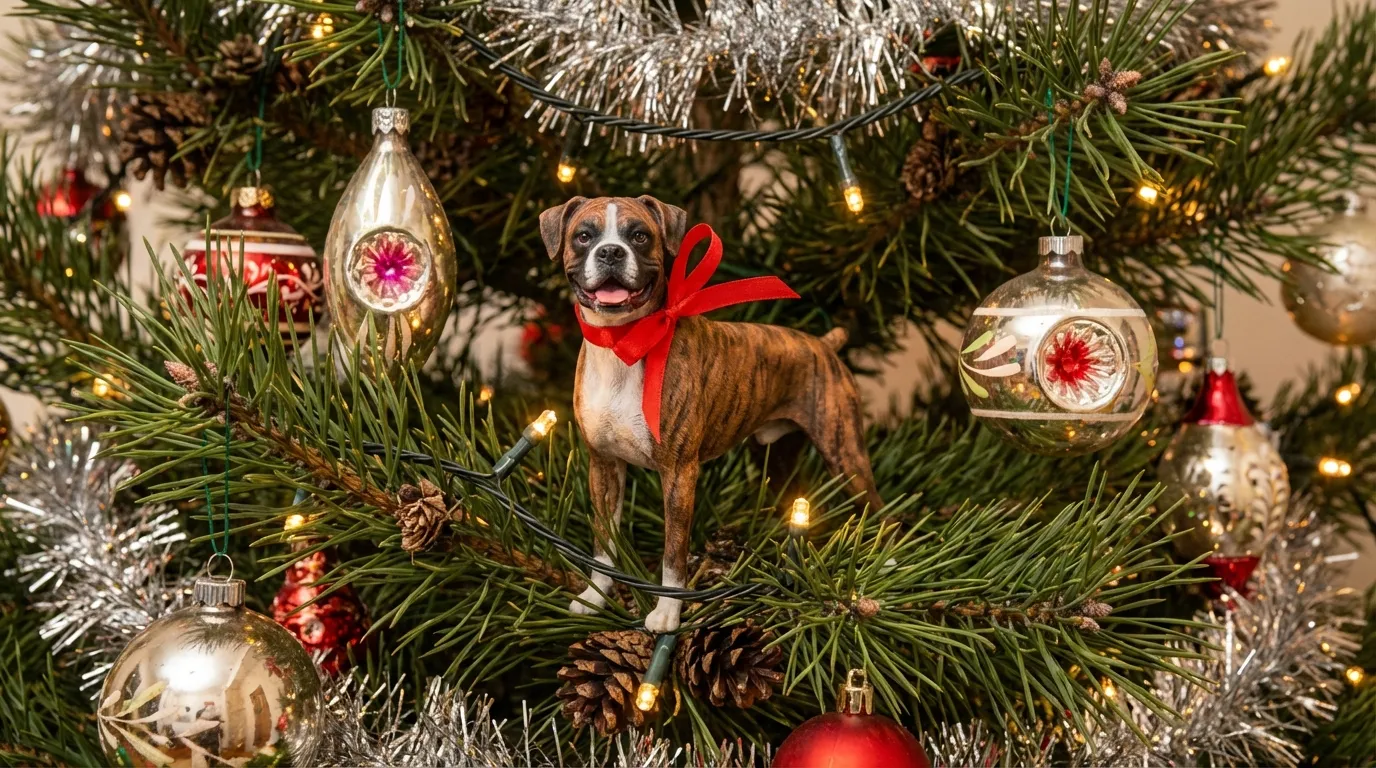
Does the stillness of the living room rug, where a 70-pound wiggle-machine used to hold court, feel louder than the holiday music? That empty space isn't just a lack of furniture; it's a disruption in your brain's expectation of a Boxer's kinetic energy, especially during the chaos of pet loss holidays.
Quick Takeaways
- Biological grief triggers — Your brain is chemically wired to expect your Boxer's greeting, causing anxiety when it doesn't happen.
- Subtle integration — Memorials don't need to be somber; they can be joyful artistic touches that guests admire.
- The relief paradox — Feeling relief that a sick dog is no longer struggling is a biological mercy, not a betrayal.
- Tangible anchors — A custom figurine acts as a physical touchstone to help ground emotional volatility.
The Neuroscience of the "Phantom Wiggle"
When you lose a Boxer, you lose more than a dog; you lose a significant amount of kinetic energy from your home. Psychologists refer to this as a disruption in your sensory gating. Your brain has spent years filtering out the background noise of clicking claws, the "woo-woo" greetings, and the physical impact of a leaning dog. When that input suddenly ceases, your nervous system goes into a state of hyper-alertness.
This is why the holidays feel so dangerous. The decorations change the environment, but the absence remains the loudest thing in the room.
The goal isn't to force "closure"—a concept that grief researchers increasingly view as a myth—but to practice Continuing Bonds. This psychological theory suggests that healthy grief involves maintaining a connection to the deceased in a way that fits into your new life. For a Boxer owner, that means finding ways to honor their exuberance without turning Christmas dinner into a wake.
1. The "Sensory Anchor" Ornament Strategy
The most common mistake grieving owners make is plastering large, somber photos of their late pet in central gathering spaces. While well-intentioned, this often triggers "empathetic distress" in guests, who then feel awkward about celebrating.
Instead, utilize the concept of a Transitional Object. Create a memorial that blends seamlessly with your decor.
We recommend a custom 3D printed ornament that captures a specific quirk—perhaps your Boxer’s "kidney bean" wiggle or their classic head tilt. Because PawSculpt uses full-color 3D printing technology, we don't rely on an artist's interpretation or hand-painting. The resin itself is printed in the exact pigment of your dog's brindle or fawn coat.
This allows you to place a miniature, hyper-realistic version of them on the tree. To a guest, it’s a beautiful, high-quality ornament. To you, it’s a tactile anchor you can touch when the wave of sadness hits.
"Grief isn't a pathology to be cured. It's a neurological restructuring of your world to accommodate an absence."
2. Acknowledge the "Cortisol Drop" (The Emotion No One Talks About)
We need to address the elephant in the room—or rather, the Boxer that isn't. Boxers are prone to difficult end-of-life conditions like degenerative myelopathy or aggressive cancers. The last few months of your dog's life likely involved high-stress caretaking: lifting a heavy dog, managing incontinence, and hyper-vigilance.
When that stops, you might feel a wave of relief.
And then, immediately after, a crushing wave of guilt for feeling that relief.
From a biological standpoint, that relief is simply your cortisol levels returning to baseline. It does not mean you loved them less. It means your body is standing down from "crisis mode."
Actionable Step: If you feel this guilt during the holidays, reframe it. Tell yourself: "My relief is evidence that I took on their pain so they didn't have to." Allow yourself to enjoy the holiday rest without the moral judgment.
3. The "Grief Partitioning" Ritual
Cognitive science tells us that the brain craves ritual to manage anxiety. If you are terrified of breaking down in front of your in-laws, you need to schedule your grief. This is called compartmentalization, and it’s a healthy coping mechanism when used intentionally.
Create a specific 15-minute window before the guests arrive. Light a candle, hold your dog's collar, or sit with their ashes. Speak to them. Cry.
Why this works: By giving the emotion a designated time and space to exist, you lower the psychological pressure. You aren't suppressing the grief; you are managing the release valve.
Comparison: Overt vs. Subtle Memorials
| Feature | Overt Memorial (e.g., Large Shrine) | Subtle Integration (e.g., Figurine/Ornament) |
|---|---|---|
| Guest Reaction | Sympathy, lowered mood, hesitation to laugh | Admiration, fond storytelling, natural conversation |
| Owner Emotion | Constant reminder of loss | Reminder of life and presence |
| Psychological Impact | Keeps brain in "acute grief" phase | Aids in "integrated grief" phase |
| Holiday Suitability | Can feel heavy or out of place | Blends with celebration and tradition |
4. Repurposing the Stocking (Operant Conditioning)
If you've hung a stocking for your Boxer for years, the empty hook is a visual trigger. However, removing it entirely can feel like an erasure.
Use the principle of associative shifting. Keep the stocking up, but change its purpose. Instead of treats, ask family members to write down a favorite memory of the dog—specifically a funny one (Boxers provide plenty of material)—and slip it inside.
Or, use the stocking to collect a donation for a Boxer rescue. This shifts the association of the stocking from "absence/loss" to "legacy/helping." It engages the reward center of the brain (altruism) to counteract the pain center.
5. The 3D Figurine as a "Cognitive Bridge"
There is a reason we keep urns, collars, and photos. The human brain struggles with the abstract concept of "gone." We are tactile creatures.
At PawSculpt, we have found that for many owners, a flat photograph doesn't trigger the same emotional connection as a three-dimensional object. A photo captures a moment; a sculpture captures presence.
"We've seen families heal by holding something tangible. Grief needs an anchor, especially when the house feels too quiet."
— The PawSculpt Team
Our custom pet figurines are created using voxel-level 3D printing. This isn't a generic mold that is hand-painted to look kind of like a Boxer. We digitally sculpt the musculature, the specific ear set, and the unique white flash on the chest based on your photos, and then the machine prints that exact coloration directly into the resin.
Placing a 4-inch or 7-inch replica of your Boxer on the mantle isn't about pretending they are still there. It's about acknowledging that their form, their shape, and their spot in the family is permanent. It serves as a cognitive bridge, allowing you to direct your affection toward a physical object, which can lower heart rate and reduce feelings of isolation.
Frequently Asked Questions
How do I include my late dog in Christmas without making everyone sad?
Focus on subtle, joyful tributes rather than somber shrines. Use a custom ornament, a subtle memorial idea like a small figurine nestled in the decor, or a "memory stocking" for funny stories. This invites guests to share happy memories rather than feeling obligated to offer condolences.Is it normal to feel relief after my Boxer died?
Yes. This is a biological response to the end of "caregiver burnout." The drop in stress hormones (cortisol) when intense caretaking ends is physical, not emotional. It does not mean you didn't love your dog; it means you prioritized their peace over your own need to keep them close.What is the best type of memorial for a high-energy breed like a Boxer?
Boxers are defined by movement. Static photos can sometimes feel "flat" to a grieving brain. 3D figurines that capture their specific posture—like a play bow, a "kidney bean" twist, or a head tilt—often resonate more deeply because they mimic the dog's physical presence in 3D space.How long does it take to get a custom pet figurine?
Because we prioritize extreme accuracy in the digital sculpting phase, the process typically takes 2-5 weeks depending on revisions. We provide a 3D preview within 48 hours. We recommend ordering early for the holidays to ensure your keepsake arrives in time to be part of your seasonal tradition.Ready to Celebrate Your Pet?
Every pet has a story worth preserving. Whether you're honoring a beloved companion who's crossed the rainbow bridge or celebrating your furry friend's unique personality, a custom PawSculpt figurine captures those details that make your pet one-of-a-kind.
Free instant AI preview • 3D artist preview within 7 days • 5 free revisions