
A Memorial Garden That Gives Back: Planting a Pollinator Bed in Honor of Your Boxer
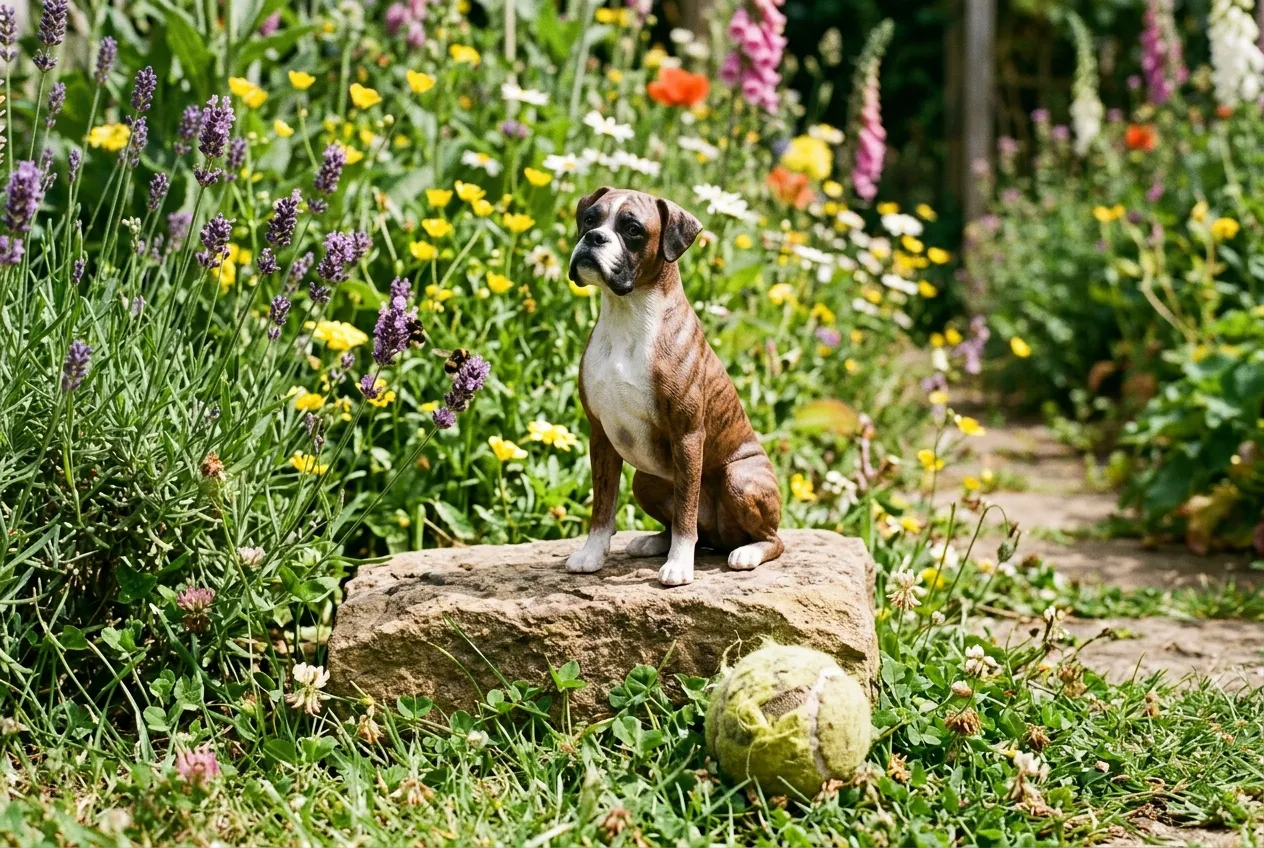
The crunch of gravel under your boots where she used to trot ahead of you, nose low, snorting at every wildflower along the trail—that sound hits different now. You're here looking for pet memorial garden ideas, and honestly, we're glad you found this page before you found another generic listicle telling you to buy a stepping stone from a big-box store. Because what we're about to walk through together is something far more alive than that.
Quick Takeaways
- A pollinator memorial garden turns grief into ecological action — your Boxer's legacy literally feeds the ecosystem
- Native plants outperform ornamental "memorial garden kits" — they're cheaper, hardier, and attract 4x more pollinators
- Designing around your dog's actual personality makes the space meaningful — not just pretty
- Pairing a living garden with a lasting keepsake like a custom pet figurine creates both a growing tribute and a permanent anchor for memory
- The first bloom cycle (8-14 weeks) can be unexpectedly emotional — plan for it, don't be blindsided
Why a Pollinator Bed Is the Memorial Most Guides Won't Suggest
Here's what you'll find if you search "boxer dog memorial" right now: engraved stones, wind chimes, paw-print ornaments, shadow boxes. All fine. All static. All collecting dust within a year.
What you won't find—and what we think deserves way more attention—is the idea of a memorial that participates in the world. A pollinator garden doesn't just sit there honoring your dog. It feeds bees. It shelters butterflies. It pulls carbon. It changes the soil composition of your yard over seasons and years. Your Boxer's memorial becomes a small engine of life in your neighborhood.
That's not a metaphor. That's measurable ecology.
The Xerces Society has documented that even a 100-square-foot pollinator patch can support dozens of native bee species and serve as a critical corridor for migrating butterflies. Your grief, channeled into a garden bed, becomes habitat. We'll be real—that reframe won't fix the hurt. But it gives the hurt somewhere to go.
And Boxers, of all breeds, deserve something with that kind of energy. These weren't dogs that sat still. They bounced. They wiggled. They shoved their faces into everything green and growing. A static memorial never quite captures that, does it?
The Emotional Truth Nobody Prepares You For
Before we get into soil and seeds, we need to talk about something first. Because you might be standing in your yard right now, staring at a patch of dirt, and feeling something you haven't told anyone about.
The guilt.
Maybe you're replaying the last vet visit. Wondering if you waited too long. Or didn't wait long enough. Second-guessing whether the Tuesday appointment should have been the Friday before, or whether you should have tried one more round of treatment. That loop—the "what if I had just..."—is one of grief's cruelest mechanisms, and it is shockingly common among pet owners who made euthanasia decisions.
Here's what we've learned from working with thousands of families navigating pet loss: almost everyone who chose to end their pet's suffering also carries a private, contradictory wave of relief. Relief that the 3 AM panting stopped. Relief that you don't have to watch them struggle to stand anymore. And then, right behind that relief, a wall of shame for feeling it.
You are not broken for feeling both things at once. You loved your Boxer enough to carry the weight of that decision so they didn't have to carry the weight of that pain. The relief doesn't cancel the love. It proves it.
"Grief isn't the absence of your dog. It's the presence of every moment you shared, looking for somewhere to land."
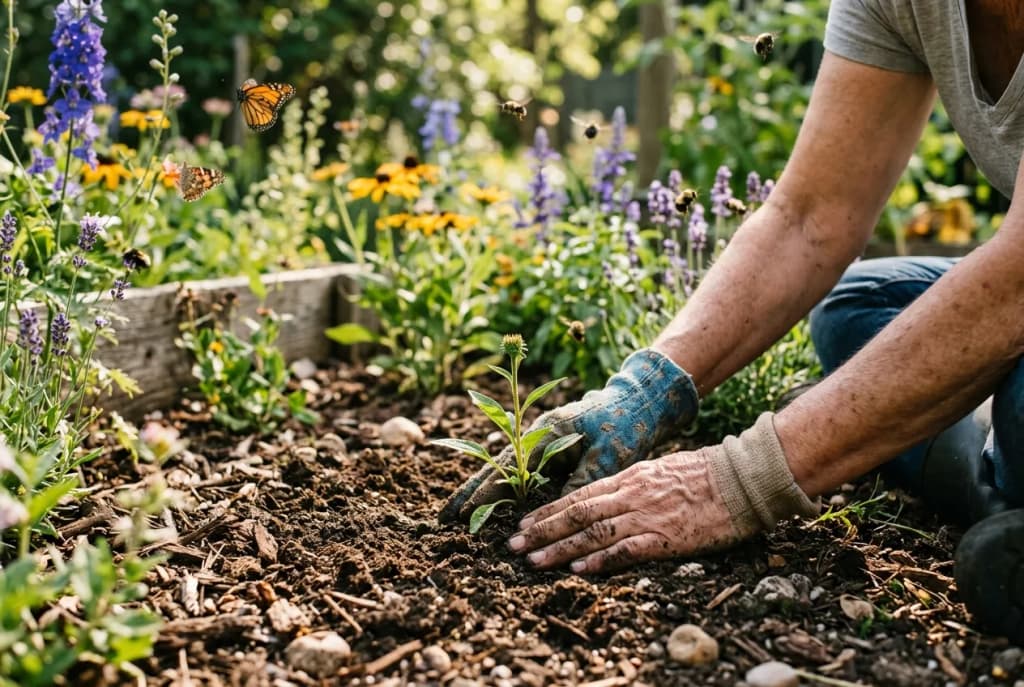
So when we talk about building a garden, understand—this isn't a distraction project. This is giving your hands something to do while your heart figures out its new shape. Dirt under your fingernails. Sun on your neck. The specific, grounding physicality of planting something and choosing to believe it will grow.
Designing a Pollinator Bed That Actually Reflects Your Boxer
Most memorial garden guides treat the garden like a blank canvas for grief. Plant some lavender, add a stone, done. But your Boxer wasn't generic, and the garden shouldn't be either.
Here's our counterintuitive take: design the garden around your dog's personality, not around traditional memorial aesthetics. This is the part most people skip, and it's the part that makes the difference between a garden you visit and a garden you connect with.
The Personality-to-Plant Translation
Think about your Boxer's actual traits. Not the breed standard—your specific dog.
Was she a bulldozer? The kind who crashed through the yard at full speed, scattering birds? Then you want bold, structural plants that command space: Joe-Pye weed (grows 5-7 feet tall), cup plant, tall ironweed. Plants that take up room unapologetically, just like she did.
Was he a gentle weirdo? The Boxer who'd freeze mid-step to watch a ladybug, then sneeze on it? Go with delicate, intricate bloomers: wild bergamot, purple coneflower, golden alexanders. Plants that reward close attention.
Was she the neighborhood greeter? Wiggling at every person who walked by? Choose plants that attract the most visible pollinators—butterfly milkweed, blazing star, and asters—so the garden is always buzzing with visitors. Always social. Always saying hello.
| Boxer Personality Trait | Recommended Plants | Primary Pollinators Attracted | Visual Effect |
|---|---|---|---|
| High-energy, bold | Joe-Pye weed, cup plant, tall ironweed | Swallowtails, large bees | Tall, dramatic, commanding |
| Gentle, observant | Wild bergamot, golden alexanders, columbine | Small native bees, hummingbirds | Delicate, layered, intricate |
| Social, people-loving | Butterfly milkweed, blazing star, asters | Monarchs, painted ladies, honeybees | Bright, busy, welcoming |
| Stubborn, persistent | Prairie dock, rattlesnake master, compass plant | Specialist bees, beetles | Tough, architectural, enduring |
| Playful, goofy | Black-eyed Susan, bee balm, wild indigo | Wide variety, constant motion | Colorful, bouncy, cheerful |
This isn't just cute—it's functional design. When the garden reflects something true about your dog, you'll find yourself saying things like "that's so her" when the Joe-Pye weed takes over its corner of the bed. And those small recognitions? They're not painful. They're the good kind of remembering.
Sizing and Placement
You don't need a huge yard. A 4x8-foot raised bed or even a 3x6-foot ground-level plot is enough to support a meaningful pollinator habitat. The key factors:
- Full sun (6+ hours daily)—most native pollinator plants need it
- Visible from a window you use daily—you want passive connection, not a pilgrimage to the back corner of the yard
- Away from areas treated with pesticides or herbicides—this is non-negotiable for pollinator safety
- Near a water source if possible (even a shallow dish with pebbles works for bees)
One thing people overlook: place the garden where you used to spend time with your dog. Near the back door where she'd wait for you. Along the fence line where he'd patrol. The geographic overlap between "where the dog lived" and "where the garden grows" creates a continuity that matters more than you'd expect.
The Practical Build: From Bare Dirt to First Bloom
Let's get specific. Here's how to actually build this thing, step by step, with timelines that account for the fact that you're grieving and your energy is unpredictable.
Step 1: Site Prep (Weekend 1 — about 2 hours of actual work)
- Mark your bed dimensions with string or a garden hose
- Remove existing grass/weeds—either smother with cardboard (slow, 4-6 weeks) or strip with a flat shovel (immediate)
- If your soil is heavy clay (common in much of the US), mix in 2-3 inches of compost
- Don't overthink this step. Imperfect soil prep still grows flowers. Perfectionism is procrastination wearing garden gloves.
Step 2: Plant Selection (Weekend 2 — the fun part)
Go native. This is the single most important decision you'll make, and it's where most memorial garden guides fail you. Those "pollinator-friendly" seed mixes from the hardware store? They're often full of non-native cultivars that look pretty but provide minimal actual nutrition for local pollinators.
Instead, find your regional native plant nursery. The Xerces Society's pollinator plant lists are organized by region and are free. Your local native plant society likely holds spring and fall sales with prices 30-50% below retail nurseries.
For a 4x8-foot Boxer memorial pollinator bed in USDA zones 5-8 (covers most of the continental US), here's a planting plan that provides three-season bloom:
| Season | Plant | Height | Color | Pollinator Value |
|---|---|---|---|---|
| Spring (Apr-May) | Golden alexanders | 2-3 ft | Yellow | Early native bees, swallowtail host |
| Spring (May-Jun) | Wild columbine | 1-2 ft | Red/yellow | Hummingbirds, long-tongued bees |
| Summer (Jun-Aug) | Purple coneflower | 3-4 ft | Purple/pink | Broad pollinator appeal |
| Summer (Jul-Aug) | Butterfly milkweed | 2-3 ft | Orange | Monarch host plant (critical) |
| Summer (Jul-Sep) | Bee balm | 3-4 ft | Red/pink | Hummingbirds, bumblebees |
| Fall (Aug-Oct) | New England aster | 3-6 ft | Purple | Late-season bees, migrating monarchs |
| Fall (Sep-Oct) | Goldenrod | 3-5 ft | Yellow | 100+ pollinator species supported |
Total cost for plants: roughly $60-$120 depending on whether you buy plugs (small, cheaper, slower to establish) or quart-sized pots (bigger, pricier, faster impact). That's less than most engraved memorial stones, and it feeds an ecosystem.
Step 3: Planting Day (Weekend 3 — 2-3 hours)
Here's the thing about planting day. It might hit you harder than you expect.
Your hands in the dirt. The quiet. The absence of a dog nose investigating every hole you dig. Some of our customers have told us this was the moment the loss became physically real—not at the vet's office, not at home that first night, but kneeling in the yard doing something their dog would have been right in the middle of.
If that happens, let it. Put the trowel down. Sit in the dirt for a minute. The plants will wait.
Practical planting notes:
- Space plants 12-18 inches apart (they'll fill in by year two)
- Water deeply after planting, then weekly for the first month
- Mulch with 2 inches of shredded leaves or wood chips—not dyed mulch, not rubber mulch
- Don't fertilize native plants—they evolved for your local soil conditions and actually perform worse with added nutrients (counterintuitive, but true)
Step 4: The First Season (Weeks 1-14)
Expect very little visible action for the first 4-6 weeks. Native plants invest in roots before shoots—they're building infrastructure underground while looking like not much aboveground. This is normal. This is not failure.
By weeks 8-14, you'll start seeing blooms. And here's something nobody warns you about: the first bloom can be an unexpectedly emotional moment. You planted this for your dog. And now something is alive and flowering because of that intention. Several families we've worked with have described the first butterfly landing on their memorial garden as a moment that broke them open in the best possible way.
"A garden doesn't replace what you lost. It gives the love somewhere to grow."
Myth vs. Reality: Memorial Gardens and Pollinator Beds
Let's clear up some things that trip people up.
Myth: Pollinator gardens are messy and will annoy your neighbors.
Reality: Native pollinator gardens have a different aesthetic than manicured landscapes, yes. But "messy" is a choice, not an inevitability. Edge your bed cleanly, add a simple border (natural stone, steel edging, or even a mowed grass strip), and your pollinator bed reads as intentional, not neglected. Many municipalities now have pollinator-friendly yard ordinances that protect native plantings from HOA complaints. Check yours.
Myth: You need a green thumb to maintain a pollinator garden.
Reality: Native plants evolved to survive your local conditions without human intervention. Once established (after the first growing season), a native pollinator bed needs less maintenance than a traditional lawn—no mowing, no fertilizing, no irrigation in most climates. You're literally doing less work, not more. The main task is cutting back dead stems in late winter, and even that's optional (many native bees overwinter in hollow stems, so leaving them up through March is actually better for the ecosystem).
Myth: Memorial gardens need to look somber and formal.
Reality: Your Boxer wasn't somber or formal. Why should their memorial be? The most meaningful memorial gardens we've seen are the ones that feel alive—bright colors, movement, buzzing with visitors. A garden full of orange butterfly milkweed and purple bee balm, with monarchs and swallowtails swooping through, captures the spirit of a Boxer far better than a gray stone in a bed of white impatiens ever could.
Adding Permanent Anchors to a Living Memorial
Here's something we've noticed that's worth talking about honestly: living memorials are beautiful, but they're also seasonal. In January, when the garden is dormant and brown, the memorial can feel dormant too. And for some people, that seasonal absence is hard.
This is where combining living and permanent elements creates something more complete.
Some families add a simple bench near the garden—a place to sit and watch the pollinators work. Others incorporate a flat stone with their dog's name, nestled among the plants so it's discovered rather than displayed. A weatherproof photo in a small frame. A ceramic bowl that catches rainwater for the bees.
"We've seen families place a figurine among the first spring shoots, and suddenly the whole garden has a center of gravity. The living and the lasting, together."
— The PawSculpt Team
And increasingly, families are choosing permanent, tangible keepsakes that can anchor a memorial garden year-round. A custom 3D-printed pet figurine made from full-color resin, for example, can sit on a windowsill overlooking the garden or be placed on a shelf inside where you see it daily—even in the months when the garden sleeps. The color is printed directly into the material (not applied on top), so it holds up over time without fading the way painted keepsakes can. It's a different kind of permanence than a garden offers, and the two together cover the full emotional range: growth and stability, change and constancy.
But look—the figurine is one option among many. The point is to pair something that grows with something that stays. Find the combination that feels right for you.
The Sounds of a Memorial Garden (And Why They Matter)
This might be the most overlooked aspect of a pet memorial, and it's the one that catches people off guard.
You know the sounds your Boxer made. The snoring. The weird groaning yawn. The thunderous full-body shake that rattled their collar tags. The specific rhythm of their paws on hardwood, on grass, on gravel. Those sounds are gone now, and the absence of them is its own kind of loud.
A pollinator garden introduces new sounds into that silence. Not replacement sounds—nothing replaces the sound of your dog—but companion sounds. The low hum of bumblebees working through bee balm. The papery flutter of a monarch's wings. Wind moving through tall grasses. The sharp chip of a goldfinch pulling seeds from a spent coneflower head in October.
These aren't dramatic sounds. They're ambient. Background. The kind of sounds that fill a space without demanding attention. And over time, they become the soundtrack of the memorial—something your ears learn to associate with this specific place, this specific love, this specific dog.
One family we worked with told us something that stuck: "I didn't plant the garden to hear something new. I planted it because the quiet was too heavy. Now the garden hums, and it's easier to be out there."
If you want to amplify this effect, include plants that are specifically good at attracting audible pollinators:
- Bee balm (Monarda) — bumblebees are loud and persistent on these blooms
- Anise hyssop — attracts an almost absurd density of bees; the collective buzzing is noticeable from several feet away
- Goldenrod — late-season magnet for everything that flies; the sound of a goldenrod patch in September is like a small engine
- Native grasses (little bluestem, prairie dropseed) — add wind-sound texture and movement
Eco-Friendly Pet Tribute: The Bigger Picture
Let's zoom out for a second, because this matters.
The United States has lost an estimated 90% of its native pollinator habitat over the past century. Monarch butterfly populations have declined by roughly 80% since the 1990s. Native bee species are disappearing at rates that should alarm anyone who likes eating food (one in three bites of food depends on pollinator activity, according to the USDA).
When you plant a pollinator bed as an eco-friendly pet tribute, you're not just processing grief. You're participating in one of the most accessible forms of ecological restoration available to a homeowner. Every square foot of native habitat you create connects to the larger patchwork of pollinator corridors that these species depend on for survival.
Your Boxer didn't know about pollinator decline. But Boxers, as a breed, are defined by their loyalty, their protectiveness, their instinct to guard what matters. There's something fitting about their memorial standing guard over a small patch of habitat that the natural world desperately needs.
That's not sentimental fluff. That's ecology meeting love, and both being better for it.
What to Do When the Garden Triggers Unexpected Grief
We'd be doing you a disservice if we didn't address this directly.
Memorial gardens are healing. They're also, at times, activating. You will have moments in the garden—maybe in month three, maybe in year two—where grief arrives without warning. A butterfly lands on the milkweed and you think, "She would have tried to eat that butterfly," and suddenly you're crying over a plant you bought at a native nursery sale.
This is normal. This is the garden doing what it's supposed to do. It's not failing you—it's giving your grief a physical location, a living ecosystem where sadness and beauty occupy the same soil.
Here's how to handle it when it happens:
Don't leave the garden. Your instinct will be to go inside, close the door, put distance between yourself and the trigger. Stay. Pull a weed. Water something. Let the tears fall into the dirt if they need to. The act of staying teaches your nervous system that grief can be experienced without emergency—that you can feel it and still function, still tend, still care for something living.
Talk to the garden. It sounds strange until you try it. Say what you're feeling out loud: "I miss you. I miss the way you used to dig up this exact spot." Giving voice to grief in an outdoor space, where the wind carries it and the plants absorb it, feels fundamentally different from crying alone in a bedroom. It's wider. Less claustrophobic.
Mark the moment. Keep a simple garden journal—nothing elaborate, just a date and a sentence. "March 14: The coneflowers are budding. Cried for twenty minutes. Saw a monarch." Over time, these entries become a record of how grief and growth interweave. You'll look back and see that the entries shift from mostly grief to mostly observation, and that shift will surprise you.
The Garden as a Conversation Starter
Boxers are social dogs, and the people who love them tend to be social people. Your memorial garden will become a topic of conversation, and those conversations will be unexpectedly healing.
A neighbor asks, "What made you plant a pollinator garden?" You answer honestly: "It's for my boxer. She used to chase butterflies in this spot." And suddenly you're telling the story—the chasing, the zoomies, the time she ran headfirst into the fence trying to catch a monarch. The grief that was private becomes shared. The garden gives your love an audience.
Some families amplify this by placing a small custom figurine of their boxer near the garden, perhaps on a windowsill overlooking the bed or tucked among the border stones. It turns the garden from a botanical memorial into a portrait of a specific life—this dog, this love, this particular plot of earth that grows because they were here.
Ready to Create a Permanent Anchor for Your Boxer's Garden?
A pollinator garden is a living tribute—growing, blooming, feeding the ecosystem your boxer was part of. A custom PawSculpt figurine gives that tribute a face, capturing your boxer's muscular stance, cropped or natural ears, and that irrepressible expression of joy that defined every day you shared.
Visit pawsculpt.com to start your order—free AI preview, a 3D artist preview within 7 days, and 5 free revisions
Frequently Asked Questions
What are the best pollinator plants for a pet memorial garden?
Lavender, echinacea, black-eyed Susan, and bee balm are all hardy, low-maintenance choices that attract butterflies and bees. Native wildflower mixes work especially well because they require less water and adapt to your specific climate zone. Choose perennials over annuals so the garden returns every year without replanting.
How do I create a memorial garden for my dog on a small budget?
Start with seeds instead of mature plants—a packet of native wildflower seeds costs a few dollars and can cover a surprising amount of ground. Repurpose a favorite water bowl as a planter, and use a simple flat stone as a marker. The most meaningful gardens aren't the most expensive; they're the ones you tend with intention.
Can I bury my dog's ashes in a memorial garden?
In most U.S. jurisdictions, yes—you can bury cremated remains on your own property. Pet ashes are sterile and safe for garden soil. Some families scatter them beneath a specific plant so the memorial feels rooted in something living. Check local ordinances if you rent or live in an HOA community.
What makes a pollinator garden a meaningful pet tribute?
Unlike static memorials, a pollinator garden actively sustains life. Every butterfly that visits is a small echo of the vitality your boxer brought to your home. It transforms grief into purpose—honoring your pet by contributing to the ecosystem they were part of.
How do I maintain a pet memorial garden year-round?
Group plants by watering needs to simplify upkeep. In spring, cut back dead perennial stalks to make room for new growth. In fall, leave seed heads standing—they feed overwintering birds. A 2-inch layer of mulch in summer reduces weeding to almost nothing. The key is choosing plants suited to your climate so the garden practically runs itself.