
When There's No Answer: Helping Young Kids and Yourself Grieve a Bernese Mountain Dog
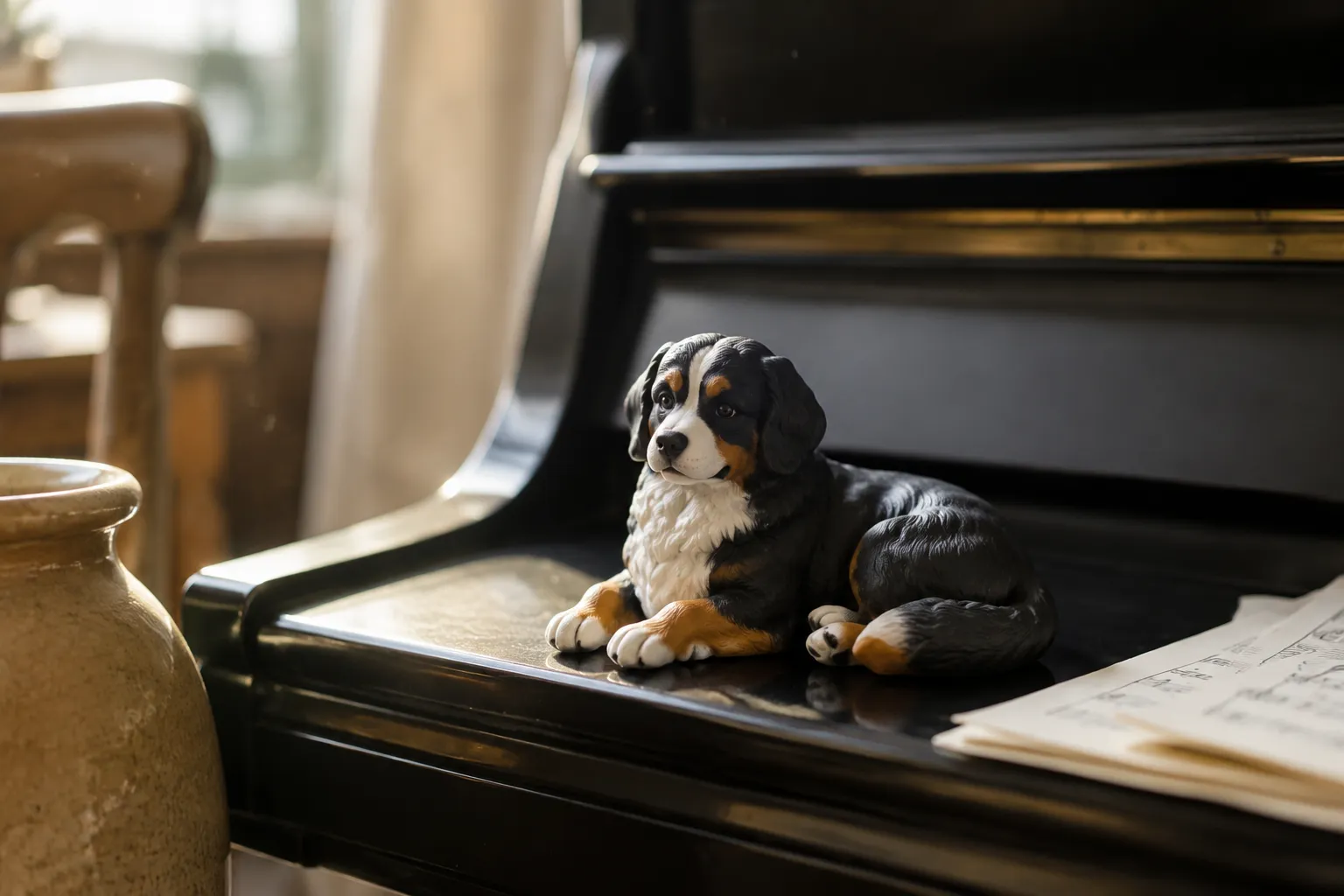
How do you explain to a five-year-old why the huge black, white, and rust-colored shape that used to fill the backyard is gone? For families facing a bernese mountain dog memorial, that empty patch of sun-warmed grass is where the hardest questions start.
A bernese mountain dog memorial should hold two truths at once: honoring the dog and helping your kids grieve. Start with honest, simple language for children, keep familiar routines steady, and create one tangible keepsake the whole family can touch. Because Berners often die young and suddenly, families rarely get closure — so you build it deliberately.
Quick Takeaways
- Tell young kids the truth simply — "his body stopped working and he died" beats confusing euphemisms.
- Sudden loss steals the goodbye — expect shock, not a tidy grieving arc, in the first weeks.
- Let children help decide how to remember the dog; involvement lowers their anxiety and fear.
- A shared object anchors grief — many families choose pet memorial figurines kids can actually hold.
- Your guilt about "missing the signs" is normal — Berner cancers hide until they don't.
Why Losing a Bernese Mountain Dog Hits a Family Differently
Here's something we've noticed across hundreds of memorial orders: grief for a Berner has a particular shape. And it's not only about how much you loved the dog.
It's about physics.
A Bernese Mountain Dog is 80 to 115 pounds of warm, shedding, floor-hogging presence. They lean into your legs. They block hallways. They take up the entire back seat and half the couch. When that body is suddenly absent, the void isn't abstract. You feel it in square footage. The kitchen echoes. Nobody's blocking the top of the stairs anymore.
Then there's the timeline. Berners are one of the shortest-lived breeds out there, with an average lifespan of roughly 7 to 8 years. Many families lose them to cancer, particularly histiocytic sarcoma, which this breed is genetically prone to. According to the American Kennel Club's breed information, their gentle giant temperament comes packaged with real health vulnerabilities.
So when people say "you knew they don't live long," it doesn't soften anything. Knowing the statistic and holding your dying dog at age six are not the same experience.
"The house didn't feel bigger without him. It felt hollow, like someone took the furniture but left the room."
The sudden-loss problem
Plenty of Berner families don't get a slow decline. The dog seems fine on Tuesday. By Friday there's an emergency vet visit, a mass nobody caught, and a decision made in a fluorescent waiting room at 11 p.m.
Sudden pet loss grief runs on a different track than anticipatory grief. There's no bucket list, no last good weekend, no chance to say the things out loud. The brain keeps snagging on the wrongness of it. That mental replay is normal, and it's part of why sudden loss can feel harder to process even when the relationship was identical.
Helping Children With Pet Loss When You Have No Good Answer
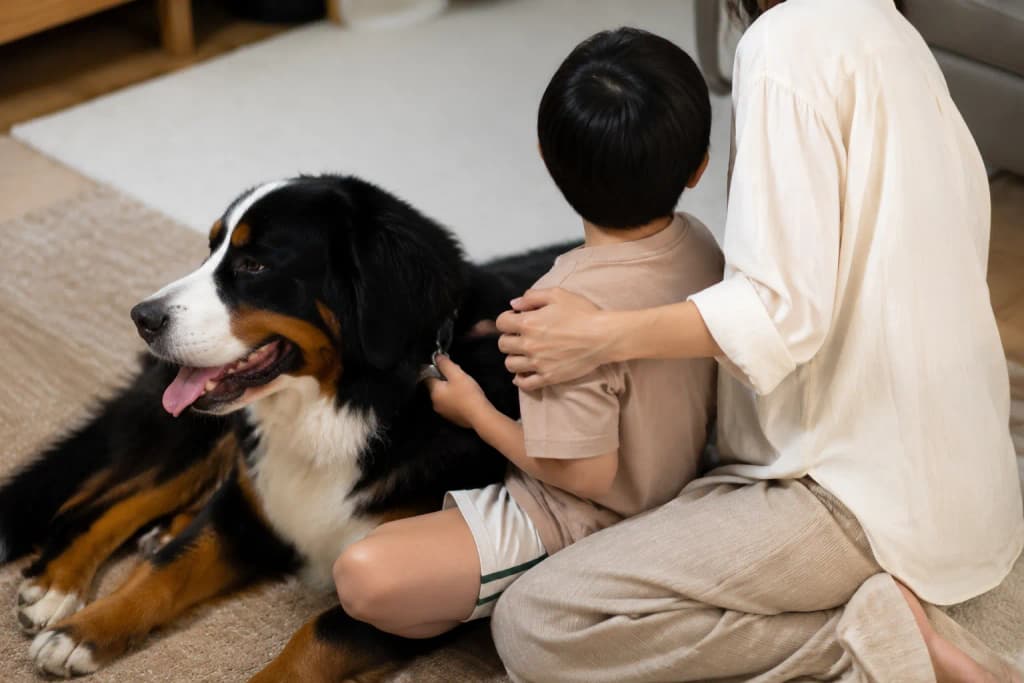
Young kids will ask the question you can't answer: why? Why did he die? Why couldn't the vet fix him? Why him and not the neighbor's old dog?
You don't have a real answer. That's okay. Pretending you do usually backfires.
The instinct is to protect them with softer language. Resist it. Phrases like "we put him to sleep" or "he went away" create a specific kind of confusion in a young child's literal brain. We worked with a family whose four-year-old refused to nap for two weeks after hearing "we let him sleep" at the vet. The connection she made was obvious to her, invisible to the adults.
Say the real words. "His body stopped working and he died. He's not coming back, and that's not because of anything you did." Kids need that last part more than adults realize.
Here's how the message shifts by age. This isn't rigid, but it's a useful starting map:
| Child's Age | What They Understand | What to Say | What to Avoid |
|---|---|---|---|
| 2–4 years | Death isn't permanent to them yet | Short, concrete: "His body stopped. He died." Repeat as needed. | "Sleeping," "went away," "we lost him" |
| 5–7 years | Grasping permanence, prone to magical thinking | Reassure it wasn't their fault; invite questions | Vague timelines, false blame-free assumptions |
| 8–11 years | Understands finality, wants facts | Honest cause ("he was very sick inside"); include them in memorial | Overprotecting them from the reality |
| 12+ years | Adult-level understanding, may hide feelings | Treat their grief as real; don't minimize | Assuming they're "fine" because they're quiet |
Notice that repetition line for the youngest kids. A three-year-old may ask where the dog is every single day for a week. They're not being difficult. They're testing whether the answer stays the same, which is how they build understanding of permanence.
Give them a job
The single most practical thing we've seen calm an anxious grieving child: a role in the remembering.
Let them pick the photo for the frame. Let them choose which of the dog's toys stays out on the shelf. Let them draw the backyard with the dog in it and tape it to the fridge. A child who helps decide how the family remembers feels less like something is happening to them and more like they're part of something the family is doing together.
One family we worked with had their six-year-old "in charge" of choosing the pose for their memorial figurine. He picked the classic Berner flop, belly-up in the grass, because that's how the dog greeted him every day after preschool. That kid got a say. It mattered.
The Feelings Nobody Warns You About
Grief guides love to say "everyone grieves differently." True, and useless. Let's talk about the specific feelings people actually have and rarely admit out loud.
The guilt of the missed warning
With Berners especially, cancer often hides until it's advanced. You'll replay every moment. The day he seemed a little slow on the walk. The meal he didn't finish. You'll convince yourself a better owner would have caught it.
Here's the honest truth: histiocytic sarcoma and hemangiosarcoma, two cancers common in this breed, are notorious for staying silent until they're everywhere. Vets miss them. You did not fail your dog by being a normal person living a normal life. The guilt is grief wearing a costume, trying to give a senseless loss a cause it can pin on you.
The relief you're ashamed of
If your dog's final weeks were hard, the vet visits, the incontinence, the watching, part of you may have felt relief when it ended. And then you hated yourself for it.
That relief doesn't cancel out your love. It's the exhaustion of caregiving finally exhaling. Feeling lighter when suffering ends means you were paying attention to their pain, not just your own wish to keep them around. The guilt that chases that relief is one of grief's meaner tricks, and it's incredibly common.
The anger
Anger at the vet. At yourself. At the breeder. At the dumb unfairness of a dog who only got seven years when the mean little dog down the street is thirteen and going strong. Anger is a normal grief emotion, not a character flaw. It usually burns off, but while it's here, don't let anyone shame you out of it.
"Grief needs an anchor. We've watched families steady themselves the moment they had something real to hold onto."
— The PawSculpt Team
Counter-Point: When "Talk About It Openly" Is the Wrong Advice
Most grief content, ours included, pushes you toward openness. Talk to your kids. Name your feelings. Process it as a family.
But that's not right for every household, and pretending it is does a disservice.
Some kids process privately and get more anxious when adults force group conversations. Some adults need to function, get to work, keep the other kids fed, and don't have the luxury of falling apart on schedule. Grieving on a "healthy timeline" is a modern expectation, not a law.
If your seven-year-old wants to talk about the dog constantly, great, follow their lead. If your nine-year-old wants to go shoot hoops and not discuss it, that's also valid. Watch behavior, not just words. A kid who's sleeping, eating, and playing is processing fine even if they never cry in front of you. The Association for Pet Loss and Bereavement offers guidance if a child's grief seems stuck, meaning weeks of disrupted sleep, appetite, or withdrawal from things they normally love.
The goal isn't maximum talking. The goal is making sure nobody in the house feels alone in it. Those aren't the same thing.
Making the Absence Into Something You Can Hold
At some point the practical question arrives: what do we actually do to remember him?
For sudden loss especially, this step does real work. When you never got to say goodbye, creating a deliberate memorial gives your brain the closure the circumstances stole. It's not sentimental fluff. It's a task with an emotional payoff.
Here's an honest comparison of the common options, including the tradeoffs nobody mentions:
| Memorial Option | Effort | What It's Good At | The Catch |
|---|---|---|---|
| Photo book | Low–medium | Storytelling, many memories | Kids can't hold it; sits on a shelf |
| Backyard garden/tree | Medium | Living tribute, ties to a place | You can't take it if you move |
| Paw-print clay mold | Low | Immediate, physical | Only captures a paw, not the dog |
| Cremation urn | Low | Keeps remains close | Can feel heavy for young children |
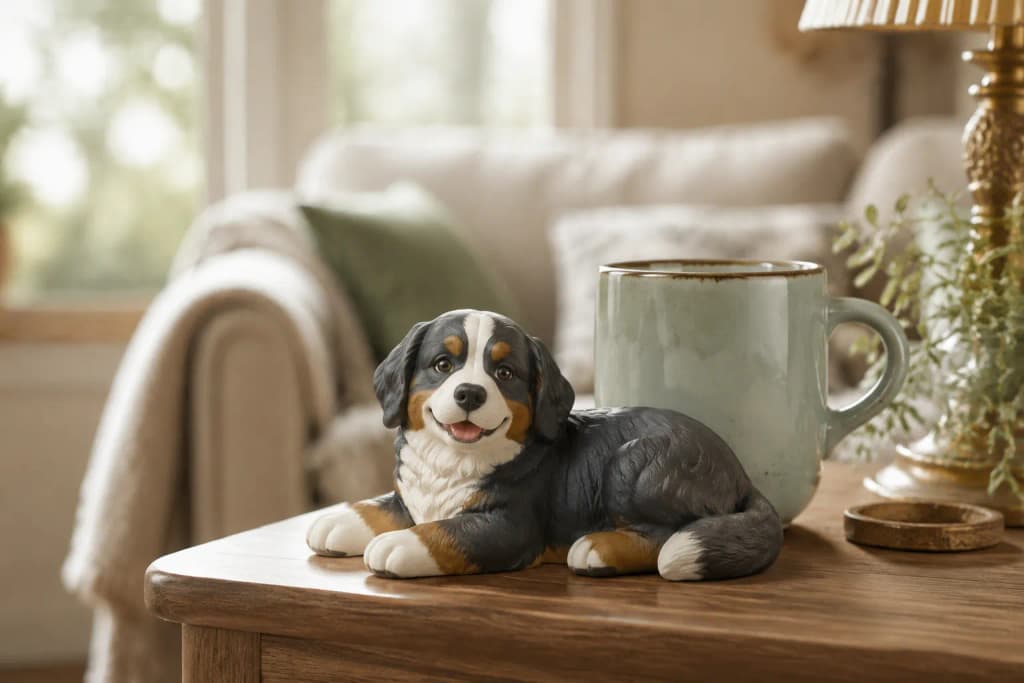
| Custom sculpted figurine | Medium | Full-body likeness kids can touch | Takes weeks; needs good photos |
For families with young children, the "can a kid hold it" column matters more than people expect. A five-year-old can't process a photo book the way they can wrap both hands around a figure that looks like their dog. Touch is how young children grieve.
This is where a sculpted keepsake earns its place. At PawSculpt, the figurines are digitally sculpted by 3D artists and then precision 3D printed in full-color resin, so the dog's specific tri-color markings, the white blaze, the rust eyebrows, the black saddle, come through in the material itself rather than as a coating on top. It's a portrait, not a photocopy: an artist's interpretation of your dog's posture and character, meant to capture the feel of him, not clone every hair.
We're upfront about the tradeoff. A figurine takes time. If you want one, you'll need a few clear photos, and the process runs weeks, not days (delivery typically lands around 27 to 40 days in the US after final payment). For a family that wants something the kids can actually hold, that's usually a worthwhile wait. You can see the full range of options for custom dog figurines and start with a free instant preview before committing to anything.
What photos work best for a Berner
Because the tri-color coat is the whole point, photography matters more with this breed:
- Shoot in natural daylight, ideally near a window or outside in open shade, so the black, white, and rust all read clearly. Harsh midday sun blows out the white blaze.
- Get down to their level. A photo taken from standing height distorts the proportions of that big barrel chest.
- Capture the pose that was theirs — the specific flop, sit, or head-tilt your family remembers. That's the character worth preserving.
- Send a couple of angles if you have them. A profile plus a straight-on face shot helps the artist read the head shape.
If you're weighing this against a flat portrait or other keepsakes, the honest breakdown on the pet portrait options page lays out what each format does well.
A Realistic Grief Timeline (So You Know What's Normal)
Nobody hands you a map, so here's a rough one based on what we hear from families. Yours won't match exactly, and that's fine.
| Timeframe | What Often Happens | What Helps |
|---|---|---|
| First 72 hours | Shock, disbelief, autopilot | Keep kids' routines steady; say the true words |
| Week 1–2 | Waves of grief; kids ask repeatedly | Answer patiently; let them help choose a memorial |
| Month 1–3 | Quiet ache; guilt and anger surface | Create the tangible keepsake; return to normal life |
| Month 3–6 | Softening; "good memory" moments return | Mark a small ritual; talk about him without dread |
| Beyond | Love without the sharp sting | Keep him present in family stories |
The first 72 hours are usually the hardest for the adults. For young kids, the harder stretch often comes weeks later, when the reality finally lands and the questions start again. Don't be surprised when your kid melts down about the dog a month after they seemed "fine."
Bringing It Back to the Backyard
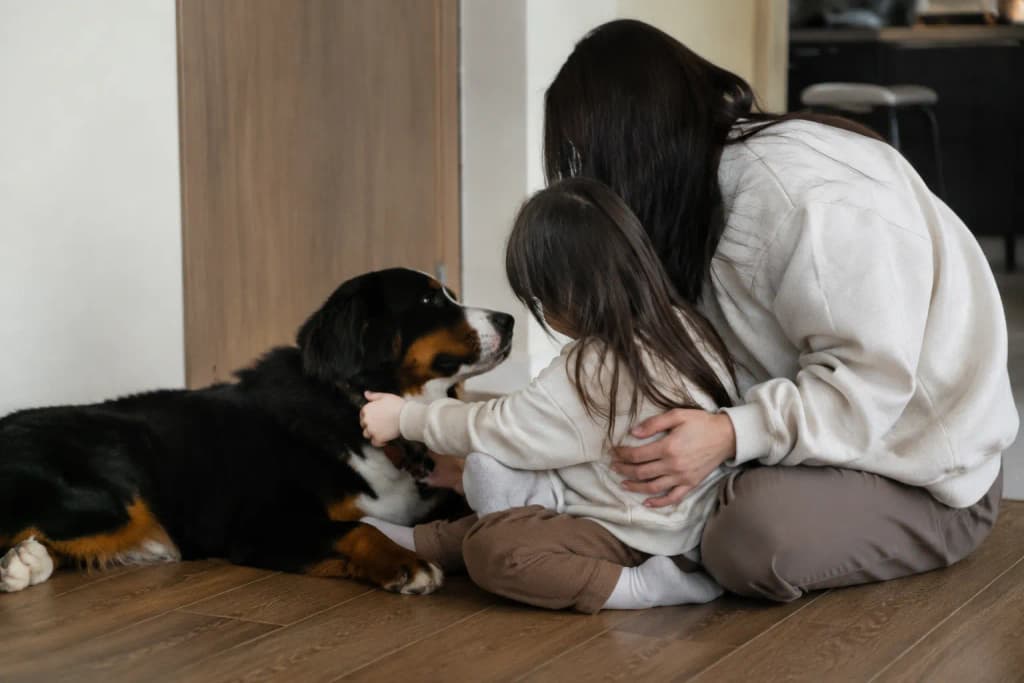
That empty patch of grass won't feel empty forever.
The morning will come when your kid runs across the yard, stops at the spot where the dog used to flop, and instead of crying, tells a story. The time he stole a whole sandwich off the picnic table. The way he'd lean his whole weight against your legs like a furry doorstop. That's not the grief ending. That's love finding a shape it can live in.
So here's your one concrete next step: this week, pick a single way your family will keep him present. One photo for the shelf. One story told at dinner. One keepsake ordered together with the kids voting on the pose. Just one. Grief gets lighter when it has somewhere to go.
A bernese mountain dog memorial isn't about finding the answer to why. There isn't one, and chasing it will wear you out. It's about giving a giant, gentle, too-short life a place to stay in your home and in your kids' memories. The dog took up a lot of room. Let the way you remember him take up some too.
Frequently Asked Questions
How do I explain a sudden pet death to a young child?
Use simple, literal words: "His body stopped working and he died." Skip euphemisms like "put to sleep" or "went away," which confuse young kids and sometimes create new fears. Reassure them it wasn't their fault, and expect to answer the same questions many times as they work toward understanding permanence.
Why do Bernese Mountain Dogs have such short lifespans?
Berners average around 7 to 8 years, shorter than most breeds their size. They carry a genetic predisposition to aggressive cancers, especially histiocytic sarcoma, which frequently goes undetected until it's advanced. Their large frame adds joint and cardiac strain on top of that.
Is it normal to feel guilty or even relieved after losing my dog?
Both are completely normal. Guilt over "missing the signs" is nearly universal with Berner cancers, which hide until late. And if the final weeks were hard, relief when the suffering ends is a sign you were attuned to your dog's pain, not a betrayal of your love.
How long does pet grief last for kids versus adults?
There's no fixed clock. For adults, the sharpest edge often softens over three to six months. Kids frequently grieve in delayed waves, seeming fine at first and then melting down weeks later when reality lands. Watch their sleep, appetite, and play as better signals than words.
What memorial works best for a family with young children?
Something they can physically hold. Young children grieve through touch, so a keepsake like a full-body sculpted figurine often comforts them more than a photo book they can't interact with. Involving kids in choosing the pose or photo also reduces their anxiety.
Ready to Celebrate Your Pet?
Every pet has a story worth preserving. Whether you're honoring a beloved companion who's crossed the rainbow bridge or celebrating your furry friend's unique personality, a custom PawSculpt figurine — a sculpted portrait, not a photocopy — captures the character that makes your pet one-of-a-kind. For families building a bernese mountain dog memorial, a keepsake your kids can actually hold gives grief somewhere to go.
Visit pawsculpt.com to learn more about our sculpting process, free instant preview, and carefully packed, insured, and tracked shipping