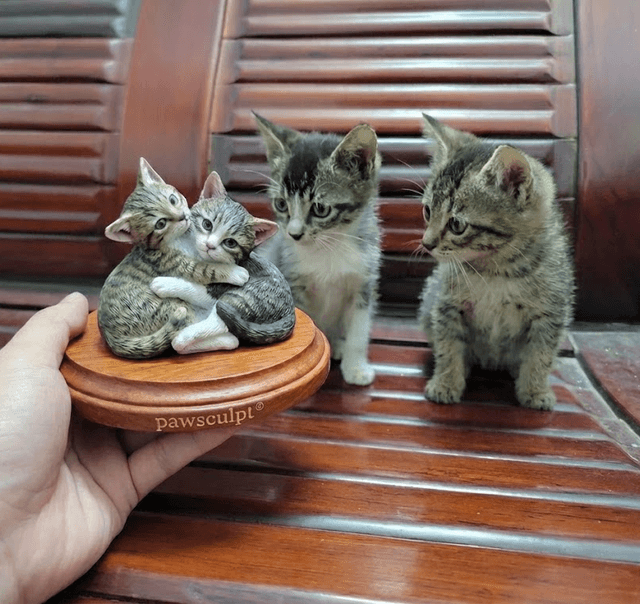
Why PawSculpt Artisans Charge More Than Etsy: A Transparent Price Breakdown
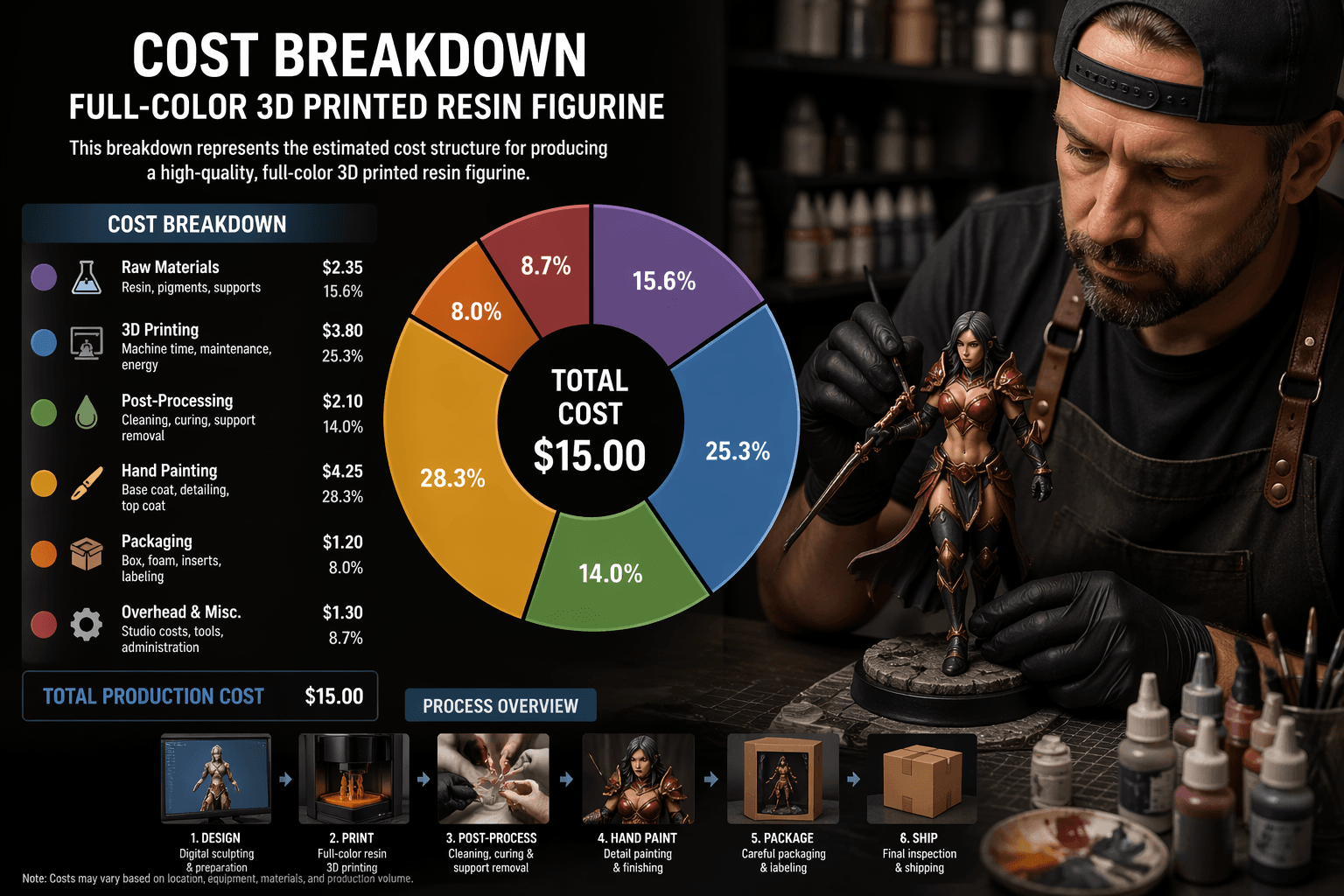
The cedar dust on the attic floor still held the shape of the old dog bed, and that empty rectangle said more than any photo could; that’s the real reason a custom pet figurine can cost more than an Etsy listing.
Quick Takeaways
- Cheap listings often price the object, not the resemblance — ask who actually models your pet’s anatomy.
- The hardest part isn’t printing — it’s translating flat photos into believable ears, posture, and expression.
- Material matters more than most buyers realize — full-color resin keeps markings integrated, not sitting on top.
- Before comparing checkout totals, compare process quality on PawSculpt’s custom pet figurine service — the proof is in how your pet is interpreted.
- The best value proposition is emotional accuracy — because a figurine that feels “almost right” rarely gets displayed for long.
Why Etsy vs custom pricing feels confusing in the first place
Most people start the same way: two browser tabs open, a coffee going cold nearby, one listing at a surprisingly low price and another that costs noticeably more. Same category, same promise on the surface, same flood of five-star reviews. So the question becomes obvious: why does one pet figurine cost so much more than another?
Here’s the blunt answer. You are usually not comparing the same thing.
That’s the part the market doesn’t explain well. “Custom” can mean anything from lightly editing a template to building a true likeness from scratch in digital form. In our years working with pet families, we’ve seen shoppers assume price tracks size alone. It doesn’t. Price tracks interpretation. The labor is not in making a small object. The labor is in seeing your pet accurately.
One customer we worked with—let’s call her Marissa—came to us after ordering an inexpensive figurine elsewhere for her senior tuxedo cat, June. The markings were technically there: white chest, black back, pale green eyes. But the pose sat wrong. June had a narrow, watchful stance and one shoulder always dipped a little forward, as if she were halfway into a thought. The cheaper piece looked like a generic cat in June’s colors. It didn’t land.
That distinction matters more than people expect. Especially in memorial work.
Because grief is strange about objects. A blanket can feel sacred. A framed photo can feel flat. A figurine can be healing—or weirdly upsetting—depending on whether it captures the right nearness. Not perfect symmetry. Nearness.
"The real luxury isn’t decoration. It’s recognition."
The first overlooked truth: low pricing often depends on standardization
A lot of Etsy sellers do good work. Some are excellent. We’ll say that plainly because it’s true.
But many lower-priced shops rely on some version of production shortcuts:
- prebuilt base models
- simplified fur surfaces
- fewer pose options
- minimal anatomy refinement
- limited back-and-forth before production
- lower-resolution color interpretation
None of that is inherently dishonest. It’s just a different product.
If your goal is a playful desk ornament, a stylized keepsake, or a budget-friendly gift for a pet lover who enjoys cute more than exact, Etsy can absolutely make sense. We’re not huge fans of pretending every cheaper option is bad. It isn’t.
The problem comes when buyers expect museum-quality resemblance from a workflow built for speed and volume.
The mistake most people make in a price comparison
They compare by dimensions or by headline claim.
They ask:
- How many inches tall?
- Is it full color?
- Is it based on my photo?
- Does it look handmade or premium?
What they should ask is this: How much human judgment went into the likeness before the machine ever starts?
That’s where pricing separates.
- sorting usable photos from misleading ones
- identifying breed-specific anatomy or mixed-breed traits
- correcting perspective distortion from phone cameras
- shaping fur flow so color placement makes anatomical sense
- translating expression into a static pose without losing personality
That’s not fluff. That’s the product.
Why “more expensive” is sometimes actually the cheaper choice
This is the counterintuitive part people rarely hear: the cheaper figurine can cost more emotionally.
If a piece misses the face, the chest depth, the ear angle, or the way your dog planted weight on one front paw, it often ends up in a drawer. That means you paid for an object you can’t quite bear to look at—or worse, one you feel guilty not displaying.
Marissa told us exactly that about June’s first figurine. It wasn’t ugly. It was just wrong in the tiny ways that matter. The space between the eyes was off. The whisker pads felt flat. The tail had the right color but none of June’s tension. She kept it in a linen closet because seeing it on the bookshelf made the room feel more empty, not less.
That’s the real economic question: not “What costs less today?” but “What will I still want in my home a year from now?”
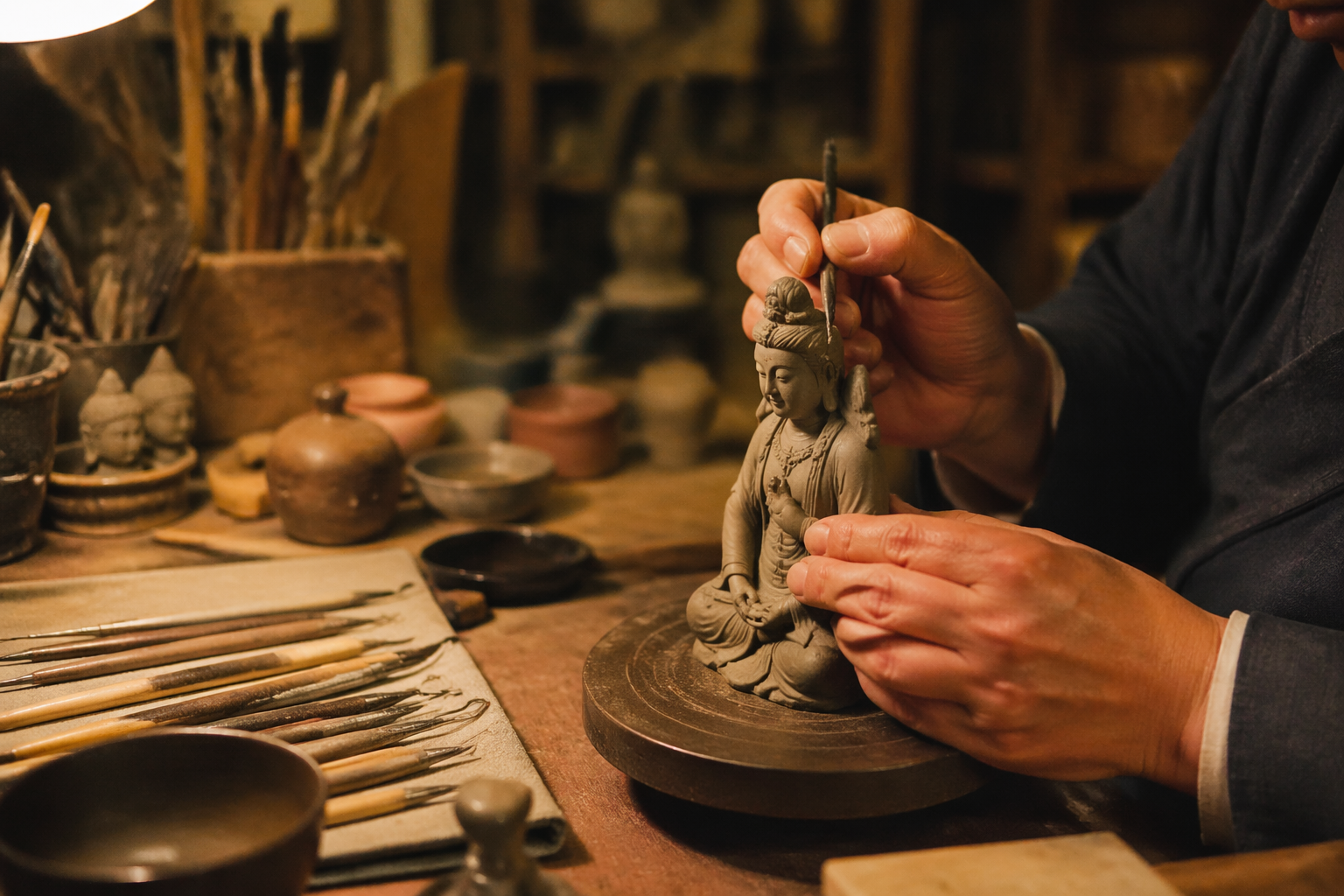
What artisan quality actually means in a digital custom pet figurine
Let’s clear out a common misconception. Artisan quality does not require old-world tools, clay dust, or romantic workshop myths. In this category, the craftsmanship often lives on a screen first.
At PawSculpt, the honest description is this: pieces are digitally sculpted by master 3D artists, then precision 3D printed in full color. The color is printed into the resin itself, voxel by voxel, not added later with surface pigment. After printing, a clear protective coat is applied for sheen and durability. That’s the process. No fake mystique. No brushes. No made-up folklore.
And honestly, that transparency matters.
Because some brands use language designed to sound luxurious while hiding what they actually do. We’d rather tell you the real story: digital craftsmanship is still craftsmanship. It just demands different expertise.
Where the craft really lives
The artistry happens in four places buyers usually never see:
#### 1. Photo interpretationA photo lies more than people think.
Phone cameras widen noses, flatten chests, and distort leg length depending on angle. Black fur loses depth in shadows. White fur blows out in window light. Long-haired pets can look twenty pounds heavier from one side and delicate from another.
A skilled modeler doesn’t merely “copy the photo.” They reconstruct the pet from conflicting evidence.
Here’s a quick way to think about it:
| What the buyer sees | What the artist has to solve | Why it affects price |
|---|---|---|
| Cute front photo | Skull width, muzzle depth, eye placement | Front-facing shots alone hide anatomy |
| Side view on couch | Spine line, stance, leg proportion | Soft surfaces distort posture |
| Flash photo | Fur color accuracy, eye tone, contrast | Harsh light changes markings |
| Low-angle phone shot | Nose enlargement, shortened body | Perspective correction takes judgment |
That judgment is not automated. And it’s one reason etsy vs custom isn’t a fair apples-to-apples comparison.
#### 2. Anatomy and breed literacyThis gets overlooked constantly. A good custom pet figurine artist needs a visual library in their head.
A Border Collie’s watchfulness sits differently than a Lab’s openness. A Persian cat carries facial volume unlike a Siamese. Mixed breeds are even trickier because there’s no standard map—just tendencies.
And then there are pets whose “signature” has nothing to do with breed at all:
- one folded ear after surgery
- a barrel chest from age
- a tongue that rests slightly to the left
- back feet that angle outward
- feathering that clumps along the haunches, not evenly
Those details don’t just make a figurine more realistic. They make it emotionally legible.
3. Surface translation
This is where lower-cost work often loses people.
Fur is not just color. Fur is direction, density, edge softness, and interruption. A golden retriever’s chest ruff doesn’t end like a clean graphic shape. A calico patch doesn’t simply sit on top of a smooth shell. The body has topography. Light catches ridges, hollows, tuft transitions.
With advanced full-color 3D printing technology, color can be embedded as part of the material. That matters because the visual effect has depth. Not painted-on symbolism. Actual integration.
The result isn’t “plastic perfect.” Nor should it be. Fine print grain and natural layer texture are part of the honest surface, protected by a clear finish. We’re not huge fans of overpromising impossible smoothness if it means losing the crispness of markings or the integrity of form.
#### 4. RestraintThis may be the least glamorous skill, and one of the most important.
The best artists know what not to exaggerate.
A lot of cheaper custom work leans cartoonish because simplification is safer. Bigger eyes. Cleaner patches. Rounder cheeks. More symmetrical posture. That can be charming. But it can also erase the exact asymmetry your family loves.
Restraint is expensive because it requires confidence. You have to trust subtlety.
"The best pet likenesses don’t chase perfection. They protect the odd little details your family recognizes instantly."
— The PawSculpt Team
Customer story thread: why June’s second figurine felt different
When Marissa submitted photos of June the second time, she included something most buyers overlook: a hallway shot from ten feet away. Not glamorous. Slightly dim. June was standing by the baseboard heater with her shoulders tucked and tail curved close.
That image did more work than the polished close-ups.
Why? Because distance reveals posture. It shows how the pet occupies space. And in memorial pieces especially, spatial memory is huge—the corner of the room they claimed, the gap between the food dish and the doorway, the exact angle of the body near your chair. A figurine that captures only facial cuteness misses the architecture of presence.
That’s the stuff better custom work chases. And yes, it costs more.
Price comparison: where the money actually goes
Let’s break down the parts of a value proposition in plain English.
People assume the cost jump is mostly markup. Sometimes in retail, that’s true. But in high-quality custom figurines, the biggest price drivers are usually more practical than dramatic:
- labor before production
- file preparation and revision
- print technology and material quality
- failure risk
- post-processing standards
- customer support from people who know what they’re looking at
A transparent look at the cost layers
This table won’t give you fixed market prices (those change constantly), but it will show why one provider can charge more than an Etsy seller and still be justified.
| Cost Layer | Budget Etsy-Style Workflow | Higher-End Custom Workflow | Why It Matters |
|---|---|---|---|
| Model creation | Template-based or simplified | Individually refined digital sculpture | Better likeness starts here |
| Photo review | Basic intake | Detailed image selection and interpretation | Prevents bad source assumptions |
| Color rendering | Simplified mapping | Full-color detail built into resin data | Markings read more naturally |
| Printing tech | Varies widely | Advanced full-color resin printing | Surface fidelity and color depth improve |
| Quality control | Minimal spot-checking | Closer review of resemblance and print integrity | Fewer unpleasant surprises |
| Support | Transaction-focused | Guided process with clearer expectations | Less confusion, better decisions |
The part nobody sees: revision pressure
Here’s some behind-the-scenes truth most companies won’t say out loud: the first version almost never gets every feature right automatically.
Ears are notorious.
So are long muzzles.
And fluffy chest fur.
And white blazes down the nose.
Not because the artists are careless. Because translating a living animal from a handful of 2D images into a 3D object is hard. Really hard.
A low-cost seller can keep prices down by reducing how much time they spend refining those problems. That’s the business model. Again—not evil. Just lean.
A premium shop charges more because there is room for actual correction. Room for someone to look twice. Room for “the right ear droops more.” Room for “her body was leaner than this.” Room for “his eyes were amber, not plain brown.”
If you’ve ever compared a bargain portrait to a commissioned one in any medium, you already understand the difference.
Why advanced full-color printing changes the equation
There’s another point worth making because it gets muddied online: not all full-color figurines are visually equal.
Some lower-end processes produce color that looks flat, muddied, or disconnected from form. Better systems print color directly into the resin material with much finer control. That improves:
- edge transitions between markings
- tonal variation across fur
- eye depth
- nose and paw coloration
- subtle shifts in cream, gray, sable, tortie, merle, and tabby patterns
For pets with complex coats, this isn’t a luxury feature. It’s the difference between “same species” and “that’s my dog.”
And if your pet was black, black-and-white, gray, or richly patterned, the challenge goes up. Dark fur is less forgiving. Tiny color reads matter more. Cheap systems often collapse those differences into a single dark mass.
The commonly overlooked aspect: customer service is part of the artwork
This one surprises people. They think service is separate from the figurine itself.
It isn’t.
Good service changes the final result because it helps buyers submit better source material, notice the right details, and articulate what matters. The best support teams ask useful questions:
- Which side looks most like them?
- Did they usually carry their tail high or low?
- Were their eyes warm brown or almost hazel in daylight?
- Is that chest marking symmetrical or slightly offset?
- Has age changed their posture from older photos?
That’s not just “being nice.” That is art direction.
If a seller treats support as admin work, the figurine suffers. If the team treats support as part of the creative pipeline, resemblance improves.
One of our customers ordering a memorial piece for a beagle mix almost left out a key detail: the dog’s front paws turned outward after arthritis set in. In older, healthier photos he stood straighter. The family didn’t realize that the later posture was the version they most deeply recognized—because it was the dog they said goodbye to. That detail changed the emotional truth of the piece.
That’s the sort of nuance a pure checkout-price comparison misses.
"A figurine earns its place in your home by getting the posture right."
Etsy vs custom: which buyers should choose which option?
Let’s be practical. Not everyone needs the highest-end route.
Sometimes the best decision is a simpler one. And yes, sometimes Etsy wins.
Choose Etsy if your priority is speed, stylization, or strict budget
An Etsy option may be the better fit if:
- you want a playful interpretation, not a precise likeness
- the gift is lighthearted rather than memorial
- the recipient prefers cute over exact
- you have limited photos
- budget is the first filter, not the second
- you’re comfortable with more variance in outcome
There’s no shame in that. A cheerful, affordable keepsake can absolutely do its job.
For living pets, birthdays, office gifts, or stocking stuffers, stylization often works beautifully. In those cases, “close enough” may genuinely be enough.
Choose a premium custom figurine if emotional accuracy matters
This is where a company like PawSculpt tends to justify the higher spend.
A premium custom pet figurine makes the most sense when:
- the pet has passed and the object carries memorial weight
- the pet had distinctive markings that generic models flatten
- expression and posture matter as much as coloring
- you want something display-worthy long term
- the figurine is intended as a major gift, not a novelty
- you care how the piece feels in a room from across the room, not just up close
That last point is bigger than it sounds.
Objects live in space. They sit on mantels, desks, shelves, hallway tables. You don’t experience them only six inches from your face. You experience them in relation to the empty chair, the collar hook by the door, the windowsill your cat owned. A premium figurine has to work at that distance too. It has to “read” as your pet from the doorway.
Marissa told us June’s second figurine passed what she called the kitchen test. From the kitchen entrance, she’d glance toward the bookshelf and feel the same small pause she used to feel when June sat there judging everyone. That’s not sentimentality. That’s visual truth.
A better buyer framework than “cheap vs expensive”
Try this instead:
| If you care most about... | Best fit | Reason |
|---|---|---|
| Keeping cost low | Etsy-style custom | Lower labor intensity keeps entry price down |
| Exact resemblance | Premium custom studio | More modeling and review time |
| Cartoon charm | Etsy-style custom | Simplification can be an advantage |
| Memorial significance | Premium custom studio | Subtle details carry emotional weight |
| Fast gift shopping | Either, depending on scope | Check provider details directly |
| Complex markings or posture | Premium custom studio | Technical interpretation matters more |
This is the real price comparison lens. Not “Which one is objectively better?” but “Which one matches the job this object needs to do?”
One honest downside of paying more
We’ll be real: paying more raises expectations. That can make some buyers more anxious, not less.
If you’re commissioning a memorial piece while actively grieving, every tiny choice can feel loaded. Which photo? Which age? Which expression? Should the ears be perked or relaxed? That emotional pressure is part of the process, and premium services don’t erase it.
Sometimes a simple framed print or a paw impression kit is the better first memorial step in the first few days after loss. The Association for Pet Loss and Bereavement is a genuinely good resource if grief is making decisions feel impossible. We’re not grief counselors, and for some families, immediate purchase decisions are too much. That’s okay.
But once you’re ready, precision matters.
How to evaluate artisan quality before you buy
This section may save you money and disappointment.
Because the best way to judge artisan quality is not by star rating alone. Reviews can tell you whether orders arrived and whether buyers felt generally satisfied. They do not always tell you whether the figurine truly captured an individual pet.
Ask for evidence of resemblance, not just craftsmanship
You want to see:
- before-and-after examples using customer photos
- multiple breeds, coat types, and lighting conditions
- black pets, white pets, and patterned pets
- close-ups and room-distance shots
- examples that show asymmetry, not just idealized faces
Be cautious if every example looks equally cute in exactly the same pose. That often signals a strong template underneath.
A provider doesn’t need to display every technical step publicly, but they should communicate the process clearly. If the wording gets vague around modeling, material, or color application, press a little. Smart buyers do.
The five questions worth asking any seller
#### 1. Is my pet individually modeled or adapted from a base template?There’s a place for both approaches. You just deserve to know which one you’re buying.
#### 2. How is color created?This matters a lot. At PawSculpt, color is part of the full-color resin 3D print, not added as a top layer. That changes durability and visual depth.
#### 3. What photos work best?A good seller should help here. If they don’t, that’s a warning sign.
For most pets, the strongest set includes:
- one eye-level front view
- one clear side profile
- one three-quarter angle
- one standing full-body image
- one photo that shows true coat color in natural daylight
The American Kennel Club’s dog photography and breed resources can also help owners understand how structure and coat pattern read in images, especially for mixed or unusual-looking dogs.
A practical photo checklist
Use this before ordering any custom figurine:
| Photo Type | Why It Helps | Common Mistake | Quick Fix |
|---|---|---|---|
| Eye-level face shot | Captures expression and eye spacing | Shot from above | Kneel to pet height |
| Side profile | Shows muzzle and body line | Fur obscures outline | Brush coat lightly first |
| Standing full body | Reveals stance and proportions | Pet sitting on furniture | Photograph on firm floor |
| Natural daylight image | Shows real coat color | Indoor yellow lighting | Move near a window |
| Signature trait close-up | Preserves unique detail | Cropped too tightly | Include surrounding context |
4. How are texture and finish described?
Be wary of impossible promises. Any physical object has a surface character. With quality full-color 3D printing, you should expect fine natural print grain protected by a clear coat. Honest sellers say that plainly.
We actually think this honesty is part of the premium experience. You’re buying a crafted object, not a CGI fantasy. The slight texture gives it presence.
5. What happens if the source photos are weak?
A serious provider will tell you if your photos are not enough. That may feel inconvenient, but it’s a trust signal.
The opposite—accepting anything and saying “no problem”—usually means the shop is prepared to guess. And guesses are expensive when the subject is emotionally important.
Customer story thread: the attic photo no one expected to matter
Late in Marissa’s process, she found a blurry picture from the attic stairs. June was halfway up, turning back over one shoulder. The photo was grainy and not especially pretty. But the angle showed June’s neck length and alert posture better than any polished portrait.
That image became a keystone.
This is why experienced teams ask for more than your favorite photo. Your favorite image may not be your most useful one. The photo that makes you cry isn’t always the photo that best explains the body.
That’s a hard truth. But a helpful one.
The real value proposition: what you’re buying besides an object
At a certain level, a figurine is not a figurine. It’s a piece of domestic architecture. It changes how a room holds memory.
That sounds lofty, but stay with us.
When a pet is gone, what hurts is often not the grand moments. It’s the spatial vacancy:
- the bare patch beside the sofa
- the bowl corner wiped too clean
- the back door that opens to no thudding paws
- the chair no one circles three times anymore
- the attic box of toys you can’t decide to keep or give away
A well-made keepsake doesn’t replace the animal. It can’t. But it can interrupt the harsh geometry of absence.
Why tangible memorials often help more than digital ones
This is the counterintuitive insight we wish more people heard: physical memorials can be gentler than endless photos.
Photos trap a pet in one instant. Sometimes that’s comforting. Sometimes it’s brutal. You scroll and scroll, and every image reminds you of time moving in one direction.
A physical object works differently. It occupies your present tense. You pass it on the shelf. Dust gathers and gets wiped away. Morning light hits it differently in winter than in July. It becomes part of the room you still live in.
That’s one reason some families choose memorial keepsakes and custom pet sculptures. Not because they need more décor, but because they need a stable point for memory—something that stands where grief keeps collapsing space inward.
What premium buyers are often really paying for
Not status. Not packaging. Not the thrill of saying something cost more.
They are paying for:
- recognition
- durability
- display confidence
- emotional accuracy
- a lower chance of regret
That last one matters.
Regret has a cost. So does reordering after disappointment. So does settling for something “fine” when what you needed was grounding.
A premium figurine should do three jobs at once
#### 1. It should resemble your pet up closeEyes, markings, body shape, posture.
#### 2. It should read correctly from across the roomThis is huge and rarely discussed. If the silhouette fails, the whole piece fails at a distance.
#### 3. It should age well in your spaceNot just physically. Emotionally.
A year later, does it still feel right on the shelf? Does it still bring a small exhale instead of a wince? That’s value.
"The right keepsake doesn’t fill the empty space. It teaches the space how to hold love."
Why PawSculpt tends to sit in a different pricing tier
Since this article is about transparency, let’s say it cleanly.
PawSculpt sits above bargain marketplace pricing because the work is aimed at a different standard: museum-quality custom pet figurines that are digitally modeled with care and produced in vibrant full-color resin using advanced 3D printing technology. The color lives inside the material. The form is individually interpreted. The finish is protected with a clear coat.
That process costs more than template-first workflows. It should.
If you’re comparing options, the best move is to study examples, read through the PawSculpt FAQ, and review the broader PawSculpt blog for guidance on photos, memorial decisions, and what quality really looks like. Not because one brand is automatically right for every buyer, but because better information leads to better decisions.
And that’s the point of transparent pricing.
What to expect from a serious custom process
- photo review for viability and detail
- digital modeling focused on structure and expression
- color mapping that respects markings and transitions
- full-color 3D printing in resin
- protective clear coating as final finishing
- quality review before it reaches your home
If any step is glossed over, ask why.
How to decide if the higher price is worth it for you
Here’s the final filter we give friends when they ask us bluntly whether a premium figurine is worth the money.
Don’t ask, “Is it expensive?”
Ask, “What emotional job does this piece need to do?”
If the answer is:
- “make my sister smile on her birthday,” you may not need the highest-end option.
- “honor the dog who slept under Dad’s desk for fourteen years,” quality matters a lot more.
- “celebrate our living cat in a playful way,” maybe stylized is perfect.
- “help this room stop feeling hollow,” don’t buy on headline price alone.
Three buyer types, three smart decisions
#### The budget-conscious gift giverBuy simpler. Prioritize charm. Don’t overbuy precision you don’t need.
#### The memorial buyer with strong photosThis is where premium custom work usually shines. Your source material can support better likeness, so paying for it has a real payoff.
#### The buyer with limited photos but deep emotional stakesProceed carefully. Sometimes a premium service can still do remarkable work, but only if the available images are strong enough. Be honest about what exists. A seller who gently tells you the photos won’t support a great result is being trustworthy, not difficult.
One last hard truth from behind the scenes
The best figurine in the world cannot fix unresolved grief.
It can anchor it. Honor it. Give it form. But it can’t erase it.
And honestly, that’s why transparent brands matter. The wrong company will imply that a keepsake will heal everything. It won’t. The right one respects the line between remembrance and rescue.
If you’re shopping while freshly grieving, slow down for one hour and do this:
- gather 8 to 12 of your best photos
- remove duplicates
- pick one image that shows posture
- pick one that shows true color
- write down three details strangers wouldn’t notice
- decide whether you want exact realism or softened stylization
That small exercise clarifies almost everything.
Marissa did this with June. Her three details were simple: left shoulder slightly forward, tail curved close to the legs, eyes more tired than bright in the final year. Those notes transformed the result. Not because they were dramatic, but because they were true.
And truth is usually what costs more.
Closing thoughts on price, memory, and the objects we keep
That attic rectangle in the dust—the one where the dog bed used to sit—doesn’t ask what something costs. It asks whether an object can bear memory without collapsing under sentiment or cliché.
That’s the standard worth using.
A cheaper figurine may be perfect for a playful gift, a casual celebration, or a buyer who wants something sweet and simple. A premium piece earns its higher price when the stakes are different—when resemblance matters, when posture matters, when the room itself has changed shape after a loss and you want to place something inside that space that feels steady.
So here’s the practical next step: don’t compare listings by thumbnail alone. Compare process, materials, modeling depth, and the seller’s willingness to tell you how the work is actually done. Pull together your best photos. Notice the details that made your pet unmistakably yours. Then choose the level of craftsmanship that matches the emotional job.
Because in the end, the right keepsake is not the one with the lowest number beside it. It’s the one that can stand quietly on a shelf and still feel like a presence, not a substitute.
Frequently Asked Questions
Why does a custom pet figurine cost more than many Etsy options?
Because higher-end work usually includes more human interpretation before printing. That means individualized digital modeling, stronger photo analysis, better handling of anatomy and markings, and tighter quality control. You’re often paying for resemblance and emotional accuracy, not just size or color.
Is Etsy or a premium custom studio better for a pet memorial?
It depends on what the memorial needs to do. If you want a sweet, stylized keepsake on a tighter budget, Etsy may be enough. If you want something that captures posture, expression, and the visual truth of your pet in a way that holds up emotionally over time, a premium custom studio is often the better route.
What photos work best for a custom pet figurine?
Start with four core images: one eye-level face shot, one clear side profile, one standing full-body photo, and one natural daylight image that shows true coat color. If your pet had a distinctive trait—one bent ear, a lopsided blaze, a curled tail—include that too. Honestly, a slightly plain photo with good structure is often more useful than a dramatic but distorted close-up.
How does PawSculpt make its figurines?
PawSculpt pieces are hand-modeled digitally with care, then brought to life through full-color 3D printing in resin. The color is part of the material itself, not applied as a surface layer. After printing, a clear protective coat is applied to protect the finish and give the piece its final sheen; for current process details, examples, and service information, visit pawsculpt.com.
What should I compare besides price when choosing a figurine seller?
Look at five things: whether the pet is individually modeled, how color is created, what examples of resemblance the seller shows, how they guide photo selection, and how honestly they describe texture and finish. A low checkout total means very little if the final piece doesn’t feel like your pet.
Ready to Celebrate Your Pet?
Every pet has a story worth preserving. Whether you're honoring a beloved companion who's crossed the rainbow bridge or celebrating your furry friend's unique personality, a custom PawSculpt figurine captures those details that make your pet one-of-a-kind.
Create Your Custom Pet Figurine →
Visit pawsculpt.com to learn more about our process and guarantees