
The Photo I Couldn't Delete: Honoring My Father's Aging Pug, Two Years On
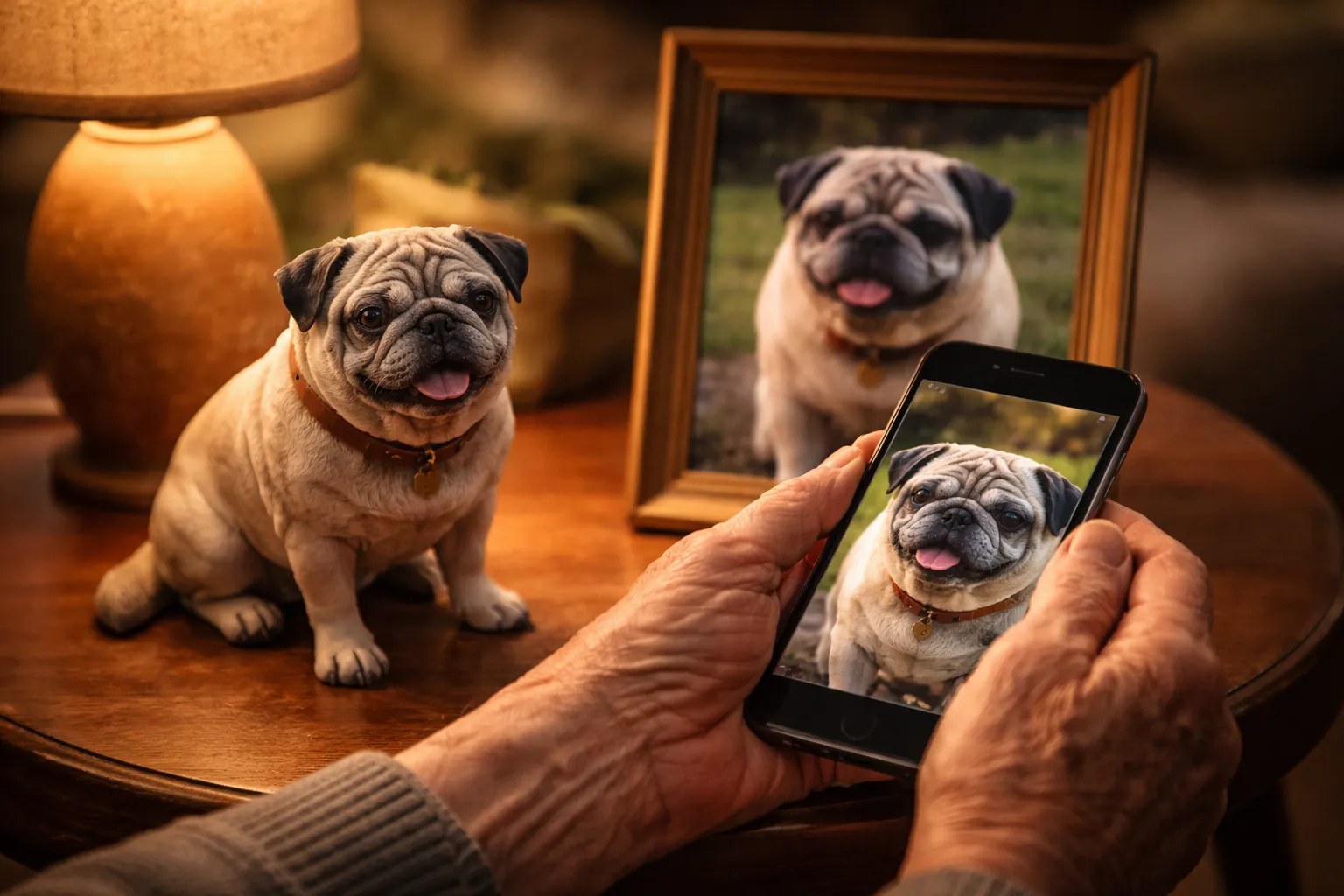
Two years ago, the hallway tile clicked under arthritic paws every morning at six. Now it's just tile. Delayed grief for a pet works like that—it waits in the floorboards, patient as a pug who knew exactly when breakfast came.
Quick Takeaways
- Delayed grief is normal — it can surface months or years after the loss, often triggered by a smell.
- A long decline is its own grief — you mourn in pieces while they're still alive.
- Guilt about timing fades slower than sadness — naming it out loud loosens its grip.
- Tangible keepsakes give grief an anchor — explore custom pet figurines when a photo isn't enough.
- Honoring inherited pets matters — caring for a parent's dog creates a second, quieter bond.
When Grief Shows Up Two Years Late
Here's the thing nobody warns you about. You can do everything "right." You can cry at the vet's office, hold the paw, scatter the ashes near the rose bush. You can move through the whole ritual like a person who has processed something.
And then, twenty-six months later, you open a kitchen drawer, catch the faint ammonia-and-corn-chip smell of an old dog bed someone forgot to throw out, and you're on the floor.
That's delayed grief. And if you've felt it, you are not broken. You are not "behind." You are extremely, ordinarily human.
We've worked with thousands of pet families at PawSculpt, and the delayed-grief stories are some of the most common ones we hear. People assume mourning is a sprint. It's closer to weather. It rolls back in.
"Grief doesn't expire. It just learns to knock quietly until you're ready to answer."
Why the delay happens (and why it's not denial)
When a pet declines slowly, your brain does something protective. It rations the sadness. You're too busy managing medications, lifting a stiff body up the porch steps, wiping cloudy eyes, to fall apart. There's no room.
So the grief gets deferred. Filed away. You don't skip the mourning—you postpone it until your nervous system decides it's safe.
Then a trigger arrives. Often it's a smell, because smell bypasses your thinking brain and goes straight to memory. The dog-park mud. The medicated shampoo. Rain hitting the porch where you used to sit together while they sniffed the evening air.
One of our customers, Dana, didn't cry when her father's pug, Biscuit, passed. She organized the vet bills. She comforted her dad. She held it together for everyone.
Eight months later she walked into a stranger's house that smelled like that exact pug smell—warm, slightly musty, a little like buttered toast—and had to excuse herself to the bathroom for twenty minutes.
The trigger map: knowing what's coming
You can't prevent delayed grief, but you can stop being ambushed by it. Most people we talk to are surprised that the triggers are so predictable.
| Trigger Type | Common Examples | Why It Hits Hard |
|---|---|---|
| Scent | Old bedding, shampoo, rain on the porch | Bypasses logic, lands in raw memory |
| Sound | Nail clicks, a collar jingle, snoring | Brain expected it; absence is loud |
| Time markers | 6 a.m. feeding, the anniversary | Body keeps the old schedule |
| Objects | The leash, a half-used bag of food | Unfinished, "still in use" feeling |
| Other dogs | Same breed, same gray muzzle | Recognition without reunion |
The most overlooked trigger is the anniversary your body remembers but your mind forgot. People mark the death date. Almost nobody marks the diagnosis date, the day the limp started, or the last good walk. Yet those dates can knock you flat, and you won't know why until you check the calendar.
So what? When you can name the trigger, you stop fearing your own mind. The wave still comes. But you ride it instead of drowning.
The Long Goodbye: Honoring a Decline That Lasted Years
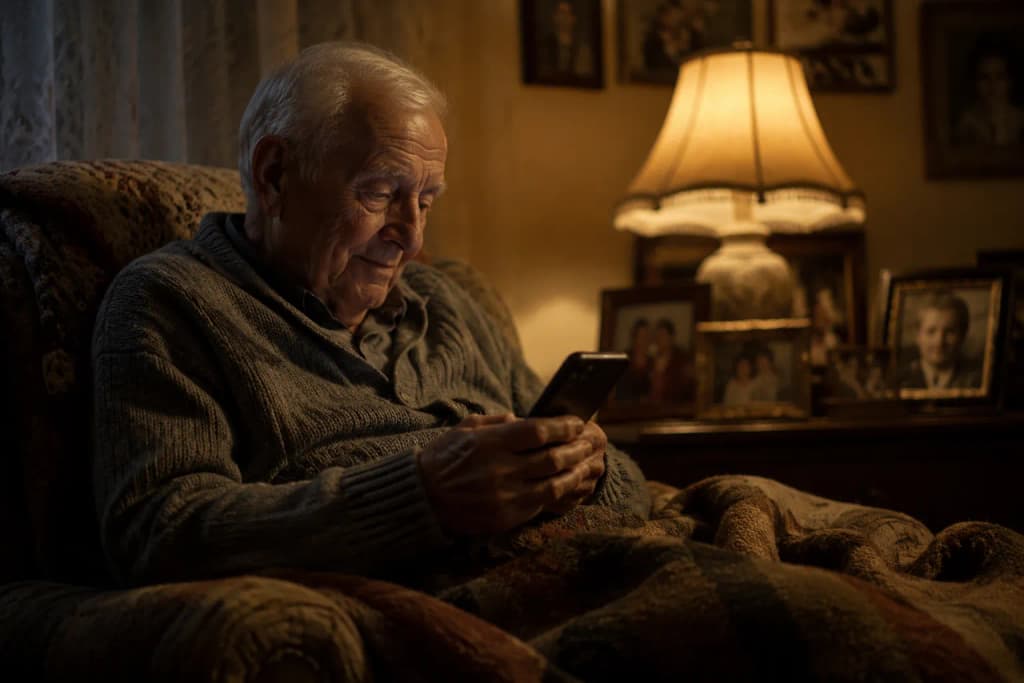
There's a specific kind of grief that gets almost no airtime. It's the grief of watching a pet age slowly, over months or years, while they're still right there beside you.
You mourn in installments. You grieve the dog who used to leap onto the couch the day he can't anymore. You grieve the one who heard the doorbell, the week his ears stop catching it. By the time the body goes, you've already said goodbye a dozen times.
This is the reality of honoring a long decline, and it scrambles the usual grief timeline completely.
Anticipatory grief is real grief
The clinical term is anticipatory grief—mourning that begins before the loss. Pet loss organizations like the Association for Pet Loss and Bereavement recognize it as legitimate, not "jumping the gun."
Here's what makes it brutal. You feel sad about a dog who's still alive, and then you feel guilty for feeling sad, because—look—he's right there, tail thumping. Shouldn't you just enjoy the time left?
That guilt is a thief. It steals the present moment by telling you that mourning the future is some kind of betrayal of the now.
It isn't. Grieving a slow decline while loving the living animal in front of you is not a contradiction. It's a tax love charges. You can hold both.
"Loving an aging pet means saying goodbye a hundred small times before the last one."
The relief you're not supposed to admit
Let's talk about the feeling almost no one says out loud.
When the decline is long—incontinence, 3 a.m. whimpering, the carrying, the cleaning, the watching them struggle—and it finally ends, a lot of people feel something other than pure sorrow.
They feel relief.
And then they hate themselves for it.
We'll be real with you: that relief does not mean you wanted them gone. It means you were exhausted from carrying a being you loved through their hardest stretch. It means the constant low-grade dread of "is today the day?" finally released its grip on your chest.
That wave of relief when their suffering ended? It doesn't make you cold. It makes you someone who loved them enough to want their pain to stop more than you wanted to keep them close. The guilt that piggybacks on that relief is one of grief's cruelest tricks—and it is wildly, universally common.
Dana told us this about her dad and Biscuit: the night the pug passed, her father slept eight hours for the first time in a year. He woke up rested, then spent the whole morning apologizing to a dog who wasn't there.
Second-guessing the timing
If you made the euthanasia decision—or watched a parent make it—you may replay it on a loop. Too soon? Too late? Should we have tried the other treatment?
Most owners we've talked to land in one of two camps: those who fear they let the pet suffer too long, and those who fear they gave up too early. Almost nobody feels they got it perfectly right.
That's not a sign you failed. It's a sign you cared enough to agonize. Indifferent people don't second-guess. They don't even remember the date.
If it helps, here's a reframe many families find grounding: you don't get to choose between a good outcome and a bad one. With a declining pet, you only get to choose between two kinds of hard. Choosing the more merciful hard is an act of love, not a mistake.
What Elderly Owner Pet Loss Does to the Whole Family
Now the part the title is really about. Because elderly owner pet loss doesn't grieve just one person. It ripples.
When a senior loses a longtime companion, the loss is rarely "just a pet." That dog may have been the reason your father got out of bed. The reason he walked, talked to neighbors, kept a schedule. The pug wasn't a pet. He was a routine, a witness, a co-pilot for the quiet years.
The pet that held a parent together
Research on the human-animal bond, including work referenced by the National Institutes of Health, points to what families already sense: companion animals reduce isolation and give older adults structure and purpose.
So when the pet goes, you're not only watching your dad grieve a dog. You're watching the scaffolding come down.
Dana noticed it within a week. Her father stopped going on his morning loop—no Biscuit to walk meant no reason to leave. The house got quiet in a way that smelled different, too: less dog, more stale coffee and unopened mail.
Here's the counterintuitive part most family members get wrong. They rush to "fix" it. They suggest a new puppy immediately. They clear out the dog stuff fast, thinking the absence of reminders will speed healing.
For an elderly grieving owner, both moves can backfire. A new puppy can feel like a demand, not a gift—energy they don't have, a betrayal of the one they lost. And erasing the evidence too fast can feel like the family is erasing the relationship itself.
"Don't rush a grieving parent toward a new pet. Sit with them in the empty room first."
Inheriting the grief—and the love
Then there's you. The adult child who maybe wasn't that close to the dog while it was alive. Who saw Biscuit twice a year, mostly as an obstacle that shed on your good pants.
And yet. When your parent grieves, and especially when your parent is also aging, that pet becomes a vessel for everything you can't quite say about your dad getting older too.
You start grieving a pug you barely knew. Why? Because mourning Biscuit is a safe rehearsal for the loss you can't look at directly.
That's not weird. That's the human heart doing math it can't do consciously yet.
If you've inherited a parent's senior pet—taken in their old dog after they couldn't care for it—you carry a doubled load: the daily care of a declining animal, plus the emotional weight of what that animal represents about your family. Caring for that creature is one of the most underrated acts of love between generations. You're not just feeding a dog. You're keeping a piece of your parent's daily world alive.
The Photo You Couldn't Delete (and What It's Asking of You)
Everyone has the photo.
It's usually blurry. Bad lighting. The pet is mid-yawn or looking the wrong way. By any normal standard, you'd swipe it into the trash without a thought.
But you can't. Your thumb hovers over delete and just... won't.
Dana's photo was Biscuit on her dad's lap, both of them half-asleep on the porch, the pug's wrinkled face smushed sideways. Out of focus. The phone had flagged it as a "duplicate" to clear. She kept it for two years on a phone she upgraded twice.
Why that specific photo matters more than the good ones
The portrait-perfect shots feel like performances. This blurry one feels like evidence—proof of an ordinary Tuesday that no one knew was precious at the time.
The photos we can't delete are rarely the best photos. They're the truest ones. They capture not how the pet looked, but how life felt.
So what do you do with it? Most people do nothing. They let it live in digital purgatory, dreading the day a phone dies and takes it with them.
That dread has a name we hear constantly: the fear of forgetting. Owners panic that one day they won't remember the exact weight of the dog on their lap, the specific snore, the smell of his ears. The photo feels like the only thing standing between memory and erasure.
Here's the gentle truth. A photo on a screen is fragile—one cracked phone, one cloud-account lapse, and it's gone. Which is exactly why so many families eventually want to move that irreplaceable image into a form they can actually hold.
"We've learned that grief needs an anchor—something with weight you can pick up when the missing gets loud."
— The PawSculpt Team
Choosing a Pug Memorial Keepsake That Actually Helps
Not every memorial helps. Some just sit there collecting dust and guilt. After years of working with grieving families, we've got opinions on what's worth your time and money—and what isn't.
Let's rank the realistic options for a pug memorial keepsake, honestly, including ones we don't sell.
Memorial options, compared honestly
Here's how the most common keepsakes stack up. No keepsake is "best"—it depends on how your grief wants to be held.
| Keepsake | Emotional Weight | Effort | Best For |
|---|---|---|---|
| Photo book | Medium | Low | People who grieve through stories and sequence |
| Paw print / clay impression | High | Must do at the vet | Tactile grievers; texture matters to you |
| Memorial garden / tree | Medium-High | Ongoing | People who heal by tending something living |
| Jewelry with ashes | High | Low | Wanting them physically near, every day |
| Custom 3D figurine | Very High | Low (you just send a photo) | Turning that one photo into something you hold |
The photo book
Who it's for: Families who want the whole arc—puppyhood to gray muzzle.
A well-made photo book is underrated. Flipping pages slows you down, makes you sit with the story. The downside? It stays flat. For some people, two-dimensional isn't enough when the missing is physical.
Consideration: order a duplicate for a grieving parent. Seniors who can't manage a smartphone gallery often treasure a book they can hold.
The paw print
Who it's for: People for whom touch is everything.
If you can get one made at the vet before or shortly after passing, do it. The texture of those toe pads is irreplaceable. The catch: you usually only get one shot, and in the chaos of loss, it's easy to miss the window.
The memorial garden
Who it's for: Those who need to do something with their hands.
Planting something living, where you used to sit together, gives grief a job. Dana's father did this—a small rosemary bush on the porch, so the spot still smells like something when it rains. The downside is obvious: gardens need a yard, and they don't travel.
The custom figurine
Who it's for: Anyone holding a single photo they can't delete.
This is where a service like custom pet figurines comes in—and we'll be straight with you about what it is and isn't, because the technology gets misdescribed a lot.
At PawSculpt, your pet is digitally sculpted by master 3D artists and then precision 3D printed in full color. The color isn't a coat brushed on top—it's printed directly into the resin, voxel by voxel, so the markings are the material. A pug's specific fawn coat, the black mask, the worried little forehead folds—the full-color resin 3D print captures those markings as part of the object itself.
The only hands-on step afterward is a protective clear coat for sheen and durability. The result has a natural, authentic texture—fine print grain under the gloss—not a slick, mass-produced plastic look.
Consideration: that blurry porch photo is often enough. You don't need a studio portrait—you need the angle that shows who they were.
"The keepsake that heals isn't the most expensive one. It's the one you reach for without thinking."
What to Expect When You Turn a Photo Into Something You Can Hold
If you've never commissioned a figurine, the process feels mysterious. Let's demystify it, without pretending we can quote you exact prices or dates—those change, and you should check pawsculpt.com for current specifics.
The general journey
- You send photos. One clear shot of the face is the anchor. A couple of angles help.
- 3D artists build a digital model. They sculpt the form, then map your pet's actual colors and markings into it.
- You review a preview. This is your moment to say "the muzzle was grayer" or "his ears folded the other way."
- It's 3D printed in full-color resin. Color and form come out together.
- A clear protective coat goes on, then it ships to you.
What photos actually work best
The biggest mistake people make is waiting for the "perfect" photo and never ordering at all. You don't need perfect. You need honest.
| Photo Factor | What Helps | What to Avoid |
|---|---|---|
| Angle | Eye-level, facing slightly toward camera | Extreme top-down phone shots |
| Lighting | Soft, even daylight | Harsh flash that flattens markings |
| Focus | Face in focus matters most | Don't stress over a soft background |
| Expression | The one that looks like them | A stiff, posed look that isn't them |
Here's the part that surprises grieving families most: the slightly imperfect photo often makes the better figurine. Why? Because it caught a real expression. Our artists can sharpen detail and correct lighting, but they can't invent the soul of a pose that was never photographed. That blurry porch shot of Biscuit? Plenty to work with. The smushed sideways face was the point.
Caring for what you receive
A full-color resin figurine with a clear protective coat is durable, and UV-resistant materials help it resist fading. Still, treat it like the heirloom it is:
- Keep it out of constant direct, blazing sunlight for the long haul.
- Dust with a soft, dry cloth—no harsh solvents.
- Display it where you'll touch it, not behind glass you never open.
That last one matters more than people expect. A keepsake you can hold beats a keepsake you only look at. The weight in your palm is half the comfort.
When Dana finally did it
Two years after Biscuit passed, Dana sent us the porch photo. Not for herself, at first—for her dad, whose memory was starting to slip in small ways.
When the figurine arrived, her father held it for a long moment. He ran his thumb over the wrinkled little forehead. Then he set it on the windowsill above the rosemary, where the late afternoon light hit it, and said, "There he is."
She told us he talks to it some mornings now. The way he used to talk to the dog at six a.m., back when the hallway tile still clicked.
A Final Word, From the Empty Hallway
Go back to that hallway. The tile that used to click under old paws, that went silent.
Here's what two years taught Dana, and what we've watched thousands of families learn: the silence never fully fills back in, and you stop wanting it to. The quiet becomes a shape your love left behind—proof that something mattered enough to leave a hole.
Delayed grief for a pet isn't a malfunction. It's love that didn't get to finish, finishing on its own schedule. Don't rush it. Don't apologize for it. And don't delete the photo.
If you're caring for an aging parent's dog, or sitting with a senior who just lost their best companion, your one actionable next step is small: don't clear out the evidence too fast. Keep the bed, the bowl, the blurry photo. Let the grief have somewhere to land.
And when you're ready—weeks or years from now—move that irreplaceable image into something with weight. A garden. A book. A figurine on a sunlit windowsill where someone you love can say, there he is.
The dog is gone. The clicking stopped. But the love still needs somewhere to live.
Frequently Asked Questions
Is it normal to feel grief for a pet years after they died?
Completely normal. Delayed grief often waits until your nervous system feels safe enough to release it, sometimes months or years after the loss. A familiar smell or the diagnosis anniversary can trigger it out of nowhere. It doesn't mean you grieved "wrong" the first time—it means your love is still settling accounts.
Why do I feel relief mixed with sadness after losing my pet?
Because you're human and you were exhausted. After a long decline full of medications, sleepless nights, and constant dread, relief when the suffering ends is one of the most common feelings owners report—and one of the least admitted. It doesn't mean you wanted them gone. The guilt that rides alongside it is a trick, not a verdict on your love.
How do I help an elderly parent who just lost their longtime pet?
Resist the urge to "fix" it fast. Don't rush them toward a new puppy or clear out the dog's bed and bowl right away—both can feel like erasing the relationship. Let them sit in the quiet. A tangible keepsake they can physically hold, like a memorial figurine, often helps more than well-meaning advice.
What if my only good photo of my pet is blurry or low quality?
That's usually enough. The expression matters more than the resolution, and the imperfect candid often captures who they really were better than a posed shot. Skilled 3D artists can sharpen detail and correct lighting—just not invent a pose that was never photographed. Send the photo you couldn't delete.
How long does pet grief usually last?
There's no fixed timeline, and anyone who gives you a number is guessing. Grief comes in waves rather than a straight line, and it can resurface around anniversaries for years. The intensity softens, but the love doesn't expire. That's not a problem to solve—it's a bond that's still real.
Ready to Celebrate Your Pet?
Every pet has a story worth preserving. Whether you're working through delayed grief for a pet who passed years ago, honoring a long decline, or helping a parent face elderly owner pet loss, a custom PawSculpt figurine turns that one photo you couldn't delete into something with real weight—digitally sculpted by master artists and printed in full-color resin that captures every wrinkle and marking.
Visit pawsculpt.com to learn more about our process, preview turnaround, revisions, and quality guarantee.