
The Unseen Weight: Why the Collar Feels Heavy in Your Hand
"Grief is just love with no place to go." — Jamie Anderson
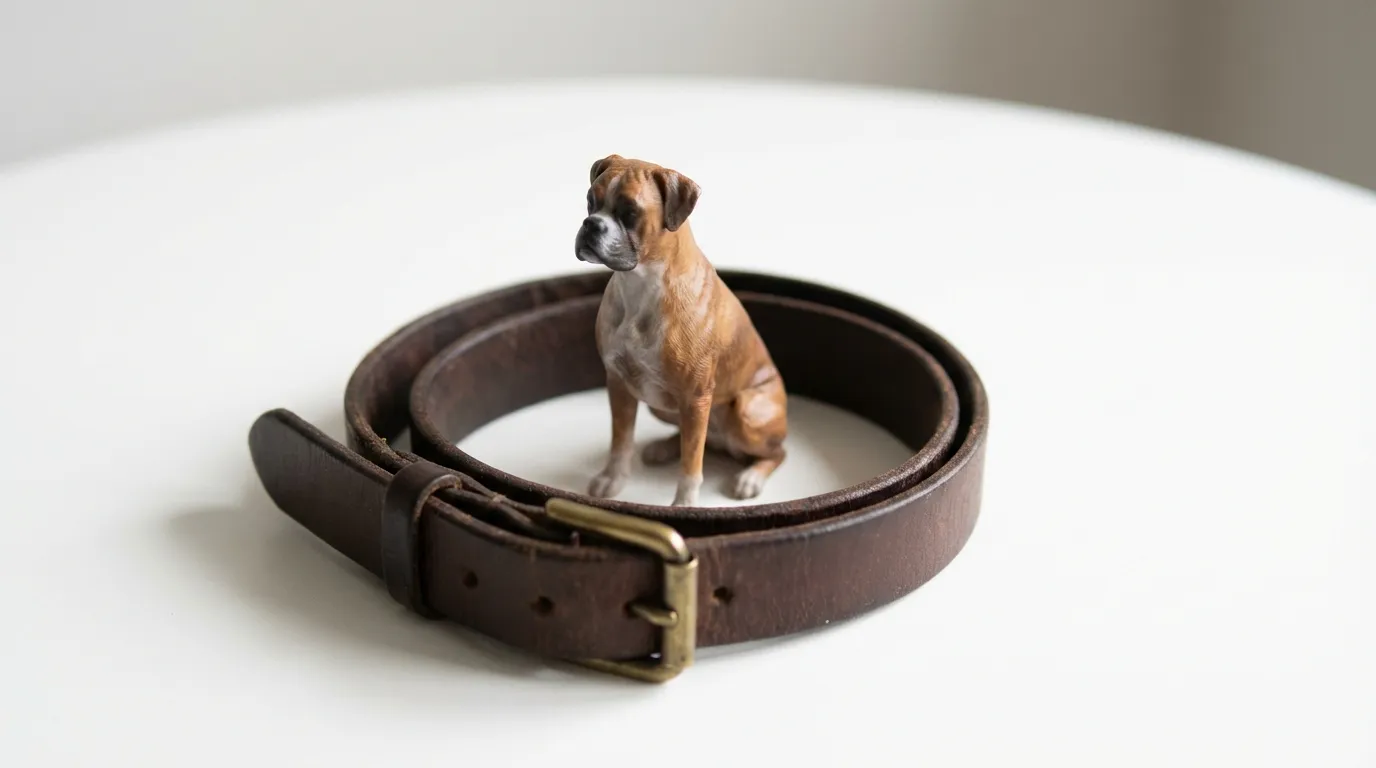
The living room looks exactly the same as it did yesterday, yet everything has changed. You’re standing there holding the leather strap, running your thumb over the worn brass tag, and despite weighing only a few ounces, the collar feels heavy in your hand—a physical anchor to the pet loss grief washing over you.
Quick Takeaways
- The "phantom weight" is real — your brain is physically rewiring its expectations of your pet's presence.
- Relief is not betrayal — feeling relief that caretaking duties have ended is a normal biological response, not a lack of love.
- Grief needs a container — creating a dedicated physical space or custom memorial helps externalize the pain.
- The "48-Hour Rule" — avoid making permanent decisions about your pet's belongings (donating beds/toys) for at least two days.
The Physics of Absence: Why the Silence is So Loud
We often talk about grief as a purely emotional experience, a matter of the heart. But anyone who has lost a dog or cat knows that it is intensely physical. It is a shock to the nervous system.
For years, your brain has been subconsciously mapping your movements around a small, furry satellite. You learned to step over a sleeping spot without looking. You learned to sleep in a contorted position to accommodate a warm weight against your legs. You learned to interpret the specific click-clack of nails on hardwood.
When that physical presence vanishes, your brain suffers a prediction error.
You walk into the kitchen and your body expects to dodge a tail. You wake up and your legs instinctively curl to make room. When the sensory input doesn't match the prediction, the brain triggers a stress response. That "heaviness" you feel isn't just sadness; it is your body trying to orient itself in a world that suddenly defies its muscle memory.
"Grief isn't a problem to be solved. It's a love story that continues after the last chapter."
The Sensory Void
The silence isn't just a lack of noise; it’s a presence in itself. We hear this constantly from the families we support. They tell us the hardest part isn't the big moments, but the micro-moments:- The sound of the mail carrier arriving, followed by... nothing.
- The stillness of the water bowl.
- The feeling of reaching down to scratch a head that isn't there.
This is why mourning a dog or cat feels so exhausting. Your brain is working overtime to rewrite its entire operating system.
The Secret Emotions: Guilt, Relief, and the "Bad Owner" Myth
Here is the part of the article where we need to be brutally honest about something few people admit at the dog park or in sympathy cards.
Grief is rarely pure sadness. It is a messy cocktail of emotions, and some of them make us feel deeply ashamed.
The Paradox of Relief
If you cared for a sick or elderly pet for a long time, you might have felt a wave of relief when they passed. Maybe it was relief that they were no longer in pain. But often, it's relief that the medication schedule is over. Relief that you don't have to wake up at 3 AM to clean up an accident. Relief that the constant, low-grade anxiety of "is today the day?" is finally gone.And then, immediately following that relief, comes the crushing guilt.
Am I a monster? How can I be relieved that my best friend is gone?
You aren't a monster. You are a caregiver who has been running a marathon without a finish line. The relief you feel is your parasympathetic nervous system finally exhaling after months, or years, of high alert. It does not negate your love. In fact, the intensity of your caretaking fatigue is proof of how much you loved them.
The Anger of Observation
Another emotion we see often? Irrational anger at strangers. You might see a neighbor walking their dog—perhaps a dog you know they don't treat particularly well—and feel a flash of hot rage. Why is their dog still here, barking at the wind, while my perfect companion is gone?This jealousy is normal. It’s a bargaining phase of grief manifesting as anger. Acknowledge it, forgive yourself for it, and let it pass.
The "Second-Guessing" Loop
- Did I do it too soon?
- Did I wait too long?
Here is the reality: You will almost certainly feel you did it wrong, regardless of the timing.
If you did it "too soon," you worry you robbed them of good days. If you waited "too long," you worry you allowed them to suffer.
Veterinarians often share a piece of wisdom that we hold onto: "Better a week too early than a day too late." Animals live entirely in the present. They do not fear the future; they only know the comfort or discomfort of now. By taking on the emotional pain of saying goodbye, you spared them the physical pain of a bad ending. That is the ultimate act of selflessness.
According to the American Veterinary Medical Association, the decision is a final act of stewardship, ensuring a peaceful transition rather than a painful natural decline.
Anchoring the Memory: Why We Need Tangible Keepsakes
Because the loss is so physical—the absence of touch, weight, and texture—the healing often needs to be physical too.
In the digital age, we have thousands of photos on our phones. But scrolling through a screen often feels hollow. It lacks the tactile connection we crave. This is why many pet parents find comfort in keepsake ideas that have weight and presence.
The Role of Physical Memorials
We are tactile creatures. Holding an object can help ground anxiety and provide a focal point for grief.- The Collar: Keep it in a special box or display it.
- The Ashes: Many find comfort in having them nearby, though others prefer scattering them in a favorite spot.
- The Likeness: This is where we have seen a shift in how people mourn.
Increasingly, families are looking for something more accurate than a generic statue. They want to see their dog's specific markings, the way one ear flopped, or the unique pattern on their cat's tail.
"We've seen families heal by holding something tangible. Grief needs an anchor—something your hands can recognize when your heart is overwhelmed."
— The PawSculpt Team
At PawSculpt, we specialize in creating custom figurines using advanced full-color 3D printing technology. Unlike traditional statues that are hand-painted (and often lose the fine details), our process builds the image voxel by voxel in full-color resin. This captures the exact gradient of your pet's fur and their unique expression. It’s not about replacing them—nothing can do that—but about having a tangible reminder that truly looks like them, protected by a clear coat to last a lifetime.
A Timeline of Processing (That Isn't Linear)
Forget the "Five Stages of Grief." Grief is not a staircase; it's a roller coaster in the dark. However, there are common phases you might recognize.
| Phase | What It Feels Like | Recommended Coping Strategy |
|---|---|---|
| The Shock (Days 1-7) | Numbness, phantom sounds, disorientation. | Stick to a basic routine (eat, sleep, shower). Don't make big decisions. |
| The Ache (Weeks 2-6) | The house feels empty. Sadness hits in waves. "Relief guilt" may surface. | Create a small memorial spot. Talk to friends who get it (avoid those who say "it's just a dog"). |
| The Integration (Months 3-6) | You can laugh at memories without crying every time. The weight lifts slightly. | Consider a lasting tribute like a custom figurine or planting a tree. |
| The New Normal (6 Months+) | The pain is duller, more like a scar than a wound. You might consider a new pet. | Volunteer at a shelter or donate old supplies. Honor the anniversary. |
Helping Surviving Pets Grieve
If you have other pets, you might notice them acting strangely. They are grieving too.
Animals thrive on routine and pack structure. When a member of the pack vanishes, the hierarchy is disrupted. You might see:
- Searching behavior: Checking the lost pet's favorite spots.
- Clinginess: Refusing to leave your side.
- Appetite changes: Eating less or too fast.
- Vocalization: Howling or meowing more than usual.
Research from the VCA Hospitals suggests that maintaining a consistent routine is the best way to help surviving pets. Stick to walk times and feeding times. Extra cuddles help both of you, but try to avoid reinforcing anxious behaviors with excessive treats.
Moving Forward Without Forgetting
There is a fear that eventually hits every grieving pet owner: What if I forget?
You worry that if you stop crying every day, you are betraying them. You worry that the specific texture of their fur or the smell of their paws will fade from your memory.
Here is the truth: You will not forget. The sharp edge of the pain will dull, yes. But that dulling allows the happy memories to surface. Right now, your memory is dominated by the end—the vet visit, the illness, the silence. As the grief settles, those traumatic memories will recede, making room for the years of joy that preceded them.
The collar in your hand feels heavy today. It might feel heavy next month. But one day, you will pick it up and instead of feeling the weight of the loss, you will feel the warmth of the connection. You will remember the walks, the tug-of-war, and the quiet moments on the couch.
That is when the collar becomes lighter. Not because you loved them less, but because you are finally strong enough to carry the memory with joy.
Frequently Asked Questions
How long does grief for a pet usually last?
There is no set timeline for grief. For some, the acute phase lasts a few weeks; for others, it can take months or even a year to feel "normal" again. It is not a linear process. You may have good days followed by a sudden wave of sadness. Be patient with yourself.Is it normal to feel guilty after my pet dies?
Yes, guilt is one of the most common emotions associated with pet loss. Whether it's guilt over the decision to euthanize, guilt about feeling relieved that caretaking is over, or guilt about "moving on," please know this is a standard reaction. It shows you cared deeply about their well-being.What are good keepsake ideas for a deceased pet?
Many families find comfort in tangible items. Clay paw prints, shadow boxes containing their collar and favorite toy, or custom artwork are popular. For a highly realistic tribute, custom 3D printed figurines can capture your pet's likeness in a way that photos sometimes can't.How do I know if my other pets are grieving?
Surviving pets often display signs of depression. Watch for lethargy, a decrease in appetite, wandering around the house as if searching, or increased vocalization. Maintaining their routine is the best way to help them cope.Ready to Celebrate Your Pet?
Every pet has a story worth preserving. Whether you're honoring a beloved companion who's crossed the rainbow bridge or celebrating your furry friend's unique personality, a custom PawSculpt figurine captures those details that make your pet one-of-a-kind. We help you hold onto the memory, turning pet loss grief into a beautiful tribute.
Free instant AI preview • 3D artist preview within 7 days • 5 free revisions