
What the Stoics Teach Us About a Ragdoll's Empty Bed in a Multi-Cat Home
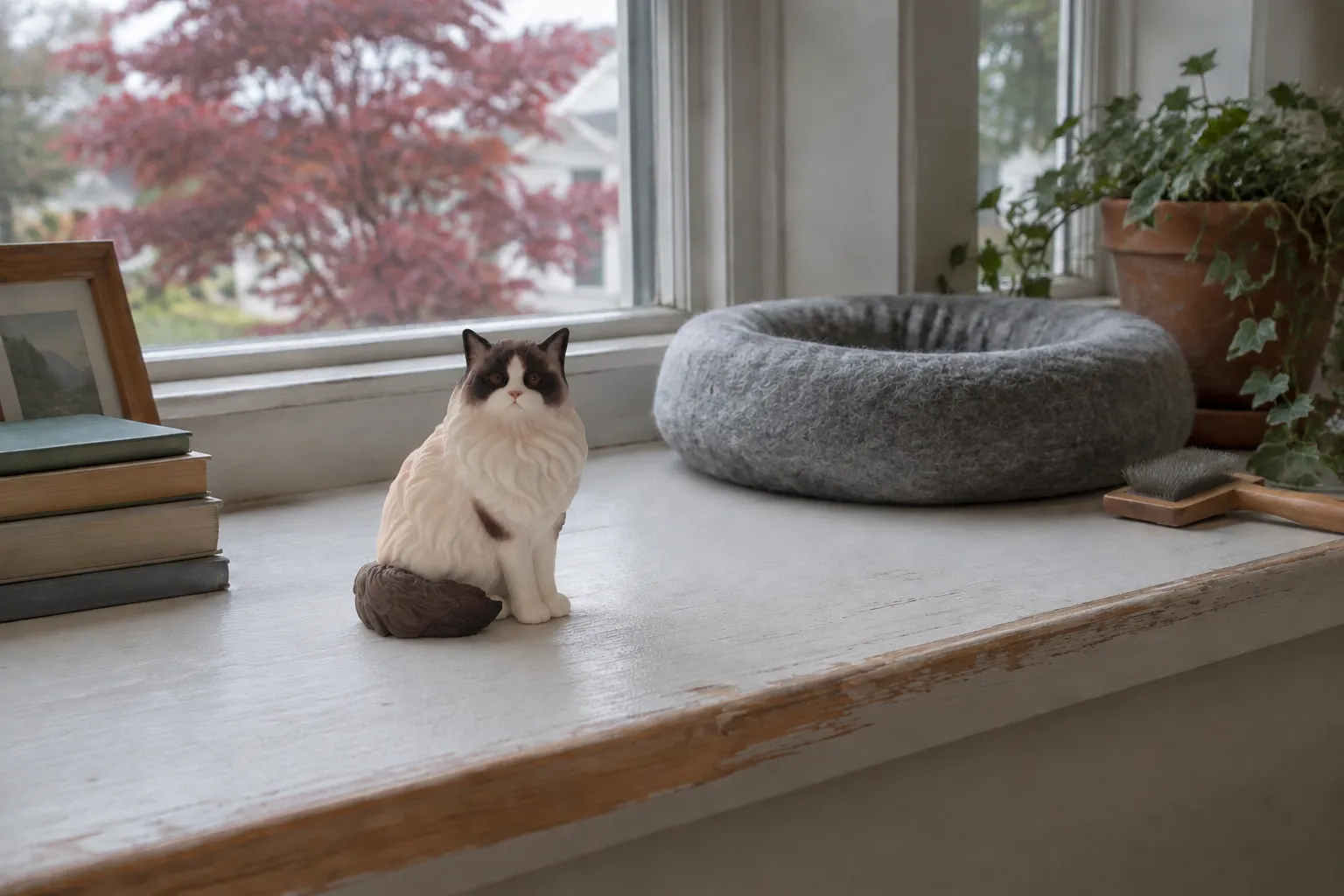
The sound you expect — the soft thud of paws on carpet at 3 a.m., the trill as you open the bedroom door — doesn't come anymore. The other cats still eat, still claim their windowsills, still knock the dish towel off the counter. But the Ragdoll who moved through your home like warm water, the one who waited by the bed until you woke, is gone. And the bed he curled into every afternoon sits empty on the windowsill, a small felted hollow that no one else will claim.
When a Ragdoll dies after a long decline in a multi-cat home, the household doesn't collapse into silence — it reorganizes around an absence. Stoic philosophy offers a practical framework: acknowledge what you've lost, preserve what remains in your control, and find a concrete anchor for memory that doesn't require the grief to resolve before it's allowed to exist.
Quick Takeaways
- Stoic practice distinguishes between what you control (your attention, your rituals, your remembrance) and what you don't (the timeline of grief, others' expectations, the fact of loss itself)
- A Ragdoll's temperament — gentle, present, physically affectionate — often creates a bond built on daily sensory routines; when those routines end, the absence is structural, not just emotional
- Multi-cat households reorganize after a loss; surviving cats may change their patrol routes, sleep spots, or social dynamics, and you're watching both your grief and theirs unfold in real time
- Memorial objects work best when they hold a specific sensory detail — the exact tilt of the head, the weight of the body in your lap, the color of the eyes in afternoon light — rather than trying to summarize the entire relationship
- Stoicism doesn't ask you to stop grieving; it asks you to stop fighting the fact that grief is happening, and to build small practices that let you carry it without being paralyzed by it
The Stoic Distinction: What You Control and What You Don't
Marcus Aurelius kept returning to one question: what is within your power, and what isn't? For a Ragdoll who died after months of decline, the answer is clear. You couldn't stop the disease, couldn't rewind the diagnosis, couldn't make the final weeks anything other than what they were. That's outside your control.
What remains inside your control: where you direct your attention. Whether you allow yourself to remember without guilt. How you structure the small rituals that let the bond persist even when the body is gone. Whether you preserve the specific details — the exact blue of his eyes, the way he tucked his paws beneath him when he settled — before memory softens them into something generic.
The Stoics weren't cold. They were precise. They knew that suffering comes not just from loss, but from the belief that loss shouldn't have happened, or that you should be "over it" by now, or that remembering is the same as refusing to move forward. A Ragdoll who spent years as your shadow, who met you at the door and slept pressed against your ribs, doesn't disappear from your nervous system just because his body is gone. The bond was built in repetition — the same greeting, the same spot on the couch, the same weight settling beside you at night. When those routines end, your body notices. Your hands reach for fur that isn't there. You still listen for the sound of him moving through the hallway.
Stoicism says: stop pretending that reaction is wrong. It's not wrong. It's structural. The work isn't to erase it. The work is to find a way to honor it without being destroyed by it.
Common Mistake: Treating every memory as painful and avoiding reminders altogether.
Better Move: Anchor one specific sensory detail — the sound of his purr, the way his tail curved when he was content — and let yourself return to it intentionally, not just when it ambushes you.
Why a Ragdoll's Absence Feels Different in a Multi-Cat Home
If you've lived with multiple cats, you know they each carve out their own territory, their own schedule, their own relationship with you. But a Ragdoll often plays a specific role: the constant. The one who doesn't care if the other cats are in the room. The one who follows you from the kitchen to the bathroom to the bed, not because he needs anything, but because that's what he does. He's the steady hum beneath the household's chaos.
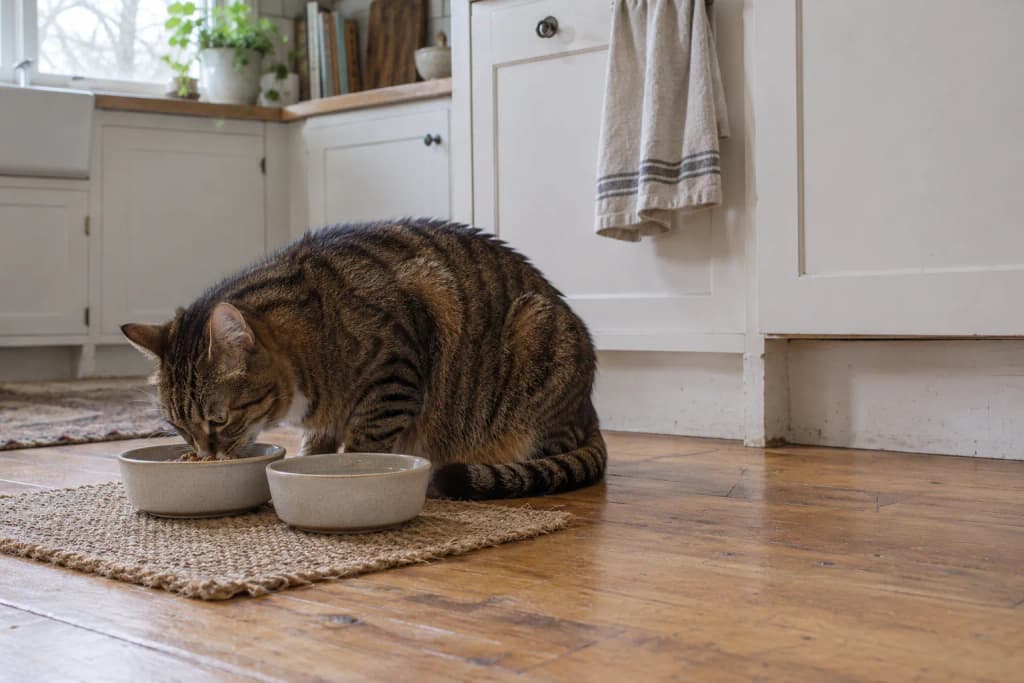
When that cat dies, the silence isn't total. The other cats are still here. They still knock things off counters, still yowl for breakfast, still sprawl across the keyboard when you're trying to work. But the rhythm changes. The Ragdoll who used to mediate, who'd settle between two cats on the verge of a spat, isn't there. The one who'd wait by the door until everyone was accounted for at night — gone. The surviving cats notice. They patrol differently. They claim new spots. One might start sleeping in the Ragdoll's old bed, or avoid it entirely.
And you're watching all of this happen while also trying to figure out how to pour your coffee without expecting him to materialize at your feet. The grief isn't just about the cat who died. It's about the system that's reorganizing itself around his absence, and the fact that you can't explain to the other cats why he's not coming back.
Stoicism says: you can't control their adjustment any more than you could control the disease. But you can control whether you give yourself permission to grieve in a house that hasn't gone quiet. You can control whether you set aside ten minutes to sit with the empty bed and let yourself feel it, instead of waiting for a moment when the house is empty and the grief feels "appropriate."
Common Mistake: Believing grief requires solitude, and deferring it until the house is quiet and the other pets are settled.
Better Move: Grief happens in fragments. Let it come when it comes — even if the other cats are eating breakfast and the dishwasher is running and the world hasn't stopped.
The Long Decline and the Stoic Preparation That Doesn't Prepare You
Some Ragdolls die suddenly. Others decline over months. You watch the weight drop. The appetite fades. The coordination slips. He stops jumping onto the bed and waits for you to lift him. He stops grooming. He stops coming when you call, not because he's ignoring you, but because he's too tired. And at some point — maybe weeks before the end, maybe just days — you start preparing.
You tell yourself: I'm ready. I know this is coming. I've already started grieving. When it happens, I'll have processed it.
And then it happens, and you're not ready. You never were. The preparation didn't soften the blow. It just gave you a script to follow when you had to make the call and carry him into the vet's office and hold him while the injection went in. But the script ends the moment you come home and the bed is still there and the other cats are milling around and you realize you have to figure out how to live in a house where his body isn't.
Stoicism doesn't promise that preparation makes loss easier. It promises that you can survive without pretending the loss didn't matter. Seneca wrote about premeditation of adversity — imagining the worst so it doesn't blindside you. But he also knew that imagining loss and experiencing it are not the same. The imagination is a rehearsal. The real thing is the performance, and you don't get to stop and start over if you miss a line.
The Stoic move isn't to brace yourself so hard that you don't feel it. The move is to expect that you'll feel it, and to build a few small practices that let you keep functioning even when the grief is loudest.
Anchoring Memory Without Waiting for Closure
Here's the thing about grief: it doesn't follow a schedule. You don't pass through five stages and then graduate. Some days you're fine. Some days you're standing in the hallway with a bag of cat food and you're crying because you bought the wrong brand and he's not here to eat it anyway. Grief doesn't ask permission. It just shows up.
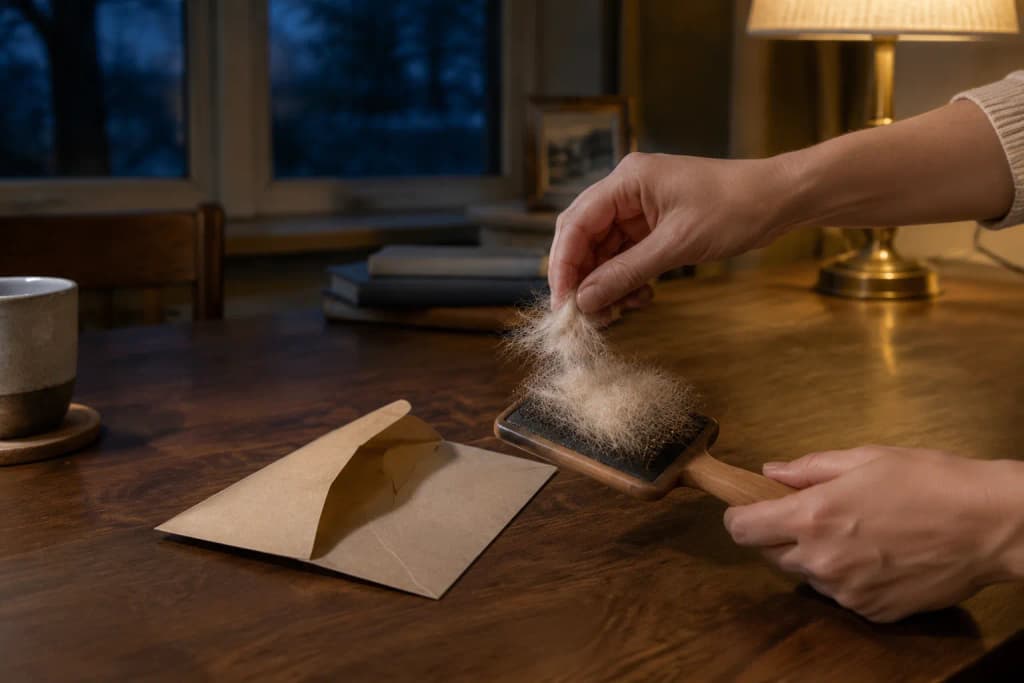
The Stoic response isn't to control the grief. It's to control the tools you use to carry it. And one of the most reliable tools is a concrete anchor — something that holds a specific detail, a specific moment, a specific truth about the bond you had.
For a Ragdoll, that might mean preserving the exact blue of his eyes in afternoon light. The way his body felt when you lifted him — not heavy, but solid, warm, trusting. The sound he made when you walked into the room, that low chirp that meant I see you, I'm here, we're okay. Those details are fragile. Memory softens them. A year from now, if you rely only on your mind, the blue will be "blue" and the sound will be "a purr" and the weight will be "heavy-ish," and the specificity that made him him will be gone.
Some people write it down. Some people commission a portrait. Some people keep a clay pawprint or a tuft of fur in a small box. And some people work with a sculptor to create a three-dimensional portrait — not a photo-exact replica, but an artistic interpretation that holds the tilt of the head, the curve of the tail, the posture he took when he was content.
A figurine like that isn't meant to replace the cat. It's meant to anchor the memory in something you can see and touch when your brain is too tired to do the work of remembering clearly. It's a Stoic tool: you can't control whether grief shows up, but you can control whether you've built a place for the memory to live outside your own head.
PawSculpt's process starts with reference photographs. An artist digitally sculpts the portrait, and you confirm the preview before it's printed. The equipment — a Mimaki 3DUJ-553 — supports more than 10 million colors, which means the sculptor can work with fine gradations in fur tone and eye color. The result is a small resin figure, 2.5 to 6 inches, with a transparent protective coat applied after printing. It's not hand-painted. It's not mass-produced. It's a sculpted portrait, specific to your Ragdoll, holding the details you choose to preserve.
Common Mistake: Waiting until the grief feels "lighter" before creating a memorial, then finding that by the time you're ready, the specific details have softened into generalities.
Better Move: Anchor the memory while it's still sharp — while you can still see the exact tilt of his ears and the way his paws tucked beneath him — and let the memorial exist even if the grief hasn't resolved.
The Empty Bed as a Stoic Practice
The bed is still on the windowsill. None of the other cats will claim it. You could move it. You could put it in a closet. You could throw it away. But you haven't. Maybe because it feels wrong to erase the spot where he spent his afternoons. Maybe because the bed is the only physical object in the house that still holds the shape of his body.
Stoicism would say: that bed is not the cat. The bed is an object. The cat is gone. Keeping the bed doesn't bring him back. But Stoicism would also say: if the bed helps you remember, if it gives you a place to direct your attention when the grief feels formless and overwhelming, then the bed is serving a purpose. The question isn't whether you should keep it. The question is whether keeping it is an intentional choice or a passive inability to move forward.
There's a difference between preserving something because it holds meaning and preserving it because you're afraid that moving it means you're moving on. The Stoics believed in living in accordance with nature — which includes the nature of loss, the nature of change, the nature of a household that reorganizes itself whether you're ready or not. If the bed is a shrine you can't touch, that's paralysis. If the bed is a deliberate anchor, a place where you sit for five minutes in the afternoon and let yourself remember, that's practice.
Some people eventually move the bed. Some people place a small sculpted figure beside it, a permanent marker that holds the memory even after the bed is gone. Some people leave the bed exactly where it is and let it become part of the house's landscape, a reminder that the Ragdoll's presence was real and mattered and doesn't need to be erased just because his body isn't here.
The Stoic move isn't to dictate what you do with the bed. The Stoic move is to make the decision consciously, not out of fear or guilt, but out of a clear understanding of what you're preserving and why.
Building a Ritual That Doesn't Require Belief
Stoicism is often misread as a philosophy of endurance — grit your teeth, accept the pain, move on. But the Stoics were deeply invested in ritual, in daily practice, in the small repeated actions that shape how you move through the world. Marcus Aurelius started each day with a series of reminders. Seneca wrote letters to himself. Epictetus taught his students to examine their impressions, to ask whether the story they were telling themselves about an event was the only story available.

For a Ragdoll who's gone, that might mean lighting a candle in the evening and sitting with the empty bed for five minutes. It might mean keeping a photograph on your desk and letting yourself look at it once a day, without guilt, without the belief that you should be "over it" by now. It might mean speaking his name aloud when you're feeding the other cats, a small acknowledgment that he was part of the household and still is, in the way that matters.
Ritual doesn't require belief. It doesn't require faith in an afterlife or a reunion or a cosmic plan. It just requires repetition. And repetition builds a groove in your day, a place where the grief can live without swallowing everything else.
Some people find that a physical object helps anchor the ritual. A sculpted portrait on a shelf, a specific place you return to when the grief feels too large to hold. The figurine doesn't have to mean anything mystical. It just has to be there, solid and specific, holding the details you chose to preserve. Over time, the ritual becomes a container. The grief is still there, but it has a shape, a place, a boundary.
Frequently Asked Questions
How long does Ragdoll grief typically last?
Pet grief has no prescribed timeline. According to resources from Cornell University College of Veterinary Medicine, grief responses vary widely between people, and there's no "normal" duration. Some people find the sharpest pain eases within weeks; others carry it for months or years. A Ragdoll's temperament — gentle, affectionate, physically present — often creates a bond built on daily routines, and when those routines end, the absence can feel structural rather than temporary. The Stoic approach isn't to set a deadline for grief, but to build practices that let you carry it without being consumed by it.
Should I remove my Ragdoll's bed after he dies?
The Stoic test is whether the bed serves an intentional purpose or creates paralysis. If the empty bed is a place where you sit for five minutes each day and let yourself remember, it's a tool. If it's a shrine you can't touch without collapsing, it may be time to move it. Some people leave the bed in place and add a small memorial object beside it. Others move the bed after a few weeks and find that the memory remains solid without the physical anchor. The question isn't whether you should keep it, but whether keeping it is a conscious choice that helps you rather than a passive inability to let go.
Will my other cats grieve the Ragdoll?
Cats reorganize their routines when a companion dies. Some may search for the missing cat, vocalize more, or change their sleep spots and patrol routes. Others show no obvious signs of distress. In a multi-cat household, the absence of a Ragdoll — often the steady, mediating presence — can shift the social dynamics. One cat may claim the Ragdoll's old bed; another may avoid it entirely. You can't control how the surviving cats adjust, but you can give them stability by maintaining their routines and allowing them space to reorganize without forcing interaction.
How do I preserve specific details before memory fades?
Write them down while they're sharp. Note the exact color of his eyes, the sound he made when you walked into the room, the way his body felt when you lifted him. Take close-up photographs of his face, his paws, his tail. Some people commission a painted portrait or a sculpted figurine to anchor the memory in a physical form. PawSculpt works from reference photographs; an artist digitally sculpts the portrait, you confirm the preview, and the approved model is printed in full color at a size between 2.5 and 6 inches. The goal isn't to create a photo-exact replica, but to preserve the specific tilt of the head, the posture, the details that made him recognizable as your Ragdoll.
What is a Stoic approach to pet loss?
Stoicism distinguishes between what you control and what you don't. You can't control the fact of loss, the timeline of grief, or others' expectations about how you should feel. You can control where you direct your attention, whether you build rituals that honor the bond, and whether you preserve the memory in a concrete form before it softens into something generic. Stoicism doesn't ask you to suppress grief or "get over it." It asks you to stop fighting the fact that grief is happening, and to build small practices — a daily moment of remembrance, a physical anchor, a conscious choice about what to keep and what to release — that let you carry the loss without being paralyzed by it.
How much does a custom Ragdoll figurine cost?
PawSculpt's custom resin figurines start at $429 USD for a 2.5-inch figure and go up to $999 USD for a 6-inch figure. A second pet can be added for $179, and optional add-ons include a nameplate ($9), a diamond glass base ($29), or a black crystal base ($39). No separate shipping fee is added at checkout for worldwide delivery, though international customers remain responsible for local customs duties or taxes. The process includes five included revisions to the artist preview, and you confirm the preview before printing begins. Delivery is typically 27–40 days after final payment for U.S. orders and 33–47 days internationally.
When You're Ready to Build the Anchor
Grief doesn't wait for permission. It shows up in the hallway, in the kitchen, in the empty bed on the windowsill. It shows up when you're feeding the other cats and realize you poured too much food because you forgot he's not here. It shows up when you hear a sound that could be him, and for half a second you believe it is, and then you remember.
The Stoic move is to stop pretending that grief will resolve on a schedule and to start building the tools that let you carry it. One of those tools is a concrete anchor — a way to preserve the specific details that made your Ragdoll yours before memory softens them into something generic.
A custom sculpted figurine isn't meant to replace the cat. It's meant to hold the memory outside your own head, in a form you can see and touch when the grief feels too large to carry alone. PawSculpt works from your reference photographs. An artist digitally sculpts the portrait — capturing the tilt of the head, the curve of the tail, the posture he took when he was content. You confirm the preview before printing, so the final piece reflects the details you chose to preserve. The figurine is printed in full color using a Mimaki 3DUJ-553, which supports more than 10 million colors, then inspected and coated for protection.
The sizes range from 2.5 inches ($429 USD) to 6 inches ($999 USD). You can add a second pet, a nameplate, or a base. No separate shipping fee is added at checkout, and delivery is typically 27–40 days after final payment for U.S. orders, 33–47 days internationally. The first artist preview arrives within about seven days after your order enters the design phase.
If you're not ready, that's fine. The bed can stay on the windowsill. The grief can live in fragments. But if you're ready to anchor the memory — to give it a shape and a place before the details fade — you can start that process now. You don't have to wait until the grief feels lighter. You just have to decide that the memory is worth preserving, exactly as it is, while it's still sharp enough to hold.