
The First Night Alone: A Gentle Nightly Ritual for the Siamese You Lost While Away
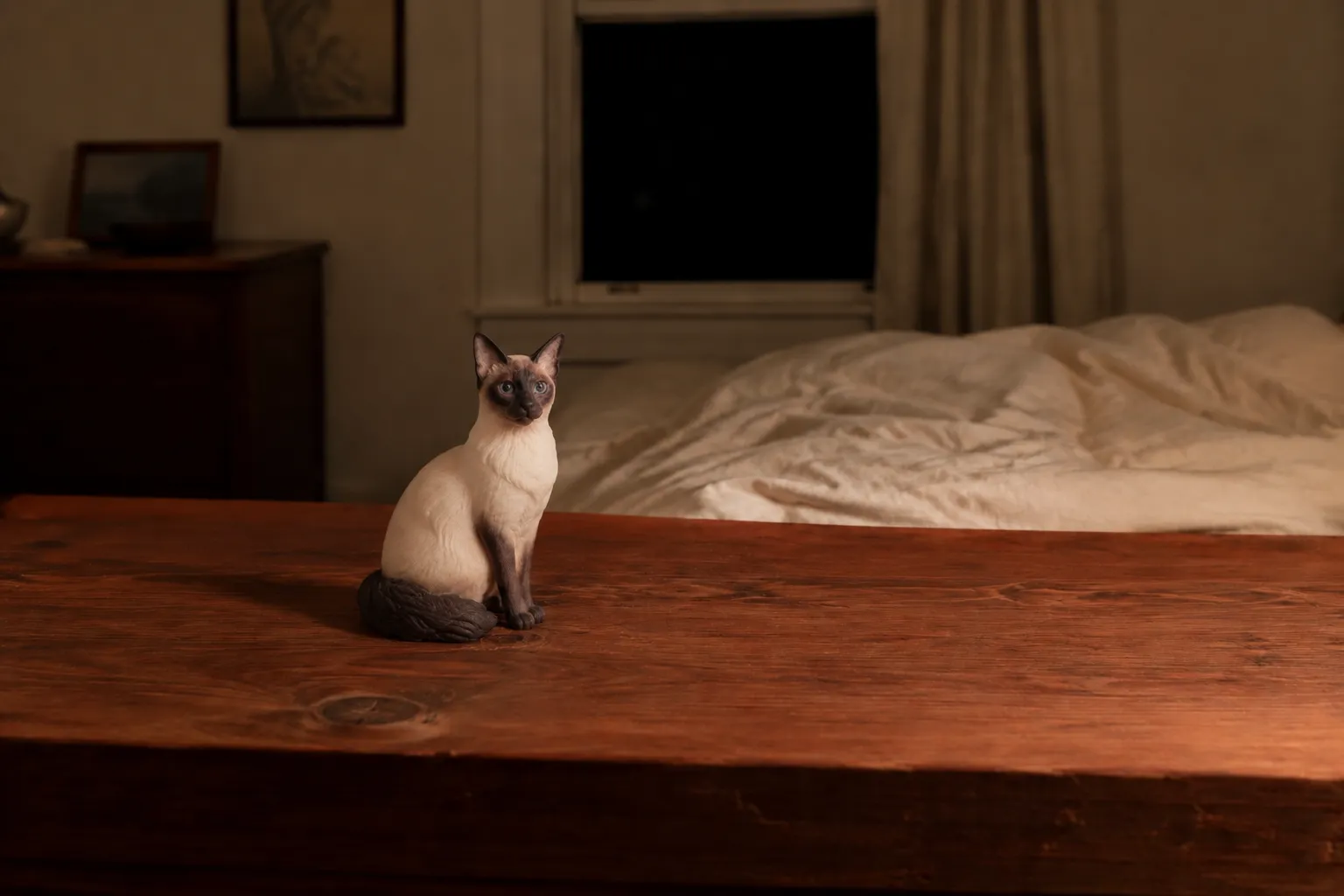
"You were already flying home when he passed. You didn't miss anything — you just weren't there for the part you couldn't have changed." A voicemail from the sitter, still saved, still unplayed on the counter.
If you're grieving a Siamese cat you lost while you were away, the ache of not being home in his final hours can feel like its own separate wound. This is for the first night you spend alone with that.
There is no correct way to grieve, and no normal timeline, according to veterinary experts. Being absent when your cat died does not mean you failed him. Tonight, you can build one small nightly ritual — a lit candle, a spoken goodnight, a chosen spot for his things — to hold the bond steady while the grief moves through at its own pace.
Quick Takeaways
- Grief after losing a pet is not linear, and there is no prescribed timeline — your response is normal, even the parts that feel messy or contradictory (Humane World for Animals).
- Being away when he died does not undo years of the bond you built. Guilt is a common thread in grief, and it does not measure your love (Cornell Feline Health Center).
- A repeatable nightly ritual gives your evenings a shape when the old routine has gone quiet.
- If grief is disturbing your sleep or daily functioning, free helplines and professional support exist and are valid to use (Tufts).
- A keepsake — a photo, a written letter, or a sculpted figurine — can hold presence in the room, and it's one option among many, not a requirement.
The Guilt of Being Away Is Not the Truth of Your Bond
Let's name the thing sitting on your chest first.
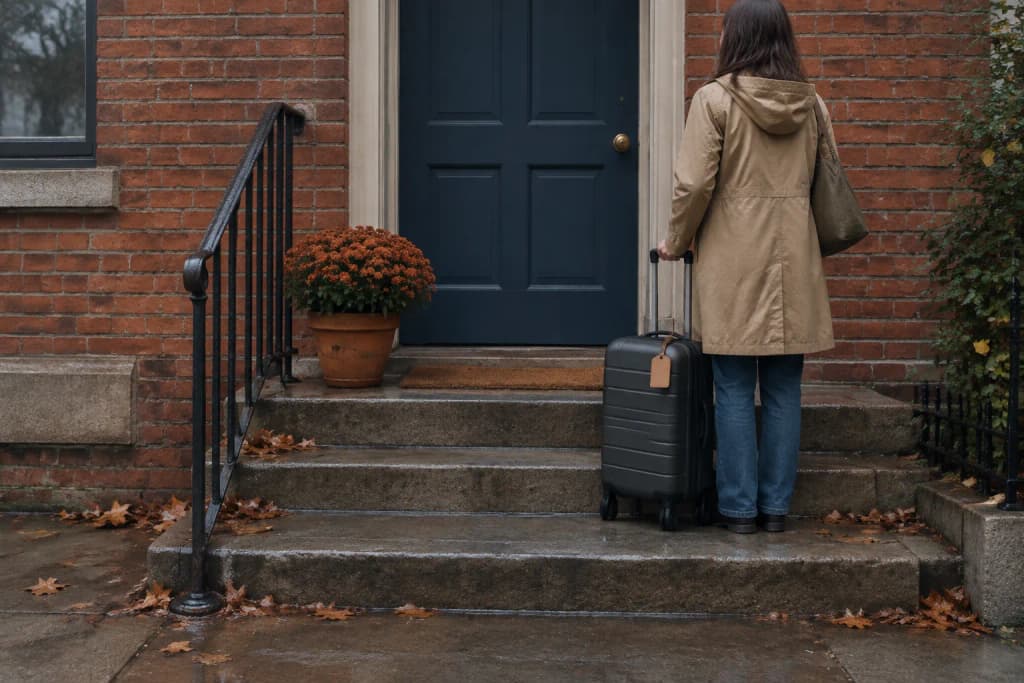
You weren't there. You were in a hotel, or on a plane, or in a meeting with your phone on silent. And now a voice in your head keeps insisting that if you'd only been home, something would have been different.
Here's what the people who study this for a living say: coping with the loss of a pet is one of the hardest experiences an owner faces, and medical information is often more accurate than what an owner can observe about a pet's health (ASPCA). Translation — the story where your presence rewrites the ending is a story grief tells. It is not a fact.
Guilt is one of the normal notes in grief, right alongside sadness, anxiety, tiredness, and even relief (Cornell Feline Health Center). All of them are allowed to be here. None of them cancels the years you were there — the mornings you were home, the vet trips you made, the way he found your lap the second you sat down.
The bond you shared with a Siamese isn't measured in a single night. It's measured in every ordinary evening you did show up. That contract between the two of you doesn't get voided by geography.
So before you build anything, put this down: you did not fail him by being away. You loved a creature who loved you back, and the ending was not yours to control.
The Soundtrack That Went Missing
Grief with a Siamese has a specific texture, and a lot of it is sound.
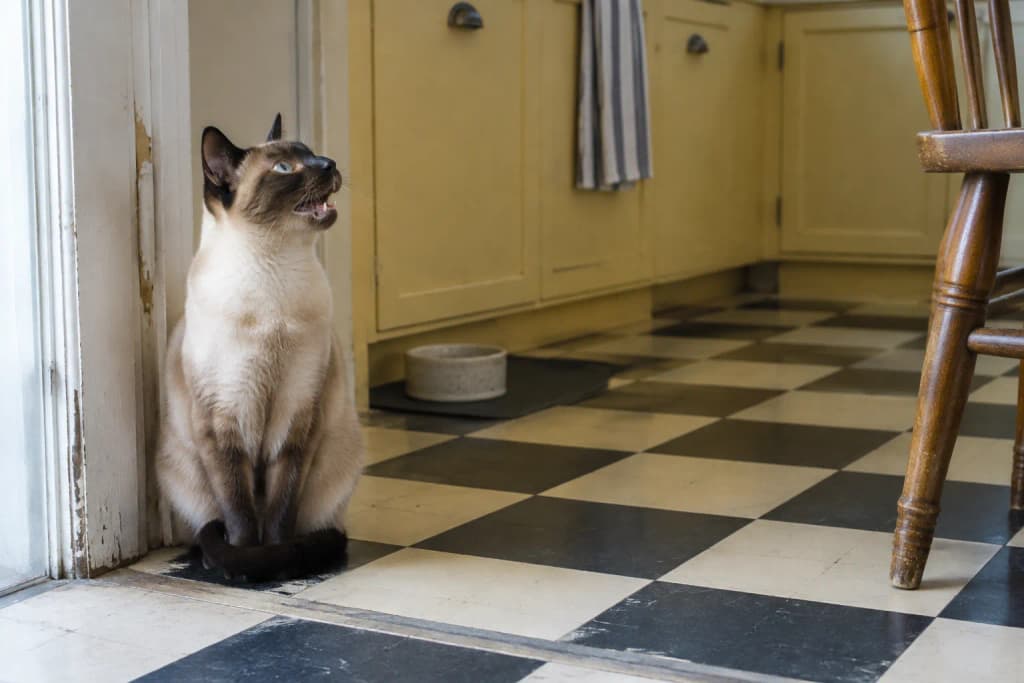
Anyone who's lived with this breed knows the running commentary — the loud, insistent, almost-conversational voice that narrates dinner, doorways, and your late arrival home. He talked. Constantly. And now the apartment doesn't answer back.
You notice it at the strangest moments. The click of the front door with no greeting behind it. The empty spot on the counter where a set of paws used to land with that soft double-thump. The absence of the low motor that would start up the instant you stilled for the night.
For a solo owner, this hits differently. There's no second person to fill the room with their own noise. When the day winds down, the quiet doesn't get diluted — it's just you and the shape of what's gone.
That's exactly why the evening is often the hardest hour, and exactly why building something small and deliberate into it matters. You're not trying to erase the missing sound. You're giving your ears somewhere else to land.
Myth vs. Reality: What the First Nights Try to Convince You Of
The mind reaches for cruel certainties when it's raw. Here are three of them, held up against what the experts actually say.
Myth: "If I'd been home, I could have saved him."
Reality: A veterinarian is the best person to advise on end-of-life timing, and medical test information is often more accurate than what an owner can observe (ASPCA). The outcome was rooted in his body, not in your absence. Presence would have given you a goodbye — it would not have given you a different ending.
Myth: "I should be past this by now."
Reality: There is no normal timeline for grief after pet loss, and the process rarely follows a straight path (Cornell University College of Veterinary Medicine). "By now" is a made-up deadline. You get to grieve on your schedule, not a clock's.
Myth: "Feeling relieved means I didn't love him enough."
Reality: Grief can include sadness, anxiety, tiredness, guilt, or relief — and all of them are normal (Cornell Feline Health Center). If he was ill or suffering, relief that it's over lives right next to the missing. Two true things at once.
Building the Nightly Ritual, One Small Motion at a Time
A ritual isn't a performance. It's a handful of repeated motions that tell your nervous system: this hour has a shape, and I know what to do in it. When the old routine is gone, you build a new one on purpose.
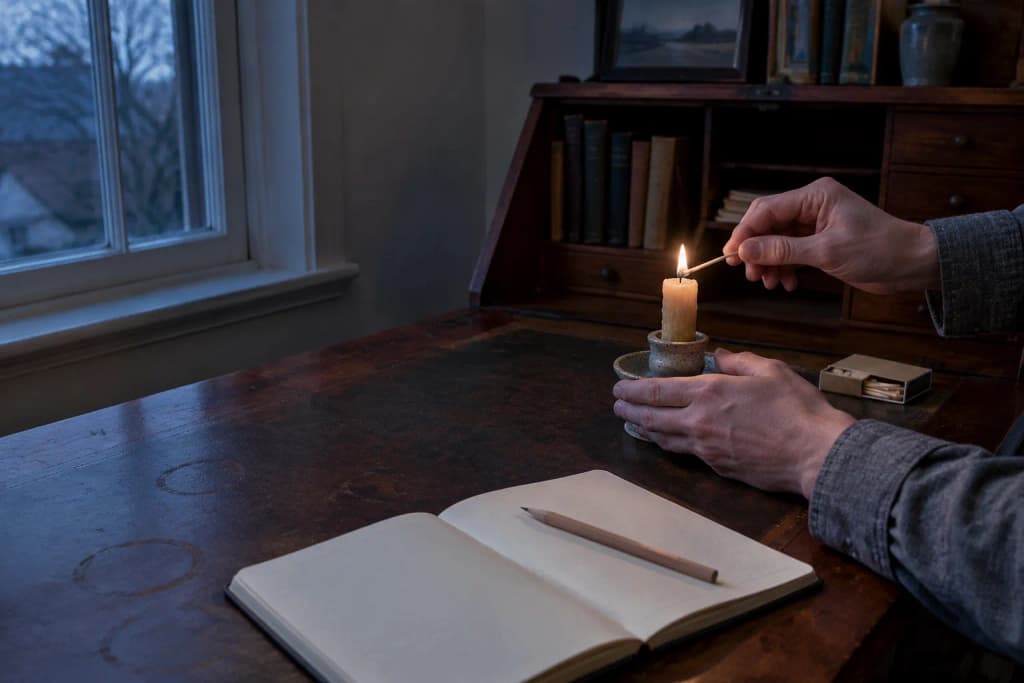
Art, writing, and remembrance are named by Cornell as ways some people find support in grief (Cornell University College of Veterinary Medicine). Here's how that can become a nightly practice you actually keep.
Choose the Spot
Pick one place that becomes his. A bedside table. A shelf you pass on your way to bed. The corner of the couch where he used to fold himself into a loaf.
This becomes your sacred space — not because of anything mystical you have to believe, but because you've decided this small square of the room holds his presence now. You get to define it. It doesn't need permission from anyone.
Set something of his there. The collar. A favorite toy. The folded blanket that still holds his shape.
Light Something
A candle gives your hands one clear job and your eyes one warm point in a dark room. Light it as the day ends. Let the striking of the match be the signal that the ritual has begun.
If open flame isn't practical where you live, a small lamp does the same work. The point is a deliberate light you turn on for him, and only for him.
Say Goodnight Out Loud
This one feels strange the first time. Do it anyway.
Speak to him. Tell him about your day. Tell him you're sorry you weren't there, if you need to say it — say it to the room, to the spot, to the light. The Siamese who narrated your whole life deserves to still be spoken to. Your voice filling the quiet, even alone, is its own kind of company.
Grief responses vary between people, and talking things through with a supportive presence can help (Tufts University Cummings School of Veterinary Medicine). Sometimes that presence is a person on a helpline. Sometimes, in the small hours, it's you and a candle and the name you called him.
Write One Line
Keep a notebook in the chosen spot. Before you close the ritual, write a single sentence. What you missed today. What made you laugh that he would have judged you for. What you wish you'd said.
You don't have to write pages. One line, one night, is enough. Over weeks, those lines become a record of the bond — proof, in your own hand, that the connection is still moving even as the sharpest pain softens. Writing is one of the remembrance practices experts point to (Cornell University College of Veterinary Medicine).
Close It
End the same way every night. Blow out the candle. Say the same last words. Touch the collar.
The closing matters as much as the opening, because it tells you the grieving of this day is complete, and you're allowed to rest. A ritual with a clear ending gives the ache somewhere to stop, so it doesn't follow you into the pillow.
When the Ritual Isn't Enough — and That's Okay
Some nights a candle won't cut it. Loss and bereavement can disturb sleep and daily routine, and support is available when they do (Humane World for Animals).
If grief is affecting how you function — if you're not sleeping, not eating, not able to move through your days — that's a signal to reach for more than a private ritual can hold. Professional grief counseling is a real option when loss disrupts daily life (Cornell Feline Health Center).
You don't have to white-knuckle this alone. Concrete places to turn:
- Tufts Pet Loss Support Helpline — a free line staffed by veterinary students, Monday through Thursday evenings Eastern, with 24-hour voicemail. A caring, non-judgmental person on the other end (Tufts).
- Lap of Love — virtual pet loss support groups and certified pet loss coaches leading small-group and one-on-one sessions, some free and some fee-based, so you can heal at your own pace (Lap of Love).
- Veterinary social work programs, like Ohio State's Honoring the Bond, exist to support owners through loss and can point you toward bereavement referrals — and some centers hold annual remembrance ceremonies for pets who've died (Ohio State University Veterinary Medical Center).
Reaching out is not a failure of the ritual. It's the ritual working — it taught you to name what you need.
The Jealousy Nobody Warns You About
Here's a feeling that catches solo owners off guard, and it's worth saying out loud so it stops feeling shameful.
You'll see someone walking a happy, healthy pet. You'll scroll past a friend's cat curled up on their bed. And something bitter will flare — why do they still have theirs? Then, right behind it, the guilt for feeling that way at all.
That flash is not ugliness in you. It's grief, wearing a different mask. When the loudest voice in your home has gone silent and you're the only one left to notice, the sight of someone else's full house can land like a small betrayal.
It doesn't mean you begrudge them. It means you miss him. The two things live in the same breath. Let the flare come, name it for what it is — I'm missing my boy — and let it pass. It's just one more note in a grief that has no wrong feelings.
Giving the Bond Something to Rest On
A ritual needs an anchor — a physical thing your eyes and hands return to. For a lot of people that's a framed photograph. For others it's the notebook filling with nightly lines, or a paw print, or a lock of fur kept close.
For some, it's a small figure that lets his presence stay in the room in three dimensions. A custom pet memorial figurine can sit in that chosen spot on the bedside table, a shape you can look at as you light the candle and speak your goodnight.
A word on what this is, so you can decide clearly. PawSculpt makes custom full-color 3D printed resin figurines, roughly 2.5 to 6 inches tall — a sculpted portrait, an artistic interpretation of your Siamese, not a photo-exact copy. You send reference photos, an artist digitally sculpts the piece, and you confirm the artist preview before anything is printed. A transparent protective coat is applied, and it's made for indoor shelf display — the kind of spot a bedside ritual lives in.
It won't bring back the voice on the counter. Nothing will. But an anchor you chose on purpose can give the nightly ritual a still point — a place for the bond to rest while you carry it forward.
Frequently Asked Questions
Is it my fault my Siamese died while I was away?
No. A veterinarian is the best person to judge end-of-life timing, and medical test information is often more accurate than what an owner can observe about a pet's health (ASPCA). Guilt is a normal note in grief — not a measure of your love.
How long will grieving a Siamese cat take?
There is no normal or prescribed timeline, and grief rarely follows a straight path (Cornell University College of Veterinary Medicine). Grief varies between people, so give yourself permission to move at your own pace.
Is it strange to talk out loud to my cat during a nightly ritual?
Not at all. Talking things through with a supportive presence can help with grief (Tufts). Speaking to your pet in a chosen spot is a tender way to keep the bond present when the room has gone quiet.
Where can I get real support if grief is affecting my sleep?
Loss can disturb sleep and routine, and support is available (Humane World for Animals). Try the free Tufts helpline, virtual sessions through Lap of Love, or a veterinary social work program.
What is a PawSculpt figurine, exactly?
It's a custom full-color 3D printed resin figurine, about 2.5 to 6 inches tall — a sculpted, artistic portrait of your pet rather than a photo-exact copy. It's made for indoor shelf display and finished with a transparent protective coat.
If You Want an Anchor for the Ritual
Tonight, the ritual is enough on its own — the spot, the light, the goodnight, the one written line. Come back to it as many nights as you need.
When you're ready for something your hands can hold in that chosen space, a sculpted portrait is one way to keep his presence in the room. You can see how custom pet memorial figurines work, or browse the broader approach to custom pet sculptures — an artist reviews your reference photos, sculpts the piece, and you confirm the preview before anything is printed, so nothing moves forward until it feels right to you.
There's no rush. The bond isn't going anywhere. Neither is your right to grieve it exactly the way you need to.