
5 Retirement Gifts an Adult Child Can Share While Missing a Chihuahua
Research suggests retirement can trigger a stress response similar to other major life transitions; on a bright beach boardwalk, one of our customers stood staring at the small empty space beside her tote, searching for a retirement gift dog lover dad could hold while missing the Chihuahua who used to trot there.
Quick Takeaways
- Pick gifts that occupy a physical space — empty corners often intensify grief after routine changes.
- Choose one shared ritual gift — it helps deployed or distant families stay emotionally synchronized.
- Match the gift to the relationship, not the occasion — retirement and pet-missing aren’t separate feelings.
- If you want something tangible, explore custom pet figurines that preserve markings, posture, and presence.
- Avoid “cheer-up” gifts in the first weeks — grounding objects usually help more than novelty.
Retirement is supposed to feel clean, almost ceremonial. A cake in the break room. A watch box. A card passed around the office with jokes in three different handwritings. But if the person retiring is also missing a Chihuahua—especially one far away with a deployed family member, or one no longer padding across the kitchen tile—the emotional math gets messier than greeting-card culture allows.
We’ve seen this up close at PawSculpt. People rarely come to us because they want a thing. They come because a chair looks wrong. Because a hallway feels too long. Because a retired parent now spends all day in a house arranged around a companion who isn’t there. That’s the part many gift guides miss: retirement changes space. It widens mornings. It sharpens absences. And suddenly the dog who once organized the day—the 7 a.m. bark, the warm curve in the recliner, the tiny nails clicking near the pantry—becomes part of the transition itself.
One customer we worked with—let’s call her Elena—was trying to find a gift for her father after his retirement from a shipping job in Virginia. Her brother had recently deployed overseas, taking his Chihuahua, Pepita, to live temporarily with his spouse near base. Nobody had expected the separation to hit her father so hard. He wasn’t just missing a dog. He was missing the creature that sat two feet from his boots every morning for six years. Same rug. Same angle. Same stubborn little sigh.
That detail matters. In attachment theory, bonds form not only around affection but around predictable proximity. We don’t just love beings; we map them into our nervous system by where they appear in our day. So when retirement removes the structure of work and the Chihuahua is also gone, the brain gets hit twice: routine disappears, and the tiny companion who helped regulate that routine disappears too. That can raise cortisol levels, disrupt sleep, and create what feels like irrational sadness over “small” things—like seeing an untouched dog bed in the corner.
It isn’t irrational at all.
The best retirement gifts in this situation do something deeper than commemorate a career. They restore orientation. They give shape to love that no longer has a daily outlet. They let an adult child say, “I see the whole change, not just the public part.”
Why a retirement gift dog lover parent needs something more specific
Most gift articles treat retirement as a standalone milestone. Golf gear. Travel accessories. Funny mugs about sleeping in. Honestly? That advice can feel weirdly tone-deaf when a parent’s emotional landscape has also been altered by a missing pet.
Here’s the overlooked angle: people don’t grieve pets only after death. They grieve after relocation, deployment, divorce, long-distance caregiving arrangements, military moves, and temporary separations. A Chihuahua gift for deployed family situations often carries a different emotional charge than a standard pet present because it has to bridge distance, not just memory.
Elena told us her dad kept drifting toward the den around 4 p.m., the old hour Pepita would start her impatient pacing near the treat cabinet. He knew the dog wasn’t there. Of course he knew. But the body often learns more slowly than the mind. That mismatch is a mild form of cognitive dissonance—your thinking brain accepts reality while your habit brain still expects the familiar pattern. People experience it when they reach for a leash that isn’t hanging by the door anymore, or glance toward the passenger seat on a drive.
That’s why a good gift here should do at least one of three things:
- Anchor a memory in physical space
- Create a shared ritual across distance
- Translate private grief into something speakable
If it does all three, even better.
Before we get into the five gifts, here’s a quick way to think about which type of present fits which kind of parent.
| Recipient Type | What They’re Really Missing | Best Gift Direction | Why It Helps |
|---|---|---|---|
| The routine parent | Feeding times, walks, chair-sharing | Ritual-based gift | Rebuilds daily structure |
| The sentimental parent | Face, posture, tiny expressions | Tangible keepsake | Gives memory a fixed form |
| The practical parent | Purpose after retirement | Living or interactive gift | Redirects caregiving energy |
| The private griever | Permission to talk about loss | Story-centered gift | Lowers emotional pressure |
| The long-distance grandparent of the dog | Ongoing connection during deployment | Shared family gift | Preserves belonging across miles |
The mistake most people make is choosing a gift that tries to distract. Distraction is useful in small doses; disorientation needs anchoring. That’s the counterintuitive piece. If your parent says, “I’m fine,” but keeps lingering in rooms the dog used to claim, don’t assume they need something lighthearted. They may need something concrete.
"Absence becomes loudest in the places where love used to stand."
1) A custom Chihuahua figurine that restores presence, not just memory
Digitally sculpted pet figurine
Who it’s for: The retiring parent who misses seeing the dog in a specific spot every single day.
Budget: $150-$400+
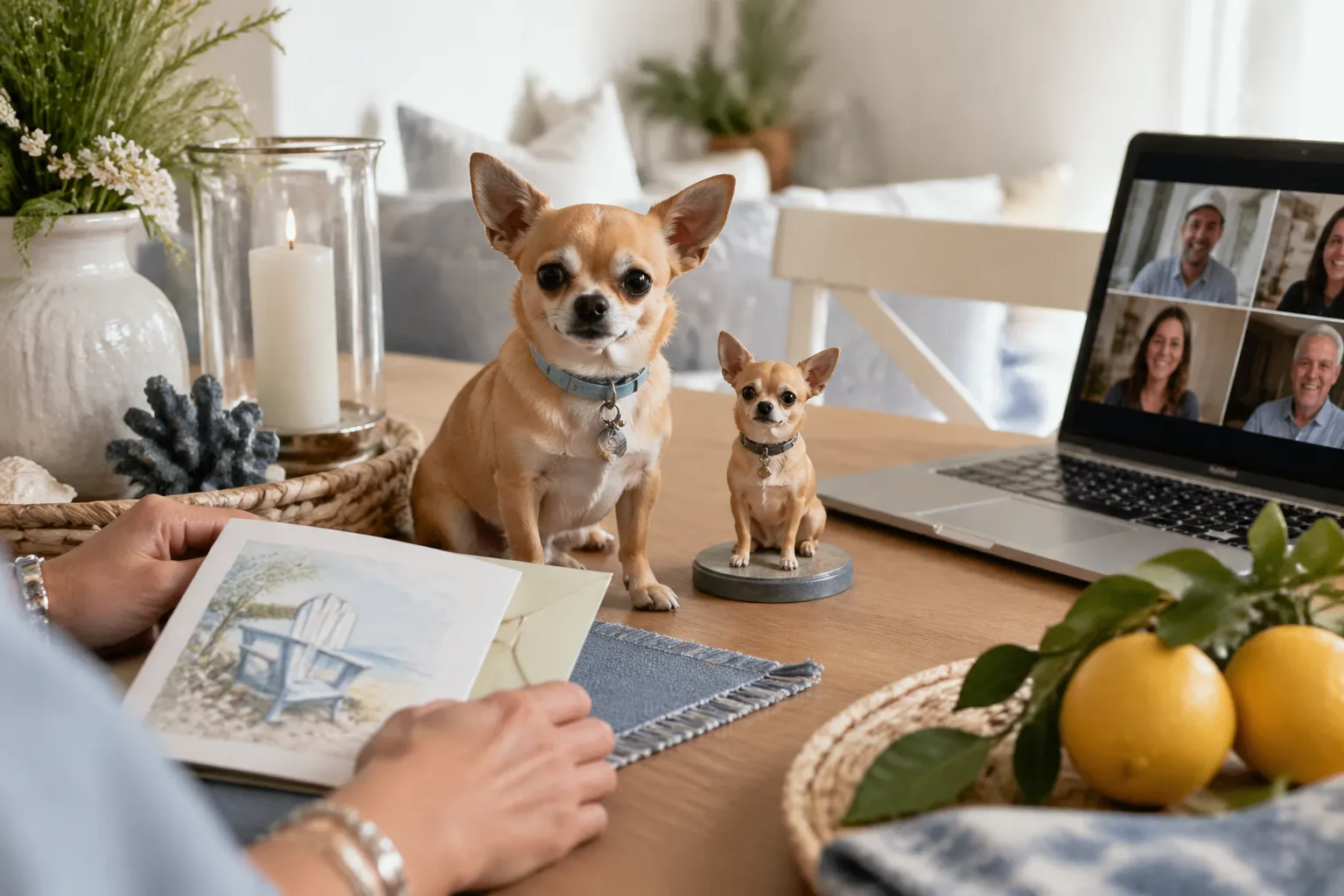
This is the gift that most directly addresses spatial grief. A custom figurine doesn’t replace the living dog—nothing can—but it gives the eye somewhere to land. And that matters more than people think. In our years working with pet families, we’ve learned that many customers don’t place a figurine in a display cabinet first. They place it near the lamp where the dog used to nap, on the desk now left empty after retirement, or beside the framed service photo of the deployed son or daughter who took the Chihuahua with them.
That’s why a generic dog statue often falls flat. A Chihuahua isn’t just “small dog energy.” It’s the angle of the ears. The slightly suspicious expression. The chest puff when they’re feeling brave in a body that weighs less than a grocery bag. A meaningful figurine should capture those specifics.
At PawSculpt, our team creates museum-quality custom pet figurines that are digitally sculpted by master 3D artists, then precision 3D printed in full color. The color is built directly into the full-color resin, not applied afterward, which is especially important for Chihuahuas with complex markings—cream brows, brindled patches, pinkish inner ears, the lighter fur around the muzzle that tends to show up with age. A clear protective coat is added for sheen and durability, but the authenticity comes from the printing process itself: vivid color, recognizable texture, and the tiny details that make the dog unmistakably their dog.
One order that stuck with us came from a retired Air Force mechanic whose daughter was deployed overseas with her Chihuahua, Tilly. He kept saying he missed “how she leaned,” not just how she looked. That sentence stayed with our team because it gets at something profound: attachment often lives in posture. The body remembers the curve of another body nearby. He placed the finished figurine on the corner of his workbench—the exact spot where Tilly used to supervise every home repair by doing absolutely nothing useful.
And yes, he cried. Then he laughed about crying. That’s usually how real healing looks.
If you’re considering this route, the best photos usually include:
- Eye-level shots that show expression
- Side angles that reveal the Chihuahua’s stance
- Natural light images where markings are accurate
- At least one familiar pose your parent would recognize instantly
A quick photo guide helps families avoid the common mistake of choosing only “cute” photos instead of recognizable ones.
| Photo Type | Why It Matters | Best Detail Captured | Common Mistake |
|---|---|---|---|
| Front-facing | Shows expression and symmetry | Eyes, muzzle, ear set | Using filters that alter color |
| Side profile | Reveals body posture | Chest shape, tail angle | Cropped body images |
| Natural resting pose | Feels emotionally true | Personality, stance | Only using holiday costumes |
| Bright natural light | Improves color accuracy | Fur markings, coat tone | Dim indoor yellow lighting |
| Close-up of face | Refines likeness | Senior muzzle details | Blurry phone zooms |
Why it stands out: For a retirement gift dog lover parent, this type of gift marks both the career transition and the emotional transition at home. It’s especially powerful in a Chihuahua gift for deployed family context because it gives the parent a visible connection to the pet and the family member far away.
Pro tip: Ask the parent’s spouse or sibling where the dog “belonged” in the house; placement is half the emotional impact.
Some families pair the figurine with a short note that says, “For the spot Pepita kept warm.” Simple. Devastating. Perfect.
If you want to explore options, 3D pet sculptures can be one of the most emotionally precise gifts because they preserve not just breed traits, but the individual dog’s look and stance.
2) A retirement-and-remembrance letter box shared across distance
Family letter box with scheduled openings
Who it’s for: The parent whose child is deployed or living far away, and who misses the Chihuahua as part of missing the whole family unit.
Budget: $25-$90
This one sounds almost old-fashioned, and honestly, that’s part of its power. Put a sturdy keepsake box together with 6 to 12 letters, notes, or voice-message transcripts from family members to be opened on specific days or milestones: the first Monday after retirement, the dog’s birthday, the first holiday, the one-month mark, the day the deployed family member returns, and so on.
Here’s the deeper reason it works. Retirement can produce “temporal drift.” Without workdays to break up time, people often experience days as strangely formless. Grief does something similar. A scheduled letter box restores gentle sequence. It gives the mind a future appointment with comfort.
Elena and her brother did this for their dad, and one envelope was simply labeled: “Open when the den feels too big.” Inside was a printed photo of Pepita draped over the arm of his recliner, plus a note from the deployed brother: “She still barks at anyone who walks past the window like she owns real estate.” That line became family lore.
You can make the box richer by including:
- A map showing where the deployed family and Chihuahua are currently living
- Small notes about the dog’s latest habits
- One story per envelope, not a novel
- A scent item only if it’s comforting and practical (for some people, scent hits too hard)
The commonly overlooked aspect here is that updates can soothe grief more than nostalgia alone when the dog is alive but absent. If the Chihuahua is with a deployed family member or temporarily relocated, hearing “she’s still stealing socks” can calm the brain’s uncertainty. Ongoing narrative keeps the relationship active.
Why it stands out: This gift turns distance into structure. It doesn’t ask the retiree to “move on.” It gives them a rhythm for staying connected.
Pro tip: Number the envelopes in a loose order, but include one marked Open Anytime for hard evenings.
And keep the notes short enough to reread. The brain under stress prefers material it can absorb in one emotional breath.
"The right gift doesn’t erase missing someone; it gives the missing somewhere to go."
3) A chair-side memory station for the dog’s “territory”
Small-space memory corner
Who it’s for: The parent who keeps returning to one room, one chair, one hallway, or one window where the Chihuahua used to hover.
Budget: $40-$180
This may be our favorite underrated idea because it respects the architecture of attachment. Most homes have what we’d call a bonded zone—a physical area where a person and pet spent disproportionate amounts of time together. It might be the recliner with a folded blanket on the arm, the mudroom bench by the leash hook, or the sunny square on the living room rug that drew the Chihuahua every afternoon.
A chair-side memory station doesn’t need to be dramatic. In fact, subtle is usually better. Think: a framed candid photo, a well-made lidded box for tags or notes, a small lamp, and one tactile object like a folded bandana or toy. If appropriate, a custom figurine can sit there too, though it’s not mandatory. The point is to create intentional presence rather than accidental haunting.
Why this matters psychologically: grief often gets worse in spaces that feel unfinished. The mind keeps scanning the old location, expecting reunion. By gently redesigning that spot, you signal to the brain that the bond still has a place—even if its form has changed. This can reduce the repetitive “checking” behavior people do without realizing it, like glancing toward the dog bed 20 times a day.
We’ve watched families get this wrong by packing every dog item away overnight. Sometimes that’s necessary. But for many retirees, abrupt erasure doesn’t create peace; it creates emotional whiplash. A curated corner is often kinder than a total reset.
What to include in the station
A useful memory station usually has three layers:
- Visual layer — one or two photos, not twelve
- Story layer — a note, card, or printed anecdote
- Object layer — one physical item with emotional weight
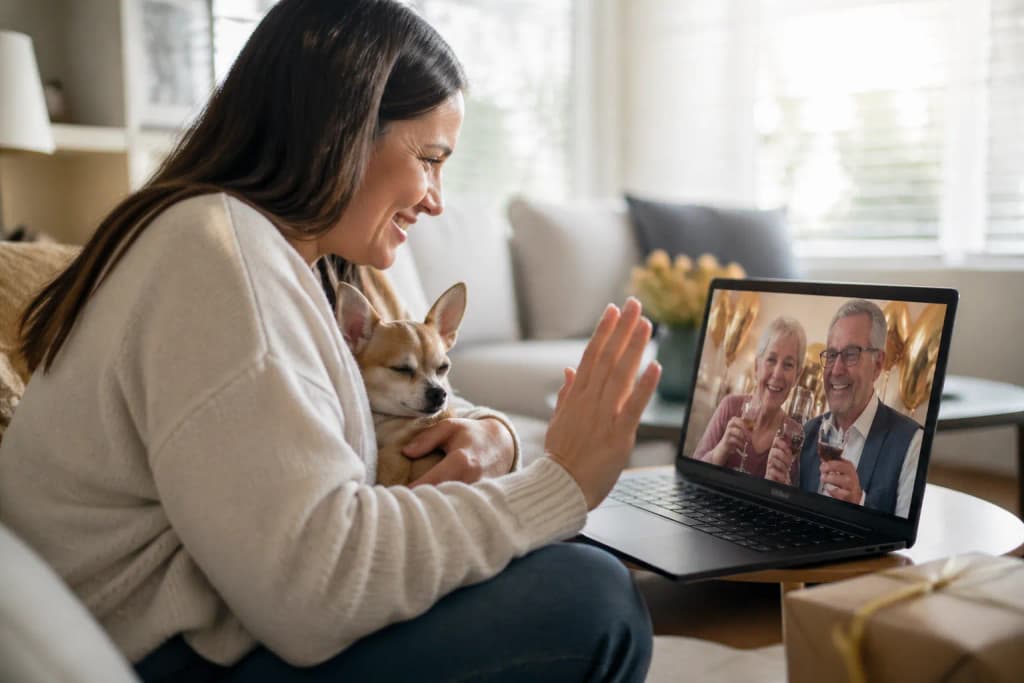
If the Chihuahua is alive but away with a deployed family member, swap memorial language for relational language. Include a current photo, a postcard from the duty station, and a note about the dog’s latest mischief. That turns the space into an active connection point.
Here’s a practical comparison of what works and what tends to overwhelm.
| Memory Corner Element | Best For | Emotional Effect | Use Sparingly If |
|---|---|---|---|
| Single framed photo | Most parents | Steady, grounding visual | They avoid looking at photos entirely |
| Dog tag or collar | Strong sentimental bond | High sensory connection | Sound triggers sadness |
| Current update cards | Deployed family situations | Keeps bond active, reduces uncertainty | Family struggles to send updates consistently |
| Custom figurine | Spatial grief, visible absence | Restores recognizable presence | They prefer very minimal decor |
| Favorite toy or blanket piece | Routine-focused parent | Tactile comfort | Scent is overwhelming |
Why it stands out: Unlike generic keepsakes, this gift uses the actual geography of grief. That’s the hidden lever.
Pro tip: Don’t surprise someone by rearranging the whole room. Set up the station with permission or with another close family member’s guidance.
A lot of healing is simply making one corner of the house less confusing.
4) A shared “Pepita Calendar” that turns missing into ritual
Monthly ritual calendar with Chihuahua touchpoints
Who it’s for: The retiree who thrives on routine and feels unmoored without the old dog-centered schedule.
Budget: $20-$75
Retirement removes external structure. Dogs often provide internal structure. So when a Chihuahua is absent too, the day can flatten out. That’s when people start saying things like, “I don’t know what to do with myself,” which is really shorthand for, “My nervous system lost its cues.”
A shared monthly calendar is a surprisingly strong gift because it treats connection as a practice, not a feeling. Build a simple wall calendar or digital-print version with recurring family touchpoints tied to the dog:
- First Sunday: photo update from the deployed family member
- Every Wednesday: five-minute video call if schedules allow
- On the 10th: “Pepita story day” where someone texts one memory
- Last Friday: retiree sends a note, treat package, or recorded message to the family and dog
This may sound small. It’s not. Repetition drives neuroplasticity, the brain’s capacity to form new pathways. In plain English, rituals can teach the brain that connection still exists, even if the form changed.
One customer made a “Luna Calendar” for her newly retired mother after her son deployed with his Chihuahua to Okinawa. Each month included one printed photo, one joke, and one task—nothing overwhelming. In February, the task was: “Sit in Luna’s old window spot with coffee and send us one thing you noticed outside.” That’s such a smart prompt because it transforms a site of longing into a site of participation.
Most guides would tell you to “keep busy.” We’re not huge fans of that phrase. Busyness can numb, but ritual can heal. Big difference.
"The best gifts don’t just mark a milestone—they give love a job to do in the new season."
— The PawSculpt Team
Why it stands out: This gift respects both retirement psychology and long-distance pet attachment. It works especially well as a Chihuahua gift for deployed family because it includes everyone, not just the retiree.
Pro tip: Keep the ritual light enough to sustain for at least three months; consistency beats intensity every time.
If you’re building a calendar gift, include one or two tactile inserts—printed snapshots, a postcard, a small note in someone’s handwriting. Screens help, but paper occupies space in a way screens don’t.
5) A legacy scrapbook that links career identity to Chihuahua companionship
Story album with “work years” and “dog years” woven together
Who it’s for: The parent whose sense of identity is tangled up with both their career and their bond with the dog.
Budget: $35-$150
This is the most reflective gift on the list, and for some families, it’s the most healing. A retirement scrapbook usually focuses on job milestones. A pet scrapbook focuses on the dog. But the deeper truth is that people often experience their pets as companions to their working life. The Chihuahua wasn’t adjacent to the career story; it lived inside it. Waiting at the door after late shifts. Sitting under the dining table while resumes were updated. Sleeping near steel-toe boots or a teacher’s tote or a nurse’s bag.
So build an album that deliberately mixes those timelines.
Use sections like:
- Before Pepita / After Pepita
- Last day at work / First quiet morning at home
- What changed in the house
- What Pepita taught our family about you
- Messages from the deployed family member
This kind of album reduces a subtle form of grief many retirees feel: identity fragmentation. That’s the uneasy sensation of thinking, “If I’m no longer going to work, who am I in this house now?” A well-made scrapbook answers with evidence. You are the person who loved steadfastly. Who showed up. Who fed the dog before feeding yourself. Who made a tiny creature feel safe for years.
Elena’s family included a page titled, “Where Pepita Waited.” It listed locations: by the back door at 5:40 p.m.; under the kitchen table during thunderstorms; halfway up the stairs when she wanted to be followed. Her father said that page hit harder than all the congratulatory retirement cards combined. Because it described the life he actually lived.
That’s the hidden power of a good gift: specificity is compassion.
How to build it without making it sentimental mush
You don’t need fancy supplies. You need precision.
Use:
- 15 to 30 photos, max
- Captions under 25 words
- A few candid images where the parent isn’t posing
- At least one page written by a deployed child or in-law
- One page that names the weird little details everyone remembers
And avoid:
- Overdecorating
- Generic quotes about dogs unless they genuinely fit
- Pages that only celebrate retirement without acknowledging the absence at home
Why it stands out: It integrates two transitions at once—career ending, companion missing. That’s rare, and it lands.
Pro tip: Include blank pages at the end so the story can continue after the dog returns or after the family’s next season begins.
For some families, the scrapbook pairs beautifully with memorial keepsakes or a visual object displayed nearby. For others, the book is enough on its own. Both are valid.
How to choose the right retirement gift dog lover families will actually use
By now you’ve probably noticed that these aren’t random gift ideas. They’re tools for specific emotional needs. And this is where adult children often freeze—they worry about choosing “the wrong kind” of meaningful.
Here’s a simple framework we’ve seen work.
Ask: Is the Chihuahua gone, far away, or just no longer part of the daily routine?
Those are three different situations.
- Gone permanently: Tangible remembrance often helps most.
- Far away with deployed family: Ongoing update-based gifts can be stronger than memorial-style items.
- No longer in routine due to retirement/living changes: Ritual and spatial gifts matter most.
People lump all pet-missing into one category, but the brain doesn’t. The nervous system reacts differently to death, distance, and disrupted routine. That’s why a gift can be “beautiful” and still somehow miss the mark.
Match the gift to emotional style
If your parent is practical, don’t give them a giant emotional production they have to perform gratitude around. If they’re expressive, don’t give them something so understated it feels evasive.
This matching table can help.
| Parent Style | Gift That Usually Works Best | Why | What to Avoid |
|---|---|---|---|
| Private and stoic | Custom figurine or memory corner | Lets emotion stay quiet but present | Public surprise party gifts |
| Verbose and nostalgic | Legacy scrapbook or letter box | Gives stories somewhere to live | Minimalist gifts with no context |
| Routine-driven | Shared calendar or memory station | Restores structure | Novelty items with no use |
| Long-distance family anchor | Letter box + current dog updates | Strengthens belonging | One-time joke gifts |
| Visually sentimental | Framed photo set or 3D figurine | The eye needs a place to rest | Audio-only gifts |
Think about the first 10 minutes after opening
That moment matters more than the wrapping. Ask yourself:
- Will they know what this gift is for immediately?
- Will it require explanation?
- Will it create relief, tears, awkwardness, or confusion?
Honestly, tears are fine. Confusion is the one to avoid.
In our experience, the strongest gifts create a fast internal recognition: Yes. That’s her. That’s us. That’s this season. If you’re considering a figurine, full-color custom pet figurines are especially effective for that instant recognition because they capture markings and expression in a tangible form the recipient can place where it matters.
And a quick note of honesty: not every parent wants a pet-centered retirement gift. If they’ve clearly said no, believe them. Respect is part of meaning too.
What makes a Chihuahua gift for deployed family different from ordinary pet gifts
Distance rearranges love. That’s the sentence underneath this whole article.
A standard dog-themed retirement gift might celebrate taste or hobby. A Chihuahua gift for deployed family has a more serious job. It has to carry continuity across geography. It has to reassure the retiree that they still belong to the dog’s daily life and the deployed child’s emotional world.
That’s why little updates can matter as much as expensive items. A printed card that says, “She still sleeps with one ear folded inside out,” may land harder than a luxury object with no context. Family systems run on detail.
Research into the human-animal bond suggests that pets can function as attachment figures, meaning they help regulate emotion, lower stress, and provide a dependable sense of connection. The NIH has published work on the health effects of human-animal interaction that helps explain why pet absence can affect mood and routine so strongly. And if you’re supporting an older parent through pet-related sadness, the Association for Pet Loss and Bereavement offers practical grief resources that many families find grounding.
We’re not vets or therapists, so for complicated grief, depression, or sleep disruption that keeps escalating, professional support matters. But for everyday human ache—the reaching, the looking, the noticing—thoughtful gifts can genuinely help.
One more counterintuitive insight before we close the list: small dogs often leave outsized spatial grief. People sometimes dismiss Chihuahua bonds because the dog is physically tiny. Yet that compactness often means the dog was in constant proximity—lap, pillow, crook of the elbow, edge of the sink mat, center of the bed. Less floor space. More nervous-system space.
That’s not a joke. It’s part of why these gifts need to be chosen with care.
"Tiny companions can occupy the largest rooms in memory."
If you’re considering a custom figurine, what to expect emotionally
This deserves its own short section because it surprises people.
A custom pet figurine—especially one created from favorite photos—can bring up more feeling than expected. The first reaction isn’t always neat. Some people smile immediately. Some go very still. Some set the box down and come back later. All normal.
What we’ve learned from thousands of pet families is this: the power usually comes from recognition of detail. Not “this is a dog.” But “that is her left ear,” or “that’s the exact way he sat when he wanted chicken.” Recognition collapses distance. It tells the heart that memory has texture.
At PawSculpt, the process begins with photos and digital artistry, then the piece is produced through advanced full-color 3D printing technology in full-color resin. Because the colors are printed directly into the material voxel by voxel, markings feel integrated and true to the original pet. The final clear coat protects the surface while preserving the natural printed character—fine grain, real depth, no fake perfection. For many families, that authenticity is exactly why it resonates.
If you go this route, think about the reveal:
- Give them time alone if they prefer privacy
- Include a note explaining why you chose that pose
- Don’t force a big reaction
- Suggest a placement spot if they seem unsure
Meaningful gifts don’t demand performance. They make room.
A few gentle mistakes to avoid
Before we wrap, let’s save you from the things that backfire most often.
Don’t make the gift all about “staying positive”
Positivity can feel like emotional eviction. Retirement and missing a Chihuahua may coexist with gratitude, pride, sadness, boredom, and relief. Let all of it exist.
Don’t choose a random Chihuahua-themed novelty item unless humor is truly the family language
A coffee mug with a cartoon Chihuahua can be sweet. It can also feel bizarrely thin if the real ache is about one particular dog in one particular house.
Don’t overfill the house with memorial objects
One meaningful focal point beats seven scattered reminders. Too many objects can turn comfort into overstimulation.
Don’t ignore the deployed family member’s role
If the dog is away with them, include them. The gift becomes more than an object when it carries voice, update, or participation from the person far away.
Don’t assume retirement itself is the whole event
This is the real thesis of the article, if we’re being honest. Retirement is public. Pet-missing is private. The private part often shapes the days more than the public part does.
The five gift ideas at a glance
If you want the short version before making a decision, this table sums up the emotional logic behind each option.
| Gift Idea | Budget | Best For | Core Benefit |
|---|---|---|---|
| Custom Chihuahua figurine | $150-$400+ | Visual, spatial grievers | Restores a sense of presence |
| Family letter box | $25-$90 | Deployed family situations | Creates connection across time |
| Chair-side memory station | $40-$180 | Home-centered retirees | Softens empty spaces |
| Shared Pepita calendar | $20-$75 | Routine-driven parents | Rebuilds structure |
| Legacy scrapbook | $35-$150 | Reflective, story-loving parents | Connects career identity and companionship |
If you’re still torn, choose the gift that best answers this question: What exactly feels missing in the room?
Not in theory. In the actual room.
Because that’s where retirement happens. Not in the HR speech. Not in the party photos. In the den at 4 p.m. In the kitchen corner where the water bowl used to slide an inch across the tile. In the chair no one else fits into the same way.
The gift is really a way of saying, “I see the whole change”
Elena eventually chose two things for her father: a letter box from the family and a custom figurine of Pepita in her famously judgmental seated pose. The figurine went on the side table near his recliner—not as decoration, but as orientation. Weeks later, she told us the room “felt less off.” That phrase has stayed with us because it’s humble and exact. Not fixed. Not magically healed. Just less off.
That’s often the real goal.
If you’re an adult child shopping for a newly retired parent who misses a Chihuahua, don’t chase novelty. Chase recognition. Give them something that acknowledges the dog-shaped absence and the newly widened day. Give them a gift that knows where the leash used to hang.
Start small if you need to. Pick one photo. One note. One corner. One date on the calendar. One object that says the love is still here, even if the daily form has changed.
And if the beach boardwalk or the back hallway or the recliner by the lamp feels unusually spacious lately, trust that instinct. Your parent isn’t being dramatic. They’re measuring a life by the space a tiny companion once filled.
Frequently Asked Questions
What is a good retirement gift for a dog lover who misses their Chihuahua?
A good gift acknowledges both transitions at once: retirement and the dog’s absence. That usually means something specific and personal, like a custom figurine, a shared family letter box, a memory corner, or a scrapbook that ties work life to pet companionship. Generic dog-themed gifts can be sweet, but they often don’t reach the real emotional need.
Is a custom pet figurine appropriate for a retirement gift?
Yes—especially for someone who misses seeing the dog in a particular place every day. A figurine can give that missing presence a physical anchor, which is often more comforting than people expect. The strongest ones are based on accurate photos and capture the dog’s actual expression, markings, and posture.
What makes a Chihuahua gift for deployed family more meaningful?
Meaning comes from connection across distance. The best gifts include updates, stories, photos, or rituals that keep the retiree involved in the Chihuahua’s life while the family member is away. It’s less about the breed motif and more about preserving belonging.
How much should I spend on a retirement gift for a pet lover?
There’s no magic number. We’d be real about this: emotional precision matters more than price. A beautifully assembled letter box can mean more than an expensive but impersonal item, while a higher-investment keepsake like a custom figurine can become a long-term family heirloom.
What if my parent gets too emotional opening a pet-related retirement gift?
That’s often a sign the gift touched the truth of the moment. Don’t rush to lighten it or apologize for making them cry. Give them space, let the reaction be what it is, and remember that recognition—real recognition—can be a relief as much as a sadness.
Are these gift ideas only for pet loss after death?
Not at all. Some of the most meaningful gifts we’ve seen were for living pets who were far away due to deployment, relocation, caregiving changes, or family transitions. Missing a dog is still grief, even when the dog is alive and well somewhere else.
Ready to Celebrate Your Pet?
Every pet has a story worth preserving. Whether you're honoring a beloved companion who's crossed the rainbow bridge or celebrating your furry friend's unique personality, a custom PawSculpt figurine captures those details that make your pet one-of-a-kind.
If you’re searching for a retirement gift dog lover parents will truly feel, a deeply personal keepsake can say what ordinary gifts can’t—I see who shared your days, and I know why that absence matters.
Visit pawsculpt.com to learn more about our process and guarantees