
Forget the Mantelpiece: Why Your Shiba Inu's Memorial Belongs on Your Desk
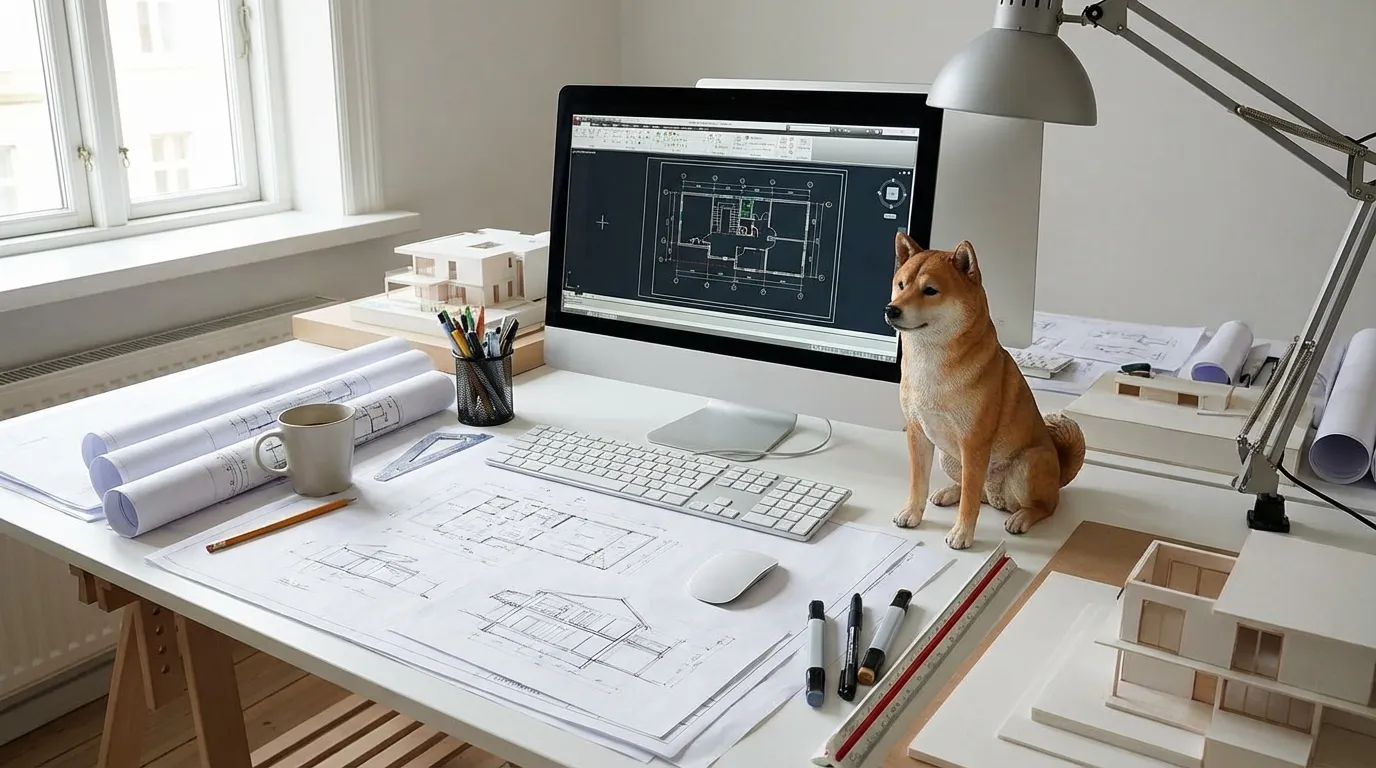
Three months ago, the backyard was a blurred track of sesame fur performing the "Shiba 500" around the oak tree, tearing up clods of dirt with joyful precision. Today, the grass is perfectly green, the dirt is undisturbed, and the stillness is loud enough to ring in your ears—reminding you that you need a Shiba Inu memorial that feels as alive as those chaotic, happy memories.
Quick Takeaways
- Visual cues regulate cortisol — seeing a beloved face during high-stress work moments naturally lowers heart rate.
- Shibas are 'supervisor' dogs — their independent, observant personality fits a workspace dynamic better than a passive shelf.
- Active vs. Passive grieving — integrating memory into your daily workflow aids neuroplasticity and helps the brain process loss.
- Tangible anchors ground you — a custom pet figurine offers necessary physical connection during sudden waves of grief.
The Psychology of "Continuing Bonds" in the Workspace
For decades, the standard advice for pet loss was "closure." The idea was to mourn, pack away the toys, place a discreet urn on a high mantelpiece, and move on. But modern grief psychology has shifted toward a healthier framework known as Continuing Bonds Theory. This approach suggests that instead of severing the relationship, we should find ways to maintain a presence in our lives that changes as we adapt.
The mantelpiece is a place of stasis. It is where things go to be looked at, not interacted with. It creates a psychological distance that reinforces the "gone-ness" of your pet.
Your desk, however, is a place of action, creation, and problem-solving. By placing a memorial here, you are integrating your Shiba Inu into your "living" world. From a cognitive standpoint, this prevents the brain from compartmentalizing your grief into a dark corner. It allows you to "micro-dose" your memories throughout the day, preventing the overwhelming tsunami of sadness that often hits when work stops and the house goes quiet.
"Grief isn't a problem to be solved. It's a love story that continues after the last chapter."
Why Shibas Specifically Belong on the Desk
If you’ve owned a Shiba Inu, you know they are rarely lap dogs. They are "nearby" dogs. They are the supervisors of the household.
Think about your daily routine when they were here. Your Shiba likely didn't beg for constant attention but positioned themselves in a strategic spot where they could watch you work. They were stoic, observant companions—cat-like in their independence but fiercely loyal in their proximity.
This specific breed trait is why a desk memorial is psychologically superior for Shiba owners.
When you place a figurine on your desk, you are replicating their natural behavior. You are recreating that feeling of being "supervised." Our brains are wired with mirror neurons; when we look at a representation of a calm, alert dog, our own nervous system tends to mirror that state. A Shiba on the mantelpiece feels out of character. A Shiba on the desk, watching you type, feels right.
The "Supervisor" Effect
We worked with a graphic designer who struggled to enter her office after her Shiba, Koji, passed. The room felt empty without him curling up under the drafting table. When she placed a custom replica on her desk, she reported a drop in anxiety. "It sounds strange," she told us, "but having him there, even as a statue, tricked my brain just enough to let me focus. He’s back on shift."The Neuroscience of Tactile Grounding
Grief is not just an emotion; it is a physical event. When you are hit with a wave of sadness, your body releases cortisol and adrenaline. Your chest tightens. This is the fight-or-flight response triggered by the emotional trauma of separation.
To counteract this, you need grounding techniques. This is where the materiality of your memorial matters.
Photographs are two-dimensional. You can see them, but you cannot hold them. The brain processes a 2D image differently than a 3D object. A three-dimensional object occupies space; it has shadows, texture, and mass.
At PawSculpt, we utilize full-color 3D printing technology that builds the figurine voxel by voxel (a voxel is a 3D pixel). This process creates a subtle, natural texture—unlike the cold smoothness of ceramic or the artificial slickness of mass-produced plastic.
When you run your thumb over the ears of a figurine during a stressful Zoom call, you are engaging haptic feedback. This tactile sensation sends a signal to your parasympathetic nervous system to calm down. It serves as a physical anchor in reality when your emotions feel like they are drifting.
Comparing Memorial Locations
| Location | Psychological Impact | Engagement Level | Best For |
|---|---|---|---|
| Mantelpiece | Creates distance; feels like a shrine or museum exhibit. | Low (Visual only) | Long-term storage of ashes; formal remembrance. |
| Bedroom/Bedside | Can impact sleep hygiene; may trigger late-night rumination. | High (Emotional/Intimate) | Private reflection; saying "goodnight." |
| Work Desk | Integrates loss into daily routine; provides stress regulation. | High (Active/Tactile) | Shiba Inus; maintaining a sense of companionship. |
| Garden | Connects to nature; emphasizes the cycle of life. | Medium (Ritualistic) | Burying ashes; annual remembrance dates. |
The Complicated Relief (And The Guilt That Follows)
We need to talk about an emotion that few pet owners admit to, but almost all feel: relief.
Toward the end, caring for an aging Shiba—managing their cognitive decline, the sundowning, the mobility issues—was likely a full-time job. It was exhausting. When they pass, there is a sudden, jarring return of your time and freedom.
And then comes the guilt. You feel guilty for sleeping through the night. You feel guilty for being able to focus on work without interruption.
This is where a desk memorial serves a unique psychological function. It allows you to keep the companionship without the caretaking. It acknowledges that you miss them desperately, but it also validates that you are now in a different phase of life.
Placing their likeness on your desk is a way of saying, "You are still my partner in this day," without the heavy burden of medical care that defined your final months together. It helps resolve the cognitive dissonance between loving them and needing to move forward.
"We've seen families heal by holding something tangible. Grief needs an anchor, especially when the house feels too quiet."
— The PawSculpt Team
Designing Your "Neuro-Friendly" Memorial Space
You don't want your desk to look like a shrine. A workspace covered in candles and black ribbons is not conducive to productivity, nor is it healthy for your mental state. The goal is integration, not domination.
Here is how to set up a memorial space that supports neuroplasticity—the brain's ability to rewire itself after trauma.
1. The 45-Degree Angle
Don't place the figurine directly in front of your monitor where it blocks your view. Place it at a 45-degree angle to your dominant hand. This places the memorial in your peripheral vision. Your brain registers the presence without you having to stare directly at it. It mimics the way a dog naturally hangs out in a room—present, but not intrusive.2. Lighting Matters
Avoid spotlighting the object. Natural, ambient light is best. If you have a desk lamp, position the figurine so the light catches the "catchlights" in the eyes. Our 3D artists digitally sculpt these details to catch light naturally. Seeing that "spark" of life in the eyes triggers a dopamine release, contrasting with the flatness of a printed photo.3. Verbal Processing
It sounds eccentric, but talk to the figurine. "Okay, Koji, what do you think of this email?" Verbalizing your thoughts is a known cognitive strategy for problem-solving (often called "rubber ducking" in programming). By directing this speech to your Shiba's memorial, you are maintaining the verbal loop you likely had when they were alive. It keeps the neural pathways associated with their name active, preventing the "fading" of memory that many people fear.When to Put It Away (The Habituation Trap)
There is a phenomenon in psychology called habituation. If a stimulus is constant, our brains eventually stop registering it. If you leave a photo on the wall for ten years, you eventually stop "seeing" it.
To keep the memorial potent, give it a break.
We recommend rotating your desk setup. Maybe the figurine stays on your desk for the work week, but moves to a bookshelf on weekends. By changing its context, you force your brain to re-notice it. Every time you move it, you get a fresh hit of the memory. You re-engage with the details—the curve of the tail, the alert ears.
This prevents the memorial from becoming background noise. It keeps the bond active.
Moving Forward Without Forgetting
The fear of forgetting is the shadow that chases every grieving pet owner. You worry that if you stop crying, or if you move the ashes off the mantel, you are erasing them.
But memory is not located in an urn. It is located in the synaptic connections of your brain. By bringing a representation of your Shiba onto your desk—into the vibrant, messy, productive center of your life—you are ensuring they remain part of your story.
You aren't moving on. You are moving forward, with them watching from the best spot in the room. Just like they always did.
Frequently Asked Questions
How long does the intense grief for a pet usually last?
According to most bereavement studies, acute grief typically lasts 1 to 2 months, but "waves" of sadness can continue for a year or more. This is entirely normal. Grief is not linear; it cycles. Creating a dedicated space for memory on your desk can help regulate these emotions by giving you a specific place to direct your feelings.Is it weird to talk to a pet memorial figurine?
Not at all. Psychologically, verbalizing thoughts to a pet is a deeply ingrained habit formed over years. Continuing this "one-way" conversation helps the brain process the loss gradually rather than severing the bond abruptly. It's a healthy form of external processing.What kind of photos do I need for a custom Shiba Inu figurine?
For the most accurate result, we recommend clear photos of the face (front and profile), the specific curl of the tail, and any unique white markings (urajiro). Natural lighting is best to capture the true sesame or red hue of the coat. However, if you don't have perfect photos, our master 3D sculptors can work with descriptions and breed standards to capture the essence of your dog.Why choose a 3D printed figurine over a traditional photo frame?
3D objects engage spatial and tactile senses that 2D photos cannot. Being able to hold the object provides "grounding" during anxiety spikes, utilizing haptic feedback to calm the nervous system. A figurine has a presence and occupies space in a way that mimics the physical reality of the pet.Ready to Celebrate Your Pet?
Every pet has a story worth preserving. Whether you're honoring a beloved companion who's crossed the rainbow bridge or celebrating your furry friend's unique personality, a custom PawSculpt figurine captures those details that make your pet one-of-a-kind. A Shiba Inu memorial on your desk isn't just a statue; it's a daily reminder of a bond that never breaks.
Free instant AI preview • 3D artist preview within 7 days • 5 free revisions