
Your Teen Is Grieving Their Bengal Cat in Silence — How Neuroscience Explains Why the Favorite Toy Matters Now
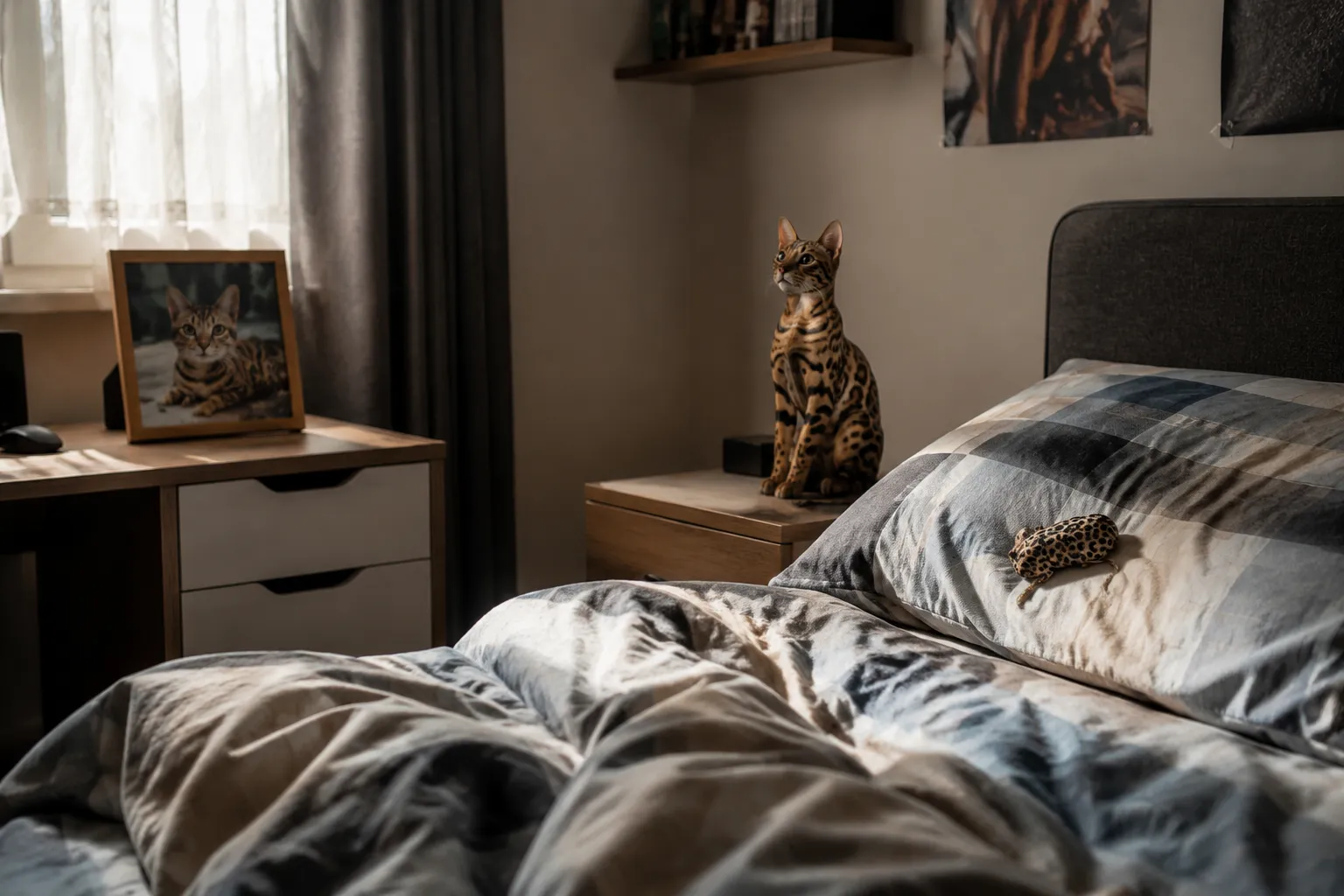
When did your teenager last mention their Bengal by name—and when did they stop?
That shift, that sudden absence of sound where a cat's name used to punctuate every sentence, is one of the earliest neurological markers of teen pet grief. It's not silence born from indifference. It's the brain's prefrontal cortex literally struggling to reconcile a word with a loss it hasn't yet categorized.
Quick Takeaways
- Teen brains process pet loss differently than adults — the prefrontal cortex isn't fully developed until age 25, making grief less verbal and more somatic
- Bengal cats create unusually strong neural bonds — their interactive, dog-like behavior activates social attachment circuits more intensely
- The "favorite toy" isn't sentimentality — it's a sensory anchor that helps the adolescent brain consolidate memory during grief
- Physical memorials reduce cortisol measurably — tangible objects like custom pet figurines give the brain a focal point for processing loss
- Silence doesn't mean "fine" — withdrawn teens are often experiencing the most intense neurochemical grief responses
The Neuroscience Most Grief Guides Skip Entirely
Here's what frustrates me about the standard "helping your teen grieve a pet" advice online: it treats adolescents like smaller adults. Sit with them. Give them space. Let them cry.
That's not wrong. It's just incomplete to the point of being unhelpful.
The adolescent brain between ages 12 and 19 is undergoing synaptic pruning—a massive neurological renovation where unused neural connections are eliminated and frequently-used ones are strengthened. This process is concentrated in the prefrontal cortex, the region responsible for emotional regulation, abstract thinking, and—critically—integrating loss into a coherent life narrative.
What does this mean practically?
Your teenager literally cannot process grief the way you do. Not won't. Cannot. The hardware isn't finished yet.
When an adult loses a pet, the prefrontal cortex helps contextualize: This is painful, but I've experienced loss before. I know it changes shape over time. A teen's brain lacks that architecture. Instead, grief gets routed through the amygdala and limbic system—the emotional and sensory centers. This is why teen grief looks like:
- Sudden rage over unrelated things (the amygdala firing without prefrontal moderation)
- Physical symptoms: headaches, stomach pain, exhaustion (somatic processing)
- Obsessive focus on objects (the brain seeking sensory anchors)
- Complete verbal shutdown (language centers overwhelmed by limbic activity)
The counterintuitive insight here: your teen's silence isn't avoidance—it's their brain working overtime in a language it hasn't learned to translate yet.
| Grief Expression | What Adults See | What's Actually Happening Neurologically |
|---|---|---|
| Refusing to talk about the cat | Moving on too fast | Amygdala overwhelm shuting down Broca's area (speech production) |
| Sleeping excessively | Laziness or depression | Brain consolidating emotional memories during REM cycles |
| Fixating on a toy or object | Childish attachment | Hippocampus using sensory cues to prevent memory fragmentation |
| Sudden anger outbursts | Behavioral problems | Prefrontal cortex unable to regulate limbic system surges |
| Scrolling old photos repeatedly | Unhealthy dwelling | Neural pathways attempting to strengthen fading memory traces |
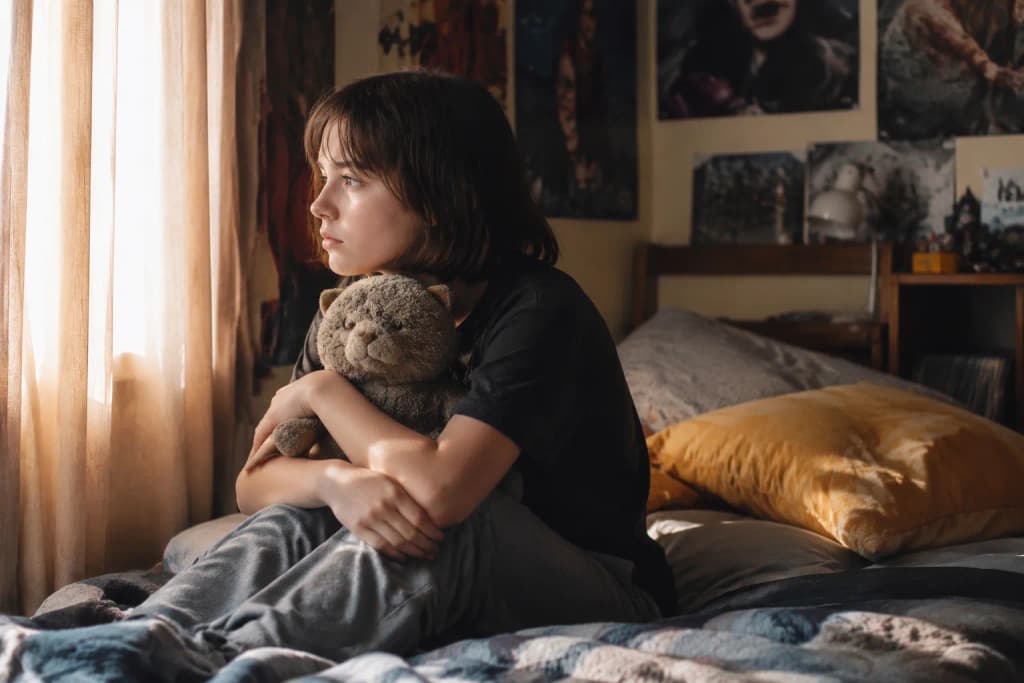
Why Bengal Cat Loss Hits Teenagers Differently
Not all pet losses create equal neurological impact. And this is where the Bengal cat loss conversation gets specific in ways that generic grief guides miss entirely.
Bengals aren't passive pets. They're interactive, vocal, responsive and—here's the key term—contingently social. They respond to their owner's behavior in real-time. They play fetch. They follow you room to room. They vocalize in response to speech.
From a neuroscience perspective, this contingent social behavior activates the same mirror neuron system and oxytocin pathways that fire during human-to-human bonding. Research on the human-animal bond from the National Institutes of Health confirms that interactive pets trigger social attachment circuits—not just affection circuits.
For a teenager whose social brain is in peak development, a Bengal isn't categorized neurologically as "a pet." It's categorized closer to "a friend." The brain doesn't distinguish based on species. It distinguishes based on interaction pattern.
So when that Bengal dies, the teen's brain responds with social grief—the same neurochemical cascade triggered by losing a close friend. Dopamine withdrawal. Oxytocin crash. Cortisol spike
And here's the cruel part: society doesn't validate social grief for animal.
"The brain doesn't grieve species. It grieves patterns of connection."
The Sound Gap Nobody Talks About
Personal Aside: Our team has worked with hundreds of families memorializing Bengals specifically, and there's one detail that comes up in almost every conversation—the sound. Bengal owners don't just miss their cat. They miss the constant audio landscape. The chirps, the trills, the 3 AM galloping across hardwood. One mother told us her son started sleeping with white noise machines not because of insomnia, but because the quiet of the house at night was physically unbearable. That stuck with us.
Bengals are among the most vocal domestic cat breeds. They create a sonic environment—a background texture of chirps, meows, purs, and movement sounds that becomes neurologically normalized. Your teen's brain has literally calibrated its baseline auditory environment to include those sounds.
When the cat dies, the brain registers the acoustic change as a threat signal. This isn't metaphorical. The reticular activating system—the brain's alertness filter—flags unexpected environmental changes. Sudden quiet where there was sound triggers low-grade vigilance. Your teen may not be able to articulate why they feel anxious at home. But their nervous system knows: something is missing from the soundscape.
This is why some teens start wearing headphones constantly after pet dies. It's not withdrawal. It's self-medication for an auditory environment that now feels wrong.
The Favorite Toy: Why Neuroscience Says It Matters More Than Talking
Here's where we get to the part most parents misunderstand.
Your teenager is clutching their Bengal's favorite toy—maybe a feather wand, a crinkle ball, a specific mouse. You might think this is sweet but ultimately something they'll outgrow. You might gently suggest putting it away when they're ready.
Don't.
That toy is doing critical neurological work.
Memory consolidation in the adolescent brain relies heavily on sensory cues. The hippocampus—your brain's memory-formation center—doesn't store memories like files in a folder. It stores them as networks of sensory associations. A memory of your Bengal isn't one thing. It's a web: the texture of fur, the sound of a chirp, the weight of a body on your lap, the visual of spotted rosettes, the smell of that specific toy.
When a teen holds that toy, they're activating the sensory nodes of their memory network. This prevents what neuroscientists call memory fragmentation—where a complex, emotionally rich memory breaks apart into disconnected pieces that become harder to access over time.
The toy isn't sentimentality. It's a memory anchor.
And here's the part that matters for parents: the fear of forgetting is one of the most intense and least-discussed aspects of teen pet grief.
The Fear Nobody Admits
Many pet owners—teens especially—experience a specific terror that they'll forget what their pet looked like. Sounded like. Felt like. This fear is neurologically grounded: adolescent brains are actively pruning neural connections. The teen knows on some level that their brain is changing rapidly. They can feel memories becoming less vivid. And they're terrified.
This fear of forgetting drives behaviors that look irrational from the outside:
- Refusing to wash a blanket that still smells like the cat
- Watching the same video clip dozens of times
- Getting angry when family members rearrange the cat's former space
- Hoarding objects associated with the pet
These aren't pathological. They're the brain's attempt to reinforce fading neural pathways before pruning eliminates them.
"Fear of forgetting isn't weakness. It's the brain fighting to keep what it loves."
What Actually Helps: A Neuroscience-Based Framework
Forget the generic advice. Here's what the science supports for helping a teenager grieve a pet, organized by what's actually happening in their brain.
Phase 1: The First 72 Hours (Acute Cortisol Response)
The stress hormone cortisol peaks within 24-72 hours of loss. In teens, this peak is higher and longer than in adults because the prefrontal cortex can't downregulate it efficiently.
What works:
- Don't force conversation. The language centers are literally suppressed during acute cortisol flooding. Asking "how are you feeling?" when Broca's area is offline creates frustration, not connection.
- Offer parallel presence. Sit in the same room. Watch something together. The co-regulation of another nervous system helps without requiring verbal processing.
- Protect sleep. Cortisol disrupts REM sleep, which is when emotional memories consolidate. Melatonin, reduced screen light, and consistent sleep times aren't luxury—they're grief infrastructure.
- Let them hold objects. Toys, blankets, collars. Sensory anchors reduce cortisol measurably by giving the amygdala something concrete to process instead of abstract loss.
Phase 2: Days 4-14 (Dopamine Withdrawal)
Here's what nobody tells you: losing an interactive pet like a Bengal triggers dopamine withdrawal. Every play session, every greeting at the door, every responsive meow was a micro-dose of dopamine. The brain adapted to that supply. Now it's gone.
Dopamine withdrawal in teens manifests as:
- Anhedonia (nothing feels fun or interesting)
- Irritability and restlessness
- Difficulty concentrating at school
- Seeking stimulation through screens, food, or risk-taking
What works:
- Don't pathologize the flatness. It's neurochemical, not characterological. It passes as the brain recalibrates.
- Introduce novel sensory experiences. Not as distraction—as dopamine pathway maintenance. New environments, new textures, new sounds. A walk in a garden they haven't visited. Cooking something unfamiliar.
- Create a memorial project. This is where tangible memorials become neurologically significant. The act of creating something—choosing photos, selecting details, making decisions about how to honor the pet—activates the dorsolateral prefrontal cortex, which is exactly the region that needs engagement during this phase.
| Memorial Type | Neurological Benefit | Best For | Engagement Level |
|---|---|---|---|
| Photo collage/album | Visual memory reinforcement | Teens who process visually | Medium —2-3 hours |
| Written letter to pet | Language-based emotional processing | Verbal/journaling teens | Low — 30 minutes |
| Custom figurine (pawsculpt.com) | Tactile + visual memory anchoring | Teens who need physical objects | Medium — choosing photos, reviewing details |
| Planting a garden memorial | Sensory + ongoing care ritual | Teens who need routine replacement | High — ongoing |
| Digital art/video tribute | Creative expression + dopamine from creation | Artistic/tech-oriented teens | High — several days |
Phase 3: Weeks 3-8 (Identity Reorganization)
This is the phase most parents miss entirely. And it's where neuroscience of pet grief gets genuinely fascinating.
For a teenager, identity is under active construction. Their sense of self is partially built on their relationships and roles. "I'm the person who takes care of the Bengal." "I'm the one she always comes to." "I'm a cat person."
When the cat dies, those identity anchors dissolve. The teen isn't just grieving a companion—they're experiencing a micro identity crisis. The neural networks that encoded "who I am in relation to this animal" are now firing into a void.
This is why some teens seem to change personality after a pet loss. They're not being dramatic. Their brain is literally reorganizing self-concept.
What works:
- Acknowledge the identity shift directly. "You were her person. That was real, and it mattered." This validates the neural pathway rather than letting it atrophy.
- Help them carry the identity forward. Voluntering at a shelter. Fostering. Creating something permanent that says "I was this cat's human." The identity doesn't have to die with the pet.
- Don't rush a new pet. The brain needs time to reorganize before it can form new attachment patterns without overlaying them on old ones. This isn't a rule—some teens benefit from a new animal quickly—but the default should be patience.
"We've noticed that teens who participate in creating their pet's memorial—choosing the pose, reviewing the details—process grief faster than those given a memorial passively. The act of choosing is the healing."
— The PawSculpt Team
The Emotion Nobody Wants to Name: Guilt About Relief
Here's where we need to get honest about something.
If your Bengal was sick—if there were months of medication, vet visits, middle-of-the-night crises, theagonizing decision about euthanasia timing—your teenager may be feeling something they'll never voluntarily tell you.
Relief.
And immediately after the relief: crushing guilt about feeling relieved.
This is one of grief's cruelest cognitive loops. The teen's brain registers the end of chronic stress (cortisol finally dropping after months of elevation). That neurochemical relief feels good. And then the prefrontal cortex—underdeveloped as it is—interprets that good feeling as evidence of being a bad person.
"If I really loved her, I wouldn't feel better that she's gone."
This is cognitive dissonance at its most painful. Two truths that feel mutually exclusive: I loved my cat. I feel relief that she's gone.
The neuroscience is clear: these aren't contradictory. Relief at the end of suffering is a compassion response, not a betrayal response. The same oxytocin system that bonded your teen to their Bengal is the system that registers "her pain has ended" as relief. It's love expressing itself as mercy.
But a15-year-old doesn't have the cognitive architecture to hold that complexity without help.
What to say (and when):
Don't premptively bring this up. Wait for signs: excessive guilt talk, self-punishment behaviors, statements like "I don't deserve another pet." Then:
"Relief and love aren't opposites. You feel relieved because you loved her enough to hate watching her suffer. That's not something to feel guilty about—it's proof of how much you cared."
Name it. Normalize it. Then let it sit. Don't over-explain. The teen brain needs the statement planted; it'll integrate it over time through repeated recall.
The Object Permanence Problem: Why Physical Memorials Work
Let's talk about why a photo on a phone isn't the same as a physical object in a teenager's hands. This isn't preference. It's neurology.
Object permanence—the understanding that things exist even when you can't see them—is fully developed by age 2. But emotional object permanence—the felt sense that a relationship continues to exist even when the other being is gone—requires prefrontal cortex involvement that teens are still building.
A photo on a phone is abstract. It exists behind glass, in a digital space, mixed with hundreds of other images. The brain categorizes it as information, not presence.
A physical object—a figurine, a paw print, a collar—occupies three-dimensional space. It has weight. Texture. It casts shadows. The brain categorizes it as real in the way cat was real. It activates the same spatial processing centers that encoded the living animal.
This is why the favorite toy matters. And it's why, as the toy inevitably wears out or loses its scent over time, having a permanent physical memorial becomes neurologically important for teens.
We've seen this pattern repeatedly at PawSculpt: families order a custom 3D-printed figurine months after the loss, often because the teen has started expressing anxiety about forgetting. The figurine—digitally sculpted to capture the specific rosette pattern, the exact ear position, the particular way their Bengal held its tail—gives the hippocampus a permanent sensory reference point. The full-color resin captures markings with a precision that photographs flatten. It's three-dimensional memory made tangible.
And here's the part that surprised us: teens who participate in the creation process—choosing which photo best captures their cat's personality, reviewing the digital sculpt, requesting adjustments—show measurably more engagement with their grief than those who receive a memorial passively. The agency matters. The choosing is part of the healing.
What Schools Get Wrong (And What You Can Do About It)
Most school counselors are trained in human bereavement. Pet loss doesn't appear in their frameworks. This means your grieving teenager is navigating an environment that:
- Doesn't recognize their loss as legitimate
- May penalize grief-related academic decline
- Offers no accommodation for the 3-6 week acute period
- Surrounds them with peers who may minimize animal grief
The neurological impact of social invalidation during grief is documented: it elevates cortisol, suppresses oxytocin, and activates the anterior cingulate cortex—the same region that processes physical pain. Your teen feeling judged for grieving a cat isn't just emotionally painful. It registers in the brain as actual pain.
Practical steps:
- Email teachers directly. A brief note: "Our family pet died this week. [Teen's name] may be less focused than usual. We appreciate your patience." You don't need to justify or explain.
- Validate at home what's invalidated at school. "I know some people don't get it. Your grief is real regardless of what anyone else thinks."
- Watch for isolation patterns. If your teen withdraws from friends for more than 2-3 weeks, the social pain of invalidation may be compounding the grief itself.
- Connect them with others who understand. Online communities of Bengal owners, pet loss support groups for teens—these provide the social validation the brain needs to process grief without shame.
The ASPCA's pet loss resources offer guidance specifically for families navigating this, including how to talk to children and teens about euthanasia decisions.
The Timeline Nobody Wants to Hear
Parents ask us constantly: "How long will this last?"
The honest answer, grounded in what we know about adolescent neurology:
Acute grief (intense daily impact): 2-8 weeks
Active grief (regular but not constant): 2-6 months
Integrated grief (present but manageable): ongoing, with decreasing intensity
But here's what makes teen grief different from adult grief: it resurfaces during developmental milestones. The brain revisits unprocessed grief each time it undergoes significant reorganization. This means your teen may seem "over it" for months, then suddenly break down:
- During the next major life transition (starting high school, getting a driver's license, leaving for college)
- On sensory anniversaries (the first cold night without the cat on their bed, the sound of a similar cat in a video)
- When their brain reaches new levels of prefrontal development and can suddenly understand the loss in ways it couldn't before
This isn't regression. It's integration at a deeper level. Each revisitation is the brain processing the same loss with more sophisticated cognitive tools.
| Milestone | Why Grief Resurfaces | What Helps |
|---|---|---|
| Starting new school | Identity reorganization triggers old identity losses | Acknowledge the connection openly |
| First anniversary of death | Temporal processing centers flag the date | Plan a small ritual—don't ignore it |
| Getting a new pet | Attachment system reactivation brings comparison | Let them feel conflicted without judgment |
| Leaving home for college | Separation activates all prior separation experiences | Bring the memorial object. It's not childish. |
| Reaching adulthood | Prefrontal maturity allows new understanding of loss | They may want to talk about it now for the first time |
Practical Protocol: The 5-Sense Memorial Exercise
Here's something concrete you can do with your teen (or suggest they do alone, depending on their preference). It's grounded in memory consolidation research and takes about 20 minutes.
The goal: Create a multi-sensory memory record before neural pruning weakens the traces.
- Sight: Choose 3 photos that capture different aspects of the cat. Not just "cute" photos—photos that show personality. The weird sleeping position. The mid-leap blur. The specific way they looked at your teen.
- Sound: Record or write down the specific sounds. Not "meowing" but "that short chirp she made when she saw a bird through the window" or "the specific rumble of her pur when she was on my chest." If videos exist with audio, bookmark them.
- Touch: Describe the texture in writing. "The soft spot behind her ears versus the coarser fur on her back." "How her paw pads felt—cool and slightly rough." "The weight of her when she'd drape across my arm."
- Smell: This fades fastest. If any object still carries scent, seal it in a ziplock bag. The olfactory bulb connects directly to the hippocampus—scent is the most powerful memory trigger we have.
- Ritual/Behavior: Document the daily patterns. "She'd wait by my door every morning. She'd tap my face at 6 AM. She'd steal my hair ties and hide them under the couch." These behavioral memories are stored in procedural memory and fade differently than visual ones.
This exercise isn't about wallowing. It's about giving the brain explicit encoding of what might otherwise be lost to implicit, fragmented storage. Teens who complete this exercise report less anxiety about forgetting—because they've externalized the memory into a form that doesn't depend on neural pathways alone.
When Grief Becomes Something Else: The Warning Signs
We're not clinicians. We want to be clear about that. But we've worked with enough grieving families to know the difference between normal teen grief and something that needs professional support.
Normal teen grief looks like:
- 2-4 weeks of significant mood change
- Gradual return to baseline functioning (even if sadness persists)
- Ability to experience moments of happiness or engagement
- Willingness to eventually discuss the pet (even if not immediately)
- Maintaining basic self-care (eating, hygiene, sleep—even if disrupted)
Seek professional support if you see:
- Complete social withdrawal lasting more than 4 weeks
- Statements about wanting to "be with" the pet (assess for suicidal ideation)
- Self-harm behaviors emerging or increasing
- Total inability to function at school after 3+ weeks
- Substance use as coping
- Extreme guilt that doesn't respond to reassurance over time
The line between grief and clinical depression can blur in adolescents. When in doubt, a single session with a therapist who understands pet bereavement isn't overeacting—it's responsible.
The Conversation About Getting Another Cat
This comes up. It always comes up. And the timing is almost always wrong—either too soon (from well-meaning family members) or artificially delayed (from guilt).
Here's what the attachment research says: there is no universal "right time." But there are neurological indicators of readiness:
- The teen can talk about the deceased pet without acute distress (sadness is fine; overwhelm is not)
- They express curiosity about other animals without immediately feeling guilty
- Their daily routines have stabilized
- They can articulate what they want in a new relationship versus what they're trying to replace
The anxiety about getting another pet is real and neurologically grounded. The brain has learned that attachment leads to loss. The amygdala has encoded: loving animal = eventual pain. This is classical conditioning, and it doesn't resolve through logic alone. It resolves through gradual exposure and new positive experiences.
Some teens benefit from intermediate steps: fostering, volunteering, spending time with friends' pets. These give the attachment system low-stakes practice before committing to a new bond.
And here's something important: getting a new cat doesn't erase the old one. The brain doesn't work that way. New attachments form in new neural networks. The old ones remain. A Bengal figurine on the shelf next to a new kitten sleeping on the bed isn't contradiction—it's the full, honest picture of a life that includes both love and loss.
Closing: The Sound Returns Differently
Remember that question at the beginning—when did your teenager last say their Bengal's name?
Here's what happens eventually, though the timeline varies: the name comes back. Not in the present tense anymore. Not "Mira is being crazy right now" but "Mira used to do this thing where..." The verb tense shifts. And that shift—from present to past—isn't loss. It's integration. The brain has successfully moved the relationship from "active daily expectation" to "permanent internal narrative."
Your teen will carry their Bengal forward. In the way they interact with animals for the rest of their life. In the specific gentleness they develop. In the neural pathways that were shaped by years of contingent social bonding with a creature who chose them back.
The favorite toy might end up in a drawer eventually. Or on a shelf next to a figurine that captures the exact tilt of a spotted head. Or in a box of things that matter too much to display casually.
But the sound—the specific chirp, the gallop, the pur—that lives in the auditory cortex permanently. Encoded. Safe from pruning. Because the brain protects what it heard most often during its most formative years.
Your job isn't to fix their grief. It's to make sure they don't grieve alone, and to give them tools—sensory, physical, tangible—that help their still-developing brain do what it's trying to do: hold on to love in a form it can carry forward.
Teen pet grief isn't a phase to get through. It's a developmental experience that shapes who they become. Honor it accordingly.
Frequently Asked Questions
How long does teen pet grief last?
Acute grief—where daily functioning is significantly impacted—typically runs 2-8 weeks. Active grief, where sadness is regular but not constant, lasts 2-6 months. But teen grief has a unique feature: it resurfaces during developmental milestones as the brain gains new capacity to understand the loss. This isn't regression. It's deeper integration.
Is it normal for my teenager to refuse to talk about their dead cat?
Completely normal, and neurologically expected. During acute cortisol flooding, the brain's language production centers (Broca's area) are suppressed. Your teen isn't choosing silence—their brain is literally prioritizing emotional processing over verbal expression. Speech typically returns as cortisol levels normalize over days to weeks.
Should I get my teenager a new cat after their Bengal died?
There's no universal timeline. Watch for readiness indicators: they can mention the deceased pet without acute distress, they show curiosity about other animals without guilt spiraling, and their daily routines have restabilized. Some teens benefit from intermediate steps like fostering or volunteering before committing to a new bond.
Why is my teen so attached to their dead cat's favorite toy?
That is functioning as a memory anchor. The hippocampus stores memories as sensory networks, and physical objects activate those networks, preventing memory fragmentation. During adolescent synaptic pruning, this is especially critical—the toy helps the brain retain complex emotional memories that might otherwise weaken.
How do I know if my teen's grief needs professional support?
Normal grief shows gradual improvement over weeks, even if sadness persists. Seek professional help if you observe: social withdrawal beyond 4 weeks, statements about wanting to "be with" the pet, self-harm, complete inability to function at school after 3 weeks, or substance use. A single session with a grief-informed therapist is never an overreaction.
Why does my teenager seem angry rather than sad about our cat dying?
The adolescent prefrontal cortex can't efficiently regulate limbic system surges. Grief gets routed through the amygdala, producing fight-or-flight responses rather than the reflective sadness adults experience. Anger, irritability, and even physical aggression are common grief expressions in teens—not behavioral problems.
Ready to Honor Your Teen's Bengal?
Some grief needs something to hold. When your teenager is ready—whether that's weeks or months from now—a memorial that captures the specific details of their Bengal can serve as the permanent sensory anchor their developing brain needs. The exact rosette pattern. The particular ear position. The pose that was uniquely theirs.
PawSculpt's full-color 3D printing technology reproduces those details directly in resin, creating a figurine that exists in three-dimensional space the way their cat once did. For teens navigating pet grief and neuroscience-backed healing, having something tangible to hold makes a measurable difference.
Visit pawsculpt.com to see how the process works and explore options for honoring your family's pet