
7 Tiny Details That Make a Rat Memorial Special (Hint: It's All in the Hands and Tail)
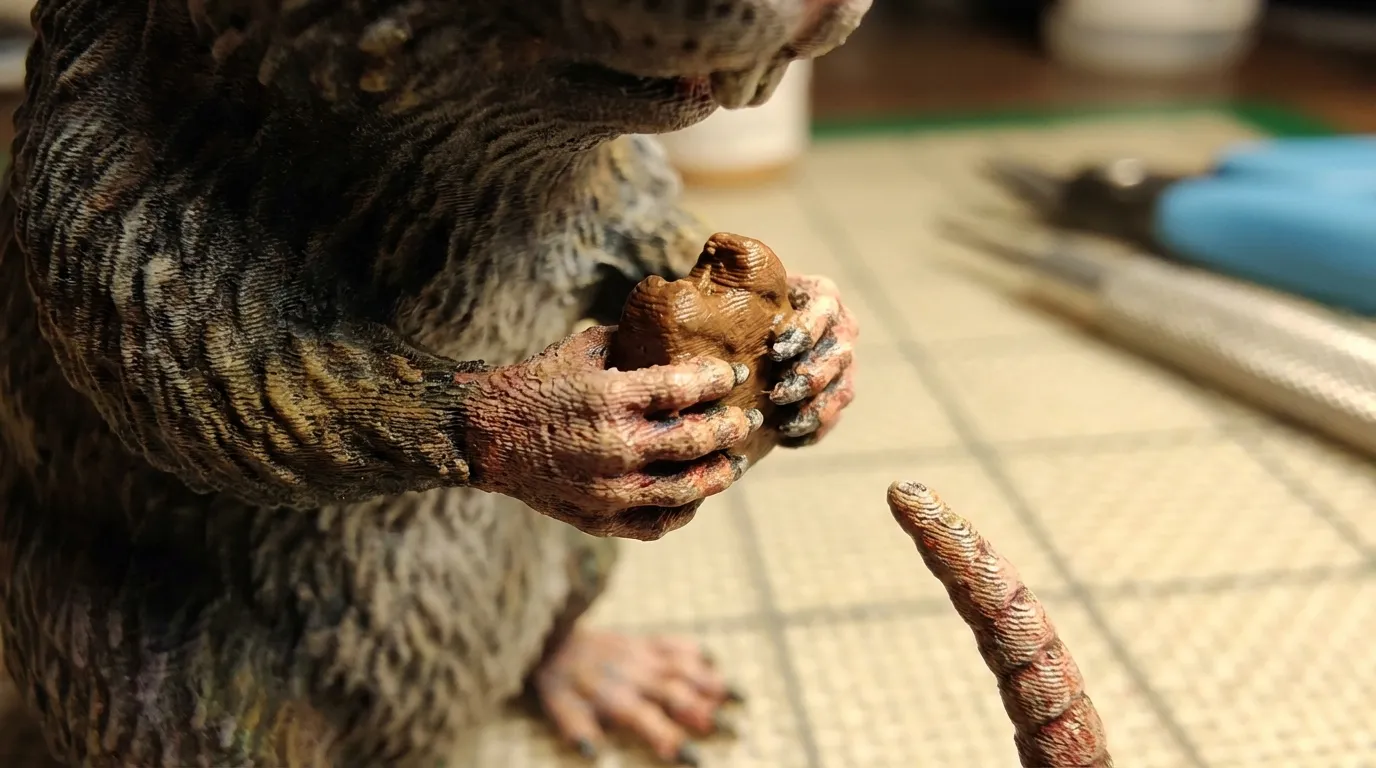
The faint, dusty scent of Carefresh bedding still lingers in the corner of the room, and if you listen closely enough in the evening, you almost expect to hear the frantic skritch-skritch-skritch of a water bottle ball bearing being aggressively hydrated against. But the cage is quiet, and that particular silence is heavier than any noise your mischief ever made.
Quick Takeaways
- Focus on anatomy — Rats have distinct hands and tail postures that generic memorials often get wrong.
- Incorporate physical items — A favorite hammock clip or chewed wooden block grounds the memorial in reality.
- Choose the right pose — The "begging" pose or the "shoulder ride" posture captures their personality better than a sleeping pose.
- Preserve the details — High-fidelity custom figurines can capture specific markings, like a hooded pattern or a dumbo ear set, that photos sometimes flatten.
Why Rat Grief Hits Different (And Why the Details Matter)
Let’s be real for a second: the world doesn't get it. When a dog dies, your coworkers send flowers. When a rat dies, you might get a confused "Oh, I'm sorry" or, worse, a joke about buying a snake. This isolation makes the grief sharper. You aren't just mourning a pet; you're mourning a highly intelligent, affectionate companion while simultaneously feeling defensive about your right to grieve them.
Because rats have such heartbreakingly short lifespans—usually just two to three years—rat owners live in a state of accelerated love. You go from bonding to geriatric care in the blink of an eye. This rapid cycle creates a unique intensity in the bond. You become their entire world, their jungle gym, and their comfort zone all at once.
"Grief isn't a problem to be solved. It's a love story that continues after the last chapter."
The reason generic "small animal" memorials often fail rat owners is that they treat rats like hamsters or mice. But you know the difference. You know the specific way your heart rat would groom your eyebrows or the exact texture of their tail. To truly honor them, you need to focus on the tiny, specific details that made them them.
1. The "Grabbies": Focusing on the Hands
If there is one universal truth about rats, it’s that their hands—often affectionately called "lil grabbies"—are remarkably human. They use them to hold treats, to push away your finger when they’re done with kisses, and to grasp the bars when begging for free roam time.
Most generic statues or art pieces mold the paws into vague lumps. A true memorial captures the dexterity.
- The Grip: Did your rat hold their yogie drop with one hand or two?
- The Digits: Rat fingers are long and articulate. A good tribute shows that separation.
The Action: Consider a memorial that involves their hands doing* something—holding a tiny dried flower, clutching a miniature version of their favorite snack, or reaching upward.
Pro Tip: If you are commissioning art or a 3D model, look for a reference photo where the hands are in focus. The emotional weight of a rat memorial often lives in those tiny fingers.
2. The Tail: It’s Not Just an Appendage
To the uninitiated, the tail is the "gross" part. To a rat parent, the tail is a thermostat, a balance beam, and a fifth limb. It’s soft, warm, and covered in that distinct, fine fuzz that feels like velvet against your neck.
When planning a memorial, don't hide the tail. Celebrate it.
- The Wrap: Did they wrap it around your wrist for stability?
- The Drag: Older males (bucks) often let their tails drag lazily behind them, while energetic females (does) might carry theirs higher.
- The Pattern: Many rats have tails that transition in color from dark to light.
Capturing the specific way your rat held their tail transforms a generic rodent shape into your baby.
3. The "Boggle" and The Ears
"Boggling" (when a rat's eyes vibrate in and out of the socket rapidly due to intense happiness/bruxing) is terrifying to strangers but pure joy to owners. While you can't easily capture motion in a static memorial, you can capture the expression that accompanies it.
This is usually a look of sleepy, ecstatic contentment. The ears go back (especially if they are Dumbos), the whiskers fan out, and the eyes soften.
| Feature | Standard Ears | Dumbo Ears |
|---|---|---|
| Placement | High on top of the head | Lower, on the sides of the head |
| Expression | Alert, perky, curious | Sweet, innocent, slightly wider look |
| Memorial Tip | Ensure they look upright and attentive | Ensure they look round and prominent |
If you choose a custom replica, getting the ear set right is non-negotiable. It changes the entire silhouette of the face.
4. Incorporating Their "Destruction"
Rats are architects of chaos. They chew. They shred. They rearrange. A pristine, perfect memorial might feel lovely, but does it feel authentic?
Some of the most touching memorials we’ve seen involve the physical evidence of their life:
- The Chewed Hammock Clip: Use the metal clip from their favorite (and inevitably destroyed) hammock as a keychain or pendant.
- The Gnawed House: Keep a piece of the wooden hide they spent months "renovating" with their teeth.
- The Stash: Rats hoard. Create a small shadow box that includes a few non-perishable items they would have stolen—a bottle cap, a shiny wrapper, or a specific type of hard pasta they loved to stash.
This acknowledges their agency. They weren't just decorations in a cage; they lived there, and they made their mark (usually with their teeth).
5. The Whisker Map
Rats navigate the world whiskers-first. Their whiskers are constantly moving, sweeping the air for information. In older rats, these whiskers often get curly, wild, or sparse. Rex varieties have crinkled, chaotic whiskers from birth.
A drawing or sculpture that depicts straight, perfect whiskers on a Rex rat will never look right. It’s a small texture detail, but it’s crucial. When we work on digital sculpting for our 3D prints, we pay close attention to the "whisker pads"—the muscular area on the snout where the whiskers originate. Even if the physical whiskers on a model are delicate, the shape of the snout tells you they are there.
"We've seen families heal by holding something tangible. Grief needs an anchor, especially for pets small enough to fit in a pocket."
— The PawSculpt Team
6. Color Patterns: Beyond Black and White
Rat genetics are wild. You have Hooded, Berkshire, Variegated, Roan, Siamese, Himalayan, Agouti, and Marten—just to name a few. And within those patterns, you have unique identifiers:
- The "head spot" on a hooded rat that is slightly off-center.
- The way a blaze marking narrows down the nose.
- The "molting" pattern on a Rex or double-rex that changes weeks to week.
Standard urns or generic statues usually come in "white," "grey," or "brown." But your rat wasn't just brown. They were Agouti with a silver ticking and a white belly.
This is where modern technology steps in. Unlike traditional hand-painting, which can sometimes look thick or obscure fine fur textures, full-color 3D printing injects the color directly into the resin material. This allows for gradients—like the subtle Ombré of a Siamese rat's nose smudge—that are incredibly difficult to achieve with a brush. It captures the pattern as part of the form.
7. The Scale of the Memorial
There is something jarring about a memorial that is significantly larger than the pet was in life. A life-sized German Shepherd statue is overwhelming. But a life-sized rat statue? That fits in the palm of your hand.
Keeping the memorial "true to scale" (1:1 ratio) can be incredibly grounding. It allows you to hold the memorial in the exact same way you held them. You can cup them in your hands. You can let them "perch" on your shoulder.
Why Scale Matters:
- Tactile Memory: Your hands remember the weight and size of your rat. A memorial that matches that size triggers positive sensory memories.
- Portability: Many rat owners move frequently (apartments, dorms). A small, sturdy memorial can travel with you, ensuring they never get left behind.
- Integration: A life-sized rat figurine can sit unobtrusively on a bookshelf, peeking out from behind a plant, looking just like they did during free-roam time.
Frequently Asked Questions
How do I preserve my rat's tail prints?
The best method is using inkless wipe kits (often sold for newborn babies). These are non-toxic and mess-free. You gently press the tail onto the reactive paper to get a detailed print of the scales. If your rat has already passed, many veterinarians are willing to do this for you before cremation.Is it normal to grieve a rat as much as a dog?
Yes, and don't let anyone tell you otherwise. The bond isn't measured in pounds; it's measured in interaction. Rats are "pocket dogs"—they learn their names, they cuddle, and they actively seek out your company. The grief is intense because the connection was intelligent and reciprocal.What can I do with my rat's ashes?
Because the volume of ashes is small, you have unique options. Many people choose small "keepsake" urns. Others mix a tiny amount into soil for a potted indoor plant (like a spider plant or herbs). Memorial jewelry is also popular, allowing you to keep them close to your heart physically.How do I help my surviving rats grieve?
This is the hardest part. Rats are social and they do mourn. If possible, allow the cagemates to see and sniff the body of the passed rat; this helps them understand why their friend is gone. Monitor the survivors closely for weight loss or lethargy, and give them extra free-roam time and cuddles to combat the loneliness.Ready to Celebrate Your Pet?
Every pet has a story worth preserving. Whether you're honoring a beloved companion who's crossed the rainbow bridge or celebrating your furry friend's unique personality, a custom PawSculpt figurine captures those details that make your pet one-of-a-kind.
Free instant AI preview • 3D artist preview within 7 days • 5 free revisions