
The Silent Alarm: Waking Up Without a Hungry Cat at 5 AM
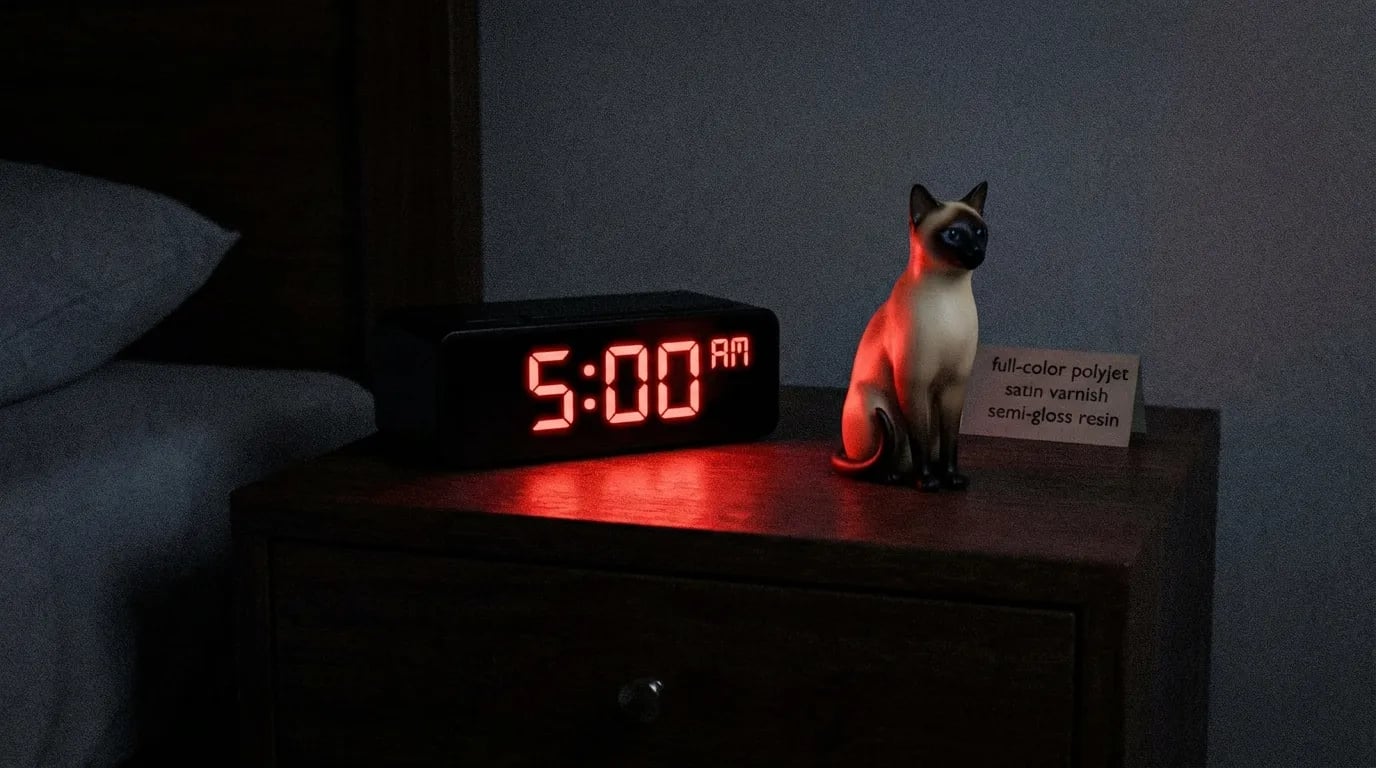
My hand drifted off the mattress edge, fingers instinctively curling to scratch behind ears that were no longer there. The digital clock read 5:03 AM—the exact time my Siamese usually demanded breakfast—but the weight on my chest was missing.
Quick Takeaways
- Phantom sensory experiences — feeling your cat jump on the bed is a normal neurological response to habit loops.
- The biology of grief — your body’s circadian rhythm takes weeks to unlearn the "cat loss grief" of a 5 AM wake-up call.
- Ritual replacement — filling the early morning void with a new, gentle habit reduces anxiety and grounds you.
- Tangible grounding — keeping a custom memorial figurine on your nightstand can provide a physical focal point for your grief.
The Neurology of the Missing Meow
It’s not just in your head. It’s in your basal ganglia.
When we talk about cat loss grief, we usually discuss the emotional cavern left behind. We talk about sadness, tears, and the emptiness of the home. But we rarely discuss the physiological violence of a broken routine.
If you owned a cat—especially a vocal breed like a Siamese or a Bengal—you didn't just have a pet; you had a living, breathing alarm clock. For years, your brain has been wired to expect a specific sequence of sensory inputs at dawn: the thud of paws hitting the duvet, the vibration of a purr against your ribs, the escalating volume of a demand for food.
Your brain is a prediction engine. It anticipates the next moment based on the last thousand moments. When you wake up at 5 AM and the air is still, your brain suffers a "prediction error." It’s jarring. It triggers a spike in cortisol (the stress hormone) because the world isn't behaving as your biology expects it to.
You aren't just sad. You are neurologically disoriented.
The "Phantom Limb" of Pet Ownership
We’ve worked with thousands of pet parents at PawSculpt, and one of the most common things we hear is, "I swear I still feel him jump on the bed."This isn't a ghost. It's your nervous system. Your legs have learned to sleep in a contorted position to make room for a sleeping cat. Your ears are tuned to the specific frequency of a hungry meow. When the stimulus is removed, the nerves can misfire, creating a phantom sensation.
"Grief isn't a problem to be solved. It's a love story that continues after the last chapter."
Recognize that this physical confusion is a valid part of your grief. You are physically withdrawing from the presence of another living being.
The Kitchen Silence: Breaking the Feeding Ritual
The bedroom is hard, but the kitchen is often harder.
The morning routine was likely a dance. You, stumbling half-awake. The cat, weaving between your ankles (a tripping hazard you’d give anything to have back). The specific pop of the can tab. The clatter of kibble.
When that ritual vanishes, the silence in the kitchen can be deafening.
The Muscle Memory of Caretaking
You might find yourself walking to the pantry before you remember. You might instinctively step over a spot on the rug where the food bowl used to sit.This is where the daily routine becomes a minefield. Every small action was a deposit of love. You weren't just feeding an animal; you were nurturing a bond. When that task is removed, you’re left with "caregiver energy" that has nowhere to go. It builds up as anxiety.
Counterintuitive Insight: Don't rush to remove the food bowl.
Many decluttering experts or well-meaning friends will tell you to pack everything away immediately to "move on." We disagree. If seeing the empty spot on the floor triggers a panic response, leave the bowl there for a week. Or two.
Let your brain adjust to the visual of an empty bowl before you adjust to the visual of no bowl. It allows for a gradual deceleration of that caretaking instinct rather than a slam on the brakes.
The Complicated Relief (And the Guilt That Follows)
We need to talk about the feeling nobody wants to admit.
You slept until 7:00 AM today.
For the first time in ten years, you weren't woken up by a paw to the face or a yowl for breakfast. You slept deeply. You woke up rested.
And then, you felt like a monster.
Normalizing the Relief
If your cat was elderly, sick, or required complex medication schedules, your life was likely dictated by their needs. Maybe you couldn't travel. Maybe you had to wake up every four hours to check insulin levels.When that responsibility ends, there is a biological wave of relief. Your body is finally resting. This does not mean you didn't love them.
It means you are human.
The guilt that follows—the thought, “How can I enjoy this sleep when they are gone?”—is a cruel trick of grief. But here is the truth: You sacrificed your sleep, your comfort, and your schedule for years to ensure their happiness. That was the gift you gave them.
Now, they have given you a final gift back: Rest.
Accepting that rest doesn't betray their memory. It honors the energy you spent loving them.
| Emotion | What It Feels Like | What It Actually Means |
|---|---|---|
| Relief | A lightness in the chest; sleeping in. | Your body is recovering from caregiver stress. |
| Guilt | A pit in the stomach; feeling selfish. | You loved them enough to worry about their absence. |
| Anger | Frustration at the silence; snapping at others. | You are adjusting to a loss of control over your routine. |
| Phantom Pain | Hearing meows; feeling weight on the bed. | Your brain's prediction patterns haven't updated yet. |
Reclaiming the 5 AM Hour
So, what do you do when your internal alarm clock wakes you up at 5 AM, and there is no cat to feed?
Lying in bed staring at the ceiling is a recipe for ruminating thoughts. The silence becomes oppressive. You need to rewrite the neural pathway. You can't just "stop" the routine; you have to replace it.
1. The "Coffee and Candle" Ritual
Instead of trying to force yourself back to sleep (which rarely works when grief is fresh), get up. But change the location.Don't go to the spot where you fed them. Go to a different chair. Light a candle. Make a cup of coffee or tea. Dedicate 15 minutes to simply sitting with your memory of them, but in a context that is peaceful, not frantic.
2. The Morning Walk
If the house feels too empty, leave it. Step outside for ten minutes. The fresh air and change of scenery disrupt the brain's expectation of the "feeding routine." It signals to your body that this is a new chapter of the day, distinct from the old routine.3. Tangible Anchors
This is where having a physical object helps. Many of our clients keep their custom pet figurine on their nightstand.When you wake up and that wave of panic hits—where are they?—you can look over and see their likeness. You can reach out and touch the cool, textured resin. It grounds you in the present moment. It acknowledges: Yes, they are gone, but they are remembered.
"We've seen families heal by holding something tangible. Grief needs an anchor."
— The PawSculpt Team
Why "Moving On" is the Wrong Goal
Society tells us to move on. To get over it. "It was just a cat."
But if you are reading this, you know that’s a lie.
You aren't trying to "move on" from your cat. You are trying to move forward with them. You are trying to figure out how to carry their memory without being crushed by the weight of their absence.
The "New Normal" isn't a Betrayal
Creating a new routine doesn't mean you are erasing the old one. It means you are building a structure that allows you to survive the loss.Eventually, the 5 AM wake-ups will stop. Your body will learn to sleep until 6:30 or 7:00. You won't reach for the food bowl automatically.
When that happens, you might feel a fresh pang of sadness—the fear that you are forgetting them.
You aren't.
You are simply healing. Your love for them is not stored in your sleep deprivation. It is stored in your heart.
Memorializing the Routine
If the loss of the routine is the hardest part, consider memorializing the routine itself.
We have seen beautiful tributes where owners place their PawSculpt figurine next to a small planter of cat grass in the sunny window where their cat used to nap. It acknowledges the space they took up in the physical world.
Unlike photographs, which are flat and static, a 3D printed figurine has presence. Because we use full-color 3D printing technology, the colors are built directly into the resin, capturing the specific gradient of your Siamese's mask or the unique patches of your Calico. It’s not painted on; it’s part of the material, just as their memory is part of you.
"The silence isn't empty. It's full of answers."
Practical Steps for the First Month
| Timeframe | What to Expect | Actionable Advice |
|---|---|---|
| Week 1 | Intense disruption. Waking up at feeding time. Phantom sounds. | Keep a journal by the bed. Write down the memory immediately when you wake up. |
| Week 2-3 | Exhaustion sets in. The adrenaline fades, leaving fatigue. | Allow yourself naps. Your brain is doing heavy processing work. |
| Month 1 | New habits start to form. Occasional "ambush" grief. | Create a deliberate memorial spot. Use a figurine or photo as a focal point. |
| Month 3+ | The "new normal" stabilizes. | Consider if you are ready to volunteer or foster, using that "caregiver energy." |
When the Silence Becomes Peace
One day, you will wake up at 5 AM. The sun will be coming through the blinds. You will reach for the spot on the bed, and it will be empty.
But instead of a sharp stab of pain, you might smile.
You might remember the time they knocked a glass of water onto your face. You might remember the specific sound of their purr.
The silence won't feel like an absence anymore. It will feel like a pause. A quiet moment to say "good morning" to the memory of a friend who changed your life, before you start your day.
The alarm is silent now. But the love is still loud.
Frequently Asked Questions
Why do I keep hearing my deceased cat meow?
This is known as a phantom auditory perception. Your brain has strong neural pathways dedicated to monitoring for your pet's sounds. When the environment is silent, your brain "turns up the volume" on its internal sensors, sometimes misinterpreting background noise as a meow. It is a sign of how deeply connected you were, not that you are losing your mind.How long does the grief of losing a cat last?
Grief has no expiration date. However, the acute phase—where your daily routine feels shattered—usually begins to soften after 3 to 6 months. According to the Association for Pet Loss and Bereavement, allowing yourself to mourn without a deadline actually helps the process move more naturally.Is it normal to feel relief after my sick cat dies?
Yes. If you were managing a chronic illness, your body was in a state of high alert. When that ends, the physical relaxation can feel like relief. This is often followed by guilt, but try to be gentle with yourself. You are recovering from a marathon of caretaking.Should I get another cat immediately to fix my routine?
It is generally better to wait until you are running toward a new love, rather than running away from the pain of the old one. If you get a new cat too soon, you may find yourself disappointed that they don't wake you up at 5 AM the same way, or that they don't like the same food. Give yourself time to reset.Ready to Celebrate Your Pet?
Every pet has a story worth preserving. Whether you're honoring a beloved companion who's crossed the rainbow bridge or celebrating your furry friend's unique personality, a custom PawSculpt figurine captures those details that make your pet one-of-a-kind.
Free instant AI preview • 3D artist preview within 7 days • 5 free revisions