
5 Australian Shepherd Routine Myths, Busted Just in Time for National Dog Day
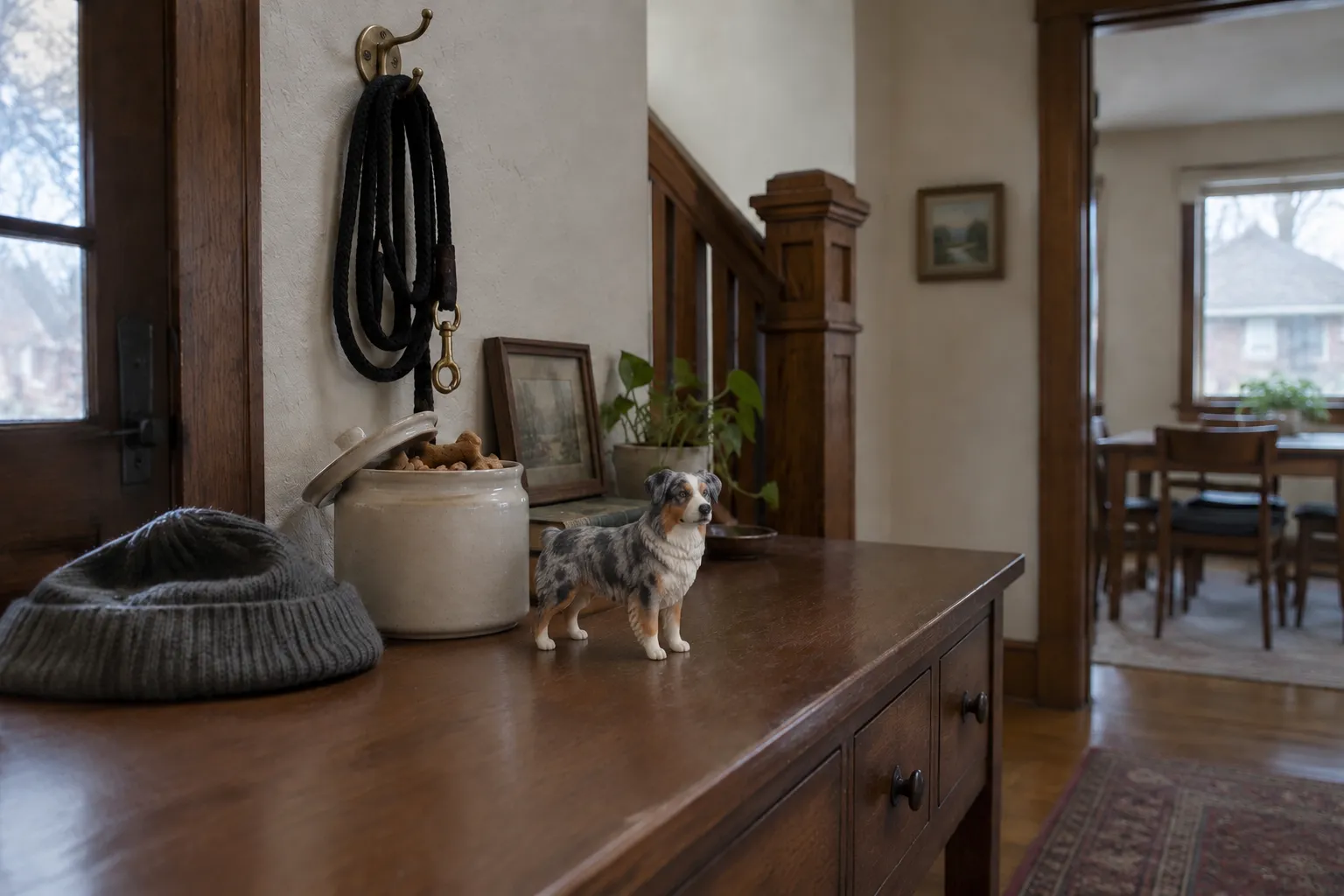
You're standing on the beach at dawn, watching your Australian Shepherd sprint—full tilt, ears back, joy radiating from every muscle—when a stranger jogs past and calls out, "Must be nice to have two hours every morning!" You smile and nod, but inside you're thinking: I wish I had two hours. We have twenty minutes before I need to shower and get to work.
Australian Shepherds thrive on purposeful engagement—not endless hours of mindless exercise—and the most damaging myths about their daily routine confuse duration with quality, mistaking exhaustion for fulfillment and treating every Aussie as interchangeable when each dog's needs shift with age, temperament, and the sacred rhythm you build together.
Quick Takeaways
- Mental work matters more than miles: A 15-minute scent game can satisfy an Aussie as deeply as a 45-minute walk, because the breed was designed to problem-solve, not just run.
- "Tired" and "fulfilled" are not the same thing: Exhausting your dog into submission can increase anxiety and reactivity instead of building calm.
- Puppies need less intense exercise than adults: Joint damage and behavioral burnout are real risks when young Aussies are over-exercised before skeletal maturity.
- Routines are spiritual contracts, not rigid schedules: The consistency your dog craves lives in predictable energy and presence, not minute-by-minute sameness.
- Life-stage changes demand different rituals: What worked at two years old may harm your dog at ten, and adapting the routine is an act of respect for the soul you're caring for.
Myth One: "Australian Shepherds Need Two-Plus Hours of Exercise Every Day"
The number floats around online like gospel: two hours minimum, sometimes three, or your Aussie will "destroy your house." It sounds scientific. It feels like a clear benchmark. And it's almost entirely wrong.
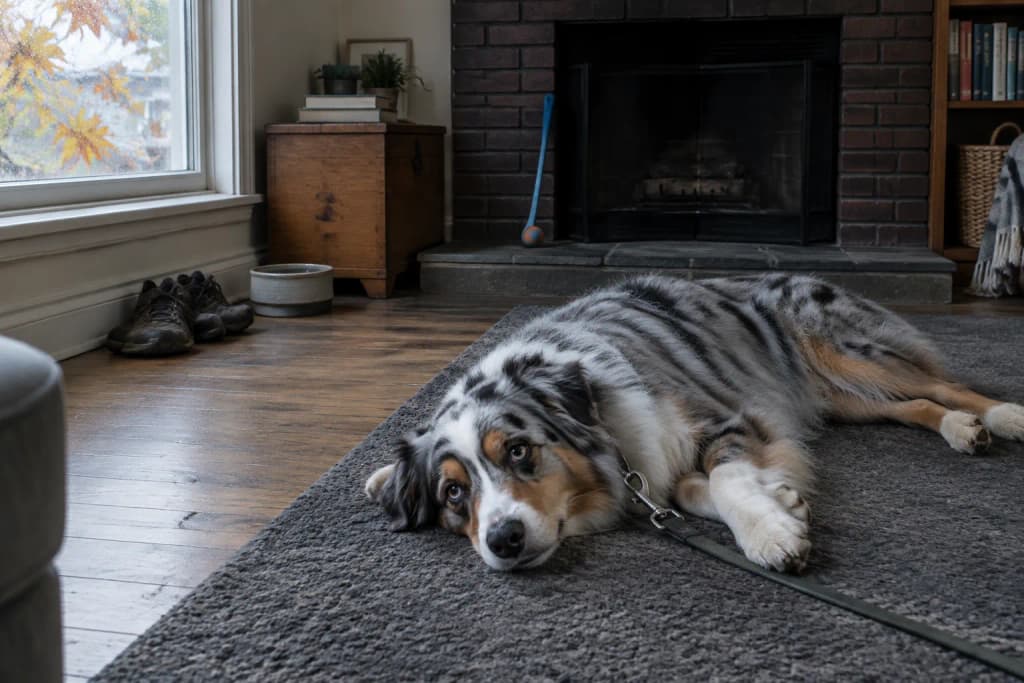
Australian Shepherds were bred to work—yes—but "work" meant reading a handler's subtle cues, making split-second decisions about livestock movement, and holding intense focus for short bursts interspersed with watchful rest. Herding is not a marathon. It's a series of sprints wrapped around problem-solving.
What your dog needs is purposeful engagement. Twenty minutes of training new tricks, or a 15-minute session hiding treats in a snuffle mat, or a structured walk where your Aussie practices impulse control near distractions—these activities light up the same neural pathways that herding activated. Duration becomes irrelevant when the work is meaningful.
Compare two australian shepherd daily routine patterns: Dog A gets a two-hour leash walk on the same route every morning, no variation, no decisions to make, just forward motion. Dog B gets a 30-minute walk with three different "stations"—five minutes of sit/stay work at the park entrance, ten minutes of loose-leash practice past the dog park, and fifteen minutes of long-line sniffing in a new area of the trail. Dog B will come home calmer, because the brain was invited to participate.
You'll know you've hit the sweet spot when your Aussie settles without pacing, whining, or pestering you for the next three hours. That's fulfillment. That's the energy of a soul who's been seen and challenged in proportion to its gifts.
Personal Aside: I used to think "a tired dog is a good dog" was universal wisdom. Then I watched a friend's Aussie—run ragged on a three-mile morning jog, a two-mile afternoon walk, and an evening fetch session—develop barrier frustration so severe she'd scream at the window whenever a dog passed. The vet behaviorist said it plainly: "You're not exercising her. You're stressing her." They cut the exercise in half, added nosework, and within two weeks the screaming stopped. Sometimes rest is the missing ingredient.
Myth Two: "If Your Aussie Is Destructive, You're Not Exercising Them Enough"
This myth is especially cruel because it puts the blame squarely on you, the handler, and it ignores the dozen other reasons a dog might chew, dig, or pace.
Destruction can signal boredom, yes. But it can also signal separation anxiety, fear, inadequate mental stimulation, pain, dietary imbalance, or the frantic energy of a dog who's been over-exercised and never learned to self-soothe. The American Animal Hospital Association recommends routine veterinary checkups to support preventive care and encourages owners to discuss behavior changes with a veterinarian, because behavior is often the first signal that something deeper needs attention (AAHA Preventive Healthcare).
If your dog is destructive only when you leave, that's not an exercise gap—that's an attachment or confidence issue. If your dog is destructive after a long run, that might be overstimulation or frustration from unmet problem-solving needs. If your senior Aussie suddenly starts chewing furniture, pain or cognitive decline could be at play.
The scent of your dog—especially an anxious Aussie—has a particular sharpness when stress hormones are high. You might notice it on their paws, their breath, the blanket they've been circling on. That smell is information. It's your dog's body telling you something the mouth can't say.
Before you add another hour to the exercise schedule, ask:
- Is my dog getting mental enrichment that requires decision-making?
- Have we practiced calm behaviors, or only high-arousal activities?
- Has anything changed in our household—schedule, scent, routine—that might feel destabilizing?
- When was the last vet visit where I mentioned this behavior?
Destruction is a symptom. Exercise might be the answer, but it's not the only answer, and doubling down without investigating can make things worse.
Myth Three: "Puppies and Adults Need the Same Intensity of Exercise"
This one does real harm.
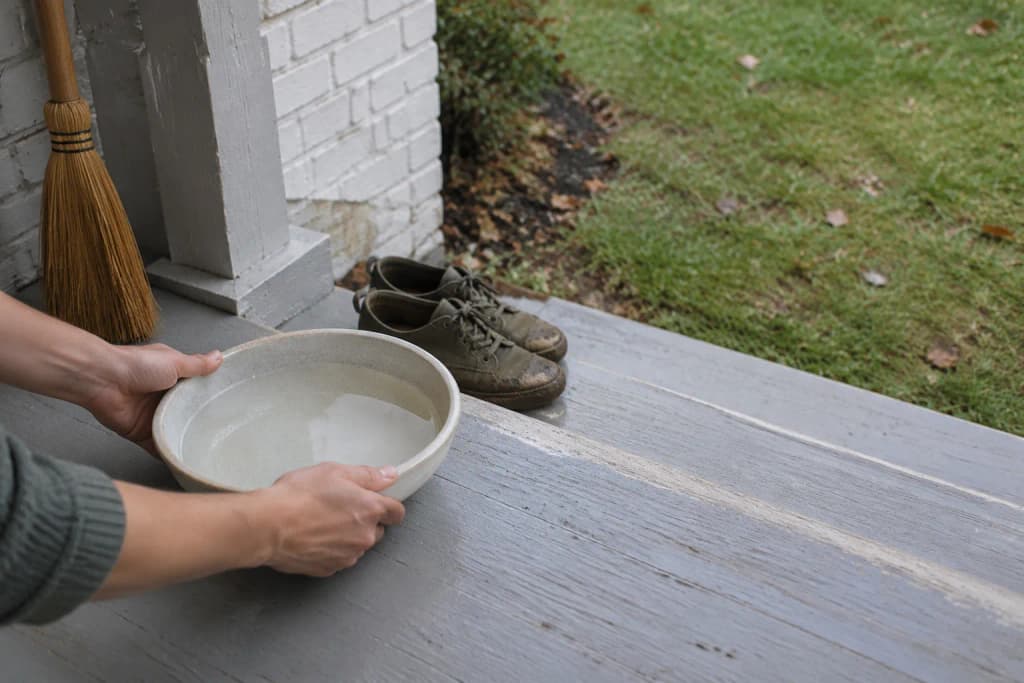
Aussie puppies are bundles of manic energy—no question. They zoom, they nip, they ricochet off furniture. The instinct is to "tire them out" with long hikes, intense fetch, or repetitive jumping. And in doing so, you risk damaging growing joints and creating a dog who never learns to settle.
The ASPCA notes that puppies eight to twelve weeks old need four meals a day, underscoring how rapidly their bodies are developing and how carefully their needs must be calibrated to their age (ASPCA General Dog Care). A puppy's skeletal system isn't fully mature until around 14-18 months, depending on the individual. High-impact exercise—repetitive ball chasing, long runs on pavement, agility jumps—can damage growth plates and set the stage for arthritis later.
What puppies need instead:
- Short, frequent enrichment sessions: Five minutes of training, three times a day, is more valuable than one exhausting hour.
- Controlled exploration: Let them sniff, investigate textures, meet new people calmly. Socialization is mental work.
- Nap enforcement: Puppies need 18-20 hours of sleep. If your puppy is a whirlwind all day, they're likely overtired and unable to self-regulate.
- Gentle, low-impact movement: Short leash walks, slow-paced fetch in soft grass, swimming (once vaccinated and comfortable).
As your Aussie matures into adulthood, exercise intensity can increase—but even then, the focus should be on variety and purpose, not sheer exhaustion. A two-year-old Aussie can handle more physical demand, but still benefits more from 30 minutes of varied, challenging work than two hours of monotonous running.
And when your dog enters the senior years—usually around seven or eight—intensity must drop again. Stiff joints, reduced stamina, and cognitive changes mean the australian shepherd daily routine that honored them at three might hurt them at ten. The sacred contract you made is to adapt as they age, not to hold them to a static standard.
Myth Four: "Routines Must Be Identical Every Single Day"
Aussies are famous for thriving on routine. That's true. But "routine" doesn't mean robotic sameness—it means predictable energy and presence.
Your dog doesn't need the walk to happen at exactly 7:03 a.m. every morning. What your dog needs is the felt sense that you will show up, that the day has a shape, that certain rituals signal safety. The scent of your morning coffee might mean "we're about to move." The jingle of the leash might mean "focus is required now." The way you settle onto the couch at night might mean "the day is done, you can rest."
Rigid schedules can actually increase anxiety, because life is unpredictable. If your Aussie has been conditioned to expect a walk at 7:00 a.m. every day without exception, what happens when you're sick, or traveling, or stuck in a meeting? The dog experiences that disruption as a broken promise, and stress builds.
Instead, build a routine around sequence and energy:
- Morning: a brief potty break, then a calm, low-arousal activity (sniff walk or nosework).
- Midday: a short training session or enrichment toy.
- Evening: a higher-energy outlet (fetch, agility, play) followed by a wind-down routine.
- Night: a predictable bedtime ritual—maybe a chew, a specific blanket, the scent of lavender on your hands as you scratch behind their ears.
The sequence is what matters. The presence is what matters. The exact minute on the clock is negotiable.
This is the spiritual contract: you promise to meet your dog's needs in rhythm, not on a stopwatch. And when you do, your Aussie learns to trust the shape of the day rather than policing every deviation.
Myth Five: "A Good Routine Looks the Same for Every Australian Shepherd"
This is the myth that denies your dog's individuality.
Yes, Aussies share breed traits—intelligence, drive, sensitivity, a need for purposeful work. But the dog in front of you is not a breed standard. They're a soul with a history, a temperament, a set of preferences that might diverge wildly from the dog in the Instagram video or the one your neighbor has.
Some Aussies are ball-obsessed and would fetch until they collapse. Others find repetitive fetch boring and would rather solve a puzzle. Some are sound-sensitive and do best with quiet morning routines. Others are social and come alive at the dog park. Some remain high-energy well into their senior years; others mellow dramatically at five.
The World Small Animal Veterinary Association recommends a nutrition assessment for every pet at every veterinary visit and emphasizes that diet and feeding needs vary by life stage, body condition, and health risk factors (WSAVA Global Nutrition Guidelines). The same principle applies to exercise and enrichment: what works must be individually tailored, and it should evolve as your dog's body and mind change.
Building a routine that honors your specific dog means:
- Observing when they're most alert and engaged. Some Aussies are morning athletes. Others are night owls who'd rather sleep until ten and then work in the evening.
- Noting what activities produce calm afterward. Does your dog settle better after a sniffy walk or after fetch? After training or after free play? That feedback is sacred data.
- Adjusting for season, weather, and your own capacity. A routine that works in October might be unsustainable in July. A routine that worked when you were single might need reshaping when you have a newborn. The dog adapts with you, not in spite of you.
- Recognizing when something stops working. If your once-reliable routine suddenly produces restlessness, reactivity, or withdrawal, something has shifted. Investigate with curiosity, not guilt.
This is the essence of the spiritual contract: you are not managing a machine. You are in relationship with a being whose needs are both universal (to the breed) and utterly singular (to the soul).
Holding Space for the Rituals That Matter
The scent of rain on the porch where you used to sit together—your Aussie pressed against your leg, ears swiveling toward every sound, nose lifting to read the air—becomes a ritual not because it's on the schedule, but because it's where you were present together.
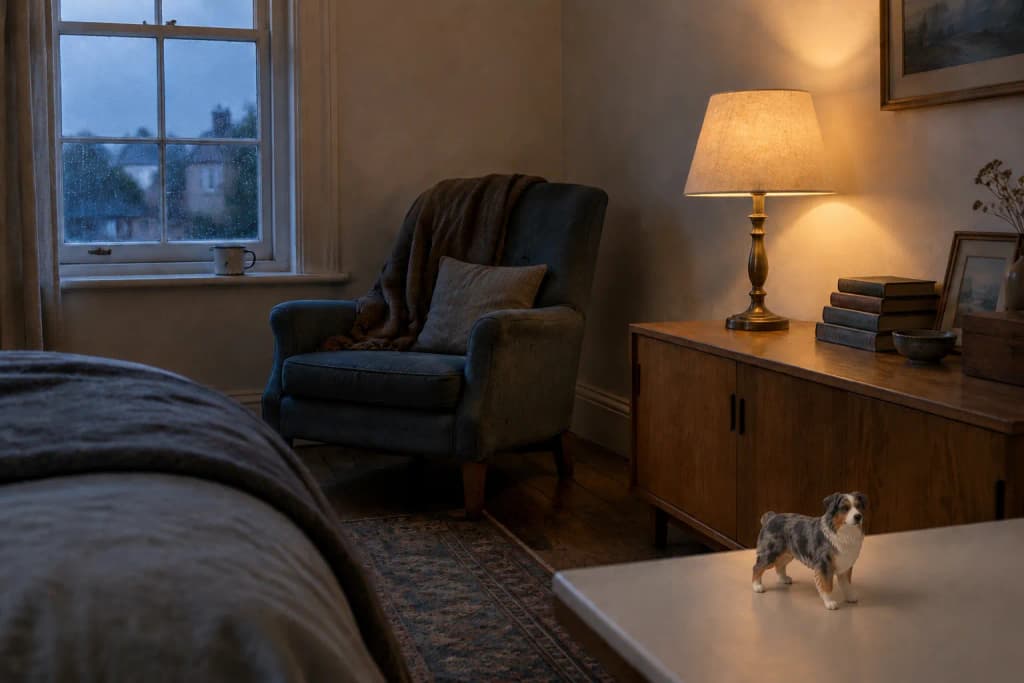
The australian shepherd daily routine myths we've dismantled here all share a common flaw: they treat the dog as a problem to be solved through mechanical input/output. Exercise in, calm out. Stimulation in, obedience out. Hours in, destruction prevented.
But your Aussie is not a formula. The relationship you're building is not a transaction. It's a covenant of presence, adaptation, and mutual respect. The routines that matter are the ones that create space for both of you to show up fully—challenged but not depleted, engaged but not frantic, together in rhythm rather than grinding against each other.
When you let go of the myths—the arbitrary hours, the one-size-fits-all intensity, the rigid sameness—you make room for something more true: a daily practice shaped by observation, love, and the willingness to evolve as your dog does.
Frequently Asked Questions
How much daily exercise does an Australian Shepherd actually need?
Most Aussies thrive on 30-60 minutes of purposeful, mentally engaging activity—scent work, training, varied walks—rather than hours of repetitive running. Quality and challenge matter more than duration.
Can I over-exercise my Australian Shepherd?
Absolutely. Over-exercising can increase anxiety, damage growing joints in puppies, and prevent dogs from learning to settle. A frantic, exhausted dog is not the same as a fulfilled one.
What counts as mental stimulation for an Aussie?
Nosework, puzzle feeders, trick training, impulse-control games (like "wait" at doorways), and varied walking routes where your dog makes decisions all provide meaningful mental enrichment.
Should my senior Australian Shepherd's routine change?
Yes. Senior Aussies (typically seven and older) need lower-impact activities, more frequent rest, and routines adapted to joint health, reduced stamina, and potential cognitive changes. Honor the aging body.
What if my Aussie is still destructive after getting plenty of exercise?
Destruction can signal separation anxiety, fear, pain, dietary issues, or overstimulation—not just under-exercise. Consult your veterinarian and assess whether your dog is getting true mental enrichment and calm-behavior practice.
Do Australian Shepherd puppies need as much exercise as adults?
No. Puppies need less intense exercise to protect developing joints. Focus on short enrichment sessions, gentle exploration, socialization, and enforced naps rather than long runs or repetitive high-impact play.
Honoring the Soul You Walk Beside
The rituals you build with your Australian Shepherd—whether it's the morning sniff walk where you let them choose the route, the evening training session where they learn to read your smallest gesture, or the quiet moment on the porch where you both watch the world settle—are not checklists. They are offerings.
You are caring for a soul bred to work with you, not for you. A soul who reads your energy, mirrors your mood, and thrives when the relationship is built on trust, clarity, and presence. The myths we've busted here all tried to reduce that relationship to mechanics: hours, intensity, sameness. But you know better now.
Your dog doesn't need you to be perfect. They need you to be observant, adaptive, and willing to meet them where they are—at eight weeks, at two years, at ten years, at every season in between.
If you're looking for a way to honor the sacred presence your Aussie brings to your daily life, consider a custom figurine that captures their unique spirit—the head tilt, the focused gaze, the particular way they hold themselves when they're truly with you. At PawSculpt, an artist digitally sculpts a portrait from your reference photos, you confirm the preview before printing, and the figurine is printed in full color using equipment capable of more than 10 million colors (Mimaki 3DUJ-553). Sizes range from 2.5 to 6 inches, with pricing starting at $429 USD for a 2.5-inch single figurine. It's not a replacement for the living relationship—nothing is—but it can be a physical anchor for the gratitude you feel when you look at the dog resting at your feet, trusting you to shape the rhythms of the day with care.
The myths are behind you now. The real work—the sacred, daily work of showing up for the soul in your care—is ahead. And you're ready for it.