
4 Science-Backed Grooming Basics Every New Golden Retriever Owner Should Master

Your fingers snag halfway down her flank on the walk back from the trail, catching on a knot of damp undercoat that wasn't there this morning. That small tangle is where golden retriever grooming actually begins. Not at the bathtub. In the feel of the coat under your hand.
Mastering golden retriever grooming comes down to four science-backed basics: brushing the double coat two to three times a week with the right tools, cleaning the floppy ears to stop moisture-trapped infections, bathing only every four to six weeks to protect natural skin oils, and trimming nails every three to four weeks. Never shave a Golden—it wrecks the coat's built-in insulation.
Quick Takeaways
- Brushing beats bathing — a slicker brush and undercoat rake, two to three times weekly, prevent painful mats.
- Check the ears, not just the coat — floppy Golden ears trap moisture and are prone to infection.
- Grooming is early health screening — your hands find lumps, hot spots, and ticks before your eyes do.
- Celebrate the coat you're caring for with a keepsake like these custom pet figurines that capture your dog's real texture and expression.
Grooming Is Really Health Monitoring in Disguise
Here's the thing most new owner guides skip: the single most valuable part of grooming a Golden isn't the finished, fluffy result. It's what your hands learn on the way there.
We've talked with hundreds of pet families who came to us for keepsakes, and the ones who groom regularly tell the same story. They found the thing early. A pea-sized lump behind the elbow. A gritty patch of skin that turned out to be the start of a hot spot. A tick tucked into the warm fold where the leg meets the body.
You don't find those with your eyes. You find them with your fingertips, running slow lines through fur, feeling for anything that interrupts the smooth pull of the brush.
That's the reframe. Every grooming session is a low-key physical exam you're giving your dog for free. A Golden's dense double coat can hide problems for weeks. Regular hands-on contact turns you into the first line of detection, long before a vet visit would catch it.
Personal Aside: We once had a customer send us a photo of her Golden, Marbles, for a sculpted portrait. In the reference shots you could see this beautiful cream ruff around his neck. She mentioned, almost offhand, that she'd found a small growth under all that fur during a weekend brush-out. Caught it early. Benign, removed, done. She said grooming that dog was the reason. That stuck with us.
So the goal isn't a show-ring coat. It's building a weekly ritual where your hands know your dog's body well enough to notice when something's off.
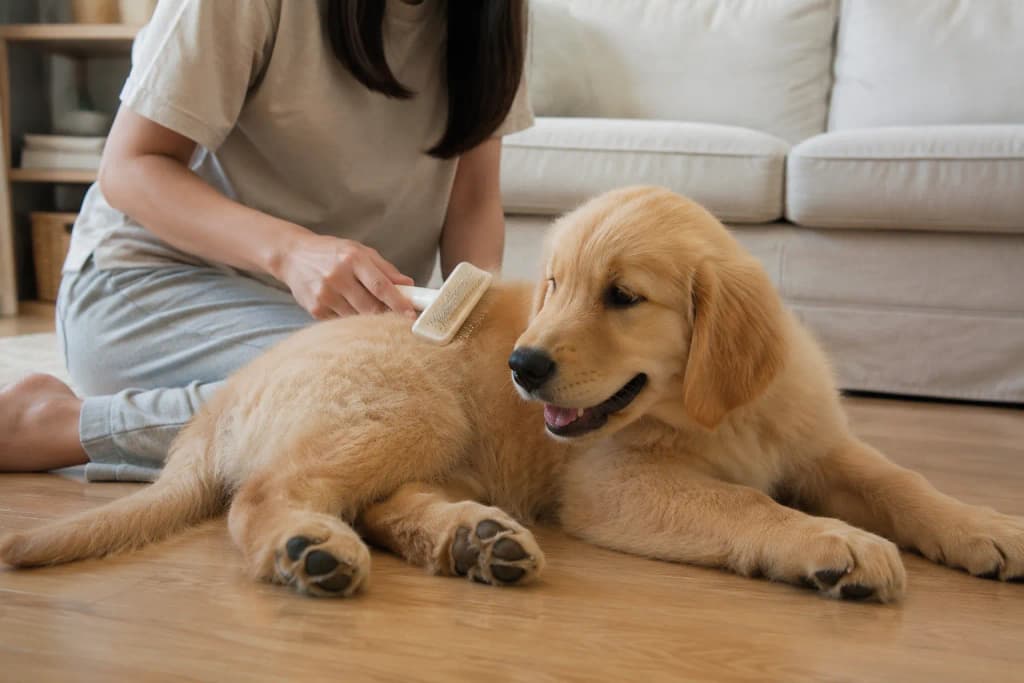
1. Brush the Double Coat the Right Way (and Never Shave It)
Run your palm across a Golden's back and you feel two things. The long, water-repellent guard hairs on top, slightly coarse. And underneath, that soft, dense, almost woolly undercoat that does the real insulating work.
Both layers matter. And both cause the classic new-owner mistake.
Why the shave is the worst thing you can do
When summer hits and the shedding gets biblical, the instinct is to shave it all off. Cooler dog, less hair on the couch, right?
Wrong, and it's worth understanding why. That double coat isn't just warmth for winter. The undercoat also insulates against heat and, along with the guard hairs, protects skin from sunburn. Shave it and you strip out the temperature regulation your dog was born with. Worse, a Golden's coat often grows back patchy or with a changed texture after a shave, because the undercoat and guard hairs regrow at different rates. The American Kennel Club's grooming guidance is clear that double-coated breeds should not be shaved down except for medical reasons.
The standout technique here is line brushing. Instead of skimming the surface, you part the fur in a line down to the skin, brush that exposed section, then move up an inch and part again. It's slower. It also actually removes the loose undercoat that causes mats, instead of just tidying the top.
The two tools that do 90% of the work
You don't need a drawer full of gadgets. After sorting through the options, two earn their place:
| Tool | What it does | How often |
|---|---|---|
| Slicker brush | Lifts loose hair, works out small tangles on top coat | Every session, 2–3x/week |
| Undercoat rake | Pulls dead undercoat from the dense layer near the skin | 1–2x/week, more during shed season |
| Metal comb | Final check for hidden mats behind ears and legs | Weekly finishing pass |
| Deshedding tool | Heavy undercoat removal during spring/fall blowout | Seasonally, don't overuse |
A word on that last one. Deshedding tools work, but people get carried away and use them daily, which can thin the coat and irritate skin. Reserve it for the twice-a-year coat blow, not routine upkeep.
The friction points to watch: behind the ears, the armpits, the pants (the feathery fur on the back legs), and the tail feathering. Mats form there first because those areas move, trap moisture, and rarely get brushed.
"A mat isn't just a tangle. It's a tiny pocket that pulls the skin every time the dog moves, and it hides whatever is growing underneath."
2. The Ears Are the Part Everyone Forgets
Golden ears are gorgeous. They're also a design flaw, grooming-wise.
That heavy, floppy flap seals off the ear canal. Warm, dark, and humid, especially in a dog that loves water as much as this breed does. It's a near-perfect setup for yeast and bacteria. Ear infections are one of the most common reasons Goldens end up at the vet, and PetMD's overview of canine ear infections notes that breeds with floppy ears and water-loving habits are especially prone.
The micro-story every Golden owner eventually lives
You get home from the lake. Dog's thrilled, soaked, smells like pond. You towel the body, forget the ears. Three days later there's a head shake, a faint sour smell, and a dog tilting her head to one side.
That's the pattern. And it's almost entirely preventable.
After every swim or bath, dry the ears. Not deep inside, just the visible canal and the flap, with a soft cloth or cotton ball. Once a week, check the color and smell. A healthy ear looks pale pink and smells like basically nothing.
Here's what to actually watch for:
- Odor — a yeasty, sour, or sweet smell means moisture has settled in
- Redness or dark waxy buildup — inflammation or the start of infection
- Head shaking or scratching — the earliest behavioral tell, often before you see anything
- Sensitivity to touch — if she pulls away when you lift the ear flap, something hurts
Use a vet-recommended ear cleaner, never a cotton swab jammed down the canal. And one honest limit: we're a portrait studio, not a veterinary clinic. If you see redness, discharge, or your dog is clearly in pain, that's a vet visit, not a home fix.
3. Bathe Less Often Than You Think
New owners tend to over-bathe. It feels like care. It's usually the opposite.
A Golden's skin produces oils that keep the coat water-repellent and the skin barrier healthy. Bathe too often and you strip those oils, which leads to dry, itchy skin and, ironically, a coat that gets dirty faster. Most healthy Goldens do fine with a bath every four to six weeks, sometimes stretching longer in winter.
What actually keeps them clean between baths
Brushing. Again. A well-brushed coat sheds dirt and distributes those natural oils along the hair shaft, which is why regular brushing does more for coat cleanliness than frequent shampooing ever will.
When you do bathe:
- Brush thoroughly first. Water turns loose tangles into cemented mats. Never bathe a matted dog.
- Use lukewarm water and a dog-specific shampoo. Human products, even baby shampoo, have the wrong pH for canine skin.
- Rinse twice as long as feels necessary. Leftover shampoo in that dense undercoat is a top cause of itchy, flaky skin.
- Dry the undercoat, not just the top. A Golden can feel dry on the surface and stay damp underneath for hours, which invites hot spots.
That last point is the sneaky one. Run your fingers down to the skin after toweling. If it's still cool and damp near the base, keep drying.
"We work from photos every day, and you can always tell a well-groomed coat. It catches light in layers. That's what we try to preserve in resin."
— The PawSculpt Team
4. Nails, Paws, and the Parts Hiding Under the Fur
If you can hear the click-click on hardwood, the nails are already too long. Simple test, and most people ignore it.
Overgrown nails aren't just a noise problem. They change how the dog distributes weight, which over time stresses the joints and can alter posture. For a breed already prone to hip and elbow issues, that matters more than it sounds.
Trim every three to four weeks. The trick that removes the fear: trim tiny amounts often rather than big cuts rarely. Small trims keep the quick (the blood vessel inside the nail) receding, so you're less likely to hit it. If your dog has clear nails, you can see the pink quick. On dark nails, stop at the point where the cut surface turns from chalky to a darker, slightly moist center.
The paw fur nobody mentions
Goldens grow fur between their paw pads, and it keeps growing. Left long, it collects burrs, ice balls in winter, and little pebbles from the trail. It also reduces traction on smooth floors, which you'll notice when an older dog starts slipping.
Trim the paw fur flush with the pads every few weeks. While you're down there, spread the toes and feel between them. It's another spot ticks love and owners overlook.
Here's a realistic weekly and monthly rhythm that keeps all four basics on track without turning your life into a grooming salon:
| Task | Frequency | Time needed | Why it matters |
|---|---|---|---|
| Line brushing (slicker + rake) | 2–3x per week | 15–20 min | Prevents mats, spreads oils, health check |
| Ear check and dry | After every swim/bath + weekly | 2 min | Stops infection before it starts |
| Full bath | Every 4–6 weeks | 30–45 min | Cleans without stripping oils |
| Nail trim | Every 3–4 weeks | 10 min | Protects joints and posture |
| Paw fur trim | Every 3–4 weeks | 5 min | Traction, comfort, debris control |
Notice what leads the list. Brushing, not bathing, is the backbone of the whole routine. Get that one habit locked in and the rest falls into place.
Turning the Ritual Into Something You Keep
There's a quiet thing that happens when you groom a dog for years. Your hands memorize the coat. The exact softness of the ruff, the coarser feathering on the tail, the warm spot on the belly where she rolls over and demands you keep going.
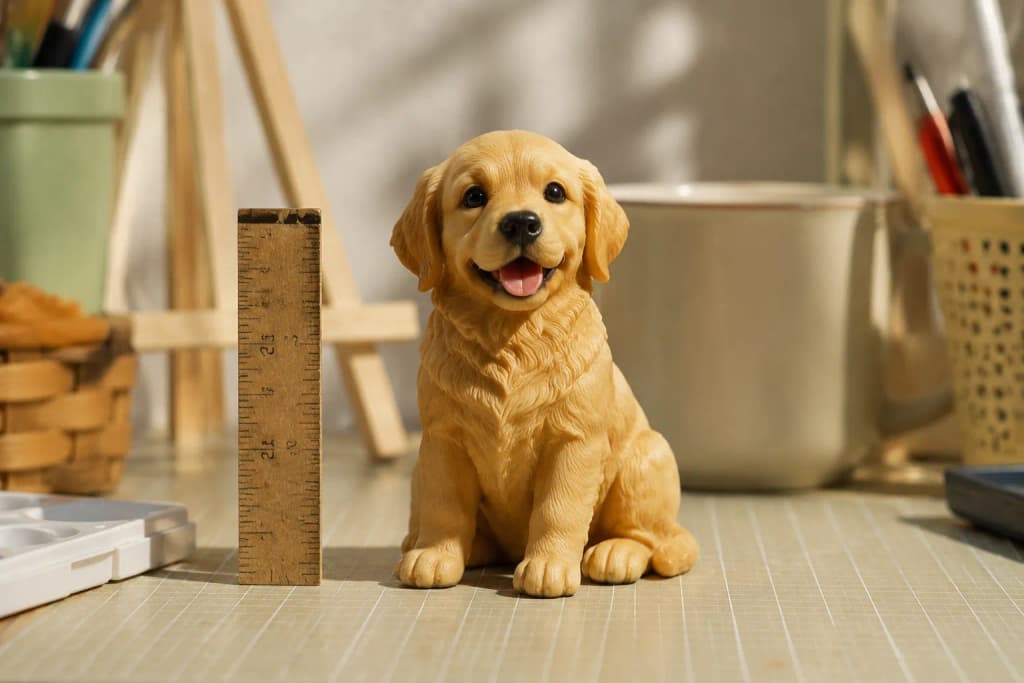
That tactile memory is part of why so many families reach for a way to hold onto it. Some keep a lock of fur in a small tin. Others frame trail photos. And a lot of pet parents are choosing sculpted keepsakes—like these custom dog figurines—that capture the specific way their Golden sits, ears and all.
At PawSculpt we're a sculpted portrait studio. Your dog is digitally modeled by our 3D artists, then precision 3D printed in full color, so the coat's real markings and layered texture come through in the resin itself. A portrait, not a photocopy. It's an interpretation of your dog's character, the posture and the expression you know by touch, rather than a photographic clone.
"Years from now you won't remember every walk. But you'll remember exactly how her coat felt after a good brush-out."
You can see a free instant AI preview on the website before committing to anything, which is a low-pressure way to picture how your own dog would translate. Explore the full sculpted pet portrait process when you're curious.
Frequently Asked Questions
How often should I brush my Golden Retriever?
Two to three times a week for most of the year, and closer to daily during the spring and fall coat blow. The key is line brushing down to the skin with a slicker brush and undercoat rake, not just skimming the top. Consistent brushing prevents the mats that form behind the ears and on the back legs.
Is it ever okay to shave a Golden Retriever?
Only for medical reasons your vet recommends, like surgery prep or a severe skin condition. Otherwise, no. The double coat regulates temperature in both heat and cold and shields the skin from sun. Shaving can permanently change how the coat regrows. Heavy brushing is the real answer to shedding.
How often should a Golden Retriever be bathed?
Every four to six weeks works for most healthy Goldens, and you can stretch that in winter. Over-bathing strips the oils that keep the skin healthy and the coat water-repellent. Brushing between baths keeps the coat cleaner than frequent shampooing does.
What are the signs of a healthy versus infected Golden ear?
A healthy ear looks pale pink and has almost no smell. Warning signs include a sour or yeasty odor, redness, dark waxy buildup, head shaking, and sensitivity when you lift the flap. If you notice these, see your vet rather than trying to treat it at home.
Do new dog owners really need special grooming tools?
You need less than the pet store suggests. A quality slicker brush, an undercoat rake, a metal comb, and nail clippers cover the essentials. A deshedding tool helps during seasonal shedding but shouldn't be used daily, since it can thin the coat over time.
Ready to Celebrate Your Pet?
Every pet has a story worth preserving. All those hours of golden retriever grooming, learning your dog's coat by heart, build a bond worth honoring. Whether you're celebrating a young Golden's goofy energy or remembering a gentle old soul, a custom PawSculpt figurine—a sculpted portrait, not a photocopy—captures the character and texture that make your dog one-of-a-kind.
Try the free instant AI preview first, then see your artist's 3D preview before production. Every order ships insured, tracked, and carefully packed.