
Grooming a Senior Chinchilla: A 6-Step First-Timer Checklist (and 2 Steps Never to Rush)
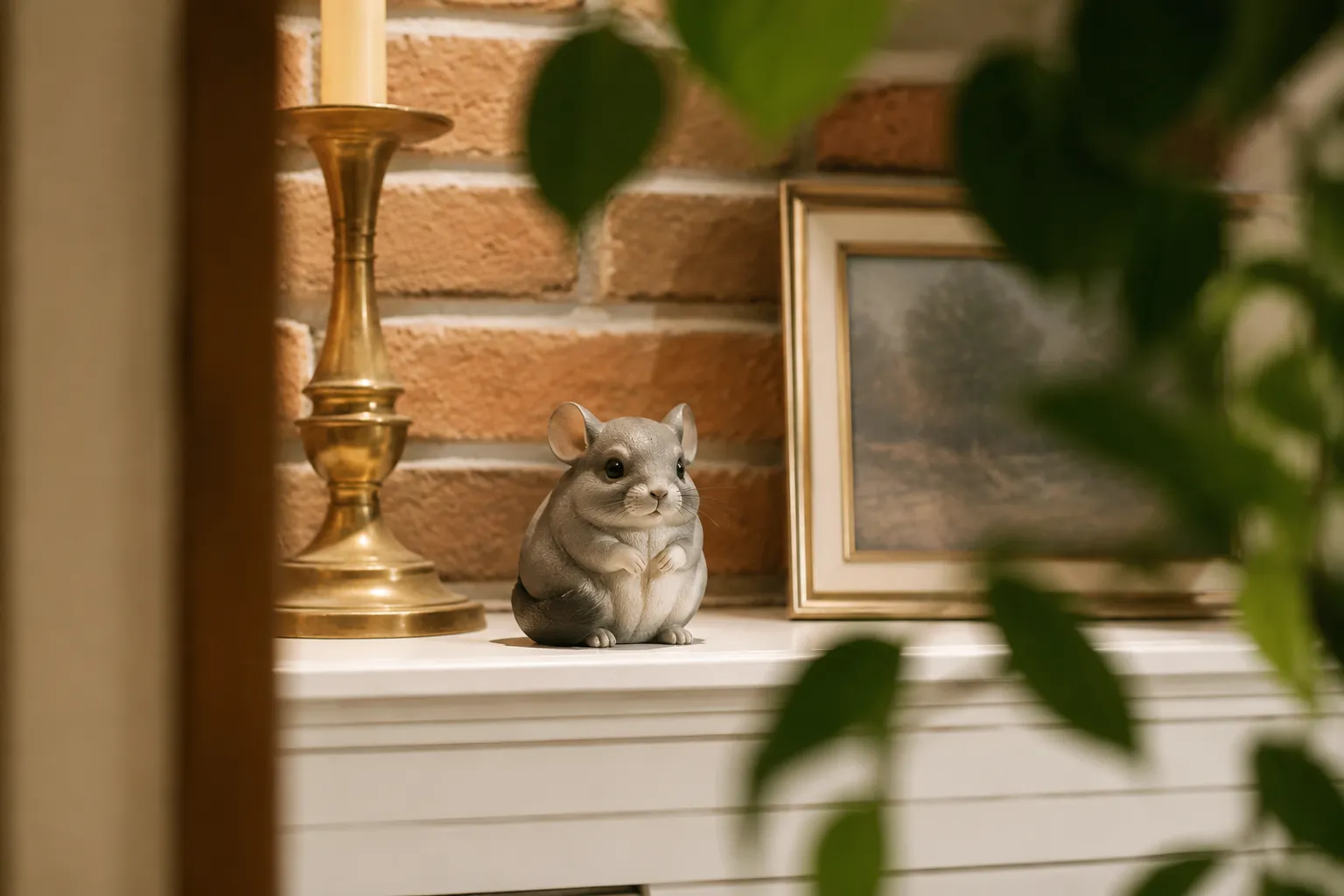
You tip the volcanic dust into the bath house, and your old chinchilla just sits there watching you, slower now, grayer around the muzzle. That quiet pause is where senior chinchilla grooming really begins.
Senior chinchilla grooming means offering dust baths 2-3 times weekly, checking teeth, weight, and fur daily, and adjusting for thinner skin and lower stress tolerance. The two steps you should never rush are the dust bath itself and any fur or mat handling. Geriatric small pets spike cortisol quickly, and a hurried session can do more harm than a skipped one.
Quick Takeaways
- Less can be more — senior chinchillas often need fewer, shorter dust baths, not extra ones.
- Grooming is diagnosis — a daily coat check catches dental and skin trouble weeks early.
- Never rush the dust bath — a stressed older chinchilla learns to fear the ritual.
- Weigh weekly — a scale reveals decline long before your eyes do.
- Preserve the moment — many owners honor aging companions with custom sculpted pet portraits that capture their real posture and personality.
Why Senior Chinchilla Grooming Isn't Just Younger Grooming, Slowed Down
Here's the thing most first-time owners get wrong. They assume caring for an aging chinchilla is the same routine, only gentler. It isn't. The whole purpose of the ritual shifts.
When a chinchilla is two years old, grooming is maintenance. That thick coat, up to 60 hairs per follicle, the densest fur of any land mammal, sheds dust and moisture on its own. You're mostly along for the ride.
By the time a chinchilla crosses into its senior years, usually around age 8 to 10 (they can live 15 to 20), the same session becomes something closer to a daily physical exam. You're not just keeping fur clean. You're reading the animal.
And this is the counterintuitive part. Your instinct as a worried owner will be to do more. More baths. More handling. More fussing. That instinct is usually wrong.
Older chinchilla skin thins and produces less oil. Bathe too often and you strip what little moisture remains, leaving flaky, itchy patches that look like a problem you then try to fix with, yes, more baths. It's a loop. We've talked to plenty of first-time owners caught in exactly this spiral, convinced they were being attentive.
The scientific piece worth understanding is cortisol (the primary stress hormone). Prey animals like chinchillas evolved to hide weakness, so a geriatric one won't tell you it's overwhelmed. It just absorbs the stress internally. Chronically elevated cortisol suppresses immune function and appetite, which is the last thing a fragile senior needs. Restraint, in both senses of the word, matters more than effort.
"With a senior chinchilla, the goal of grooming isn't a cleaner animal. It's a calmer one you know better than yesterday."
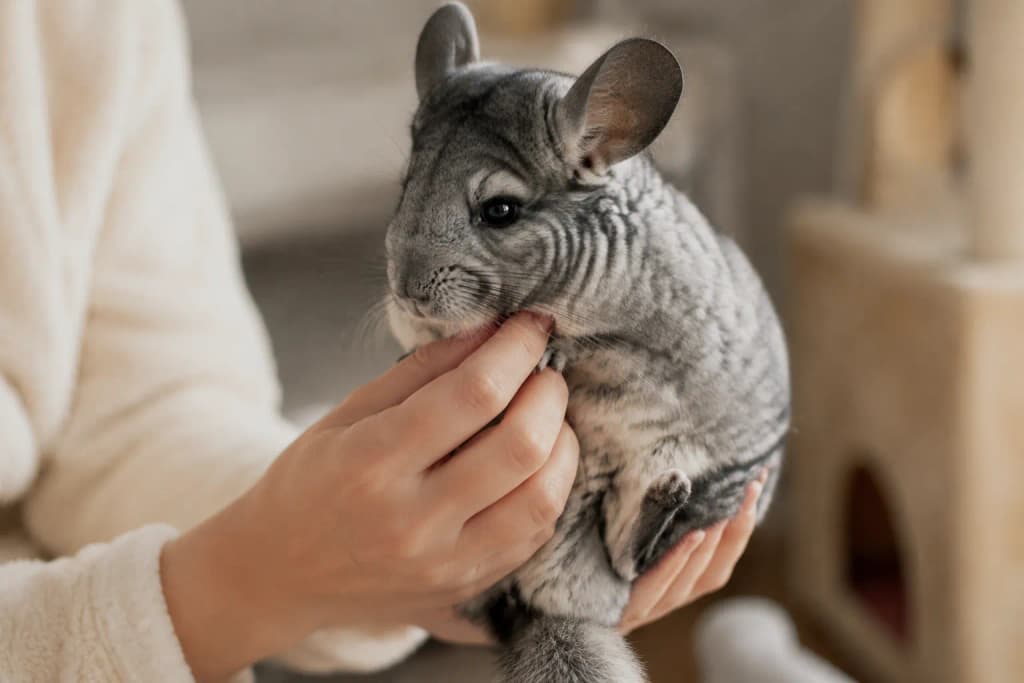
The 6-Step First-Timer Checklist
Think of these six steps as a sequence you run through, not a race to finish. On a good day the whole thing takes ten minutes. Some of it happens while your chinchilla is simply sitting on a towel in your lap.
1. Start with a hands-off visual scan.
Before you touch anything, just look. Good light is everything here. Take your chinchilla to a bright window or under a warm lamp and watch how the coat catches it. A healthy senior coat looks even and slightly silvered, with a soft sheen. Dull, clumped, or yellow-tinged patches near the rear often mean the chinchilla can no longer groom that area itself. Why it matters: the spots they stop reaching are the first map of declining mobility.
2. Check the teeth and jawline.
Chinchilla teeth grow continuously, and dental disease is the single most common serious problem in older chinchillas. Look for drooling, a wet chin, food dropping from the mouth, or pawing at the face. According to VCA Hospitals' guidance on chinchilla dental disease, overgrown molars can cause painful spurs you can't see without a vet's scope, so treat any appetite change as urgent.
3. Feel for weight and body condition.
Under all that fur, chinchillas hide their frame well. Run your fingers gently along the spine and ribs. You want a slight cushion, not sharp ridges. A senior losing muscle over the hips is telling you something. This is the check your eyes will miss every single time.
4. Inspect fur for mats, breaks, and "fur slip."
Older chinchillas mat behind the ears, under the chin, and around the tail base. Note them. Do not yank them (that's step-two territory below). Also watch for patches of missing fur, which can signal over-grooming from stress or a skin issue.
5. Offer the dust bath.
This is its own art, covered in detail in the next section. For now, know that the bath is not just cleaning. Rolling in dust is a deeply wired comfort behavior, the chinchilla equivalent of a long exhale.
6. Close with a weight log.
Put your chinchilla on a small kitchen scale (grams, not ounces) once a week and write it down. A loss of even 10 to 15 grams in a senior can precede visible illness by two weeks or more. So what? Numbers don't lie to you the way a fluffy coat does.
Here's a simple rhythm to keep it all straight:
| Task | Frequency | Time | Watch for |
|---|---|---|---|
| Visual coat scan | Daily | 1 min | Dull or clumped patches |
| Teeth & chin check | Daily | 1 min | Wet chin, dropped food |
| Dust bath | 2-3x weekly | 5-10 min | Reluctance, flaky skin |
| Body condition feel | 2x weekly | 2 min | Sharp spine or hips |
| Weight log | Weekly | 1 min | Any drop of 10g+ |
| Full mat inspection | Weekly | 3 min | New or growing mats |
Notice what's daily and what isn't. The cheap, fast, low-stress checks happen often. The hands-on work happens less.
The 2 Steps You Should Never Rush
If you take one idea from this whole guide, take this one. Two parts of the routine reward patience and punish speed, and both are where first-timers stumble.
Step One Never to Rush: The Dust Bath
A young chinchilla dives into its bath like a kid into a pool. A senior often approaches slowly, stiff in the joints, sometimes hesitant. Your job is to let the pace be theirs.
Give a chinchilla dust bath in the late afternoon or evening, when they're naturally most active (they're crepuscular, meaning dawn and dusk are their peak hours). Use a proper bath house and quality volcanic pumice dust, never sand, which scratches. Two to three sessions a week is plenty for most seniors. Some very old chinchillas with dry skin do better with two.
Here's the mistake we see: leaving the dust in the cage all day. That over-dries the skin and can irritate the eyes. Offer it for five to ten minutes, then take it out. The scarcity is part of what keeps the ritual special to them.
Watch the light in their eyes while they roll. A content chinchilla flips fully onto its back, kicks, and comes up looking like a powdered doughnut. A senior that just sits in the dust, or won't get in at all, is flagging pain or stress. That refusal is data. Don't force it. End the session, and if it repeats, call your vet.
"The powder puff of dust hanging in the evening light, and one old chinchilla flipping through it, is the whole reason you keep doing this."
The psychology underneath this is worth naming. Repeated calm, predictable rituals build what behaviorists call a secure base, an idea borrowed from attachment theory. When the bath is always safe, always unhurried, your chinchilla's baseline anxiety drops. Rush it once or twice and you can undo months of that trust, because prey animals encode fear fast and forget it slowly.
Step Two Never to Rush: Fur and Mat Handling
Senior chinchilla skin is delicate, sometimes paper-thin over the shoulders and hips. And chinchillas have a defense mechanism called fur slip, where they release a patch of fur when grabbed or frightened, leaving a bald spot that takes months to regrow.
So mats demand a slow hand. Never pull, never scissor blindly against the skin. For a small mat, work a little dust into it with your fingertips and gently tease it apart over several short sessions. For anything tight, close to the skin, or near the eyes and genitals, stop and let a vet or experienced groomer handle it.
We're not vets, so anything involving cutting near skin, bleeding, or a mat you can't loosen in a minute or two should go to a professional. There's no prize for finishing fast.
One last visual cue: part the fur and look at the skin underneath in strong light. Healthy skin is pale and clean. Redness, dandruff-like flakes, or a greasy film points to a skin condition that grooming alone won't fix.
Myth vs. Reality: What First-Time Owners Get Told
A lot of well-meaning advice floating around gets senior care backwards. A few worth correcting:
Myth: Older chinchillas need more frequent baths to stay clean.
Reality: They usually need fewer. Aging skin dries out, and over-bathing causes the flaking owners then panic about. Two to three sessions weekly is the ceiling for most seniors, not the floor.
Myth: A chinchilla that stops rolling in its bath is just getting lazy with age.
Reality: Reluctance is almost never laziness. It signals joint pain, dental discomfort, or stress. It's one of the earliest behavioral red flags you'll get.
Myth: If the coat looks full and fluffy, the chinchilla is healthy.
Reality: That dense fur hides weight loss and muscle wasting beautifully. This is exactly why the weekly scale matters more than the mirror.
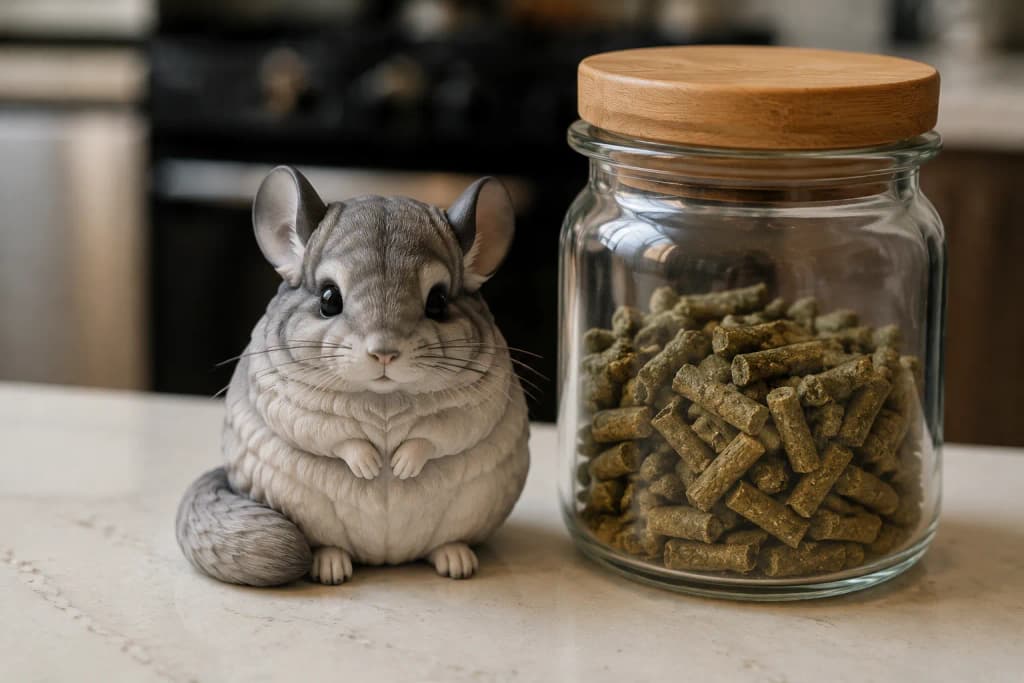
Reading the Coat: A Senior Chinchilla's Silent Report
There's a reason we keep circling back to looking. A chinchilla's coat is a live document. Once you learn to read it under good light, grooming stops being a chore and becomes the most reliable early-warning system you own.
Color and texture shift with health. The blue-gray standard coat should look uniform and luminous, almost like brushed pewter. When something's off internally, the coat often speaks before the animal does.
| What you see | What it may mean | What to do |
|---|---|---|
| Yellow-tinged fur near rear | Reduced self-grooming, mobility loss | Gentle spot help, vet mobility check |
| Greasy, clumped patches | Skin oil imbalance or over-bathing | Reduce bath frequency, inspect skin |
| Bald patch, clean edges | Fur slip from stress or rough handling | Review handling, reduce stressors |
| Bald patch, flaky skin | Possible fungal or skin condition | Vet visit, do not self-treat |
| Dull, lifeless overall coat | Systemic illness, poor nutrition | Vet exam, review diet |
Keep this near the cage for the first month. After a while you'll read it without thinking.
There's a quieter truth in all this observation, too. When you groom a senior animal, you're spending concentrated, attentive time with a creature whose remaining chapters you can feel getting shorter. Biologists talk about the human-animal bond in terms of oxytocin and mutual gaze. Owners just call it love. Both are describing the same thing: the way ten unhurried minutes a day become the memory you'll reach for later.
"We've noticed the pets people ask us to capture are almost always caught mid-ritual. The stretch, the roll, the pose they made a thousand times. That's the real portrait."
— The PawSculpt Team
That's part of why so many chinchilla owners, once their companion enters these later years, start thinking about how to hold onto that specific personality. Photos help. So do videos of the evening dust roll. Some families also choose a tangible keepsake, like a sculpted portrait figurine that captures a chinchilla's exact posture and expression. At PawSculpt, these are digitally sculpted by 3D artists and then precision printed in full-color resin, so the soft silver of that coat and the pose you know by heart live on as more than a memory. A portrait, not a photocopy.
What to Expect as Your Chinchilla Ages
Grooming a senior isn't a fixed routine you set once. It's a moving target, because the animal keeps changing. Roughly speaking, here's the arc first-timers can expect.
In the early senior stage (around 8 to 10), most chinchillas stay spry. You'll mostly notice subtle things: a slightly less enthusiastic dust roll, a first gray hair or two around the face, marginally slower jumps between shelves.
By the mid-senior stage, joint stiffness becomes real. This is when you lower shelves, add softer bedding, and start watching the rear coat for missed grooming spots. Baths may need to shorten.
In the late stage, everything slows. Some chinchillas stop bathing independently and need you to gently work small amounts of dust into the coat by hand. Weight monitoring becomes the most important number in the house. And your grooming sessions become less about the fur and more about connection, warmth, and comfort.
None of this is a decline to dread so much as a season to pay closer attention. The ASPCA's general small-pet care resources are a solid starting point if you want to build a broader senior-care plan alongside your vet.
The Emotional Weight Nobody Warns You About
Nobody tells first-time owners that grooming a senior pet does something to you, too.
You start noticing the gray muzzle. You feel the ribs a little easier than last month. You catch yourself lingering after the dust bath, watching the powder settle in the lamplight, not quite ready to put the bath house away. That's not morbid. That's attachment doing exactly what it evolved to do.
Some owners channel that awareness into a memory project. A shelf of photos. A short video compilation. Others commission a keepsake while their pet is still here to sit for, in a sense, its own portrait, which many find more comforting than waiting until after. Studies on the human-animal bond suggest that tangible, physical reminders can ease anticipatory grief, giving the mind something solid to hold. Whatever form it takes, the impulse to preserve is healthy. Honor it.
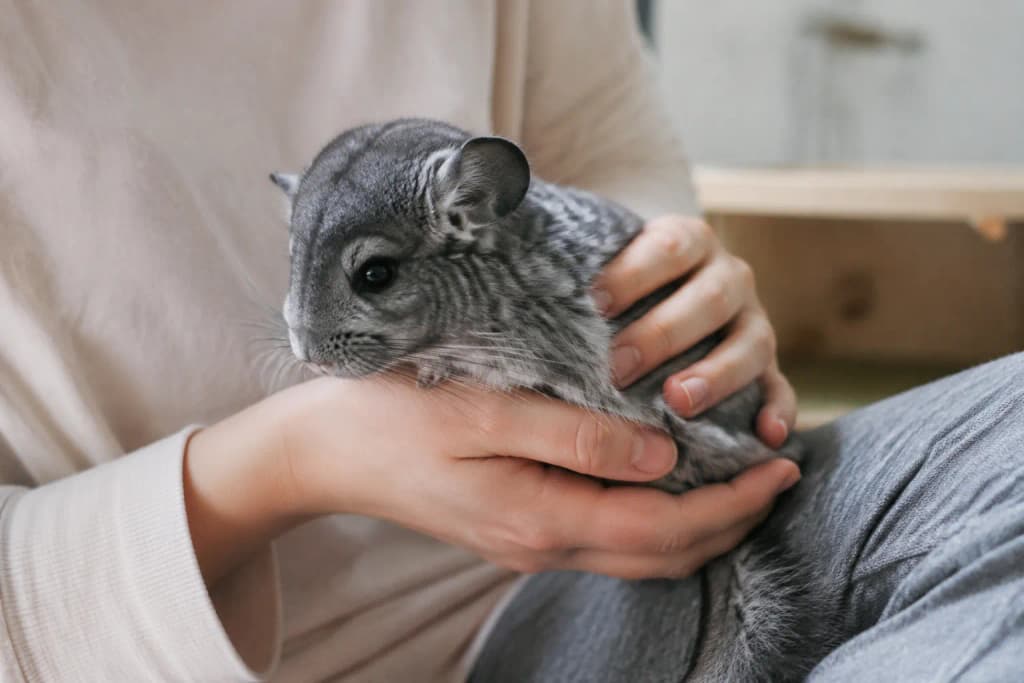
Closing: The Powder Settles
Come back to that opening image. The dust drifting down into the bath house. Your old chinchilla, gray around the muzzle, deciding in its own time whether to climb in.
Early on, you probably saw that pause as hesitation, maybe even a worry. By now you know better. That pause is an invitation to slow down to its pace. It's the whole practice of senior chinchilla grooming distilled into one moment: patience over speed, attention over effort, presence over routine.
So tonight, when you set out the bath, don't rush it. Watch the light catch the dust. Feel along the spine. Write the weight in the notebook. Let the ten minutes be exactly ten minutes.
The fur will thin. The rolls will slow. But the ritual you build now becomes the thing you'll remember most clearly later, the version of your chinchilla that lives on long after the bath house is empty. Groom the animal. But really, you're memorizing it.
Frequently Asked Questions
How often should a senior chinchilla have a dust bath?
Most seniors need a chinchilla dust bath just 2-3 times a week, for five to ten minutes each. Aging skin produces less oil and dries out fast, so more frequent bathing often backfires with flaking and irritation. Always remove the bath house afterward rather than leaving it in the cage.Is it normal for my senior chinchilla to stop rolling in its dust bath?
It's common, but it's not something to ignore. Reluctance almost always points to joint pain, dental discomfort, or stress rather than simple aging. Treat a sudden refusal as a genuine signal and, if it lasts more than a couple of days, book a vet visit.What age is a chinchilla considered senior?
Generally around 8 to 10 years old. Since chinchillas can live 15 to 20 years with good care, the senior phase can stretch across a long stretch of their life, which is why gradual adjustments matter more than sudden overhauls.Can I brush or cut out my senior chinchilla's mats?
Handle mats slowly and gently. Their skin is delicate and they can release fur when scared (called fur slip), leaving bald patches. Work small mats apart using a bit of dust and your fingertips over several short sessions. Anything tight or close to the skin belongs with a vet or experienced groomer.How do I catch weight loss when the fur hides everything?
Weigh your chinchilla weekly on a gram scale and write the number down. That dense coat masks a shrinking frame, so the scale often reveals trouble two weeks before your eyes would. Feeling gently along the spine and hips a couple of times a week helps confirm it.Ready to Celebrate Your Pet?
Every pet has a story worth preserving. Whether you're honoring a beloved companion who's crossed the rainbow bridge or celebrating the quiet dignity of a chinchilla growing older beside you, a custom PawSculpt figurine, a sculpted portrait, not a photocopy, captures the character that makes your pet one-of-a-kind. The same attention you bring to senior chinchilla grooming, the posture, the coat, the personality, is exactly what our 3D artists sculpt into full-color resin.
Start with a free instant AI preview on our site, review your artist's 3D preview within 7 days of deposit, and every finished portrait ships insured, tracked, and carefully packed.