6 Grooming Shortcuts Vets Wish Busy Owners Knew for a Senior Persian Cat
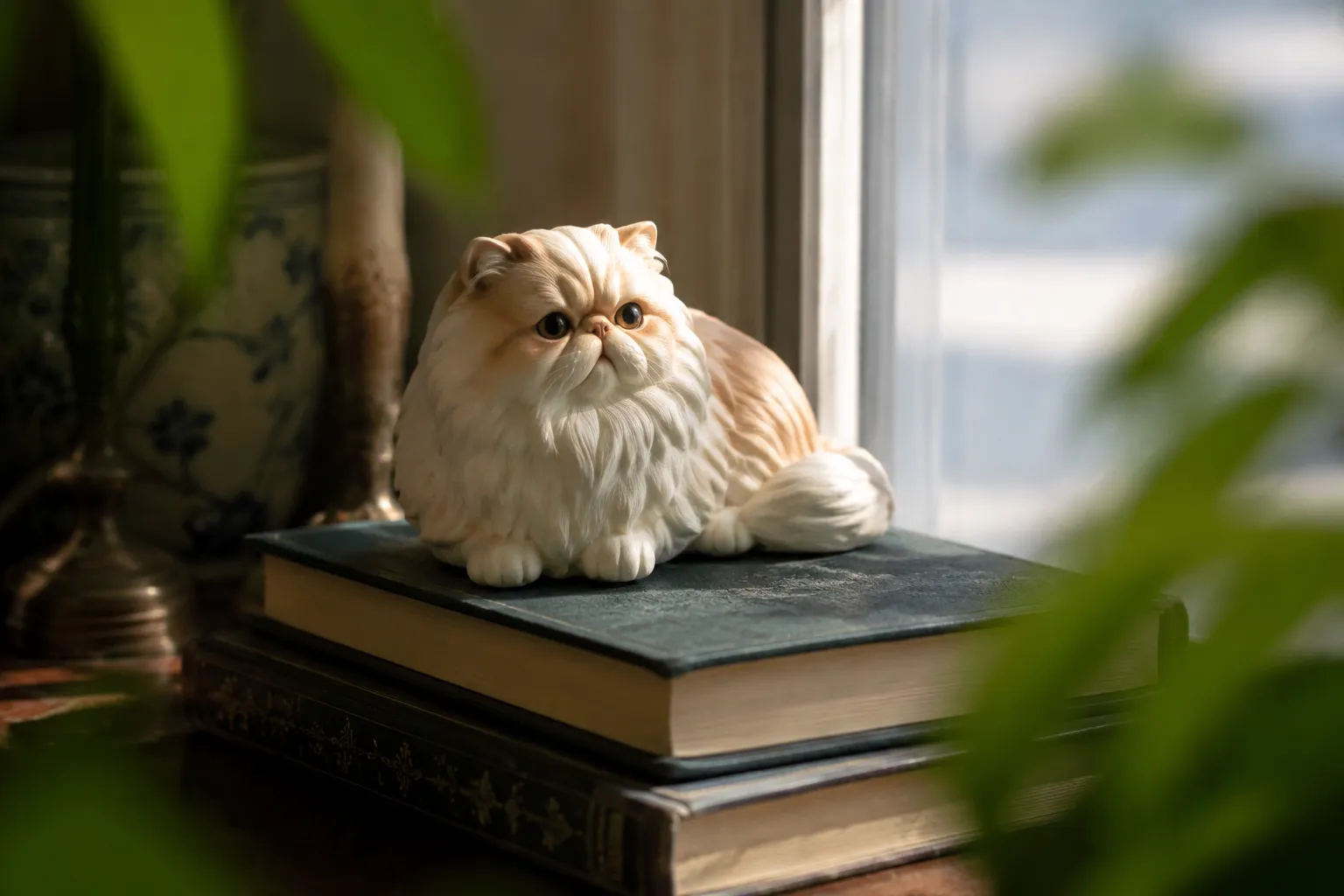
A wide-tooth comb on the nightstand. A drift of white fur across the duvet. A knot forming behind one ear you didn't catch in time. Senior Persian cat grooming quietly becomes a bedroom ritual, whether you signed up for it or not.
Senior Persian cat grooming works best in short, targeted sessions rather than long full-body brushouts. Aim for two to three brief sessions daily using a wide-tooth comb, keep the eyes clean with a warm damp cloth, and treat every session as a health scan. Older Persians stop self-grooming when arthritis makes twisting painful, so matting is often a pain signal.
Quick Takeaways
- Short beats thorough — three two-minute sessions calm a senior cat more than one long brushout.
- Matting is a message — sudden knots often mean joint pain, not laziness or a dirty coat.
- Your hands are the first vet visit — grooming catches lumps, dental pain, and stiffness early.
- Preserving the coat's memory matters too — some families capture that plush face in custom sculpted pet figurines as the years pass.
Why Your Senior Persian Stopped Grooming Herself (And Why It's Not Laziness)
Here's something most grooming guides skip entirely. A Persian doesn't develop mats because she's dirty. She develops them because she can't reach.
Twisting to clean the base of the tail or the hind end requires a spine and hips that still move freely. In a cat over ten, they often don't. Feline arthritis is dramatically underdiagnosed. Studies of senior cats suggest the vast majority have some degree of joint degeneration on X-ray, yet most never limp in a way owners notice. Cats hide pain. It's wired into them as prey animals.
So the coat tells the story the cat won't.
When you notice matting appearing over the lower back, the belly, or behind the thighs, that pattern is spatial evidence. Those are exactly the zones a stiff cat can no longer bend to reach. The mats aren't the problem. They're the readout.
"The coat is the last honest thing a cat owns. When grooming stops, the body is usually telling you something the cat won't."
This reframes the whole task. You're not maintaining fur. You're compensating for a body that's aging, and reading it as you go. Once you see grooming this way, the six shortcuts below stop feeling like chores and start feeling like the most efficient checkup you can give at home.
We're not vets, so anything that feels off belongs in front of one. But the earlier you catch the pattern, the more your vet has to work with.
The 6 Grooming Shortcuts Vets Actually Recommend
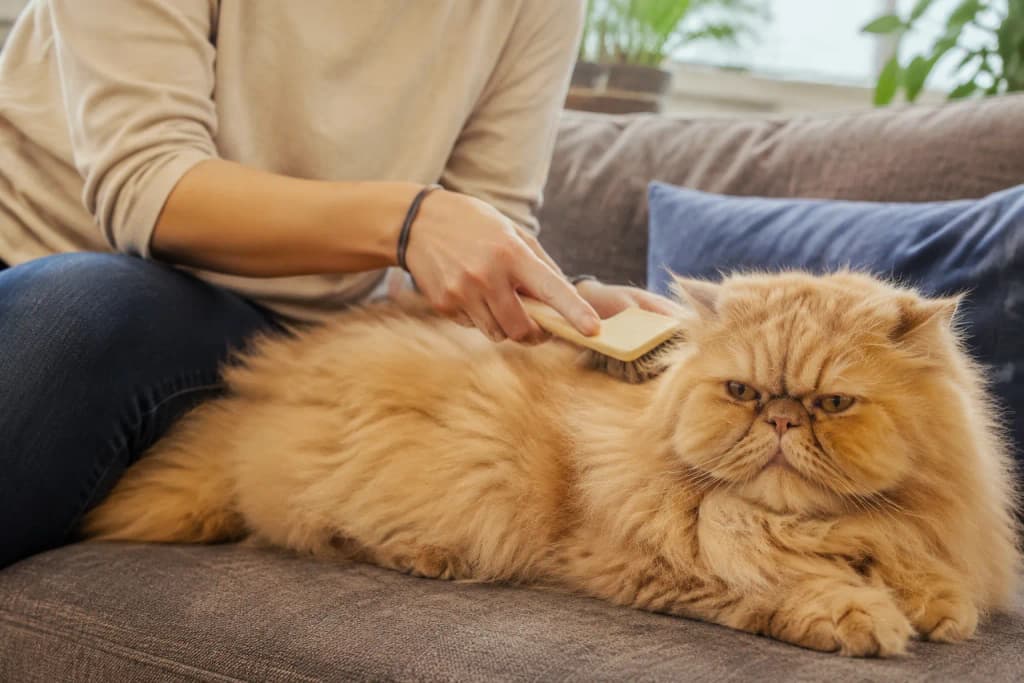
1. Trade the Full Brushout for "Zone Grooming"
The mistake most owners make is trying to do the whole cat at once. You pin her down, work through every panel of fur, and by minute four she's wriggling, you're frustrated, and neither of you wants to do this again tomorrow.
There's a biological reason it fails. A long restraint session spikes cortisol (the stress hormone), and a stressed cat associates the comb with that feeling. You've just made every future session harder.
Instead, break the cat into zones and hit one or two per session:
- Morning: face, chest, front legs
- Midday: back and sides
- Evening: the trouble spots (belly, hind end, tail base, behind the ears)
Each session lasts two to three minutes. Total daily time is about the same, but the cat never crosses her stress threshold. Short and frequent always beats long and thorough for a senior Persian. The nervous system stays regulated, and grooming becomes a rhythm instead of a wrestling match.
2. The Warm Cloth Eye Routine Nobody Explains Properly
Persians have flat faces (brachycephalic structure), which means shallow tear ducts and near-constant eye drainage. Left alone, that moisture crusts into the fur and, in older cats, can lead to skin irritation right under the eye.
Most people reach for a dry tissue. That drags and pulls at fragile skin.
What actually works: a warm, damp washcloth, held gently against the corner of the eye for a few seconds first. Let it soften the crust. Then wipe outward, away from the eye, with a separate clean corner for each side so you're not moving bacteria back and forth.
Do this once in the morning. Thirty seconds. The ASPCA's general cat care guidance echoes the same principle for flat-faced breeds: gentle, daily, no yanking.
One thing to watch. If discharge suddenly turns yellow, green, or thick, that's not a grooming issue anymore. That's a vet call.
3. Fingers and Cornstarch Before You Ever Touch a Comb
A comb driven into an existing mat pulls the skin and hurts. In a senior cat, that single bad experience can poison the whole routine.
The insider move groomers use: work a small amount of plain cornstarch into the mat with your fingers first. It reduces friction between the tangled hairs and lets them slide apart. Tease the mat open from the edges with your fingertips, splitting it into smaller sections, and only then bring in a wide-tooth comb.
Never cut a mat out with scissors. Persian skin is thin and tents up into the mat, and emergency vets see lacerations from this every single week. If a mat is tight to the skin, it's a job for clippers in trained hands, not scissors at the kitchen table.
Here's a quick reference for what different mat situations actually call for:
| Mat Situation | What It Usually Means | Best Action |
|---|---|---|
| Loose tangle, combs out easily | Normal shedding buildup | Finger + cornstarch, then comb |
| Recurring mats in same lower-back zone | Possible joint stiffness | Groom zone daily, mention to vet |
| Tight mat flat against skin | Overdue, skin at risk | Professional clipper trim |
| Mats plus flaky skin or odor | Possible skin condition | Vet visit before grooming |
4. Consider the Lion Cut Sooner Than You Think
This one surprises people, and it's the shortcut that saves the most suffering.
A lion cut (body shaved short, head, legs, and tail tip left full) isn't giving up. For many senior Persians, it's the kindest option. When a cat physically cannot maintain a long coat and the daily de-matting has become a source of stress for you both, a short trim resets everything.
We worked with a family whose seventeen-year-old Persian, Marigold, had reached the point where grooming meant a struggle twice a day. After her first lion cut, they said she stretched out on the windowsill in the sun for the first time in months. No pulling, no knots, no discomfort. Just a warm patch of floor and a cat who could finally relax into it.
The tradeoff is real, and worth naming: you lose the signature plush look for a few months while it grows back. Some owners grieve that. That's valid. But comfort for a fragile senior almost always outranks aesthetics.
"A shaved senior Persian on a sunlit floor, finally still, tells you everything you need to know about what the coat was costing her."
What We Wish We Knew Sooner
Candid hindsight from our team, after years of hearing the same regrets from pet families:
- We wish we'd started grooming rituals earlier. The cats who accept handling at twelve are the ones who were touched gently at three. Attachment forms through repetition.
- We wish we'd photographed the full coat before the lion cut. So many families realize afterward that they have a thousand photos of the face and none of that glorious mane in good light.
- We wish we'd treated the vet's "mild arthritis" note as urgent. It's the quiet diagnoses that reshape a senior cat's daily comfort the most.
5. Turn Every Session Into a Silent Health Scan
This is the shortcut vets genuinely wish every owner understood. Your hands, moving slowly over your cat several times a day, are the best early-warning system that exists. Better than a twice-yearly exam, because you're checking constantly.
As you groom each zone, your fingers should be asking questions:
- Along the jaw and cheeks: any swelling? Bad breath when she yawns? Dental disease is rampant in senior cats and painful long before they stop eating.
- Down the spine and hips: does she flinch or tense? That's a joint-pain flag.
- Across the belly and under the legs: any new lumps, warm spots, or bald patches?
- At the base of the tail: grease buildup ("stud tail") or reluctance to be touched.
The point isn't to diagnose. It's to notice, and to notice early. A lump you find at four millimeters gives your vet options a lump found at four centimeters may not.
Senior cats should see a vet every six months rather than annually, precisely because things move fast at this age. Your daily grooming scan fills the gap between those visits. Pair it with PetMD's senior cat wellness resources so you know which findings warrant a same-week call versus a mention at the next checkup.
6. Groom Around Her Clock, Not Yours
Timing is the invisible variable. A cat groomed right after a nap, when she's warm and loose, is a completely different animal from one grabbed mid-stalk or right before dinner when she's hungry and alert.
Aging brings changes in the feline brain that can look a lot like mild cognitive dissonance in humans. Routine and predictability lower anxiety. Senior cats lean hard on ritual.
So anchor grooming to moments she's already calm. Right after she wakes. During the drowsy stretch after a meal. In the same spot each time, ideally somewhere she already feels safe, like the corner of the bed she's claimed.
Here's a realistic weekly rhythm that keeps a senior Persian comfortable without overwhelming either of you:
| Task | Frequency | Time Needed | Why It Matters |
|---|---|---|---|
| Zone combing | 2-3x daily | 2-3 min each | Prevents mats, avoids stress spikes |
| Warm-cloth eye clean | Daily | 30 sec | Stops crusting and skin irritation |
| Full health scan | Daily (during grooming) | Built in | Catches lumps, pain, dental issues |
| Sanitary/hygiene trim | As needed | 5 min | Keeps hind end clean when she can't reach |
| Professional groom | Every 4-8 weeks | Drop-off | Deep de-matting, nail trim, safe clipping |
"Every whisker, every fold of that flat little face carries the cat's whole story. Our job is to hold onto the ones that matter most."
— The PawSculpt Team
The Part Nobody Warns You About
Long-haired cat care in the senior years does something to a house, spatially. You start to organize rooms around her. The comb migrates to the nightstand because that's where she settles now. A towel lives on the chair she prefers. Her world shrinks to a few warm corners, and yours quietly rearranges to match.
And somewhere in the middle of all this practical care, a quieter thought arrives. That plush coat you're working so hard to maintain won't always be here. Neither will the specific way she folds her paws when she finally relaxes.
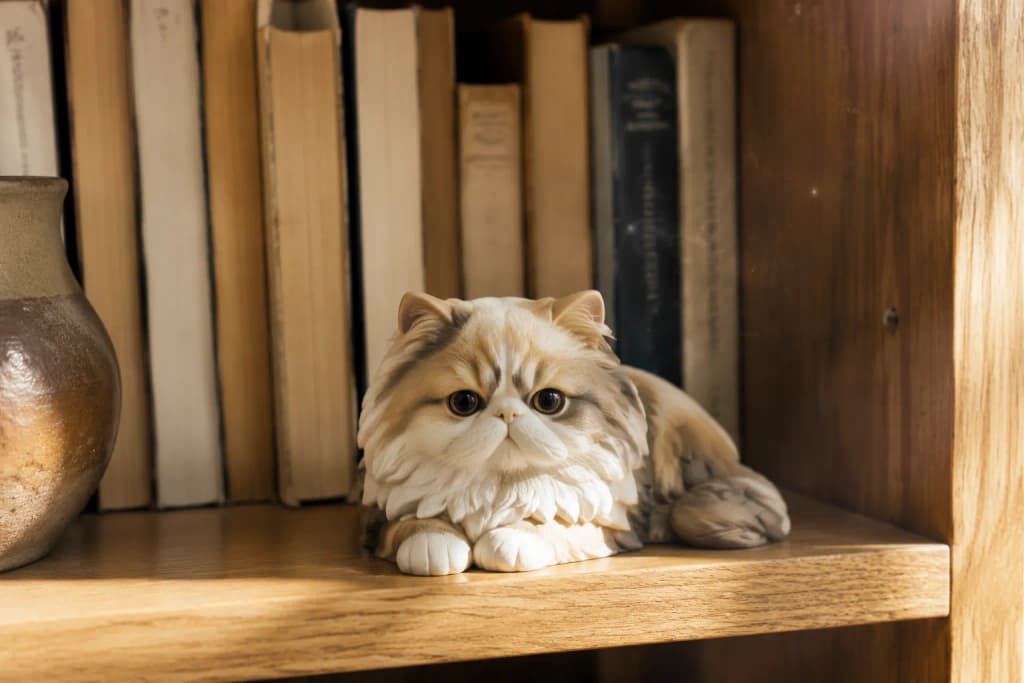
Families handle that awareness differently. Some take a proper photo series of the full coat before a lion cut. Some keep a small clipping of fur. And some choose to preserve her the way they see her, commissioning custom sculpted cat figurines that hold the posture and the personality rather than just a flat image.
If you go that route, a note on how it actually works. PawSculpt is a sculpted portrait studio, not a print shop. Your cat is digitally sculpted by 3D artists and then precision 3D printed in full-color resin, so those distinctive Persian markings and that flat-faced expression come through in the material itself, finished with a protective clear coat. The brand line is honest about what it is: a portrait, not a photocopy. An interpretation of her character, not a clone.
You can see a free instant AI preview on the site before committing to anything, which takes the guesswork out of it. The full process and current details live at pawsculpt.com.
A Note on Grooming Tools for Arthritic Cats
Small ergonomic detail that matters more than you'd expect. The tool you choose changes how gentle you can physically be.
Skip the fine-tooth flea combs and slicker brushes with stiff wire pins for a senior Persian. Those catch and pull. Reach instead for a wide-tooth comb and a soft-pin or rubber-tipped brush for finishing. Your goal is to glide, never to drag.
And warm your hands first if the room is cool. It sounds fussy. But a stiff old cat tenses under cold fingers, and tension is exactly what you're trying to avoid.
Frequently Asked Questions
How often should I groom a senior Persian cat?
Short and frequent wins. Aim for two to three brief sessions daily, each lasting only two to three minutes, using a wide-tooth comb. This keeps mats away without spiking your cat's stress the way one long brushout does. Add a quick daily eye clean and a full-body health scan built into the grooming itself.
Why has my senior Persian suddenly started getting mats?
Most often it's a mobility issue. Arthritis makes it painful for older cats to twist and reach their lower back, belly, and hind end, so those areas mat first. The location of the mats is a clue. If they cluster in hard-to-reach zones, mention it to your vet, because you may be seeing joint pain before you see a limp.
Is a lion cut cruel for a Persian cat?
No. For a senior Persian who can't keep up with her own coat, a lion cut is often the most comfortable choice. You lose the plush look for a few months while it regrows, but you gain a cat who isn't fighting daily de-matting. Comfort for a fragile older cat generally outweighs appearance.
What's the best way to clean tear stains on a flat-faced cat?
Use a warm, damp washcloth rather than dry tissue. Hold it gently against the eye corner to soften any crust, then wipe outward using a fresh section of cloth for each eye. Daily is ideal. If discharge turns thick, yellow, or green, that's a veterinary issue, not a grooming one.
Can grooming really help me catch health problems early?
Absolutely, and it's underrated. Running your hands over your cat several times a day makes you the earliest detection system she has. You'll notice new lumps, dental odor, flinching over sore joints, or skin changes long before a twice-yearly exam would. You're not diagnosing, just noticing early enough to give your vet options.
Ready to Celebrate Your Pet?
Every pet has a story worth preserving. Whether you're honoring a beloved companion who's crossed the rainbow bridge or celebrating your senior Persian's plush, one-of-a-kind personality, a custom PawSculpt figurine — a sculpted portrait, not a photocopy — captures the character that hours of gentle senior Persian cat grooming taught you to love.
See a free instant AI preview before you commit, with an artist's 3D preview to follow. Every order ships insured, tracked, and carefully packed.