
Before You Adopt a Senior Rescue Greyhound: The Quiet Joy Nobody Warns You About
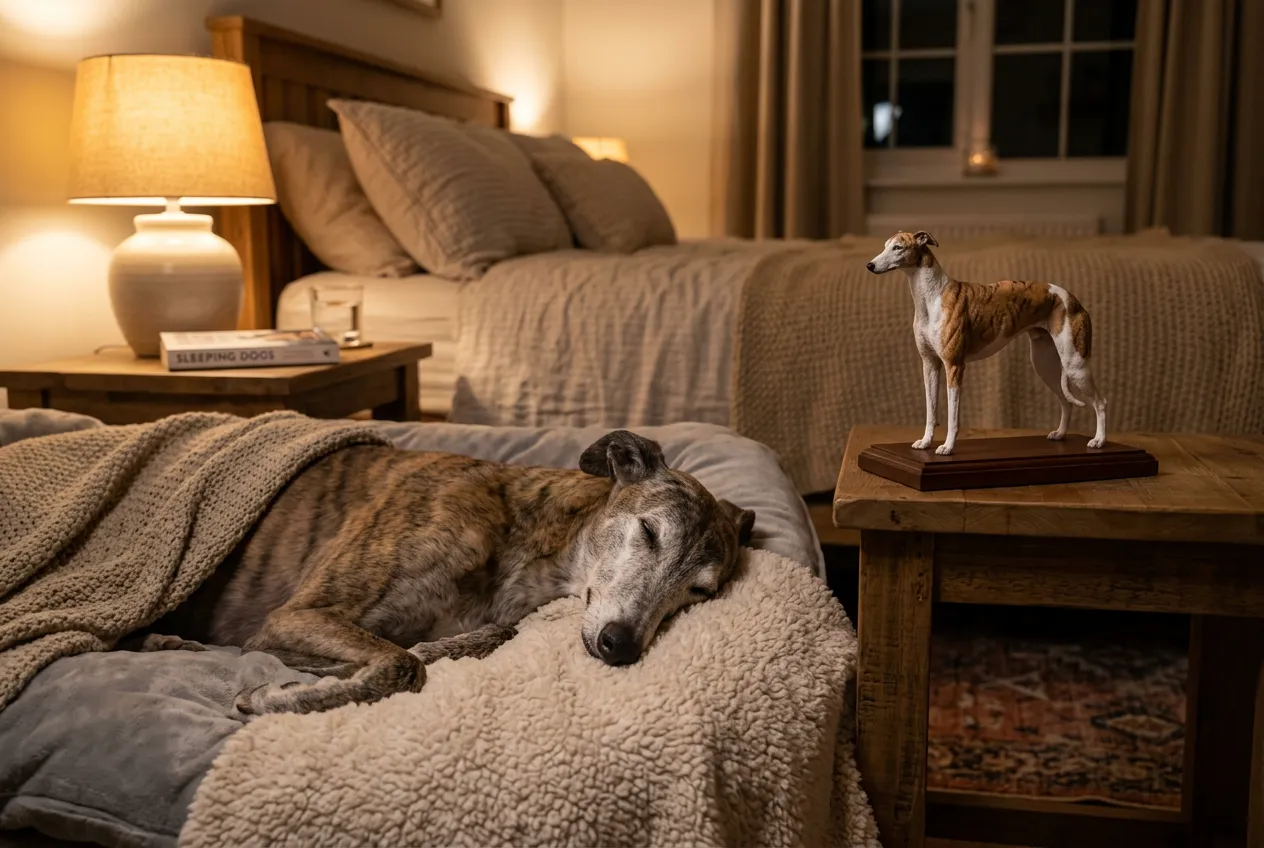
What sound does your hallway make at 6 a.m. when there's no greyhound standing in it yet—and what will it sound like three months after senior greyhound adoption changes everything you thought you knew about quiet?
Quick Takeaways
- Senior greyhounds don't need "breaking in" — they arrive already fluent in the language of couch cushions and calm
- The first 72 hours matter less than you think — the real personality emerges around weeks 3-5, not day one
- Expect a "reverse puppy" experience — these dogs get more playful and confident over time, not less
- Celebrate your greyhound's quirks in lasting form — custom pet figurines from PawSculpt capture the exact personality that unfolds after adoption
- Retired racers have a secret superpower — their emotional attunement to human moods is sharper than most breeds, and almost nobody talks about it
The Joy That Arrives Wearing a Muzzle and a Confused Expression
Here's the thing most adoption guides won't tell you: the first emotion you'll feel when you bring home a retired racing greyhound isn't love. It isn't even tenderness. It's something closer to bewilderment—yours and theirs, mirrored perfectly.
A customer we worked with last year described it this way: "She walked into the living room, looked at the couch like it was an alien spacecraft, and then stood completely still for eleven minutes. I timed it." That woman—let's call her Diane—had adopted a nine-year-old brindle girl named Opal who had spent her entire life on tracks and in kennels. Opal had never seen a television. She'd never heard a dishwasher. The hum of the refrigerator made her ears rotate like satellite dishes.
And that right there—that mutual confusion, that shared beginning where neither of you quite knows the script—is where the quiet joy starts. Not with a cinematic moment of connection, but with a tall, bony dog standing frozen in your kitchen while you both figure out what happens next.
Most articles about adopting a senior rescue dog focus on what you're giving: a second chance, a soft landing, a retirement home. That framing is beautiful, and it's also incomplete. Because what nobody warns you about is what you're receiving. Senior greyhounds don't just accept your love—they restructure your entire understanding of what companionship sounds like.
Why Senior Greyhounds Are Nothing Like What You've Been Told
Let's clear the underbrush of misconceptions first, because there's a lot of it.
The "They Need Tons of Exercise" Myth
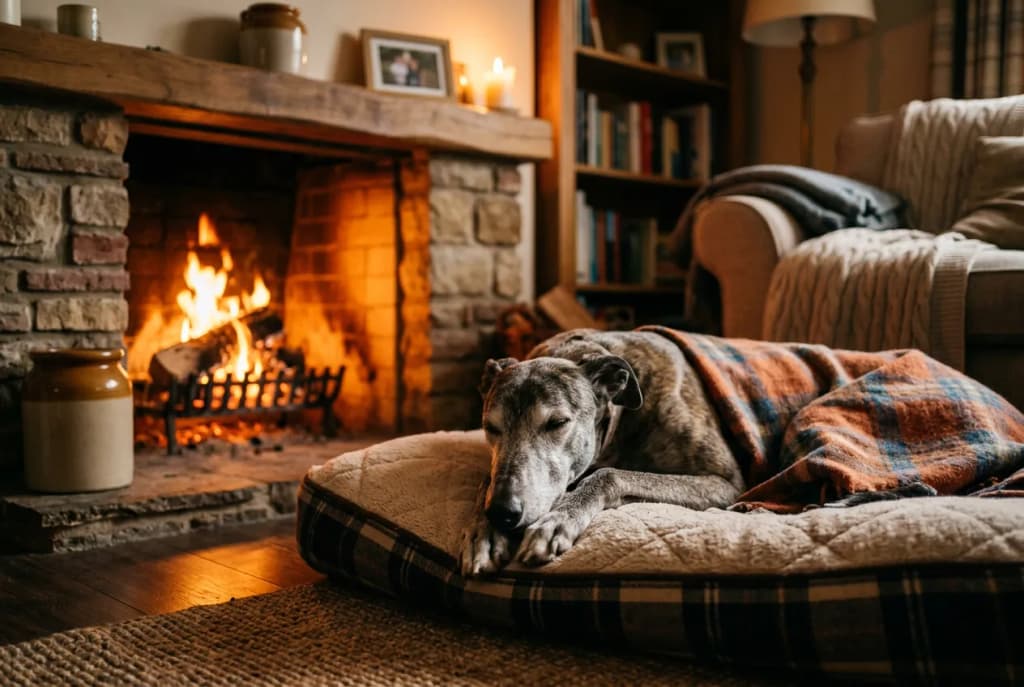
If you've hesitated because you picture greyhounds as high-octane athletes requiring five-mile runs, let that go right now. Retired greyhounds—especially seniors aged seven and older—are among the lowest-energy dogs you'll ever meet. The racing industry bred them for explosive sprinting, not endurance. A senior greyhound's ideal day involves two moderate 20-minute walks and approximately 18 hours of sleeping in positions that look anatomically impossible.
One family told us their eleven-year-old greyhound, a fawn male, completed his entire outdoor routine in under 30 minutes and then claimed the exact center of their king-size bed for the rest of the afternoon. "He sleeps like he's being paid for it," the husband said.
The "Old Dogs Can't Bond" Myth
This one makes us genuinely frustrated. Senior dogs bond differently, not less. In fact, many greyhound rescue organizations report that dogs adopted after age eight often form deeper, faster attachments than younger dogs, partly because their emotional needs are simpler and more direct. They're not distracted by the chaos of puppyhood. They're not testing boundaries. They're looking for exactly one thing: a person who stays.
The American Kennel Club's greyhound breed profile describes the breed as "gentle, noble, and sweet-tempered," but that clinical language doesn't capture what it actually feels like when a dog who has never had a home of their own leans their entire 65-pound frame against your leg while you're making coffee. That lean—greyhound people call it "the lean"—is worth more than a thousand tail wags.
"Senior greyhounds don't need you to save them. They just need you to sit still long enough for them to find you."
The Counterintuitive Truth About Age and Adoption
Here's where we challenge the main narrative: adopting a senior greyhound is not an act of charity. It's one of the most strategically sound decisions a pet owner can make.
We don't say that to diminish the compassion involved. We say it because framing senior adoption purely as rescue work actually discourages people from doing it. It makes them feel like they're signing up for heartbreak on a countdown timer. And while yes, the timeline is shorter, the density of joy per day is remarkably high.
Consider this comparison:
| Factor | Puppy/Young Dog | Senior Greyhound (7+) |
|---|---|---|
| Housetraining time | 4-8 weeks (often longer) | Usually 3-7 days (crate-trained from racing) |
| Destructive chewing phase | 6-18 months | Virtually nonexistent |
| Energy management needs | High — daily vigorous exercise | Low — two short walks, done |
| Personality predictability | Unknown until maturity | What you see is what you get |
| Bonding timeline | Gradual over months | Often immediate and intense |
| Veterinary costs (first year) | Spay/neuter, vaccines, puppy illnesses | Usually just a dental and senior bloodwork |
That last column isn't wishful thinking. It's the lived experience of thousands of greyhound adopters, and it's the part that gets buried under sentimental language about "giving them their golden years." You're not just giving. You're getting a fully formed companion with a PhD in relaxation.
The Soundtrack of Life With a Senior Greyhound
Since we're leaning into sound here—and sound is genuinely one of the most underappreciated dimensions of living with a greyhound—let's talk about what your house actually sounds like once they move in.
The Sounds You'll Gain
Rooing. If you've never heard a greyhound roo, prepare yourself. It's not a bark. It's not a howl. It's this bizarre, melodic, almost yodel-like vocalization that seems to come from somewhere deep in their narrow chest. Not all greyhounds do it, but the ones who do will roo when they're happy, when they hear a siren, when you come home, when they're trying to convince you that 4:47 p.m. is close enough to 5:00 p.m. dinner. It becomes the background music of your life, and you'll miss it on the days it doesn't happen.
The tail. A greyhound's tail hitting a wall, a doorframe, your shin—it's a metronome of enthusiasm. Thin and whip-like, it produces a sound somewhere between a drumstick on a snare and a ruler snapping against a desk. You'll develop bruises. You won't care.
Chattering teeth. This one catches new owners off guard. Greyhounds chatter their teeth when they're excited or nervous—a rapid clicking sound like someone speed-typing on a tiny keyboard. It's involuntary and completely harmless, and once you learn to read it, it becomes one of your favorite forms of communication.
Sleep sounds. Senior greyhounds dream audibly. Soft woofs, paw twitches against the dog bed, the occasional full-body twitch that makes them look like they're running a race in their sleep. Which, honestly, they probably are.
The Sounds You'll Lose
This is the part that surprises people. Your house gets quieter in unexpected ways.
Senior greyhounds rarely bark. Some never do. The absence of barking—if you've lived with terriers or hounds or herding breeds—is almost disorienting at first. You'll find yourself checking on them just because the silence feels wrong.
You'll also lose the sound of your own restlessness. There's something about a 70-pound animal sleeping peacefully on your couch that makes you slow down. The TV gets turned down a notch. You stop scrolling your phone as aggressively. The ambient noise of your own anxiety decreases because there's this warm, breathing presence in the room that radiates calm like a space heater radiates warmth.
"A greyhound doesn't fill your house with noise. It fills your house with presence."
The First 30 Days: A Realistic Senior Greyhound Adoption Guide
Most retired greyhound adoption guides break the adjustment period into neat phases. Reality is messier than that, but here's a framework that actually reflects what we hear from families.
Days 1-3: The Statue Phase
Your greyhound will likely be overwhelmed. They may stand in one spot for long stretches. They may refuse to eat. They may not understand stairs, mirrors, glass doors, or the concept of a bed that isn't a crate. This is completely normal.
Don't flood them with affection. Don't invite friends over to meet them. Don't rearrange furniture. Just exist near them. Sit on the floor if they seem nervous about your height. Speak in low tones. Let them approach you.
One practical tip that most guides skip: put a ticking clock near their sleeping area. The rhythmic sound mimics the ambient noise of a kennel environment and can ease the transition during those first silent, strange nights.
Days 4-14: The Observer Phase
Your greyhound starts watching you. Really watching. They're mapping your routines—when you wake up, when you eat, when you leave, when you return. Senior greyhounds are remarkably observant, and they'll start anticipating your patterns faster than you'd expect.
During this phase, introduce one new experience per day, not five. One room at a time. One new sound. One new person. Greyhounds process novelty slowly, and rushing it creates anxiety that can take weeks to undo.
Here's a practical schedule that works well:
| Day | New Introduction | How to Do It | Signs of Comfort |
|---|---|---|---|
| Day 4-5 | The backyard | Walk them on-leash first, even if fenced | Sniffing, relaxed tail, lying in grass |
| Day 6-7 | One additional room | Leave door open, let them explore alone | Entering voluntarily, lying down inside |
| Day 8-9 | TV or music at low volume | Start quiet, increase gradually | No startle response, continued resting |
| Day 10-11 | One calm visitor | Brief visit, no direct approach to dog | Approaching visitor on own terms |
| Day 12-14 | Car ride (short) | 5-minute drive to nowhere, then home | Settled posture, no panting or drooling |
Days 15-30: The Unfolding
This is when the magic happens, and it's the part that adoption counselors wish they could bottle.
Around the two-to-three-week mark, your greyhound's actual personality starts emerging from behind the shell of adjustment. The dog who stood frozen in your kitchen suddenly play-bows at a squeaky toy. The dog who wouldn't make eye contact starts following you from room to room—not anxiously, but companionably, like a friend who just wants to be in the same chapter of the same book.
The counterintuitive insight here is this: senior greyhounds don't decline into old age in your home. They bloom into it. Many adopters report that their dog became noticeably more playful, more vocal, and more affectionate between months one and six. It's a reverse trajectory from what you'd expect. The comfort of a home unlocks behaviors that a kennel environment suppressed for years.
We've seen this pattern reflected in the photos customers send us when they're commissioning 3D pet sculptures—early photos show a reserved, uncertain animal, and photos taken three months later show a completely different dog. Same markings, same face, but the eyes are brighter. The posture is looser. The joy is visible even in a still image.
What Nobody Tells You: The Emotional Recalibration
Here's the angle you won't find in the first five Google results for senior greyhound adoption, and it's the one that matters most.
You Will Grieve Before They Die
This sounds harsh. Stay with us.
When you adopt a senior dog, you walk into the relationship with full awareness of the timeline. A seven-year-old greyhound might give you five years. A ten-year-old might give you two. You know this going in, and you think you've made peace with it.
But what actually happens is more complex. You'll experience what psychologists call anticipatory grief—small, sudden waves of sadness that hit you not when something bad happens, but when something good happens. Your greyhound finally learns to play with a toy, and instead of pure joy, you feel joy laced with the knowledge that this phase has an expiration date. They fall asleep with their head on your lap, and your throat tightens because you're already counting.
This is normal. This is not a sign that you made the wrong choice. This is the tax you pay for loving something with your eyes open.
"The bravest kind of love is the kind that knows the ending and begins anyway."
The Relief You'll Feel (And Feel Guilty About)
We'll be real about something that almost nobody discusses publicly.
Many senior greyhound adopters—especially those whose dogs came with health issues—experience a complicated cocktail of grief and relief when their dog eventually passes. Relief that the dog isn't suffering. Relief that the 3 a.m. medication schedule is over. Relief that they can travel again.
And then: crushing guilt about feeling relieved.
This is one of the most common emotional experiences in senior pet adoption, and one of the least talked about. If you're reading this before adoption, file it away. If you're reading this after, know that you're not a monster. You're a human being who carried a heavy, beautiful weight, and putting it down doesn't mean you didn't love it.
The Unexpected Identity Shift
Something strange happens when you adopt a senior greyhound. You become a greyhound person. Not gradually. Almost overnight.
You'll find yourself in online forums at midnight, reading about osteosarcoma prevention and the best brands of martingale collars. You'll start recognizing greyhounds on the street from half a block away. You'll develop opinions about fleece coat brands. You'll say things like "he's actually a 45-speed dog, not a 60-speed" and expect people to understand what that means.
The greyhound community is one of the tightest, most supportive networks in the dog world. And because so many greyhound owners are senior-dog adopters, there's a shared understanding of both the joy and the timeline that creates an unusual depth of connection. You're joining a tribe, not just adopting a dog.
"Every greyhound we've immortalized in full-color resin carries a story of someone who took a chance on an older dog—and got the surprise of their life."
— The PawSculpt Team
The Counter-Point: When Senior Greyhound Adoption Isn't the Right Call
Intellectual honesty matters here. We've spent most of this article painting a beautiful picture, and it is beautiful—but it's not for everyone, and pretending otherwise would be irresponsible.
When You Should Wait
- If you have very young children (under 5). Senior greyhounds are gentle, but they can be startled by sudden movements and loud sounds. A child who grabs or falls on them can trigger a fear response. This isn't a dealbreaker, but it requires constant supervision and a level of management that some families aren't set up for.
- If you can't handle veterinary costs. Senior dogs need senior care. Dental work, bloodwork panels, joint supplements, potential emergency visits—these add up. A rough estimate for first-year veterinary costs for a senior greyhound runs between $800 and $2,000, depending on pre-existing conditions. If that number makes you flinch, a younger dog with lower immediate medical needs might be more realistic.
- If you travel frequently and can't arrange care. Senior greyhounds don't board well. They're sensitive to environmental changes, and a kennel environment can be genuinely traumatic for a dog who just escaped one. You'll need a trusted pet sitter or a very understanding friend.
- If you're adopting to fill a void immediately after losing another pet. This one's nuanced. Sometimes it works beautifully. But sometimes the new dog becomes a screen onto which you project your grief, and that's not fair to either of you. Most grief counselors recommend waiting at least a few weeks before bringing a new animal home—not because you need to "get over it," but because you need enough emotional bandwidth to see the new dog as themselves, not as a replacement.
When You Should Absolutely Do It
- When you want a calm, affectionate companion who doesn't need to be entertained every waking moment
- When you have a relatively quiet household with predictable routines
- When you're prepared for a shorter but extraordinarily rich chapter
- When you understand that love doesn't require a long timeline to be complete
Practical Preparations: Setting Up Your Home
Let's get concrete. Before your greyhound arrives, here's what actually matters (and what doesn't).
What You Need
- A quality orthopedic dog bed. This is non-negotiable. Greyhounds have almost no body fat, and their bony joints need cushioning. Spend the money here. Look for beds at least 4 inches thick with memory foam, not just polyfill.
- A martingale collar. Greyhounds have narrow heads and thick necks—standard collars slip right off. A martingale tightens gently when they pull, preventing escape without choking. Never use a retractable leash with a greyhound. Their prey drive can kick in without warning, and the sudden jolt of hitting the end of a retractable leash at 30 mph can cause serious injury.
- Baby gates. Stairs are often foreign to ex-racers, and a senior greyhound attempting stairs for the first time can fall. Gate off stairways initially and introduce them slowly, one step at a time, using treats.
- A coat. Yes, really. Greyhounds have virtually no undercoat and minimal body fat. If you live anywhere that drops below 50°F, your dog needs a fleece or jacket for walks. They're not being dramatic—they're genuinely cold.
What You Don't Need
- A fenced yard (nice to have, not essential—leash walks are fine)
- Expensive toys (most senior greyhounds are indifferent to toys initially; a stuffed animal and a squeaker are plenty)
- Another dog for companionship (greyhounds are often happiest as the only pet, though some do well with calm housemates)
- Agility equipment or training tools (your dog has retired; respect that)
Capturing the Dog They Become
Here's something we've noticed across hundreds of customer interactions at PawSculpt: people almost never commission a figurine of their greyhound during the first month. They wait. And when they do reach out, it's always with photos from later—month three, month six, month twelve—because that's when the dog they fell in love with fully appeared.
The greyhound in the early photos is a stranger wearing their dog's markings. The greyhound in the later photos is theirs—the specific tilt of the head, the particular way the ears fold back when they're content, the exact curve of the spine when they're doing that absurd roach-on-their-back sleeping position that makes every greyhound owner laugh.
Our full-color 3D printing process captures those details with a precision that flat photos can't match—the brindle striping reproduced directly in resin, the specific way your dog's coat color shifts between their shoulders and their haunches. It's not a generic greyhound figurine. It's your greyhound, frozen in the posture that makes your chest ache with recognition.
For specifics on how the process works—from photo submission to the finished piece—you can explore everything at pawsculpt.com. But the emotional truth is simpler than any technical explanation: you're turning a moment of joy into something you can hold.
The Long Game: Health Considerations for Senior Greyhounds
We're not veterinarians, and we always recommend finding a vet who has specific greyhound experience (their bloodwork values differ from other breeds in ways that can cause misdiagnosis). But here are the health realities you should prepare for.
Common Senior Greyhound Health Issues
| Condition | Prevalence | What to Watch For | Typical Management |
|---|---|---|---|
| Dental disease | Very high (80%+) | Bad breath, difficulty eating, drooling | Professional dental cleaning, often extractions |
| Osteosarcoma (bone cancer) | Higher than average for breed | Limping, swelling in legs, sudden lameness | Varies; consult vet immediately if suspected |
| Corns (on paw pads) | Common in retired racers | Limping on hard surfaces, visible hard spots | Hulling, boots, or surgical removal |
| Hypothyroidism | Moderately common | Weight gain, lethargy, coat changes | Daily thyroid medication (inexpensive) |
| Arthritis | Expected in seniors | Stiffness after rest, reluctance to climb | Joint supplements, anti-inflammatories, soft bedding |
One critical note: greyhound blood chemistry is different from other dogs. Their red blood cell counts run higher, their platelet counts run lower, and their thyroid values sit below the "normal" range for other breeds. Make sure your vet knows this. We've heard too many stories of greyhounds being incorrectly diagnosed because a vet used standard reference ranges.
The Financial Reality
Budget approximately $150-250 per month for a senior greyhound's ongoing care, including food, supplements, and routine vet visits. Set aside an emergency fund of $1,500-3,000 for unexpected issues. This isn't to scare you—it's to prepare you. The worst version of senior adoption is one where financial stress poisons the experience.
Finding Your Greyhound: Where to Start
The adoption process for retired racing greyhounds is more structured than general shelter adoption, which is actually a good thing.
Start with breed-specific rescue organizations. Groups like the National Greyhound Adoption Program, Greyhound Pets of America chapters, and regional organizations maintain detailed profiles of available dogs, including temperament assessments, cat-safety testing, and medical histories. These organizations know their dogs deeply—they can match you with a greyhound whose personality fits your lifestyle, not just the first one available.
Ask about foster-to-adopt programs. Many greyhound rescues place dogs in foster homes before permanent adoption, which means the foster family can tell you exactly what the dog is like in a home environment. This is invaluable information. You'll know whether the dog is cat-safe, how they handle being alone, whether they resource-guard, and what their energy level actually looks like outside a kennel.
Be honest on your application. Rescue organizations ask detailed questions for a reason. If you work long hours, say so—some greyhounds handle alone time beautifully. If you have cats, say so—some greyhounds are cat-safe and some absolutely are not. Honesty leads to better matches, and better matches lead to adoptions that last.
The Hallway, Revisited
Remember the question we started with? The sound of your hallway at 6 a.m.?
Here's what it sounds like three months after a senior greyhound moves in: the soft click of nails on hardwood as they pad toward you. The whisper of their tail brushing the wall. Maybe a low, contented groan as they stretch—that full-body, trembling stretch that greyhounds do, legs extended, spine arched, like they're trying to take up as much space in the world as possible.
And underneath all of that, a sound you can't quite name. It's the sound of a house that has a heartbeat in it. A rhythm you didn't know was missing until it arrived wearing a racing muzzle and a confused expression, stood frozen in your kitchen for eleven minutes, and then—slowly, quietly, without any fanfare at all—became the best decision you ever made.
Senior greyhound adoption isn't about rescue. It's about mutual discovery. It's about two beings—one human, one canine—meeting in the second act of their lives and realizing that the second act is where the real story begins.
The quiet joy nobody warns you about? It's not quiet at all. It's the sound of nails on hardwood, teeth chattering with excitement, a roo echoing down the hallway at 6 a.m. because you're awake and that, apparently, is the best thing that has ever happened.
Listen for it.
Frequently Asked Questions
Are senior greyhounds good apartment dogs?
Absolutely—and honestly, they might be the best apartment dogs out there. Senior greyhounds are quiet (most rarely bark), calm, and need surprisingly little space despite their size. Two 20-minute walks per day satisfies their exercise needs, and the rest of the time they're content to sleep on their bed. The main consideration is having enough floor space for an orthopedic dog bed, because they do stretch out to impressive lengths.
How long do retired racing greyhounds live?
The typical lifespan for a greyhound is 10-14 years. If you adopt a greyhound at age eight, you're realistically looking at 3-6 more years together, depending on their health. That might sound short on paper, but adopters consistently tell us those years are among the richest they've experienced with any pet. Quality over quantity isn't just a cliché here—it's the entire point.
Do senior greyhounds get along with cats?
This varies dramatically from dog to dog, and it's not something you can guess at. Always work with a rescue organization that formally cat-tests their dogs. Some greyhounds live peacefully with cats for years. Others have a prey drive that makes cohabitation genuinely dangerous. A reputable rescue will be transparent about each dog's testing results. Never skip this step.
What is the biggest challenge of adopting a senior greyhound?
The initial adjustment period. Many retired racers have spent their entire lives in kennels and on tracks. They may have never encountered stairs, glass doors, hardwood floors, televisions, or the sound of a vacuum cleaner. The first 2-3 weeks require patience, a slow introduction to new stimuli, and the willingness to let the dog set the pace. After that window, most greyhounds settle in remarkably well.
How much does it cost to care for a senior greyhound each month?
Plan for roughly $150-250 per month covering quality food, joint supplements, flea/tick prevention, and routine care. The first year often includes a dental cleaning ($400-800) and senior bloodwork panels. We strongly recommend building an emergency fund of $1,500-3,000 for unexpected health issues. Being financially prepared means you can focus on enjoying the relationship instead of stressing about costs.
How can I create a lasting memorial for my greyhound?
Many families plant memorial gardens, create photo books, or commission custom keepsakes. One increasingly popular option is a custom 3D-printed figurine that captures your specific dog's markings, posture, and personality in full-color resin. Companies like PawSculpt use advanced 3D printing technology to reproduce your greyhound's unique brindle pattern or fawn coloring directly in the material itself, creating a lasting tribute you can hold in your hands.
Ready to Celebrate Your Greyhound?
Every retired racer has a story—from the track to the couch, from confusion to contentment, from standing frozen in a kitchen to rooing down the hallway at dawn. A custom PawSculpt figurine captures the specific dog yours became: the exact tilt of those folded ears, the brindle pattern no other dog shares, the posture that makes you smile every single time.
Whether you're celebrating a senior greyhound adoption that changed your life or honoring a gentle soul who's already crossed the rainbow bridge, there's something powerful about holding their likeness in your hands.
Visit pawsculpt.com to explore the full process, preview options, and service details