
An Empty Bowl and a Restless Mind: Finding Growth After a Bengal's Unexplained Loss
Grief after losing a pet follows no prescribed timeline and looks different for every person, according to Cornell's pet loss resources. When you're grieving a Bengal cat whose loss came without a clear explanation, that unpredictability can feel especially cruel.
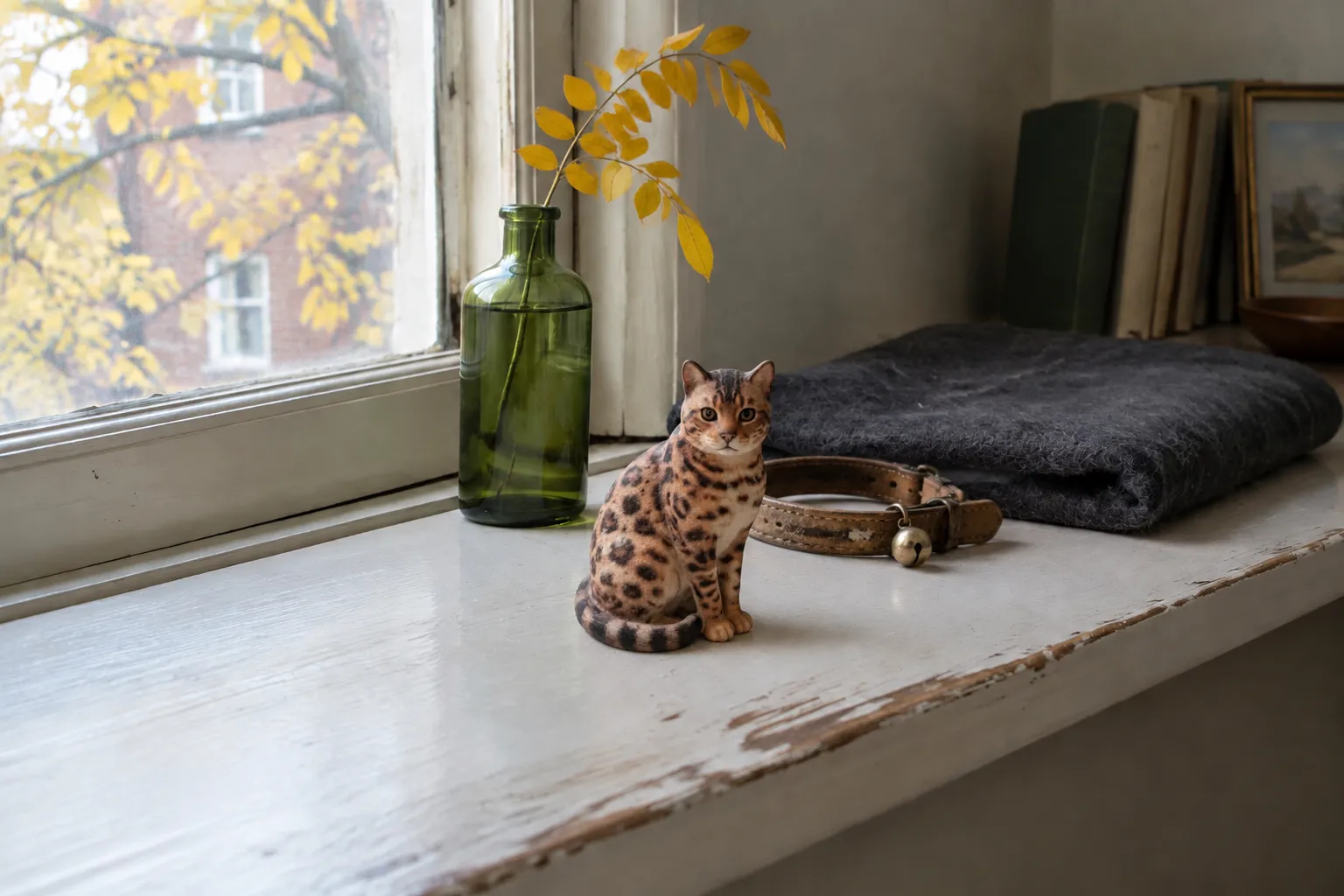
There is no correct way to grieve a Bengal, and no normal timeline for it, especially when the loss is unexplained. The path is gradual and rarely straight. Support from compassionate people, remembrance, writing, and art can help, and a keepsake like a sculpted figurine can hold that presence in one place.
Quick Takeaways
- Grief after pet loss is not linear, and there's no "right" schedule for feeling better (Humane World).
- Sadness, anxiety, tiredness, guilt, or even relief are all normal responses (Cornell Feline Health Center).
- Talking to a caring, non-judgmental person helps, and free pet loss helplines exist, like the one run by Tufts.
- Memorialization through writing or art can support some people as they heal.
- A custom figurine is one way to keep a presence nearby, alongside photos, letters, or other keepsakes.
The Sound That Isn't There Anymore
You know the exact rhythm you lived by. The soft thud of paws landing on the counter you told him to stay off. The chirp-trill that Bengals make instead of an ordinary meow, the one that greeted you at the door. The scrabble of claws on the scratching post at 5 a.m. The particular clink of a tag against a ceramic bowl.
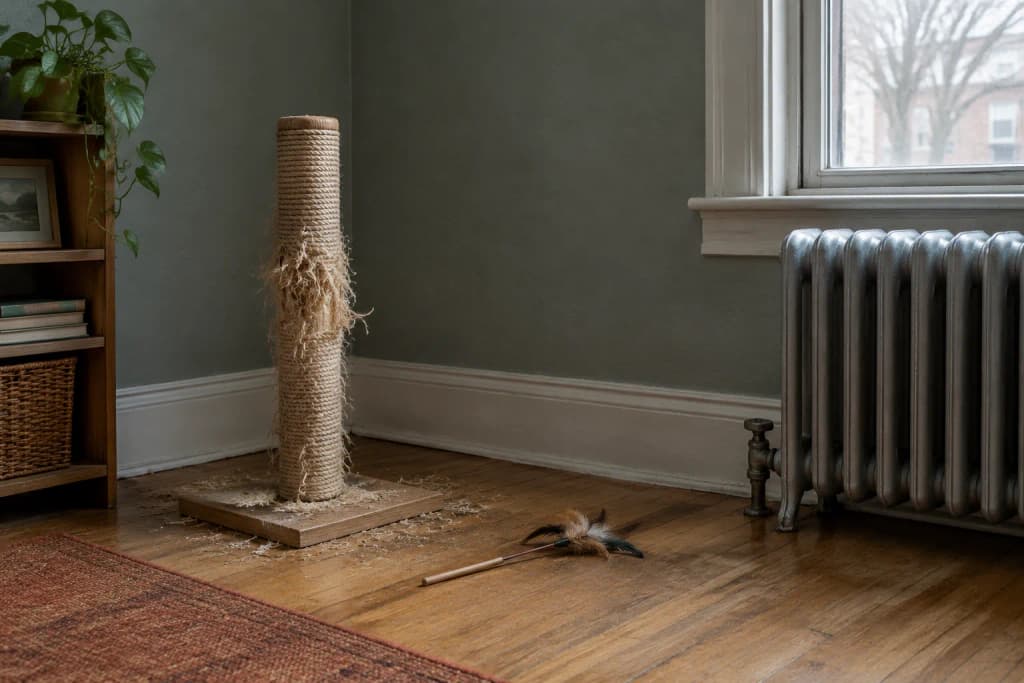
Now the house keeps a different time. You wait for a sound that doesn't come, and the waiting itself becomes a kind of noise. Your ears are still tuned to a frequency that no longer broadcasts.
That listening is not weakness. It's the shape love takes when the body it belonged to is gone.
The grief process is not linear, and it's okay, even important, to mourn the relationship you had with your pet, as Humane World for Animals puts it. So if you find yourself pausing mid-sentence because you thought you heard him, know that nothing is wrong with you. Your mind is simply doing what love asks of it.
Why "Unexplained" Hurts in Its Own Way
When you don't know why he's gone, grief has nowhere to rest.
A diagnosis, even a terrible one, gives the mind something to hold. A timeline. A reason. Something to organize the pain around. But an unexplained loss leaves a door swinging open in the middle of the night, and you keep walking through it, running scenarios, replaying the last normal morning, asking a question that has no answer.
Was there a sign you missed? A sound in his breathing you should have caught? A change in how he moved to the bowl?
Here's what's worth naming plainly: guilt is a normal part of grieving a cat, right alongside sadness, anxiety, tiredness, and even relief, according to the Cornell Feline Health Center. Feeling responsible does not mean you were.
It's also true that medical information is often more accurate than what an owner can observe about a pet's health, as the ASPCA notes. The signals you're now torturing yourself for "missing" may simply not have been visible to you. Bodies keep secrets that eyes can't read.
You don't have to solve the mystery to grieve him well. Sometimes the most honest thing you can say is: I don't know why, and I loved him anyway.
The Jealousy Nobody Warns You About
Let's talk about the feeling you might not have admitted to anyone.

You scroll past a friend's photo of their cat stretched across a sunny floor, and something ugly flickers in your chest. A neighbor complains about their cat knocking a glass off the table, and you want to shake them: do you know what you have? You see someone at the vet's office with a healthy, purring animal, and you have to look away.
This is jealousy, and it can arrive uninvited in the middle of grief. It doesn't mean you're bitter or small. Grief responses vary between people and follow no prescribed timeline, as Cornell describes, and envy is one of the harder-to-confess corners of that landscape.
What that jealousy is really pointing at is not their cat. It's the ordinary future you assumed you'd have and didn't get. The mornings. The sunny floor. The years you'd already spent in your imagination.
You're not resenting them. You're missing him.
When the feeling comes, try not to fight it or shame it. Notice it, name it, and let it pass through like a passing sound in another room. It will soften. Grief is a gradual journey that rarely follows a straight path, and these sharp edges tend to dull with time and care.
Talking helps here. A caring, supportive, non-judgmental person can hold that confession without flinching, which is exactly what the free helpline staffed by veterinary students at Tufts exists to offer, Monday through Thursday evenings Eastern time, with 24-hour voicemail. Saying the jealous thing out loud, to someone who won't judge you, often takes half its weight away.
Building a Sacred Space for Him
There's a difference between a house that's haunted by absence and a home that holds a presence on purpose.
You can choose the second one. Not by pretending he's still here, and not by scrubbing every trace of him away, but by creating a small, deliberate place where his memory lives. A sacred space. A corner that belongs to him.
This is where ritual quietly does its work. Memorialization and remembrance can help some people move through grief, as Cornell notes, and building something with your hands gives grief somewhere to go besides in circles.
Think about what belonged to the sound of him:
- The feather wand toy he'd stalk across the floor, the one that made that faint whir when it moved.
- The bowl, even empty, especially empty.
- A folded blanket that still holds the dip where he curled.
- A photograph where his eyes are doing that half-closed, trusting thing.
Arrange them somewhere the light falls well. A windowsill. A shelf. A quiet ledge where you'll pass it and be reminded, gently, that he was real and he was yours.
Imagine the Morning After You Build It
Imagine you wake before the alarm, out of that old habit his 5 a.m. scrabbling built into you. Instead of lying there listening for a sound that won't come, you walk to the windowsill you set up last night. You touch the edge of the little feather toy, you say his name once into the early light, and you let the quiet be a place you visit rather than a hole you fall into. Then you put the coffee on.
That small ritual won't erase the ache. But it changes the shape of it, from something that ambushes you to something you can meet on purpose.
Turning Grief Into Legacy: Writing, Art, and a Sculpted Presence
Grief that has no outlet tends to churn. Grief that gets expressed tends to move.
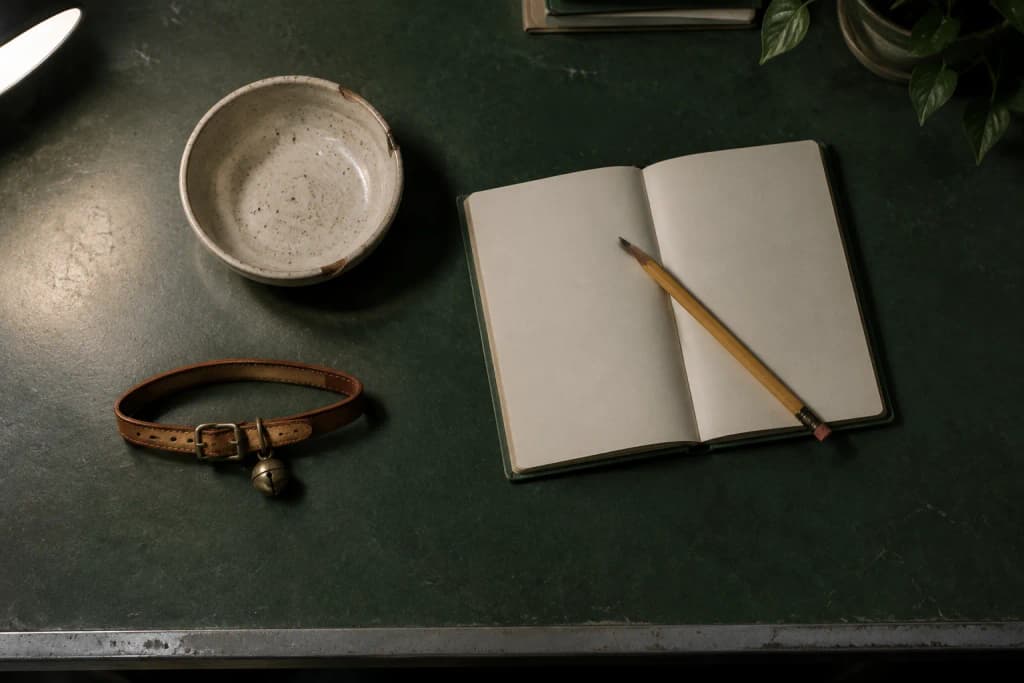
Writing, art, and remembrance are among the ways compassionate support can help people through pet loss, according to Cornell. You don't have to be a writer or an artist for this to work. The point isn't a finished product. The point is turning what's inside you into something outside you, where you can look at it, tend to it, and carry it differently.
Here are a few directions, gentle ones:
Write him a letter. Not for anyone else. Tell him about the morning. Tell him the thing you never said, or the thing you're afraid you did wrong. Let the guilt onto the page instead of leaving it to loop in your head.
Record the sounds of him from memory. Describe the chirp, the trill, the thud of the counter landing. Sound fades from memory faster than we expect. Writing it down keeps the soundtrack of him within reach.
Make or commission something that holds his presence. A framed photo. A painting. A small sculpture. An object that turns a swirl of feeling into a fixed point you can return to.
This last one is where a keepsake earns its place, and it's worth being honest about what it is and isn't. A custom figurine is not the cat. Nothing brings back the weight of him on your chest or the sound at the door. But a well-made keepsake can become the anchor of that sacred space, something that says he was here, he mattered, and I'm keeping him close.
If you go that route, choose thoughtfully. A custom pet memorial figurine is one option among many, and it should feel like the right fit for you, not an obligation. What makes a sculpted portrait meaningful for a Bengal specifically is the chance to capture what a flat photo can miss: the spotted or marbled coat, the lean athletic build, the particular tilt of the head, the way he curled with his tail wrapped around himself.
At PawSculpt, that piece is a sculpted portrait rather than a photocopy. An artist reviews your reference photographs and digitally sculpts the portrait, then the model is printed in full color on a Mimaki 3DUJ-553, a printer whose equipment supports more than 10 million colors. That color capability is what lets a Bengal's coat pattern read as itself rather than a rough approximation. The figurines stand between 2.5 and 6 inches tall, sized to sit naturally on that windowsill or shelf you've set aside.
One detail matters most for grief: you confirm the artist's preview before anything is printed. The first preview is typically delivered within about 7 days after your complete references are received and the order begins, and up to 5 revisions are included. So you're never handing your memory of him over and hoping. You get to look, react, and ask for changes until it feels like him.
A small nameplate can carry a phrase you'd choose yourself, something as simple as Our boy. The result is a physical presence for the sacred space you're building, one you can dust and adjust and stand near on the mornings when you need him nearby.
When Grief Needs More Than a Windowsill
Rituals and keepsakes help. Sometimes they aren't enough on their own, and that's not a failure.
Loss and bereavement can disturb sleep and daily routine, as both Cornell and Humane World describe. When grief starts interfering with how you function day to day, professional grief counseling is a legitimate option, according to the Cornell Feline Health Center.
There's more support available than most people realize:
- Free pet loss helplines. The helpline at Tufts is staffed by veterinary students Monday through Thursday, 6 to 9 p.m. Eastern, with 24-hour voicemail, and callers are met by a caring, respectful, non-judgmental person.
- Virtual support groups and coaches. Lap of Love offers both free and fee-based virtual sessions led by certified pet loss coaches, including one-on-one and small-group formats, to help you heal at your own pace.
- Veterinary social work programs. Programs like the one at The Ohio State University Veterinary Medical Center exist to honor the human-animal bond and can help with bereavement referrals, and some veterinary centers hold annual remembrance ceremonies for pets that have died.
Reaching out is not an admission that you can't handle it. It's how you honor a bond that was worth this much pain in the first place. The very institutions that treat cats recognize that the human-animal bond is worth honoring, which is another way of saying: what you're feeling is real, and it deserves support.
Frequently Asked Questions
Is it normal to feel guilty when my Bengal's death was unexplained?
Yes. Guilt sits right alongside sadness, anxiety, tiredness, and even relief as normal parts of grieving a cat, according to the Cornell Feline Health Center. Feeling responsible doesn't mean you were, especially when a cause was never clear and medical information often reveals more than an owner could observe.
Why do I feel jealous of people who still have their cats?
Jealousy can surface unexpectedly in grief, and it doesn't make you a bad person. Grief responses vary between people and follow no set timeline. That envy usually points at the ordinary future you expected to have, not at anyone else, and it tends to soften with time and support.
Where can I find free pet loss support?
Tufts runs a free helpline staffed by veterinary students, Monday through Thursday from 6 to 9 p.m. Eastern, with 24-hour voicemail. Lap of Love also offers free and fee-based virtual sessions led by certified pet loss coaches.
Can a memorial figurine really help with grief?
Memorialization, remembrance, and art can help some people process loss, as Cornell notes. A figurine won't replace your cat, but it can anchor the remembrance space you build and give grief a fixed place to return to.
How does a PawSculpt figurine capture a Bengal's coat?
An artist digitally sculpts a portrait from your reference photos, then prints it in full color on a Mimaki 3DUJ-553, a printer whose equipment supports more than 10 million colors. You confirm the artist preview before anything is printed, with up to 5 revisions included.
When should I consider professional grief counseling?
When loss disturbs your sleep or interferes with daily functioning, professional grief counseling is a valid option, according to the Cornell Feline Health Center. Asking for help is a way of honoring the bond, not a sign you're failing at grief.
When You're Ready to Keep Him Close
There's no rush here. Grief keeps its own time, and the right moment to make something is whenever it feels right to you, not a day sooner.
When that moment comes, and you want a physical presence for the sacred space you've built, a sculpted portrait can hold his likeness where the light falls well. Explore PawSculpt's pet memorial figurines or browse the full range of custom pet sculptures to see whether the fit feels right for you.
You'll review the artist's preview before anything is printed, and you can shape it until it reads as him, the tilt of his head, the curl of his tail, the pattern only your Bengal wore. Until then, be gentle with the version of you that's still listening for a sound at the door. That listening is love, and love like that deserves somewhere to rest.