
The First Night Without Her: A Stoic's Gentle Take on Your Abyssinian's Empty Bowl
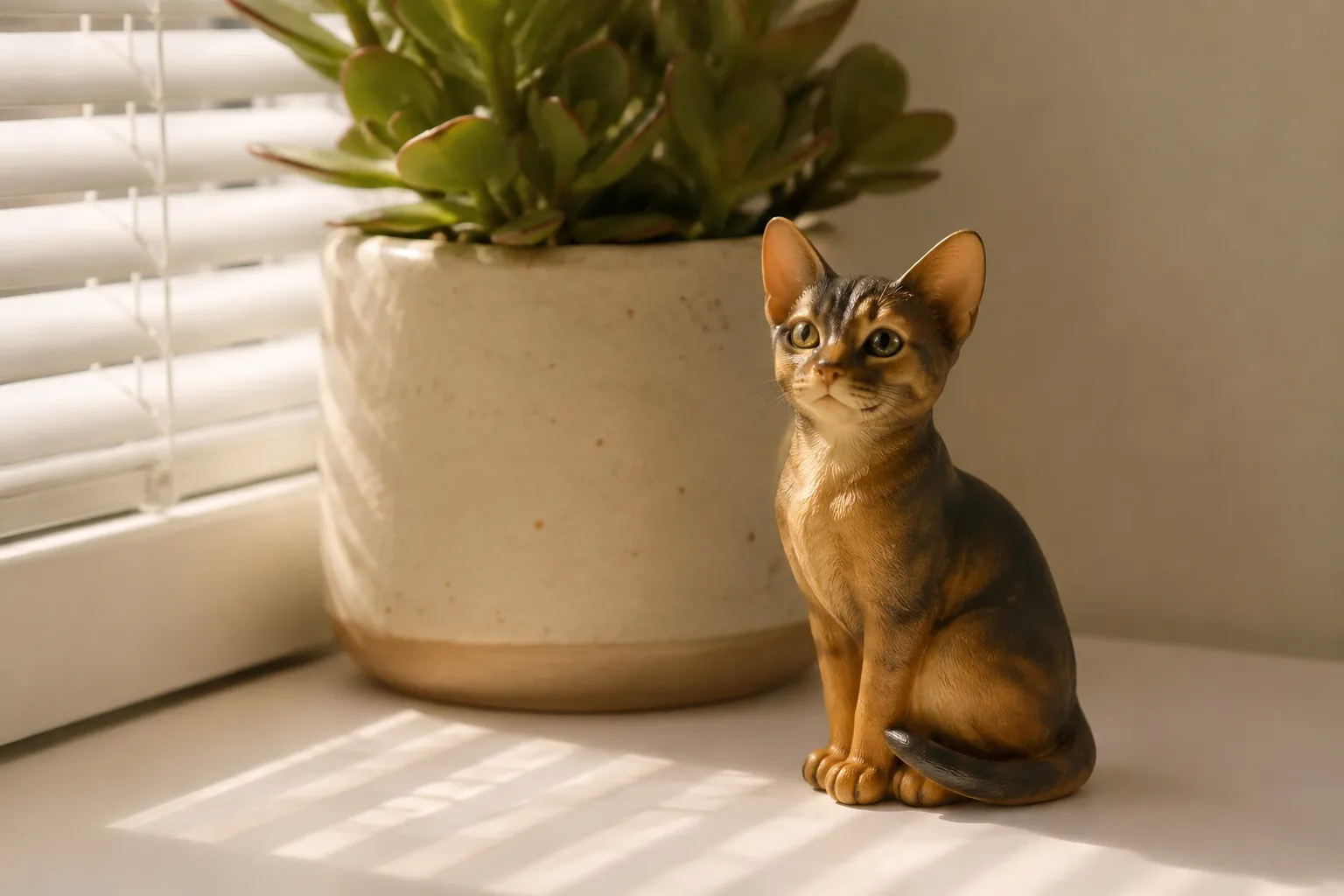
You reach the top of the attic stairs and stop. No soft trill follows you up. That chirping brrp your Abyssinian made on every climb is gone, and the pet loss first night stretches ahead with a quiet your ears keep testing, like a tongue finding a missing tooth.
Surviving the first night after losing your Abyssinian starts with expecting the silence instead of fighting it. Leave her bowl where it sits for one more day, let the grief keep its own timing, and treat small rituals as anchors. An Abyssinian cat memorial gives that raw first night a place to land.
Quick Takeaways
- Name the silence before it ambushes you — the missing sounds hit harder than the empty spaces.
- Stoic grief isn't cold — it's loving fully while accepting what you could never control.
- The guilt and the relief are both normal — you can feel two opposite things at once.
- Turn the first night into a small ritual — a candle, her collar, one spoken goodbye out loud.
- A tangible keepsake helps grief find an anchor — many families explore custom pet memorial figurines when the ache needs somewhere to go.
The First Night Without Her: Why the Quiet Is So Loud
Here's what nobody tells you about the pet loss first night: it's not the sight of the empty cat tree that undoes you. It's the sound. Or rather, the sound that isn't there anymore.
Abyssinians are talkers. Not loud, exactly, but constant. The little chirp when you open the fridge. The trill that answered your voice from three rooms away. The soft thud-and-scramble of her landing on the bed at 2 a.m. because she decided your feet needed guarding.
That whole private soundtrack just stopped.
One of our customers, a woman named Priya, told us the first night without her Abyssinian, Ravi, she kept the bedroom door open out of habit. She lay awake waiting for a jump that wasn't coming. Around 3 a.m. she got up and closed the door, and she said closing it felt like a second goodbye.
If you're reading this tonight, doors open, ears straining, you're not doing anything wrong. Your nervous system spent years tuned to one specific frequency. It doesn't switch off because the source went quiet.
"The house isn't empty. It's just missing one small sound that used to fill every room."
The first 72 hours are usually the sharpest. Grief researchers and pet loss counselors both note that acute loss tends to peak in those early days, when the routines still fire but the reason for them is gone. You'll reach for the food scoop. You'll step over a spot on the floor that no longer needs stepping over.
Let your body do those things. Correcting yourself every time only adds a second sting on top of the first.
A Stoic's Gentle Take on Grief (No, Not the Cold Kind)
When people hear "stoic grief," they picture someone stone-faced, swallowing it down, being strong. That's not Stoicism. That's just repression wearing a nicer coat.
Real Stoicism, the kind Marcus Aurelius wrote in his journal at night, is gentler and stranger than that. It says: love completely, and at the same time, hold loosely. Two things that sound like they can't share a room.
The Stoics had a practice called premeditatio malorum, quietly rehearsing loss while you still have the thing you love. Seneca wrote that we should love our companions as though they are on loan, because they are. Every warm body we adore is borrowed. Your Abyssinian was always a loan the universe was going to call back.
That's not depressing. It's the opposite. It's the reason she mattered so much.
The dichotomy of control, applied to a cat
The core Stoic idea is simple: some things are up to us, most things are not. You could not control the length of her life. You could not negotiate with her kidneys or her heart or whatever finally took her.
What was up to you? The warmth of your lap. The clean water. The 15 minutes of feather-wand chaos every evening. Whether she knew, in her body, that she was safe.
You gave her all of it. That part was yours to give, and you gave it.
So here's the counterintuitive piece most grief advice skips. The goal isn't to stop hurting faster. It's to stop adding a second layer of suffering on top of the first. The natural pain of missing her is clean grief. The story you tell yourself, that you should have caught it sooner, done more, chosen differently, that's the added weight. The Stoics called that "assent." You can decline to sign off on it.
"Grief needs somewhere to rest its hands. We've watched families steady themselves the moment they had something solid to hold."
— The PawSculpt Team
The Abyssinian, of all cats, suits this philosophy. They're curious, present, endlessly interested in the now. She never once worried about how many years she had left. She was too busy investigating the grocery bag. There's a small teaching in that, if you want it.
The Feelings Nobody Warns You About
Let's talk about the emotions that show up uninvited and then make you feel like a monster for having them.
Relief. If your Abyssinian was sick for a long time, if the last weeks were syringe feedings and vet drives and watching her not be herself, you may have felt something loosen in your chest when it ended. A breath you didn't know you were holding.
That relief doesn't cancel your love. It is your love. It's what happens when the person who cared most finally stops bracing for the next bad night. Feeling lighter when her suffering ended makes you someone who loved her enough to want her comfort over your own need to keep her here. The guilt that chases that relief is one of grief's cruelest tricks, and it lies.
Anger, too. At the vet. At yourself. At the friend who said "it was just a cat" and meant well. At the cat, even, for leaving. Anger is grief with nowhere to go yet. It's normal, and it passes through if you let it move instead of judging it.
And the one almost nobody admits out loud: the fear of forgetting. You panic a little because you can't quite hear her trill in your memory the way you could last week. You worry the specifics are dissolving. This fear is so common among the families we work with that we've come to expect it.
Here's the reassuring part. You won't forget her. What fades is the raw audio file. What stays is her. Two different things.
A quick map of the early days
Grief doesn't march in tidy stages, but knowing the rough terrain helps you stop bracing for the wrong thing. This is a general pattern, not a schedule you're failing at.
| Timeframe | What often hits | What tends to help |
|---|---|---|
| First night | Missing sounds, waiting for a jump that won't come | Keep one routine, skip the rest. Let the door stay open. |
| First 72 hours | Reaching for the bowl, the scoop, the leash-of-habit | Don't correct yourself each time. Let the body catch up slowly. |
| First 2 weeks | Waves that arrive without warning, often at dusk | A small daily ritual. Say her name out loud. |
| First 1–3 months | Guilt, relief, the fear of forgetting details | Write down three specific sounds or quirks before they blur. |
| Beyond | Missing her without the sharp edge; a warmer ache | A tangible keepsake, a photo wall, a memorial spot. |
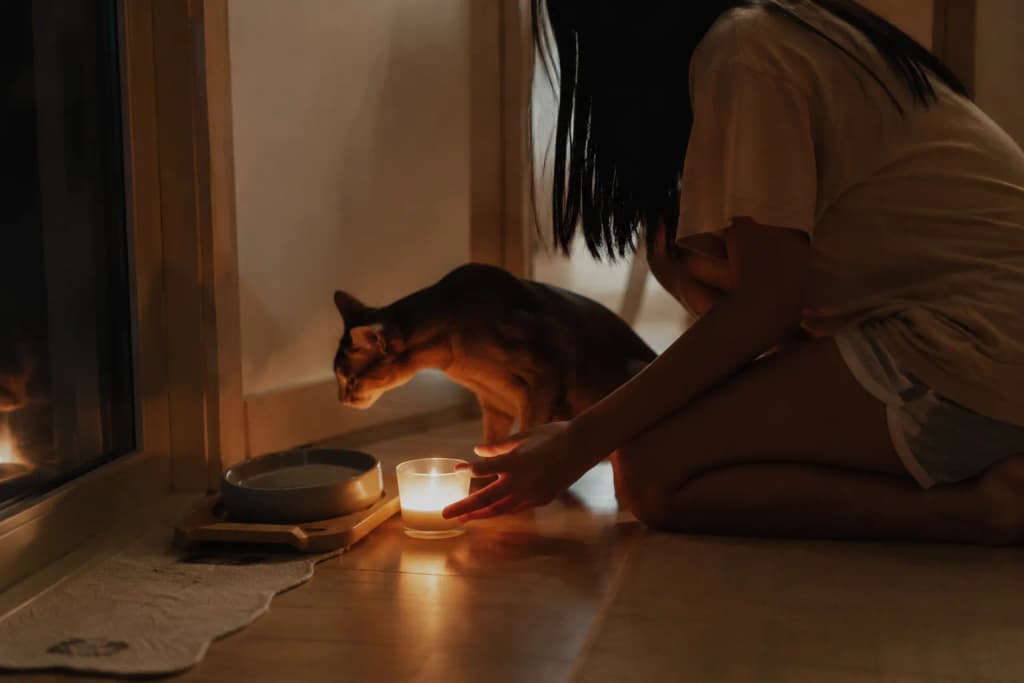
Priya told us the dusk waves surprised her most. Ravi used to demand dinner at exactly 5:40, and for weeks her body clenched at 5:40 like a phantom alarm. She started lighting a small candle at that time instead. Same ritual, new shape.
What to Actually Do With the Empty Bowl
The empty food bowl is the object that wrecks people. It sits there, clean, catching light, saying nothing.
Well-meaning relatives will tell you to put it away immediately. Others will say keep everything forever. Ignore both as rules. There is no correct timeline for a dish.
What we've learned from thousands of grieving families is that the middle path works best: don't rush the removal, and don't freeze the house into a museum either. Move things when moving them feels like honoring her, not erasing her. You'll feel the difference.
Some concrete things you can do on the first night and the days after:
- Say a real goodbye out loud. Speak to her by name, in the room she loved. It sounds strange until you do it. Then it doesn't.
- Keep one sensory anchor. Her collar with the little bell. A blanket that still holds her smell. Don't wash it yet.
- Record what you remember. Open your phone's voice memo and describe her trill, her ruddy coat, the way she head-butted your chin. Future-you will weep with gratitude for this.
- Light something. A candle at her dinner time turns a painful hour into a small, held ritual.
- Let the house be quiet. You don't have to fill the silence with a TV. Sometimes sitting in it, on purpose, is its own kind of respect.
The Abyssinian Cat Club and general feline welfare groups will tell you these cats bond intensely with their people. That bond doesn't have an off switch, which is exactly why building a small ritual matters. A sacred space, even a shelf, gives the love a room to live in now that she can't.
"Keep the collar with the little bell unwashed for a while. Some sounds are worth holding onto in your hand."
If you have another pet
Surviving cats often grieve too, and Abyssinians who lived with a bonded companion may search, vocalize more, or go off their food. The ASPCA notes that animals can show real behavioral changes after losing a companion. Keep their routine steady, offer extra floor-time, and check with your vet if they stop eating for more than a day or two.
We're not veterinarians, so anything medical goes to your vet first. But the emotional read is usually right: they're confused by the same missing sound you are.
Building an Abyssinian Cat Memorial That Actually Holds
At some point, the sharp days soften, and a quieter question surfaces: how do I keep her present, not just remembered?
This is where a physical memorial earns its place. Not because you need proof she existed. Because grief, as our team quote said, needs an anchor. Something your hands can find when your memory gets slippery.
Families choose different anchors, and there's no hierarchy here:
| Memorial option | Effort | What it gives you |
|---|---|---|
| Memorial garden or planted tree | Seasonal, ongoing | A living, changing presence outdoors |
| Photo book or wall gallery | One afternoon | Faces and moments, flat but familiar |
| Paw-print casting or clay impression | Quick, done early | A literal trace of her body |
| Custom sculpted figurine | You choose photos, studio does the rest | A three-dimensional presence you can hold |
| Donation in her name | One gesture | Meaning that ripples outward |
The figurine option is the one people ask us about most, so let me be honest about what it is and isn't.
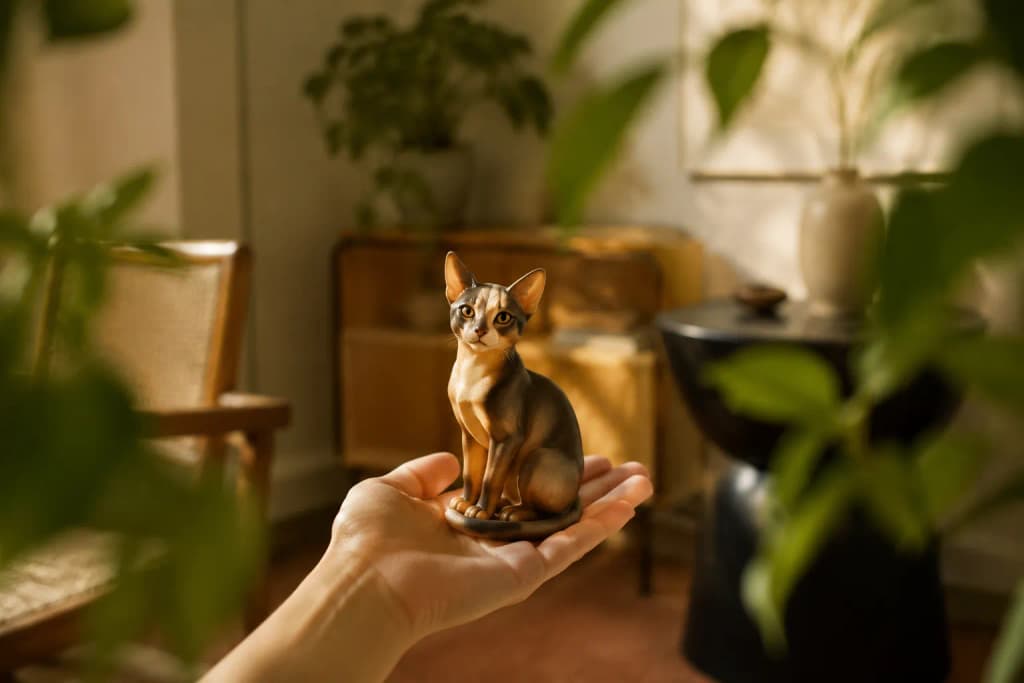
At PawSculpt, we're a sculpted portrait studio. Our master 3D artists model your Abyssinian digitally, capturing her posture, her expression, the particular tilt of those big ears and the ruddy ticking of her coat, and then we bring her to life through full-color 3D printing. The color is printed into the resin itself, voxel by voxel, not layered on afterward. The only hands-on step is a protective clear coat for sheen and durability.
What that means for you: it's a portrait, not a photocopy. An artist's interpretation of her character, with a natural print texture you can feel, not a cold plastic clone and not a promise of every single hair. We think that's the honest kind of beautiful.
If you want to see her before committing to anything, the website has a free instant AI preview, and an artist's 3D preview follows within 7 days of a deposit. You can explore custom cat sculptures and the full memorial range at your own pace. There's no rush, and grief shouldn't be rushed by a checkout button.
Priya waited two months before she reached out. She sent us photos of Ravi mid-trill, mouth slightly open, ears forward. When the figurine arrived, carefully packed and tracked, she said she finally had somewhere to put her hand at 5:40. The candle still gets lit. Now there's a small ruddy shape beside it.
That's the whole point. Not to replace the sound. To give the love a shape.
Frequently Asked Questions
How do I get through the first night without her?
Keep just one routine that comforts you and let the rest go. Leave her bowl and blanket where they are for now. Expect the missing sounds instead of being ambushed by them, and if it helps, say goodbye out loud in the room she loved. There's no gold star for making it a productive night.
Is it normal to feel relieved after my pet passed?
Completely normal, especially after a long illness. That relief is the sound of you finally stopping the brace against the next bad night. It doesn't cancel your love, it reflects it. The guilt that often follows is grief playing a cruel trick, and it isn't telling you the truth about what kind of caretaker you were.
Does "stoic grief" mean I should just be tough about it?
No, and that's the biggest misunderstanding. Stoic grief means grieving openly while releasing what you could never control, like the length of her life. It asks you to drop the self-blame, the "I should have known sooner," while still feeling the clean, honest ache of missing her. Feel it fully. Just don't add a second wound on top.
How long will this feeling last?
The sharpest edge usually lands in the first 72 hours, then softens in uneven waves over the following weeks and months. Grief isn't a straight line, so a hard day at month four isn't a setback. Over time the missing-her doesn't disappear, it just loses the panic and becomes a warmer kind of ache.
What's a meaningful way to memorialize an Abyssinian?
Because Abyssinians are so present and interactive, many people want something equally tangible. A memorial garden, a paw-print casting, a photo wall, or a sculpted figurine all work. The best choice is whatever gives your hands somewhere to go on the hard evenings. You can browse pet memorial keepsakes when you feel ready.
When is the right time to consider a keepsake?
Whenever you feel it, not when someone tells you to. Some families order within days because they need an anchor fast. Others wait months, like Priya did. There's no expiration date on honoring her, so let the timing be yours.
Ready to Celebrate Your Pet?
Every pet has a story worth preserving. Whether you're honoring a beloved companion who's crossed the rainbow bridge or holding onto the trill and the character that made your Abyssinian entirely her own, a custom PawSculpt figurine, a sculpted portrait, not a photocopy, captures the personality that made her one-of-a-kind. When the pet loss first night gives way to the long work of remembering, an Abyssinian cat memorial you can hold gives the love a shape.
Explore the free AI preview and artist's 3D preview process on our site. Every order is carefully packed, insured, and tracked to your door.