
Navigating the Dark: Living with a Blind Collie Who Hasn't Lost Spirit
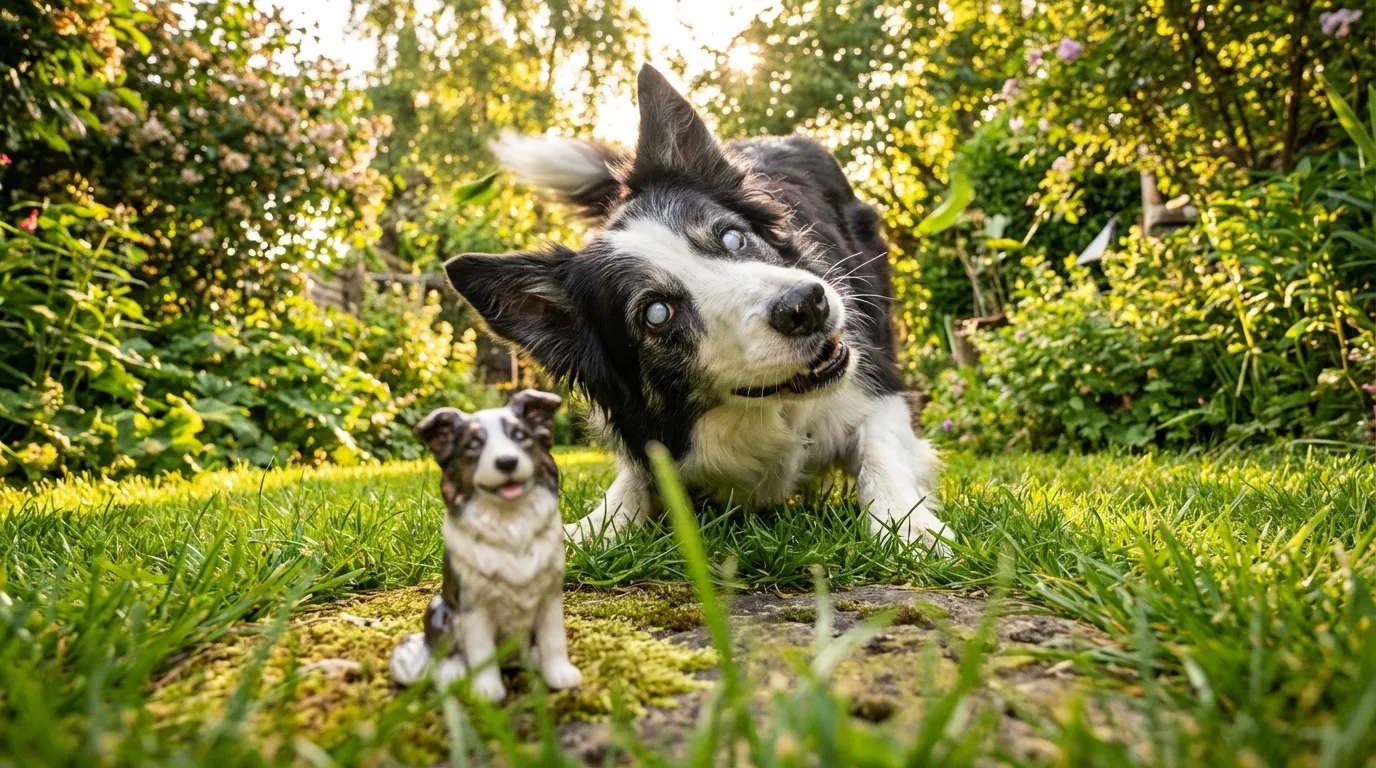
Dogs rely on smell for roughly 33% of their sensory input, but a Border Collie’s brain processes spatial data faster than almost any other breed. Watching a blind collie navigate the attic purely by air currents proves that special needs pets don’t lose their purpose; they just switch sensors.
Quick Takeaways
- Texture mapping (using different rugs) is more reliable than scent for fast-moving dogs.
- "Wait" is a more effective safety command than "No" or "Stop" for blind dogs.
- Mental exhaustion through nose work must replace visual fetch for high-energy breeds.
- Tactile toys with bells or distinct scents engage their remaining senses best.
- Preserve their unique look with PawSculpt's custom keepsakes that capture their spirit forever.
The Working Mind in the Dark
The biggest misconception about caring for a blind dog—especially a high-drive breed like a Border Collie or Australian Shepherd—is that they need pity. They don't. They need a job.
We recently worked with a family whose Collie, Jasper, lost his sight to PRA (Progressive Retinal Atrophy). The owners were paralyzed by the diagnosis, treating him like fragile glass. But Jasper? He was frustrated. He was barking at walls not because he was confused, but because he was bored.
Border collie care isn't just about exercise; it's about cognitive load. When the lights go out, that brain is still firing at a hundred miles an hour. If you don't give them a problem to solve, they will invent one (usually involving your baseboards).
"Blindness is a human concept of loss. To a dog, it’s just a new set of rules for the game."
The counterintuitive insight here is that you shouldn't clear the floor completely. While you want to remove sharp hazards, leaving some obstacles actually helps keep their mind sharp. They build a mental "mesh" of the room. When you create a perfectly empty padded cell, you deprive a working breed of the environmental feedback they crave.
Tactile Mapping: The "Touch" Language
Most guides suggest using scents (vanilla near the door, lavender near the bed). While helpful, scents drift with drafts. For a dog moving at speed, tactile information is king.
Think of your home as a highway system. You need rumble strips.
We recommend a system of "landing strips." Place a runner rug leading to the water bowl. Use a specific textured mat (like a nubby bath mat) exclusively at the top and bottom of stairs. Within two weeks, a blind dog learns that nubby texture equals elevation change.
The Tactile Navigation System
Use this guide to set up your home for success:
| Surface Type | Purpose | Best Location |
|---|---|---|
| Bubble/Nubby Mat | Warning: Danger/Change ahead | Top & bottom of stairs; in front of glass doors |
| Runner Rugs | The "Highway": Safe to run | Hallways; path from bed to water bowl |
| Gravel/Mulch | Perimeter: Yard boundaries | Around the edges of the fence line |
| Plastic Mat | Destination: Food/Water | Under bowls (auditory cue when stepped on) |
One of our customers told us about their blind Collie who uses the "click-clack" sound of his nails on the hardwood to echolocate. He barks once, listens to the reverb off the sofa, and knows exactly where to jump. It’s brilliant adaptation.
Enrichment for the Sightless Worker
You can't play fetch the old way. Throwing a ball for a blind dog is just cruel unless you adapt the equipment. But blind dog enrichment can be even more rewarding than sighted play because it requires intense focus.
The "Sniffari" Walk
Stop trying to walk for distance. Walk for information. On a "Sniffari," the dog leads. If they want to stop and smell a fire hydrant for four minutes, let them. That olfactory processing burns as much energy as running.The Anchor Command
Teach the command "Touch." Hold your hand out and have the dog press their nose to your palm for a treat. This becomes their anchor in a chaotic world. If they get disoriented at the park, or if visitors startle them, the "Touch" command brings them back to a safe, known point—you."We see so many photos of blind dogs with their heads tilted, listening intently. It's a pose of pure intelligence, not disability."
— The PawSculpt Team
The Emotional Hurdle (For You, Not the Dog)
Here is the hard truth: The grief is yours. The dog is fine.
We often project our human reliance on sight onto our pets. We feel guilty moving a chair. We feel heartbroken when they bump into a doorframe. But watch their tail. Is it wagging? Then they are happy.
However, there is a poignant shift in the relationship. You become their seeing-eye human. The bond deepens because the trust must be absolute. They rely on your voice to tell them if the path ahead is clear.
This is often when pet parents realize how special this phase of life is. It's distinct. It's quieter, perhaps, but deeper. Many families choose to commemorate this resilience. We've seen a rise in people commissioning custom figurines of their senior or special needs pets. There is something powerful about holding a physical representation of that dog—capturing the cloudy eyes that still look at you with love, or the gray muzzle that mapped a thousand miles.
Unlike generic statues, a full-color 3D print captures the specific markings that define your dog. It’s a way to freeze time, holding onto the spirit of a dog who refused to let darkness stop them.
Handling the "Spook" Factor
Blind dogs, especially herding breeds, can become reactive. If they can't see what's approaching, their instinct is to control the space around them.
The Mistake: Most people try to soothe the dog after they get startled.
The Fix: Announce your presence before you enter their personal space.
Develop a "narrator track" for your life. Say "Coming through" before walking down the hall. Say "Touching" before you pet them. It sounds silly at first, but it lowers the dog's baseline cortisol levels. A relaxed dog learns; a stressed dog just reacts.
Also, be an advocate. Strangers will want to pet the "poor blind dog." It is your job to say no. A blind Collie doesn't need pity pats from strangers; they need predictable interactions.
Frequently Asked Questions
Do blind dogs get depressed?
Rarely in the way humans do. They live in the moment. They may experience a period of confusion or lower activity (adjustment period) while they re-map their world, but with encouragement and enrichment, their spirit typically rebounds quickly. If lethargy persists, check with your vet to ensure there isn't underlying pain.How long does it take a dog to map a house?
Most dogs begin to navigate confidently within 2-3 weeks. High-intelligence breeds like Collies or Shepherds may map the main pathways in as little as 48 hours if furniture remains consistent.Should I get a halo or bumper for my blind dog?
Halos (protective hoops attached to a harness) can be excellent for preventing eye injuries, but some working breeds find them restrictive and frustrating. They are best used during the initial transition period or in unfamiliar environments. Many dogs eventually prefer to navigate using their whiskers and tactile cues without the extra gear.Can a blind dog live with other pets?
Absolutely. We often hear stories of a sighted companion dog naturally taking on the role of a "seeing-eye dog" for their sibling. However, you must monitor play. A blind dog cannot read visual body language (like a play bow or a snarl), so you may need to intervene if the sighted dog is playing too roughly or giving warnings the blind dog can't see.Ready to Celebrate Your Pet?
Every pet has a story worth preserving, especially those who have taught us about resilience and trust in the face of challenges. Whether you're honoring a beloved companion who navigated the world by heart or celebrating your furry friend's unique personality, a custom PawSculpt figurine captures those details that make your pet one-of-a-kind.
Free instant AI preview • 3D artist preview within 7 days • 5 free revisions