
Stop Putting Figurines in Glass Cabinets: Displaying Your Calico Cat in the Open
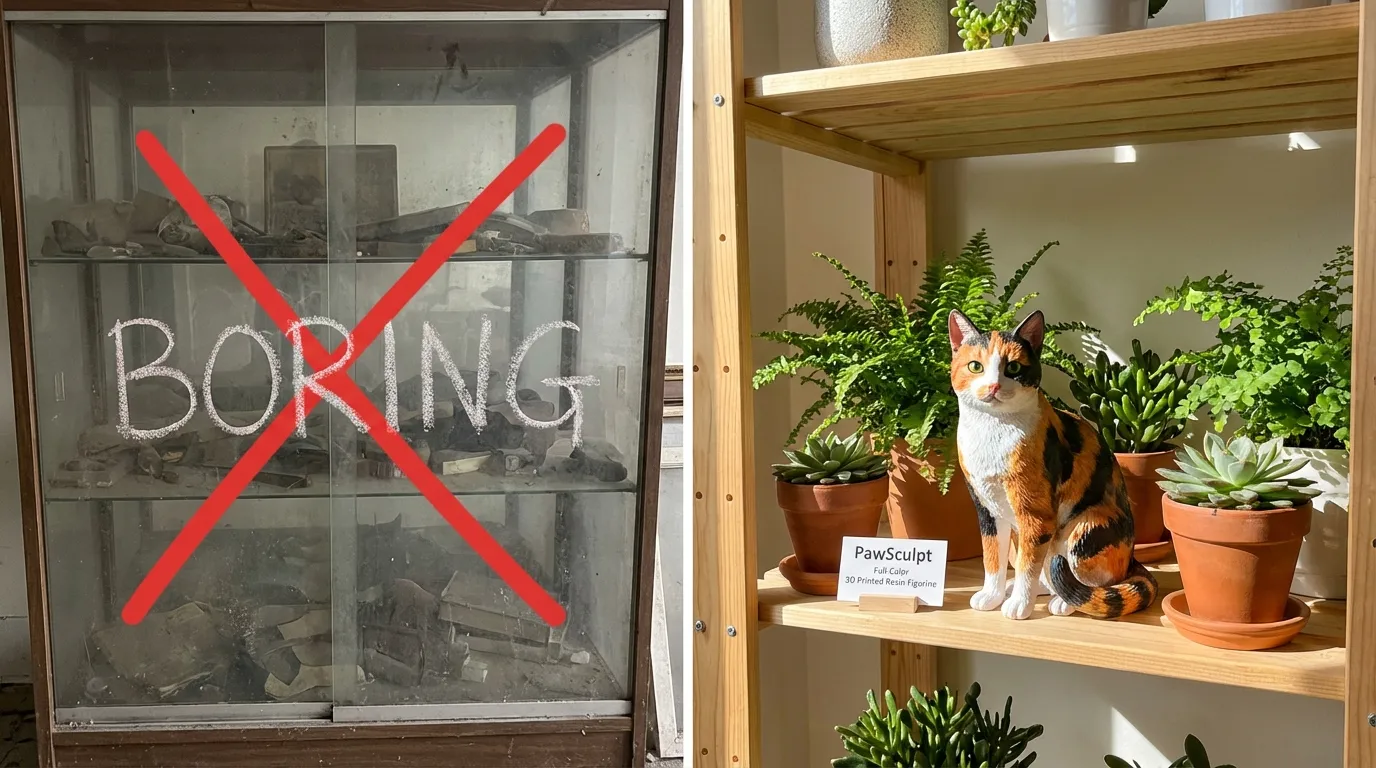
I used to walk into homes where memories were locked behind glass—dust-free, untouched, and utterly silent. Today, when I see a Calico cat figurine placed right on a sun-drenched windowsill or nestled among daily coffee mugs, I feel the vibrant, chaotic energy of a life that refuses to be archived.
Quick Takeaways
- Energy needs circulation — Placing figurines in active living spaces keeps the spiritual connection to your pet dynamic and present.
- Resin is tougher than you think — Modern custom pet figurines use UV-cured photopolymer resins that withstand daily handling better than fragile ceramics.
- Touch anchors memory — The tactile experience of holding a figurine triggers different neural pathways than just looking at a photo.
- Sunlight reveals the soul — Natural light brings out the translucency and depth of full-color 3D prints in ways cabinet lighting cannot.
The Stagnation of the Glass Cabinet
We need to talk about the "museumification" of our pets.
In the early days of collectibles, materials were genuinely fragile. Porcelain shattered if you looked at it wrong. Hand-painted clay chipped if the humidity changed too fast. So, the glass cabinet became the standard—a hermetically sealed vault where things went to be preserved, but effectively, where they went to sleep.
From a metaphysical perspective, placing a representation of your beloved Calico behind glass creates a barrier. It signals that the relationship is "finished," something to be observed from a distance rather than experienced. But your bond isn't a static historical event; it's a living current of energy.
"Grief isn't a problem to be solved. It's a love story that continues after the last chapter."
When you remove the glass barrier, you invite the spirit of that animal back into the daily rhythm of the household. The figurine collects dust? Good. That means it’s part of the atmosphere you breathe. It gets moved to wipe the table? Excellent. That interaction is a micro-ritual of care.
Understanding the Material: Why It Can Handle "Real Life"
As someone who has spent over a decade on the production floor of additive manufacturing, I often have to deprogram customers from the "porcelain mindset."
We aren't working with fired clay. We are working with engineering-grade photopolymers.
The Physics of Full-Color Resin
At PawSculpt, we use full-color 3D printing technology (similar to PolyJet or MJF processes). Here is the reality of the material that allows you to display it openly:- Voxel-Level Bonding: We aren't painting a surface layer that can scratch off. The orange, black, and white patches of your Calico are printed into the resin, voxel by voxel (think of a voxel as a 3D pixel). The color goes deep.
- UV Curing: The resin is cured instantly by high-intensity UV light during the print process. This creates a dense, cross-linked polymer chain. It is chemically stable.
- The Clear Coat Shield: The only manual step in our process is the application of a clear coat. This isn't just for gloss; it seals the surface porosity and provides a UV-resistant barrier against the sun.
Is it indestructible? No. If you drop it on concrete, it might break.
Is it tougher than your grandmother's china? Absolutely.
Material Durability vs. Environmental Exposure
| Threat Level | Ceramic/Clay (Traditional) | Full-Color 3D Print (PawSculpt) |
|---|---|---|
| Handling | Oils from hands degrade paint | Clear coat resists oils; safe to touch |
| Sunlight | Paint often fades unevenly | UV-resistant clear coat slows fading significantly |
| Humidity | Can cause cracking/crazing | Highly resistant to humidity changes |
| Dusting | Fragile parts snap easily | Flexible enough for gentle brushing |
"We've seen families heal by holding something tangible. Grief needs an anchor."
— The PawSculpt Team
Sacred Spaces: Where to Place Your Calico
If we agree that the glass cabinet is a spiritual cage, where should the figurine go? The answer lies in where the energy of the animal still lingers.
The "Traffic" Zones
I always tell clients to place the figurine in a high-traffic area. This seems counterintuitive—isn't that dangerous? Perhaps slightly. But the trade-off is presence.If your Calico used to sleep on the corner of your desk while you worked, placing the figurine there bridges the gap. Every time your eye catches that specific pattern of orange and black, your brain fires a recognition signal. It keeps the neural pathways of "companionship" active.
The Altar of Daily Life
Don't build a shrine in a dark corner. Integrate the memorial into the living space.- The Kitchen Window: Cats love sunbeams. A full-color 3D print looks spectacular when backlit by natural light. The resin has a slight subsurface scattering effect (similar to skin or marble) that makes the fur look organic rather than plastic.
- The Nightstand: For many, the hardest time is turning out the lights. Having the figurine within arm's reach allows for a tactile "goodnight" ritual.
The Tactile Connection: Why You Need to Touch It
There is a profound difference between seeing and touching.
Visual processing happens in the occipital lobe. It's analytical. But touch? Touch is primal. It connects directly to the emotional centers of the brain.
Because we digitally sculpt the fur texture to match the flow of your specific pet's coat—capturing how the hair swirled around the ears or the specific fluffiness of the tail—the tactile feedback is grounding.
A Note on "Patina"
In the world of high-end manufacturing, we obsess over perfection. We measure layer heights in microns (often 25-50 microns). We check for "bloom" or "suction cup" artifacts on the print bed.But in the spiritual life of an object, perfection is sterile.
If you handle your figurine every day, over ten years, the clear coat might wear slightly on the head where you rub it. In the antiques world, we call this "handling wear," and it increases value because it proves the object was loved.
Don't fear this. A pristine object is an ignored object. A figurine with a slightly worn spot on the forehead is a testament to thousands of moments of remembrance.
Practical Care for Open Display
Since I am encouraging you to take the figurine out of the cabinet, I need to equip you with the shop-floor knowledge to keep it safe in the wild.
1. The Dusting Ritual
Dust is inevitable. Do not use chemical cleaners or wet cloths, which can seep into the microscopic layer lines if the clear coat has any micro-pores.- The Tool: Use a soft, makeup brush or a camera lens blower.
- The Method: Treat it like an excavation. Gently brush with the grain of the sculpted fur, not against it. This prevents dust from getting impacted in the texture.
2. Stabilization
If you are placing the figurine on a busy desk, use a tiny amount of museum wax (sometimes called "earthquake putty") under the paws or base.- Why: It prevents the "elbow knock" catastrophe.
- The Benefit: It grounds the piece physically, making it feel more permanent and substantial when you touch it.
3. Sun Management
While our UV-cured resin and clear coats are robust, UV light is a relentless destroyer of all pigment eventually.- The Fix: Rotate the figurine occasionally. If it's on a windowsill, turn it 180 degrees every few months so any potential mellowing of the color happens evenly, looking like natural aging rather than damage.
A New Perspective on "Legacy"
We often think legacy means "keeping something forever." But in the context of a pet's soul, legacy is about continuing the relationship.
When you lock a figurine away, you are preserving an object. When you place it in the center of your chaotic, messy, beautiful life, you are preserving a presence. You are saying, "You are still part of this pack."
Your Calico didn't live in a glass box. Neither should their memory.
Frequently Asked Questions
Is it safe to clean a 3D printed figurine with water?
We generally advise against submerging the figurine or using wet cloths. While the resin is water-resistant, water can get trapped in the fine texture of the fur or layer lines, potentially causing issues over time. A dry, soft brush is best.Will the colors fade if I put it in direct sunlight?
All pigments, whether painted or printed, react to UV light over long periods. Our clear coat includes UV blockers to minimize this, but for maximum longevity, we recommend indirect sunlight rather than harsh, direct noon sun exposure year-round.Can I repair the figurine if it breaks?
Because the material is a photopolymer resin, it can often be repaired cleanly with cyanoacrylate (super glue). However, the break point might be visible. For severe damage, reach out to us—we keep the digital files on hand and can often assist with a replacement.How heavy are these figurines compared to ceramic?
They are typically lighter than solid ceramic but heavier than hollow plastic toys. We often print them solid or with a dense internal lattice structure to give them a satisfying "heft" in the hand, making them feel like premium collectibles.Ready to Celebrate Your Pet?
Every pet has a story worth preserving. Whether you're honoring a beloved companion who's crossed the rainbow bridge or celebrating your furry friend's unique personality, a custom PawSculpt figurine captures those details that make your pet one-of-a-kind.
Free instant AI preview • 3D artist preview within 7 days • 5 free revisions