Canvas Print vs 3D Figurine: An Honest Price and Timeline Breakdown for Ragdoll Owners
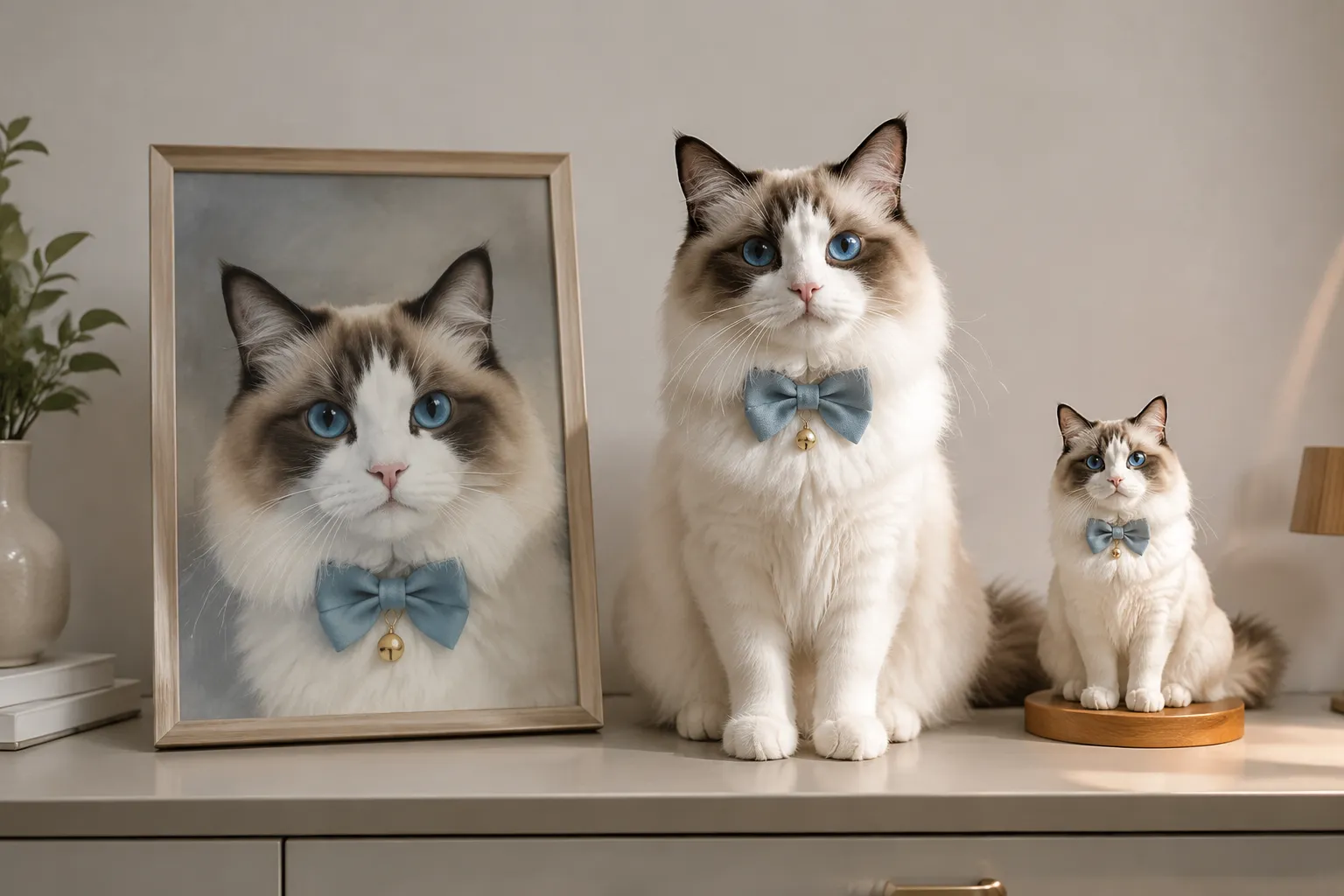
You're standing in the garage, holding a rolled-up canvas print in one hand and a photo of your Ragdoll on your phone in the other, stuck on the same question every Ragdoll owner eventually faces: pet canvas vs figurine, and which one actually deserves the money.
Quick Takeaways
- Canvas wins on speed and price — most prints ship faster and cost a fraction of a 3D figurine.
- Figurines win on presence — a Ragdoll's silky coat and floppy posture translate into three dimensions, not two.
- Timeline matters more than you think — figurines need digital sculpting time, so order weeks ahead of any deadline.
- For the full breakdown on process and current pricing, explore custom pet figurines before you commit to either option.
- Your photos decide everything — good source images make or break both formats, but especially the 3D one.
The Question Nobody Frames Honestly
Here's the thing most comparison guides get wrong. They line up canvas and figurine like they're competing for the same job. They're not.
A canvas is a window. A figurine is a presence in the room.
We've worked with thousands of pet families, and the ones who end up happiest are the ones who figured out which of those two things they actually wanted before they started shopping. Not the cheaper one. Not the fancier one. The right one for the specific ache they were trying to soothe.
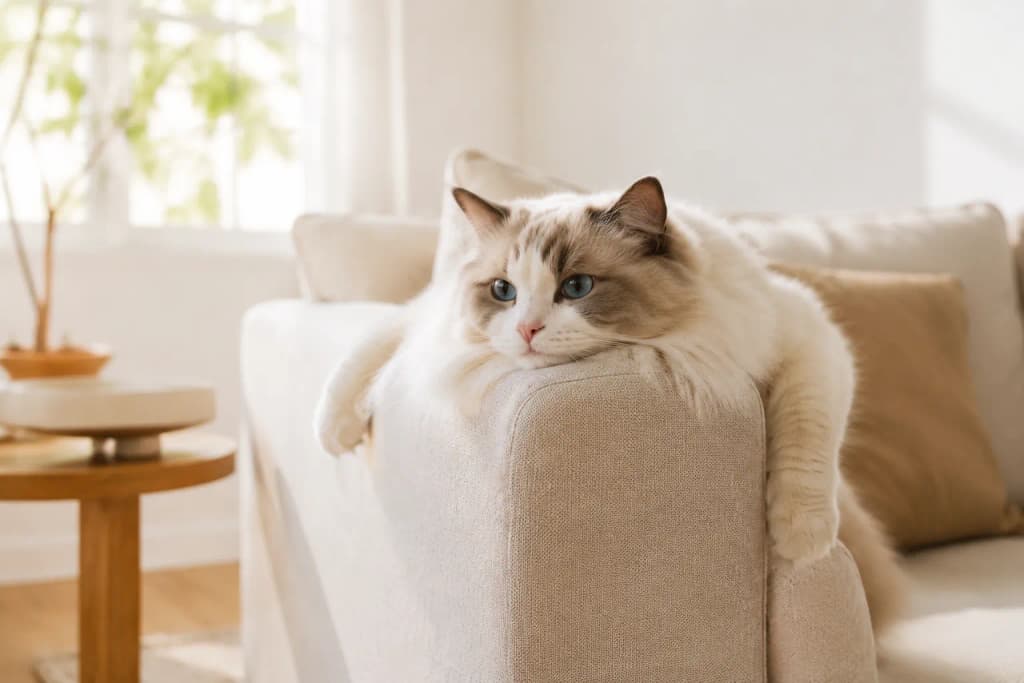
Think about your Ragdoll for a second. That breed is famous for going limp in your arms—the "ragdoll flop," the whole reason for the name. Their personality lives in their body. The way they drape across the back of the couch like a melting scoop of cream. The way they roll belly-up the instant you sit down.
"A canvas captures how your pet looked. A figurine captures how they took up space in your life."
That distinction is the whole ballgame. And it's why a flat print, no matter how gorgeous, sometimes leaves Ragdoll owners feeling like something's missing.
What you won't find in the first five Google results
Most articles will tell you canvas is cheap and figurines are expensive, slap a price chart on it, and call it a day. Useless.
What they skip is the emotional ROI question—how much joy or comfort you get per dollar over the years you'll own the thing. A $40 canvas you stop noticing after a month has a worse return than a more expensive keepsake you reach for and touch every single day.
We'll be real with you: we make figurines, so we have a horse in this race. But we've also told plenty of customers that a canvas was the smarter call for them. Keep reading and you'll see exactly when we say that.
The Real Price Breakdown (Without the Guesswork)
Let's talk money, because that's probably why you're here.
Canvas prints sit at the affordable end. The technology is mature, the materials are cheap, and printing onto stretched fabric is a high-volume, low-cost process. You're looking at the price of a nice dinner out, give or take, depending on size.
A custom pet figurine lives in a different category entirely. And the reason isn't greed—it's labor and technology you can't see from the outside.
Here's what you're actually paying for with a quality 3D figurine:
- A master 3D artist digitally sculpts your Ragdoll from your photos, shaping every contour of that semi-long coat and those big oval eyes.
- The model gets refined—posture, proportions, the slight asymmetry that makes your cat your cat and not a generic feline.
- It's then precision 3D printed in full color, where the color is baked into the resin itself, voxel by voxel.
- A protective clear coat goes on at the end for sheen and durability.
That digital sculpting stage is hours of skilled human work. It's the part nobody sees and the part that costs the most.
The table below gives you a realistic sense of how the two formats stack up. We're keeping ranges general because real prices shift with size, complexity, and provider—for current figurine pricing, check PawSculpt directly rather than trusting a number that might be stale by the time you read this.
| Factor | Canvas Print | 3D Figurine |
|---|---|---|
| Relative cost | Low (dinner-out range) | Higher (skilled-labor range) |
| What drives the price | Size, frame quality | Digital sculpting hours, print complexity |
| Cost per year of joy | Drops if it blends into the wall | Stays high if you handle it daily |
| Best for tight budgets | Yes | Order one, smaller size |
| Gift wow-factor | Moderate | High |
The counterintuitive part about cost
Most people assume the cheaper option is automatically the better financial decision. For a wall print, that's often true.
But here's what surprised even us after years of doing this: the figurine frequently gets cherished longer. A canvas becomes part of the wall. Your eye stops registering it within weeks, the same way you stop hearing the hum of your fridge.
A figurine sits at eye level on a desk or shelf. People pick it up. Guests ask about it. Kids carry it around. It earns its keep through touch and conversation, and that's a different kind of value than square footage of pretty fabric.
So the "expensive" option can quietly out-earn the "cheap" one over a decade. Not always. But more often than the price tags suggest.
Why Ragdolls Are a Special Case
This is where we get specific, because Ragdolls aren't just any cat.
That coat is the headache and the magic. It's a semi-long, silky double coat with very little undercoat, and it catches light in a way that's genuinely hard to reproduce. Think about how your Ragdoll looks in late-afternoon sun—the fur goes translucent at the edges, glowing like the rim of a cloud.
A canvas can handle that. Photography captures light beautifully, and a good print preserves those soft gradients and that creamy-into-seal-point color shift Ragdolls are known for. According to the Cat Fanciers' Association breed profile, Ragdolls come in a range of patterns—colorpoint, mitted, bicolor—and those subtle markings are exactly the kind of detail a flat image holds onto well.
So if your cat's beauty is mostly about color and light, canvas has a real edge.
But here's the flip side. Ragdolls are big, structural cats. Some of them hit fifteen, twenty pounds. Their charm is physical—the heft, the flop, the way they sprawl. A figurine captures that. The three-dimensional volume. The pose. The sense that you could almost feel the weight if you cupped your hands around it.
"You don't pet a photograph. With the right keepsake, your hand remembers what your eyes forget."
A quick story from our queue
One order stuck with us. A family had lost their senior Ragdoll, a big mitted boy who used to sleep in a specific sunbeam on their kitchen floor every morning. They sent us a photo of exactly that—him stretched out, paws tucked, that distinctive white-mitten coloring catching the light.
We sculpted him in that pose. Not standing, not posed stiffly. Mid-flop, the way he actually lived. The daughter told us she puts it in the kitchen window now, in the same spot, so the morning light still finds him.
You can't do that with a canvas. That's the difference we're talking about.
Personal aside: Honestly, the kitchen-window detail wrecked our whole team that week. We talk a lot internally about "capturing the pose that meant something," and that order became the example we point to. It's never the show-cat pose people want. It's the lazy Tuesday-afternoon sprawl. The ordinary moment is always the one that matters.
The Timeline Reality Check
Let's talk about the production timeline figurine buyers consistently underestimate, because this trips people up more than price does.
Canvas is fast. It's a print job. Once you upload your photo, the turnaround is usually measured in days, sometimes less. If you need something on the wall by this weekend, canvas is your friend.
A figurine is a different animal. There's a creative pipeline involved, and rushing it ruins the result.
Here's the general flow, stage by stage. We're not putting hard day-counts on this because real timelines depend on the provider's queue, your revision requests, and shipping—for specifics, visit the PawSculpt process page. But the shape of the timeline looks like this:
| Stage | What Happens | Why It Takes Time |
|---|---|---|
| Photo review | The team checks your images for usable angles | Bad photos get caught here, saving you grief later |
| Digital sculpting | A 3D artist models your Ragdoll | This is skilled, careful work—the heart of the process |
| Preview & revisions | You review, request tweaks | Your feedback gets the markings and pose right |
| Full-color 3D printing | The model prints in full-color resin | Precision printing isn't instant |
| Clear coat & shipping | Protective finish, then it heads to you | Curing and careful packing take a beat |
The mistake almost everyone makes
They order too late.
Someone decides in early December that a figurine would be the perfect Christmas gift. They order on the 18th. Then they're stunned that it can't materialize by the 24th.
Look—we get it, and good providers will tell you honestly whether a deadline is doable. But a 3D figurine is made to order from scratch, not pulled off a shelf. The digital sculpting alone is real human hours.
The fix is simple: order weeks ahead of any hard deadline. Birthday in three weeks? Order now. Gotcha-day anniversary coming up? Don't wait. If you're working toward a specific date, build in buffer for the preview-and-revision back-and-forth, because that's where thoughtful customers spend extra time getting the pose exactly right.
"Every whisker tells a story. Our job is to capture the ones that matter most—which is why we'd rather take an extra day than rush a pose."
— The PawSculpt Team
Canvas, by contrast, forgives last-minute decisions. So if procrastination is your love language, that's a legitimate point in the canvas column.
What Actually Makes or Breaks Either Option: Your Photos
Here's the part both camps agree on, and the part most buyers ignore until it's too late.
Your source photos determine the outcome. For a canvas, a blurry photo prints as a blurry canvas. For a figurine, weak photos force the 3D artist to guess at details they can't see—and guessing is how you end up with a cat that's almost your cat but not quite.
The good news: you probably don't need a professional shoot. You need to be a little deliberate.
What works best for both formats:
- Natural light, no flash. Position your Ragdoll near a window. Flash flattens that gorgeous coat and kills the depth.
- Get on their level. Crouch down. Shoot at eye height, not from above. A top-down phone photo distorts proportions badly.
- Capture multiple angles for figurines. Front, both sides, and a three-quarter view. The artist needs to understand the full shape, especially for a fluffy breed where the silhouette isn't obvious.
- Show the markings clearly. If your Ragdoll is mitted or has a specific blaze pattern, make sure those areas are well-lit and in focus.
The table below breaks down what each format demands from your photos. Notice that figurines ask for more—that's the tradeoff for three dimensions.
| Photo Element | Canvas Needs | Figurine Needs |
|---|---|---|
| Resolution | High (for large prints) | Moderate, but clear detail |
| Number of angles | One strong shot | Three to five angles |
| Lighting | Even, flattering | Even, shows fur texture |
| The pose | The "hero" portrait shot | The pose that captures personality |
| Markings visible | Helpful | Essential |
A counterintuitive photo tip
Everyone reaches for the cutest, most posed photo. The one where your cat looks like a magazine cover.
Skip it. Or at least, don't only send that.
For a figurine especially, the photo that captures your Ragdoll's actual personality—mid-yawn, sprawled out, that one ear flopped—translates into something far more them than a stiff portrait ever could. The American Kennel Club and feline behavior experts both note that an animal's characteristic resting posture says more about who they are than any staged shot. We've seen it over and over. The candid wins.
For more guidance on prepping images and what to expect, the PawSculpt blog and FAQ page walk through it in detail.
When We'd Honestly Tell You to Pick Canvas
We promised we'd be straight with you, so here it is. There are real situations where canvas is the smarter buy, and we'd rather you trust us than oversell.
Pick canvas if:
- Your budget is genuinely tight right now. A beautiful print today beats a figurine you can't comfortably afford.
- You need it fast. Tight deadline, no buffer? Canvas delivers.
- You want to fill a large blank wall. A figurine can't anchor a living room the way a big print can.
- Your cat's magic is purely about color and light. Some pets are stunning in 2D and that's enough.
- You're testing the waters. Some families start with a canvas and add a figurine later, once they know the format they love.
There's no shame in any of those. A canvas isn't a consolation prize. It's the right tool for a specific job.
And when the figurine is worth every penny
Flip all of that around. If you've got a little lead time, if the physical presence of your Ragdoll is what you miss or want to celebrate, if you want something people will pick up and ask about for years—that's when the 3D route pays off.
It's also, frankly, the more meaningful memorial keepsake for a pet who's passed. A canvas hangs on the wall. A figurine sits where your cat used to sit. For a lot of grieving families, that physical occupancy of space is exactly what helps. The Association for Pet Loss and Bereavement talks about the importance of tangible anchors in healthy grieving, and we've watched that play out in real time with our customers.
Care, Longevity, and the Long Game
Nobody mentions this in the price comparison, but it matters over the years you'll own either piece.
Canvas is low-maintenance but vulnerable. It fades in direct sunlight over time, and the fabric can sag or attract dust. Hang it out of harsh light and it'll hold up for years, but it's not immortal.
A full-color resin figurine made with UV-resistant materials and a protective clear coat is genuinely durable. It doesn't fade the way a print can. You dust it now and then. It survives being picked up, moved, and loved on. The natural fine texture of the 3D print, sealed under that clear coat, gives it an authentic feel—not the slick, fake-plastic look people sometimes worry about.
Here's the long-game truth: a print is a moment frozen behind glass or fabric. A figurine is an object that ages alongside you, gathering its own little history of fingerprints and shelf-spots and "remember when."
"The cheapest keepsake is the one you stop seeing. The best one is the one you can't stop touching."
Neither is wrong. But knowing which kind of person you are—a looker or a toucher—tells you almost everything about which to buy.
Frequently Asked Questions
Is a 3D figurine really worth the extra cost over a canvas?
It comes down to what you're after. If you want a piece you'll touch, hand to guests, and keep at eye level for years, the figurine's three-dimensional presence earns its price. If you want affordable wall art fast, canvas is the smarter spend. Many families eventually own both.
How much does a custom Ragdoll figurine cost?
Prices vary based on size and the complexity of your cat's coat and pose, since every figurine is digitally sculpted and 3D printed individually. Expect it to sit higher than a canvas print because of the skilled sculpting work involved. For current numbers, check the provider's site directly rather than relying on outdated figures.
How long does the production timeline for a figurine take?
Longer than you'd guess. The process runs through photo review, digital sculpting, a preview-and-revision round, full-color printing, and a protective finish before shipping. None of it is instant. The safest move is ordering several weeks before any birthday, holiday, or anniversary you're targeting.
What photos should I send for the best result?
Shoot in natural light with no flash, get down to your Ragdoll's eye level, and capture three to five angles for a figurine. Make sure the coat texture and any mitted or bicolor markings are clearly visible. And don't only send the posed shot—the candid, sprawled-out photo usually captures your cat's real personality best.
Will a resin figurine fade or break over time?
Quality full-color resin figurines use UV-resistant materials and a protective clear coat, so they resist fading far better than a canvas in sunlight. They're durable enough for regular handling. A light dusting now and then is all the upkeep they need.
Ready to Celebrate Your Pet?
Every Ragdoll has a story worth preserving—the sunbeam they claimed, the flop they perfected, the way they took up space in your whole heart. Whether you're weighing pet canvas vs figurine for a memorial or celebrating a living companion's goofy personality, a custom PawSculpt figurine captures the dimensional details a flat print simply can't hold. Your cat's silky coat and signature pose, brought to life in full-color resin.
Visit pawsculpt.com to explore our digital sculpting process, preview turnaround, flexible revisions, and quality guarantee.