
The Complete Pre-Order Guide to a Pug Figurine That Won't Fade With Time
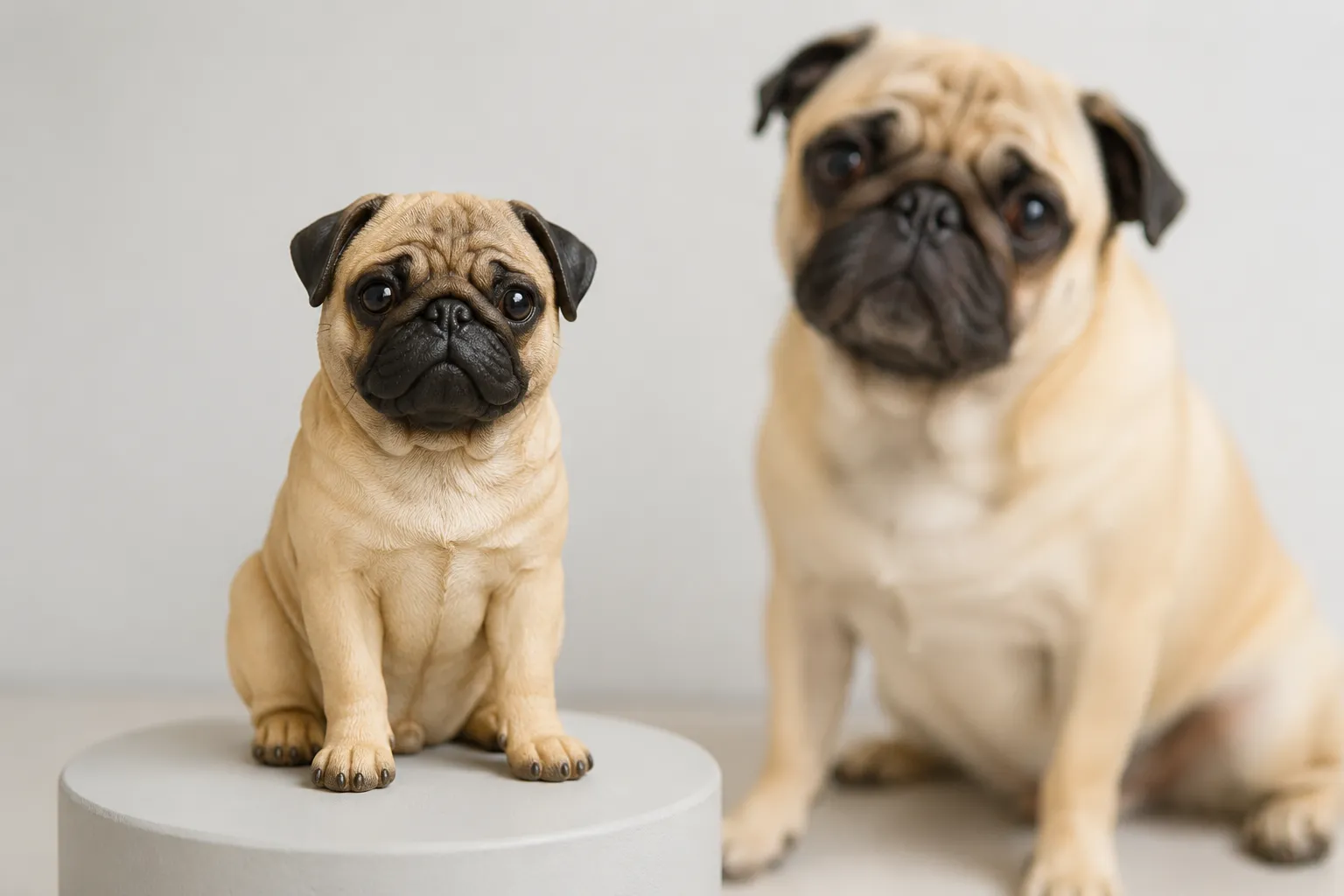
"What we have once enjoyed we can never lose; all that we love deeply becomes a part of us." — Helen Keller
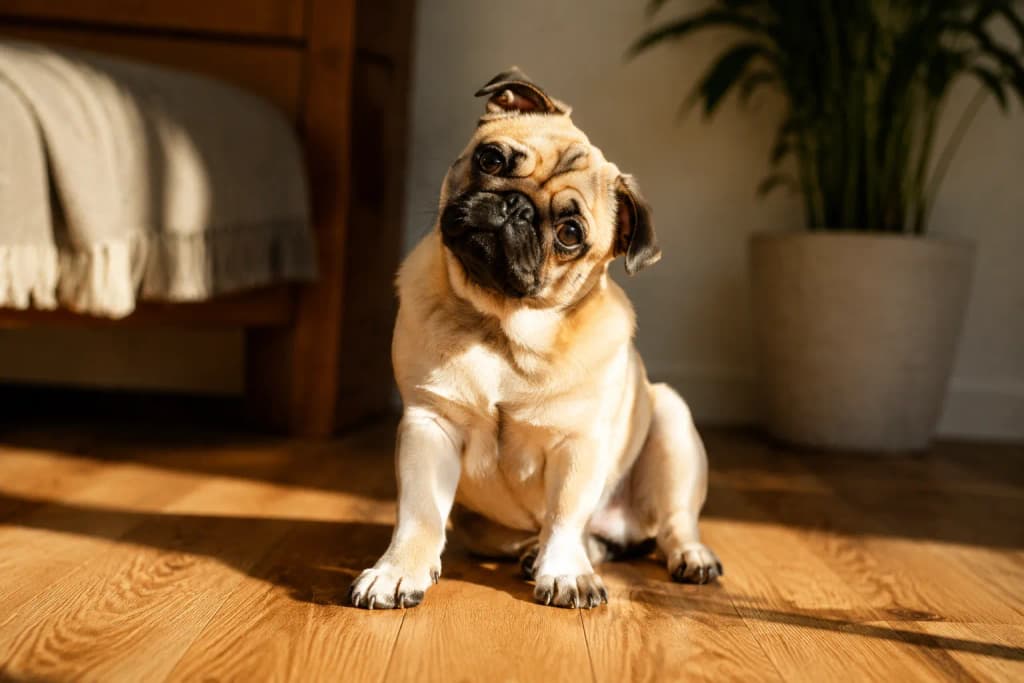
A pug's snore drifts up from the warm patch of sun by the window, and you pause mid-thought on your pug figurine pre-order just to listen. That wheeze, that flat-faced little engine of contentment. That's the thing you're actually trying to keep.
Quick Takeaways
- Fading is about light and finish, not just "cheap resin" — display location matters as much as material quality.
- Full-color 3D printing embeds pigment in the resin itself — color isn't a surface layer that can chip off.
- The clear coat is your real UV shield — it's the single most underrated factor in long-term durability.
- Your photos decide 80% of the result — flat, even lighting beats dramatic shots every time.
- Pre-order details like turnaround and revisions vary, so check the custom pet figurine process before you commit.
Here's What the Industry Doesn't Tell You About "Fade-Proof"
We've watched a lot of pet parents agonize over the same fear before placing a pug figurine pre-order. They've all heard the horror story — the cousin's figurine that turned yellow on a windowsill, the wedding cake topper that went chalky after a summer. So they ask us, point blank: will the figurine color fade with time?
Honest answer? It depends far less on the figurine than on where you put it.
That's the part most articles skip. They'll list resin types and UV ratings like a spec sheet and call it a day. But after producing thousands of these little guys, we can tell you the figurines that fade aren't usually victims of bad material. They're victims of a south-facing window, eight hours of direct afternoon sun, and zero protective finish. Same figurine, different shelf, completely different ten-year outcome.
So let's reframe the whole question. Instead of "is this thing fade-proof," ask "what makes a figurine hold its color, and what's in my control?" Because a surprising amount of it is.
"A figurine doesn't fade because of one bad decision. It fades because of a hundred small days in the wrong light."
Pugs make this especially interesting, by the way. That fawn coat with the black mask, the little dark trace down the spine, the velvety ears — there's a lot of subtle color transition packed into a small body. Get the longevity right and those nuances stay readable for decades. Get it wrong and the first thing to wash out is exactly the contrast that made your dog look like your dog.
Why this matters more for a memorial piece
There's a psychology angle here worth naming. Tangible keepsakes work as what grief researchers call an anchor object — something physical your brain ties memory and emotion to. When you can hold it, your nervous system gets a small, real signal that the bond still exists, which can actually take the edge off the spike in cortisol (the stress hormone) that comes with acute loss.
But that only works if the object stays recognizable. A washed-out figurine slowly stops triggering the memory. So "won't fade" isn't a vanity feature for a keepsake. It's the whole point.
How a Full-Color 3D Printed Pug Actually Gets Made
Let's clear up a big misconception first, because it changes how you think about durability.
A lot of people assume a custom figurine starts as a blank white model that someone colors in afterward. That's not how this works at our studio. We use full-color resin 3D printing — think PolyJet or MJF-style technology, where the color is printed into the material voxel by voxel. (A voxel is just a 3D pixel: a tiny cube of material the printer places, each one assigned its own color.)
So the pigment isn't sitting on the surface. It's baked into the resin throughout the printed layers. Nothing gets brushed on. There's no coat of color to scratch through, because the fawn of your pug's coat goes all the way down.
Here's the rough journey, start to finish.
1. Digital sculpting from your photos
A master 3D artist builds your pug from scratch in software like ZBrush or Blender — digitally sculpted, not carved from clay. This is where your reference photos earn their keep. The artist checks proportions against your shots: the muzzle length, how deep the wrinkles fold, where the ears actually sit (pug ears are deceptively specific — rose ears vs. button ears change the whole face).
The "aha" most people miss: at this stage we're sculpting coat flow, not painting color. The little ridges and direction of the fur, the way the chest fluffs out, the tail curl. Color comes later from the printer. Form comes from the sculpt.
2. Orientation and supports
Before printing, the model gets oriented in the build space. This sounds boring and it's actually one of the highest-stakes decisions in the whole process.
Every printed object needs supports — little temporary scaffolds that hold up overhanging parts while the resin cures, kind of like scaffolding on a building. The catch is that wherever a support touches the model, it leaves a tiny mark when removed (we call them support scars or pitting). So we angle the figurine to push those contact points onto hidden, low-detail areas — the underside of the belly, the bottom of the paws — and away from the face.
"We'll fight over the angle of a pug's chin for twenty minutes. That one degree decides whether the face reads as soft or stiff."
3. Full-color printing
Now the printer goes layer by layer. Layer height typically lands somewhere in the 25–50 micron range (a micron is a thousandth of a millimeter — roughly a third the width of a human hair). Thinner layers mean smoother, finer detail but a slower print and more chances for something to go sideways. It's a real tradeoff, not a "more is always better" situation.
The resin is a UV-cured photopolymer — a liquid plastic that hardens when light hits it — with pigment embedded right in the build material. That black mask on your pug's face and the fawn around it print as one continuous, integrated piece.
4. Post-processing (and what we don't do)
After printing, the figurine gets washed to clear off uncured resin, then fully cured under controlled UV light. Then supports come off and any contact points get gently sanded smooth.
The only hand step at the end is applying a clear coat — a protective varnish that seals the surface, adds the sheen, and, crucially, carries UV-inhibiting properties. No acrylics. No painting. The color was already done by the printer. The clear coat is armor, not makeup.
That distinction matters for your fade question, so hang onto it. We'll come back to it.
The UV Resin Durability Question — Straight Talk
Time for the counterintuitive part. Most guides treat UV resin durability like a single number you can rank. Reality is messier and a lot more useful to understand.
UV light is the enemy. It breaks down polymer chains over time, which is what causes yellowing and chalkiness. But "UV resistance" in a finished figurine actually comes from three layers working together, not one magic material.
| Durability Factor | What It Does | In Your Control? |
|---|---|---|
| Base resin chemistry | Sets the raw fade resistance of the material | No — handled in production |
| Full cure quality | Under-cured resin stays soft and yellows faster | No — handled in production |
| Clear coat / UV varnish | Blocks and absorbs UV before it reaches pigment | Partly — ask about it |
| Display location | Direct sun is the #1 fade accelerator | Yes — fully yours |
| Humidity & heat | Extreme swings can stress the surface over years | Yes — fully yours |
Look at that last column. Two of the five biggest factors are things you decide after the figurine arrives. That's the insight competing articles bury: a beautifully made figurine in a brutal window will fade faster than a modest one on a bookshelf in the shade.
The "bloom" and "over-cure" failure modes nobody mentions
A couple of behind-the-scenes failure modes, because you deserve the real story.
Bloom is a faint hazy film that can appear on resin surfaces, sometimes from residue or improper finishing. Proper washing and a good clear coat prevent it. If you ever see it on a cheap resin piece, that's a finishing shortcut showing up months later.
Over-cure and under-cure are the twin demons of resin. Under-cured resin stays slightly tacky and yellows fast. Over-cured resin gets brittle and can develop micro-cracks. The sweet spot — a full, even cure — is what makes a piece both color-stable and tough enough to survive a knock off the shelf. This is invisible to you as a buyer, which is exactly why who makes your figurine matters as much as what it's made of.
So how long will it actually last?
We won't insult you with a fake number. Anyone promising "100 years guaranteed" is guessing. What we'll say honestly: a fully cured, clear-coated full-color resin figurine, kept out of direct sun, should hold its color and detail for many years to decades of normal indoor display. Put it in a sunbeam and you're rolling the dice. The American Kennel Club's general guidance on protecting keepsakes echoes the same common sense you'd apply to photos — the AKC's resources on pets are worth a browse for breed-specific care context, and the principle carries over: light is what ages things.
"Every wrinkle on a pug tells you something. Our job is to make sure those wrinkles are still telling the story in twenty years."
— The PawSculpt Team
What Photos to Send (This Decides Everything)
Here's the part you can nail this week, before you even place a pug figurine pre-order. We've said it internally a hundred times: the sculpt can only be as good as the photos. Garbage in, guesswork out.
The mistake most people make is sending their favorite photo — the dramatic one with moody lighting and the dog looking off into the sunset. Gorgeous for Instagram. Useless for sculpting, because the shadows hide the very anatomy we need.
What actually helps is boring, flat, evenly lit photos from multiple angles. Think passport photo energy, not portrait studio.
Here's a quick reference for what works:
| Shot | What We Need to See | Pro Tip |
|---|---|---|
| Straight-on face | Muzzle, wrinkles, eye spacing, ear set | Get down to their eye level |
| Full side profile | Body length, tail curl, leg posture | Stand them on a flat surface |
| Top-down | Back markings, spine line, ear position | Shoot from directly above |
| Close-up of coat | True color and markings |