
Will a Resin Figurine's Colors Fade? A Side-by-Side Test on an Afghan Hound
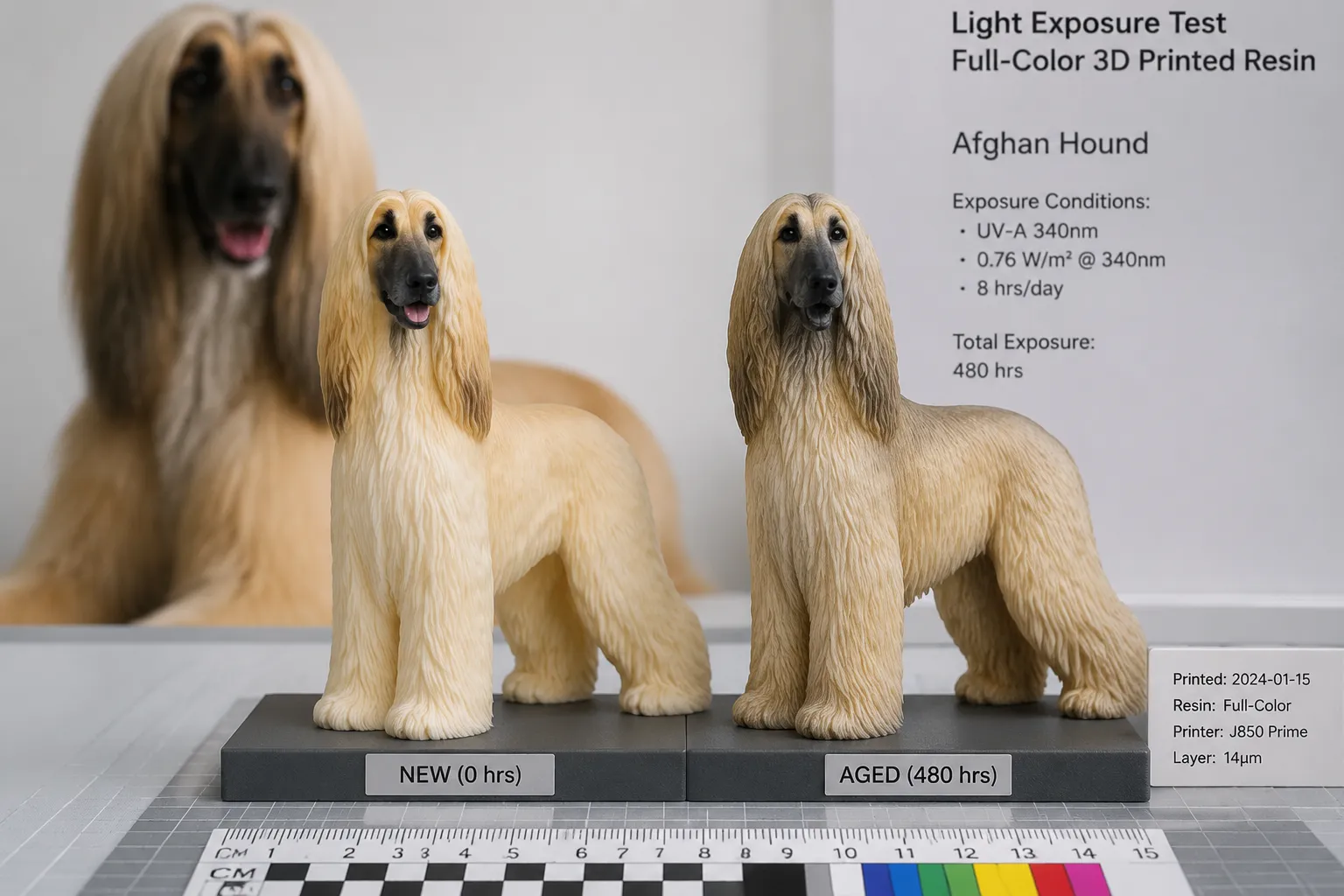
Most pigments surrender to sunlight inside a year. The full-color resin figurine on our home-office windowsill—an Afghan Hound caught mid-stride, her coat flaring like a curtain in wind—has held that light through three summers with no resin figurine color fade. Not a whisper. We wanted to know why.
Quick Takeaways
- Full-color resin doesn't "fade" like paint — the pigment lives inside the material, not on top of it.
- The clear coat and the resin substrate are the real variables — that's where longevity is won or lost.
- An Afghan Hound's long coat is the ultimate stress test — fine flowing detail shows surface change before color ever does.
- UV, heat, and dust matter more than most people think — placement beats any miracle product for protecting a custom pet figurine.
- A few minutes of care a month keeps your keepsake looking the way memory deserves.
Why We Used an Afghan Hound to Ask a Hard Question
Here's the thing about testing whether colors hold up. You don't reach for the easy subject. You reach for the one that'll rat you out.
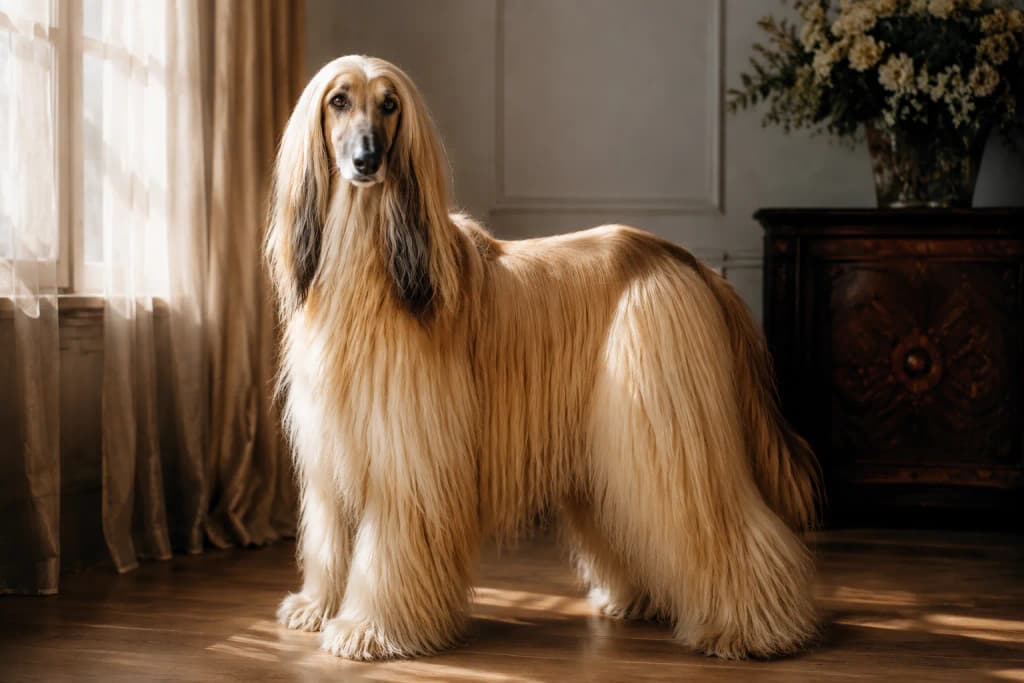
A short-coat dog—say a smooth-coated Lab or a Boxer—is forgiving. Big simple surfaces. Few shadows. If something shifts in the color or the finish, it hides in all that open space. An Afghan Hound is the opposite. That breed is basically a four-legged silk scarf. The American Kennel Club describes the Afghan's coat as "thick and silky," flowing in long fine strands that catch and throw light from every angle. (If you want to nerd out on the breed standard, the AKC's Afghan Hound profile is a good rabbit hole.)
So when we wanted to really interrogate the question—will the colors fade?—we chose the long coat dog figurine on purpose. Cruelty, you could call it. Or honesty.
Because a flowing coat does two things at once. It creates thousands of tiny ridges and valleys where color transitions live, and it creates a surface so detailed that any change in gloss, any dust, any micro-shift in tone shows up instantly under raking light. (Raking light is just light coming in low and sideways—the trick every shop uses to spot surface flaws the eye misses head-on.)
"If a long coat holds true over time, everything else is easy. We test on the hardest subject, not the kindest one."
If we could keep an Afghan's silver-and-gold cascade looking honest over years of real display—windowsills, mantels, the occasional curious thumb—then the answer would mean something. Not marketing. Just truth you can hold.
What "Fading" Actually Means (And Why Most People Get It Wrong)
Let's clear up the biggest misunderstanding right away, because it changes the whole conversation.
When most folks picture a figurine "fading," they picture paint. A painted surface where pigment sits on top like makeup—and over time it chalks, lifts, flakes, and washes pale. That's a real failure mode. It's just not our failure mode, because we don't paint anything.
PawSculpt figurines are made with full-color resin 3D printing. The short version: a master 3D artist digitally sculpts your pet in software like ZBrush or Blender, building the form whisker by whisker from your photos. Then a printer lays that model down in UV-cured photopolymer resin, and—this is the part that matters—the color is printed directly into the resin, voxel by voxel.
A voxel is just a 3D pixel. Picture a pixel with depth, a tiny cube of material. Where a screen pixel glows one color, a voxel is one color, all the way through that little cube. The machine deposits pigmented resin point by point so your pet's markings aren't a coat sitting on the surface. They're baked into the body of the thing.
So when someone asks will the color fade, the honest reframe is this: there's no paint layer to chip or peel. The color can't flake off because it was never stuck on. It's structural. It's in the bones.
"We don't put color on the figurine. We print the figurine out of color."
That doesn't mean nothing can ever change—physics doesn't hand out free passes, and we'll get into the genuine risks. But it moves the whole question to a different street. The enemy isn't a peeling skin. The enemy, if there is one, is the resin itself and the clear coat we put over it. More on both shortly.
The counterintuitive part
Here's what surprised even us, years back. The thing most likely to make a figurine look faded over time often isn't the color at all. It's the surface losing its gloss—dust settling into fine texture, a clear coat going slightly matte, light scattering differently than it did on day one. The pigment is fine. The way light bounces changed.
Which means caring for your figurine is less about protecting color and more about protecting shine and surface. Nobody tells you that. We learned it the slow way, watching pieces age on real shelves in real homes.
The Side-by-Side Test: Setup, Honestly Explained
We want to be straight with you about what this "test" is and isn't. We're a figurine studio, not a materials lab with a Q-Sun chamber running accelerated-weathering cycles. So we won't throw fake percentages at you. What we can offer is the pattern-recognition that comes from making these pieces every day and watching thousands of them live out in the world, plus a deliberate side-by-side we set up in our own space.
Here's the setup. Two identical full-color resin Afghan Hound prints, same file, same machine, same clear coat batch.
- Figurine A went on the south-facing home-office windowsill—direct, punishing afternoon sun, the kind of light that bleaches book spines and warms the sill hot enough to notice under your palm.
- Figurine B went into a closed display cabinet across the room. Ambient light only. Stable temperature. The boring, sensible spot.
Then we just... lived with them. Checked them under raking light every few weeks. Ran a thumb over the coat ridges. Looked for the things we know to look for: tonal shift, gloss change, any yellowing in the lighter silver areas where ambering shows first.
This table lays out what actually threatens a resin figurine over time, ranked by how much it matters in our experience—not by how scary it sounds.
| Threat | Real Risk Level | What It Actually Does | What Stops It |
|---|---|---|---|
| Direct UV (sun) | Moderate | Slow ambering of resin/clear coat over years | UV-stable resin + placement out of direct sun |
| Heat cycling | Moderate | Softening, micro-stress, accelerates ambering | Keep away from windows, radiators, electronics |
| Dust buildup | High (cosmetic) | Kills gloss, makes color look dull/faded | Gentle monthly dusting |
| Physical handling | High | Oils, scuffs on high points of the coat | Hold by the base, occasional wipe-down |
| Pigment loss | Very Low | Essentially none—color is in the resin | Built-in by the process itself |
Notice the bottom row. Pigment loss—the thing everyone worries about—sits at the very bottom. The things that'll actually make your piece look tired are dust and handling. The unglamorous stuff.
What we saw
After three summers, Figurine B (the cabinet) looked identical to day one. No surprise.
Figurine A (the brutal windowsill) was the interesting one. The vivid golds and silvers of the coat? Still vivid. The markings held. But under raking light, the very lightest, near-white feathering on the chest and tail showed the faintest warmth—a hint of cream where there'd been cool white. Subtle. The kind of thing you only catch holding both side by side. That's ambering, and it's the real, honest long-term variable, so let's talk about it like grown-ups.
The Real Enemies: UV, Heat, and the Honest Limits of Resin
Resin is a wonderful material with one quirk you should know about. Photopolymer resin keeps reacting to UV light even after it's "done." It's cured by UV; UV is also, slowly, its long-term frenemy.
In practice this means two things over a span of years in harsh light:
- Ambering: the lightest, clearest areas can warm very slightly toward cream or pale honey. It reads most on white-and-silver coats—exactly why our Afghan was the right cruel choice.
- Embrittlement: over-exposed resin can get a touch more brittle. Relevant if you're keeping something in a sunbeam for a decade, not if it's on a normal shelf.
Now—the materials we use are chosen and clear-coated specifically to resist this, and good UV-stable formulations plus a protective top coat slow it dramatically. But we're not going to pretend any resin on earth is fully immune to a south-facing window blasting it for three summers straight. That'd be a lie, and you'd catch us in it the moment you looked closely. No paint to fade, yes. A substrate that prefers shade, also yes.
Heat is the quiet partner in crime. Resin softens with warmth, and a hot windowsill cycles hot-cold-hot every single day. That cycling stresses the material and speeds the ambering along. Honestly? Heat and UV usually travel together—the same sunny spot delivers both—so the fix for one is the fix for the other.
"Color was never the fragile part. The fragile part is the light we choose to bathe it in."
Here's the heuristic we give every customer, plain as we can make it: treat your figurine like a watercolor painting or a fine photograph, not like a coffee mug. You wouldn't hang a beloved photo in direct noon sun. Same instinct. Bright room, sure. Direct sunbeam for hours a day, let's not.
And the clear coat. That last manual step—the only hand step in our whole process—is where we apply a protective gloss or satin coat. It does double duty: it deepens the color the way water deepens a river stone, and it forms the first line of defense against UV, dust, and fingerprints. A good clear coat is sacrificial by design. It takes the hits so the resin underneath doesn't. Over a very long life in harsh conditions a clear coat can itself amber slightly, but it's also the part that's protecting everything beneath it. Worth the trade every time.
Myth vs. Reality: Three Things People Get Wrong
We hear the same misconceptions constantly. Let's bust them with what's actually true.
Myth #1: "The colors are painted on, so they'll chip and fade like a toy."
Reality: There's no paint. Color is printed into the resin, voxel by voxel, all the way through. Nothing to chip because nothing's sitting on the surface. This single fact is the whole reason these pieces age the way they do.
Myth #2: "3D-printed means smooth, glossy, plastic-perfect."
Reality: Full-color resin prints carry a fine natural texture—subtle layer grain you can feel if you really look for it. We're not chasing fake plastic perfection. That faint grain is part of why a coat reads as fur and not as injection-molded plastic. It catches light like real hair does. We're genuinely not huge fans of the over-polished plastic look, and the texture is part of the soul of the thing.
Myth #3: "If I keep it out of the sun, it'll last forever with zero effort."
Reality: Placement is the biggest factor, true. But the thing that dulls a figurine first isn't UV—it's dust filling the fine valleys of the coat and killing the gloss. Five minutes of gentle dusting a month does more for long-term appearance than any storage trick. The "set it and forget it" crowd is the crowd whose pieces look tired in two years.
That third one trips up almost everybody. People brace for the dramatic enemy (sunlight!) and get ambushed by the boring one (dust). Memory deserves better than a gray film.
How the Process Builds Longevity From the Start
You can't bolt durability on at the end. It's decided early, in choices most customers never see. Let's pull back the curtain, because understanding the craft is part of trusting the keepsake.
It starts with the sculpt, not the print
Before any resin gets cured, a master 3D sculptor builds your pet digitally from your photos. This is genuine craftsmanship—just done with a stylus and a screen instead of clay. They study proportion, the anatomy under the coat, and the way the fur flows. For an Afghan, coat flow is everything. Get the hair direction wrong and the whole soul of the dog evaporates, no matter how good the print.
This is also where longevity quietly begins. A well-built model has no impossibly thin spurs of resin that'll snap, and balanced mass so the piece stands stable for decades. A flowing tail feathered too thin is a future break. A good sculptor sees that before it ever exists.
"Every whisker carries a memory. Our job is to keep the ones that made you fall in love—and make sure they last."
— The PawSculpt Team
Then the print, with choices that matter
The digital model gets printed in full-color UV-cured resin. A few practitioner details that affect how your piece survives the years:
- Orientation: how the model is angled on the build plate decides where support marks land. We orient to hide support contact points in less-visible areas—under the belly, inside the legs—so the showy coat surfaces stay clean.
- Layer height: typically in the 25–50 micron range for fine work (a micron is a thousandth of a millimeter—finer than a human hair). Thinner layers mean crisper coat detail; it's a tradeoff against print time and, sometimes, fragility on delicate features.
- Hollowing and drain holes: larger pieces are often partially hollowed with discreet drain holes so uncured resin doesn't pool inside and cause stress or slow leaching. Done right, you'll never spot the holes.
Then post-processing—where care shows
After printing comes washing off uncured resin, a controlled post-cure under UV to bring the material to full strength, and careful support removal. Pull supports wrong and you get "support scars" or "pitting"—little divots where material tore. We sand those contact points smooth so the coat stays continuous.
Then the clear coat. The one manual finishing step. It seals, protects, and gives that finished depth. After that, quality control: dimensional checks against the model, a symmetry check (do both sides of the face match?), and a surface inspection under raking light to catch anything the naked eye would miss straight on.
Here's a rough map of the journey, stage by stage. We're not going to commit to specific day counts—turnaround shifts with the season and the complexity of the coat, and you can see current timing on the PawSculpt site. But the shape of the process looks like this:
| Stage | What Happens | Why It Affects Longevity |
|---|---|---|
| Photo review | We assess your reference images | Better references = accurate, well-built model |
| Digital sculpting | Artist hand-models your pet in 3D | Sound geometry prevents future breaks |
| Full-color printing | Color printed into resin, voxel by voxel | Pigment is structural, can't flake |
| Post-cure | UV brings resin to full strength | Proper cure = stable, durable material |
| Support removal + sanding | Contact points cleaned and smoothed | No weak scars or rough pitting |
| Clear coat + QC | Protective coat, then inspection | First defense against UV, dust, handling |
The reason we walk you through all this: when you understand that the color is in the resin and the clear coat is guarding it, the durability stops being a marketing claim and starts being something you can reason about yourself.
Caring for a Long Coat Figurine: The Practical Bit
A customer wrote to us a while back, a little embarrassed, asking if she'd "ruined" her Golden's figurine because it looked dull after a year on a sunny shelf. She hadn't. It was dust and a slightly hazy gloss from afternoon sun. A gentle clean and a move three feet to the left, and it looked new again. Almost nothing about figurine care is dramatic. It's just small habits.
Long coats need a touch more attention than short ones—all those fine ridges are dust magnets. Here's the routine we actually recommend, the same one we use on our own shelves.
| Task | How Often | How To |
|---|---|---|
| Dusting | Monthly | Soft dry makeup brush or microfiber; work with the coat's flow |
| Deeper clean | Every few months | Barely-damp microfiber, then dry immediately |
| Placement check | Once, then forget | Bright room, out of direct sun and off hot surfaces |
| Handling | As needed | Lift by the base, not the delicate coat or tail |
| Inspection | Occasionally | Tilt under a lamp (raking light) to spot dust in the grain |
A few specifics worth burning into memory:
- Use a soft brush for long coats. A makeup brush or a clean paintbrush gets into the fine valleys a cloth can skip right over. Brush along the direction of the fur, the way you'd pet the real dog. There's a small ritual in that—your hand remembering a motion it knew by heart.
- Skip the household sprays. No Windex, no furniture polish, no "all-purpose" anything. Solvents can cloud or soften a clear coat. Dry first, barely-damp water only if you must.
- Mind the high points. On a flowing coat, the raised ridges take the wear—the tail tip, the ear feathering, the crest of the back. Those are where fingertip oils and scuffs land first. Lift by the base and you sidestep almost all of it.
- Bright, not blazing. You don't need to hide it in a drawer. A well-lit room is perfect. It's the direct, hours-long sunbeam you're dodging, not light itself.
"A keepsake isn't a thing you store. It's a presence you keep—and presence asks for small, steady tending."
Do this and the honest expectation is simple: your full-color resin figurine should hold its color and character for many, many years. Not because we're making promises about decades we can't personally fast-forward through, but because the color is structural and the rest is just keeping light from bouncing wrong.
What to Expect When You Order
We won't quote you prices, timelines, or revision counts here—those shift, and the last thing you want is a blog post from who-knows-when steering you wrong. The current details live on the PawSculpt FAQ page, kept up to date. What we can tell you is the shape of the experience and how to set yourself up for the best result.
The single biggest factor in your figurine's quality is your reference photos. Not the breed, not the pose. The photos. Here's what actually helps:
- Shoot at your pet's eye level, not looking down from human height. Get on the floor. It changes everything about how the proportions read.
- Natural daylight, indirect, so the true coat colors show without harsh shadows or color casts from indoor bulbs.
- Multiple angles—front, both sides, a three-quarter view. For a long coat especially, we need to see how the fur falls from several directions.
- A few close-ups of the face and any unique markings. That gray muzzle, the one white toe, the cowlick that never lay flat. The details that make people say that's him.
If your pet has passed and you only have a handful of imperfect photos, don't count yourself out. We've built beautiful pieces from a single slightly-blurry phone snap. A skilled sculptor fills gaps with anatomy knowledge and a careful eye. When in doubt, just reach out through the contact page and ask before you assume it can't be done.
Families come to us for all kinds of reasons. Some are honoring a companion who's crossed the rainbow bridge, turning grief into something they can hold in their hands. The pet-loss community at the Association for Pet Loss and Bereavement speaks often about the comfort of a physical anchor for memory—and a figurine can be exactly that kind of sacred object on a shelf. Others are celebrating a very-much-alive goofball's birthday, or marking a "gotcha day." Both are legacy, in their way. Both are worth keeping.
Frequently Asked Questions
Will a resin figurine's colors really fade?
Not the way painted figurines do. Because the color is printed into the resin rather than brushed on top, there's no paint layer to chip, flake, or wash pale. Kept in a normal bright room out of direct sun, the colors should stay true for many years. The main long-term variable is very slight ambering of the lightest areas under harsh UV—subtle, and largely preventable with smart placement.
Does sunlight actually hurt a 3D-printed resin figurine?
Years of direct sunbeams can do two slow things: warm the lightest tones slightly toward cream (ambering) and, with heat cycling, stress the resin. Our materials and clear coat are chosen to resist this, but no resin is fully sun-proof. Treat it like a fine photo—bright room, yes; direct noon sun for hours a day, no.
How do I keep a long coat dog figurine looking new?
Dust it monthly with a soft brush, working along the direction of the fur to reach the fine valleys a cloth misses. Lift it by the base to keep fingertip oils off the delicate high points. Skip household sprays entirely. That's genuinely most of it—small, steady habits beat any one miracle product.
Are these figurines hand-painted or hand-carved?
Neither. Your pet is digitally sculpted by a 3D artist, then printed in full-color resin where the pigment is embedded in the material itself. The only manual step at the end is applying a protective clear coat. That's exactly why the color is so stable—it's part of the material, not a coating on the surface.
Why does a long coat make such a good durability test?
Long, fine coats create thousands of tiny ridges that show dust, gloss changes, and tonal shifts almost immediately under angled light. A short smooth coat hides those changes in its open surfaces. If a flowing coat ages well, you can trust the process on any breed.
What photos give the best figurine result?
Shoot at your pet's eye level in indirect daylight, from several angles, with a few close-ups of the face and any unique markings. Good references are the single biggest driver of an accurate piece—more important than breed or pose.
Ready to Celebrate Your Pet?
Every pet has a story worth preserving. Whether you're honoring a beloved companion who's crossed the rainbow bridge or celebrating your furry friend's unique personality, a custom PawSculpt figurine captures the details that make your pet one-of-a-kind—from the flow of a long coat to the one crooked whisker you'd know anywhere. And because the color is printed into the resin itself, you never have to worry about resin figurine color fade the way you would with painted keepsakes.
Visit pawsculpt.com to learn more about our full-color 3D printing process, current turnaround, and quality guarantee.