
How Remember Me Thursday Helped Our Teens Honor an Australian Shepherd's Last Video
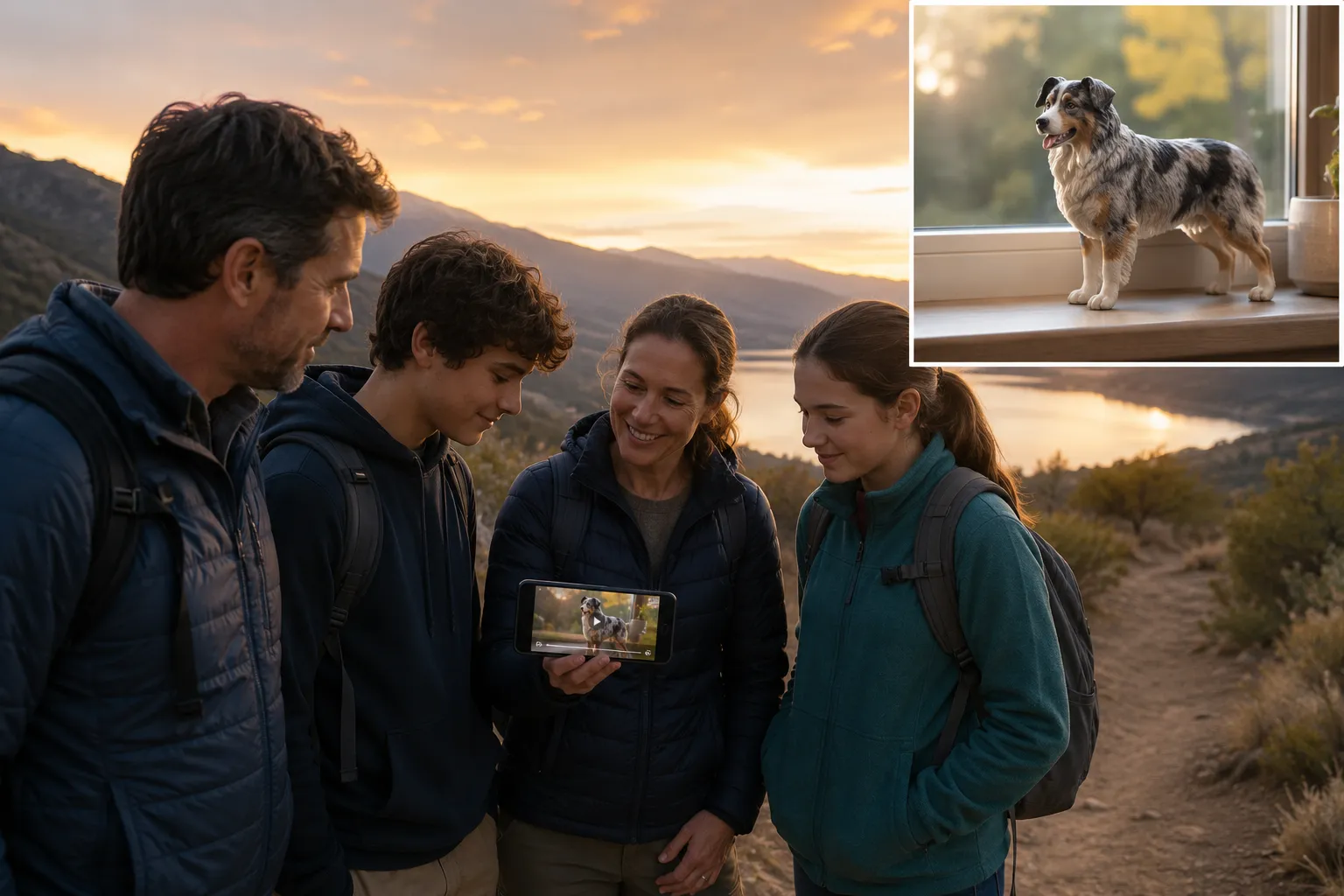
You're in the basement, thumb hovering over your phone, and there it is—the last video of your Australian Shepherd, ears snapping toward a sound only she could hear. Remember Me Thursday is three days out, and your teenagers want to do something real with those fourteen seconds.
Quick Takeaways
- Remember Me Thursday falls on the fourth Thursday of September — a global night to light a candle for pets who've passed.
- Teens grieve through their phones — give them a project with that last video instead of asking them to "talk about feelings."
- A healing walk retraces your dog's favorite route — motion moves grief better than sitting still ever will.
- Turn a video still into something you can hold — many families now commission custom pet figurines from a single clear frame.
- Guilt and second-guessing are normal — even the "right" decision leaves a residue, and naming it helps teens more than platitudes.
What Remember Me Thursday Actually Is (And Why It Lands Different for Teens)
Here's something most grief guides skip: teenagers don't want your ritual. They want their own.
Remember Me Thursday is a global awareness day launched in 2013 to honor pets who've died and shine a light on the millions still waiting in shelters. It lands on the fourth Thursday of every September. People light candles, post photos, and share their pets' names into a collective wave of remembrance that circles the planet as time zones roll over.
That's the official version. The version that matters in your house is smaller and stranger.
We've worked with a lot of families who came to us in that exact week—late September, a candle still smoking on the counter, and a teenager who won't come downstairs. What we've learned is that the day gives kids something they desperately need but can't ask for: permission and a container. Permission to grieve out loud, and a fixed container of time so it doesn't feel endless.
An Australian Shepherd is a particularly hard dog to lose for a teen, honestly. Aussies bond hard, work hard, and never really turn off. If your kid grew up with one, that dog was their shadow through middle school anxiety, first heartbreaks, the whole ugly beautiful mess of growing up. The dog knew things the parents didn't.
"Teens don't grieve less than adults. They grieve sideways—through projects, playlists, and screens instead of tears."
So when we talk about a Remember Me Thursday pet memorial for teenagers specifically, we're not talking about a solemn ceremony they'll sit through resentfully. We're talking about handing them the reins.
The counterintuitive part
Most parents' instinct is to protect. To keep the memorial gentle, brief, low-key, so the kids don't get "too upset."
That instinct backfires.
What actually helps teens is the opposite: a job with real stakes and a real deadline. Give a 15-year-old the assignment of editing the last video into a 60-second tribute for Thursday night, and you've done more for their grief than any amount of "how are you feeling, sweetie?" ever will. The task metabolizes the emotion. They cry while they work, not instead of working.
That's the whole secret. Grief needs a task. Teens especially need to do something with their hands and their attention while the feelings move through.
The Last Video: Why Your Teens Keep Watching Those Fourteen Seconds
There's a specific behavior we hear about constantly. The kid who watches the same short clip of the dog on loop, forty times, headphones in, face blank.
Parents panic about this. They shouldn't.
That looping isn't stuck-ness. It's a form of processing that neurologists would recognize—repeated exposure to a painful stimulus in small, controlled doses. Your teen is doing grief work in the only language their generation fully trusts: video. Let them.
The mistake most families make is trying to replace the video with "healthier" memorial activities. What works far better is building the memorial around the video.
Here's a scenario we've seen play out beautifully. A family lost their blue merle Aussie named Juniper in early September. Their two teens were fighting constantly—grief does that, turns siblings into enemies. Mom stopped trying to make them talk and instead asked them to collaborate on one thing: a video montage for Remember Me Thursday. The older one handled footage. The younger one, who was into music, scored it. They argued about the song for two hours. And somewhere in that argument, they were finally grieving together instead of alone.
What to do with the last video (a practical order of operations)
- Back it up in three places first. Phone, cloud, and one physical drive. Nothing spikes panic like a teen thinking they lost the last footage. Do this before anything else.
- Pull the best single frame. Pause the video, screenshot the moment where your dog looks most themselves. You'll want this later—not just for the montage, but for keepsakes we'll get to below.
- Let your teen edit, not you. Even if the pacing is weird and the transitions are cheesy. It's theirs.
- Keep it under 90 seconds. Grief attention is short. A tight tribute hits harder than a ten-minute reel nobody rewatches.
- Decide where it lives on Thursday. A TV in the living room? A shared story? A private family text thread? The venue matters to teens.
The smell memory is the one that ambushes you, by the way. Video gives you the ears and the tail and the specific way an Aussie play-bows. But it can't give you that warm-cornchip-and-clean-dirt smell of their paws, or the way the top of their head smelled like sun-warmed wheat after a day outside. Warn your teens that scent will hit them when they least expect it—a blanket, a car seat, the back door. Naming it in advance takes some of the sting out of the ambush.
"Video keeps the motion. Scent keeps the truth. Grief lives in the gap between them."
Building an Australian Shepherd Memorial Teens Will Actually Show Up For
An Australian Shepherd memorial should look like the dog it honors: active, a little chaotic, full of purpose. A candle on a windowsill is fine for some families. For a household with teenagers and a herding breed's ghost in it, you probably need more motion and more mess.
Let's get concrete. Here's how different memorial approaches stack up when your audience is teens, not grandparents.
| Memorial Approach | Teen Buy-In | Effort | Why It Works (or Doesn't) |
|---|---|---|---|
| Candle + moment of silence | Low | Minimal | Feels imposed; teens sit through it, don't engage |
| Video montage project | High | Medium | Gives them creative control and a real deadline |
| Healing walk on Aussie's route | High | Low | Motion suits both grief and the breed's spirit |
| Memorial photo book | Medium | Medium | Good for reflective kids; loses restless ones |
| Custom figurine from a photo | High | Low | Tangible object they can keep in their room |
| Shelter donation in dog's name | Medium-High | Low | Aligns with Remember Me Thursday's shelter mission |
Notice the pattern. The high-buy-in options either give teens control or give them movement. The low-buy-in option asks them to be still and passive. That's the whole map.
Match the memorial to the actual dog
This sounds obvious and almost nobody does it. A memorial for a working Aussie shouldn't be quiet and floral. It should have the dog's energy in it.
If your Aussie was a frisbee fiend, the memorial might be the family throwing one last frisbee at the park at sunset on Thursday. If she was a shadow who followed your kid everywhere, the memorial might be your teen walking her old route with her collar in their pocket. The American Kennel Club's breed profile describes Aussies as intensely devoted work partners—so honor the partnership, not just the loss.
We had a customer whose teenage son insisted the memorial be a hike, because that's what the dog loved. No candle. No speech. Just the trail their Aussie ran a thousand times, the whole family walking it slow, and the son carrying a small resin figurine of the dog in his jacket pocket the entire way. That, to us, is a memorial that fits.
The role of the collar
Small thing, big impact. The collar carries scent longer than almost anything else—that oily, doggy, alive smell trapped in the nylon. Don't wash it. Bag it, or better, let whichever teen needs it keep it.
We've seen kids sleep with a collar under their pillow for months. That's not morbid. That's a nervous system reaching for a familiar smell to self-soothe. Let them have it as long as they need it.
The Healing Walk: Moving Grief Through Your Feet
If you only take one idea from this whole thing, take this one.
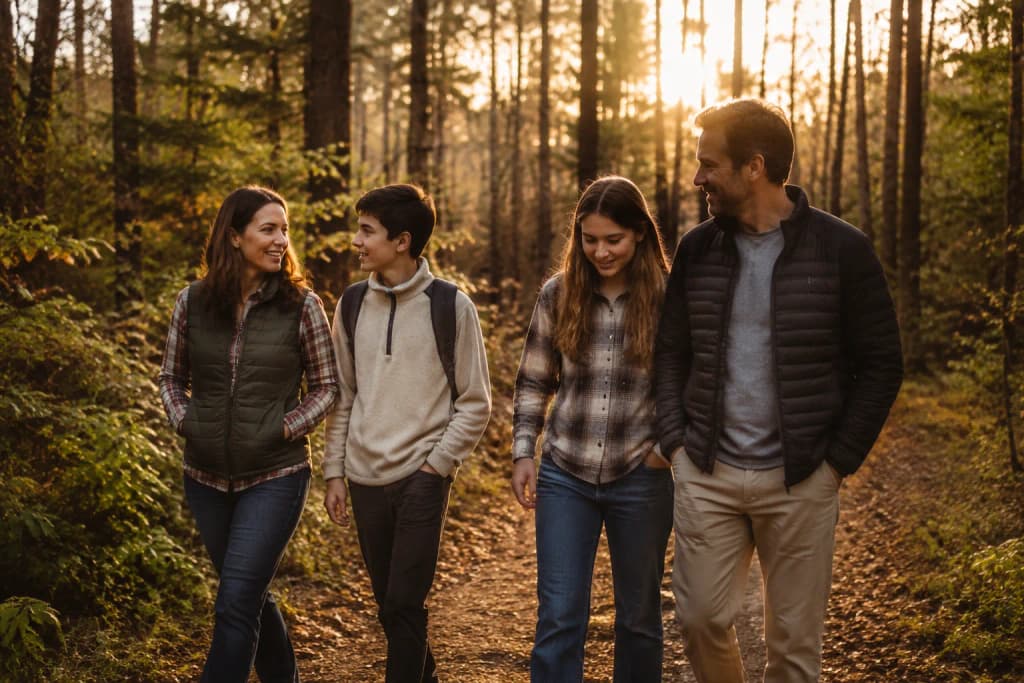
A healing walk for pet loss is exactly what it sounds like: you walk the route your dog loved, deliberately, as a family, as an act of remembrance. And for Aussies specifically—dogs bred to cover ground all day—it's almost eerily fitting.
Here's the thing about grief and motion. Sitting with heavy feelings is a skill that takes decades to build. Most teens don't have it yet, and honestly a lot of adults don't either. But walking? Walking bypasses the whole problem. The rhythm of feet on a trail does something to the nervous system that no amount of "just sit with it" can. Grief that feels unbearable while seated becomes bearable in motion.
"You can't outrun grief. But you can walk beside it until it's ready to walk beside you."
How to run a healing walk that doesn't feel forced
The failure mode here is making it too ceremonial. Teens have a finely tuned detector for forced solemnity and they will shut down the second they smell it. Keep it loose.
- Pick the real route. Not a "nice" route. The actual muddy path your Aussie dragged you down every morning. Specificity is the whole point.
- Go at the real time of day. If she was a dawn dog, go at dawn. The light and the smell of the morning will match the memory. Wet grass, cold air, the mineral smell of dew—these are the anchors.
- Bring the leash. Carry the empty leash. Sounds painful, and it is, but that ache is the walk doing its job. Some families take turns holding it.
- No agenda for conversation. Don't require anyone to share memories. They'll come out sideways, unprompted, usually near the spot where the dog did something ridiculous once.
- End somewhere specific. The bench where you always stopped. The tree she always marked. Close the loop with a physical location, not a speech.
One family told us the rain started halfway through their healing walk, right as they reached the porch where their Aussie used to sit out storms. Nobody moved. They just stood in it, breathing that sharp wet-earth-and-ozone smell of rain on old wood, the exact smell of a hundred lazy afternoons on that porch with the dog stretched out beside them. That smell brought back more than any photo could. Rain, for that family, is now permanently their dog.
Timing the walk with Remember Me Thursday
Here's a practical pairing that works well. Do the healing walk on Thursday evening as the light fades, then come home to watch the video montage and light a candle at the traditional Remember Me Thursday hour. Movement first, stillness second. The walk drains off the restless energy so the quieter ritual can actually land instead of feeling suffocating.
This sequence—motion, then reflection—is worth remembering for any grief ritual with teens, not just this one.
The Emotions Nobody Warns Your Teen About
This is the section most articles won't write, so pay attention.
Grief in teens comes out crooked. And some of the feelings underneath are ones they'll never say out loud because they're ashamed of them. Your job isn't to fix these feelings. It's to name them first, so your kid knows they're not a monster.
The guilt they won't mention
Many teens feel a specific, secret guilt after a pet dies—guilt that they weren't around enough at the end. That they were at practice, or on their phone, or annoyed at the dog for being needy in its last months. Adolescence pulls kids away from the family dog naturally; that's developmentally normal. But when the dog dies, that natural pulling-away curdles into "I abandoned her."
Here's what you tell them, and it's true: the dog didn't experience those years as abandonment. To an Aussie, a teenager who breezed through the kitchen and ruffled her ears on the way out the door was still their person. Dogs don't keep the ledgers we keep on ourselves. That guilt is real, it's common, and it's built on a math the dog never did.
Second-guessing the timing
If your family made the euthanasia decision, expect your teen to circle it obsessively. Was it too soon? Too late? Did we give up? Should we have tried the surgery?
This second-guessing is one of grief's cruelest loops, and teens fall into it hard because they're wired for black-and-white thinking. The truth is there's rarely a perfect moment, only a window of "least wrong" moments, and choosing within that window out of love is not a failure. The Association for Pet Loss and Bereavement offers grief resources specifically for this kind of decision regret, and it can help to point an older teen there so the reassurance comes from somewhere outside the family.
Say this part plainly to your kid: choosing to end an animal's suffering is the last hard gift you give them. The doubt afterward is the price of having loved them enough to make the call.
Feeling judged, and feeling alone
Teens grieve in a social minefield. A friend says "it was just a dog" and it lands like a slap. So they stop talking about it, and then they feel isolated—like nobody understands that this was their oldest friend, the one who was there before the friend group, before high school, before everything.
Watch for the shutdown. The kid who says "I'm fine" and disappears into their room isn't fine, they've just decided the outside world isn't safe to grieve in. The healing walk and the video project both help here because they let the grief happen inside the family, where it's safe, without demanding words.
"We've seen families heal by holding something tangible. Grief needs an anchor, especially for teenagers who can't find the words yet."
— The PawSculpt Team
When the relationship was complicated
Not every kid had a golden-retriever-commercial bond with the family Aussie. Some teens fought with the dog, or the dog was Mom's dog, or there was resentment about walk duties and shed hair. When that dog dies, the grief gets tangled with guilt about not having loved them "enough."
That complicated grief is valid too. You don't have to have been the dog's favorite to mourn them. Let your teen off the hook for the feelings they think they're "supposed" to have.
From the Screen to Something You Can Hold
Here's a shift we've watched happen with our own customers over the years. The video is precious, but it lives on a screen, and screens feel temporary to grieving teens in a way that surprises adults. Phones die. Accounts get deleted. Clouds fail. There's a low-grade anxiety underneath the constant rewatching: what if I lose this too?
That's where a physical object earns its place. Not to replace the video—nothing replaces the motion of your dog being alive—but to give the memory a body.
This is genuinely what we do at PawSculpt, so let me be straight about how it actually works, no marketing gloss.
We take a clear photo—that best single frame you pulled from the last video works great—and our master 3D artists digitally sculpt your dog, then precision 3D print it in full color. The color isn't painted on. It's printed straight into the resin, voxel by voxel, so an Aussie's blue merle marbling or a red tri's copper points come through as part of the material itself. The only thing done by hand afterward is a clear protective coat for durability and sheen.
The result has a real, honest texture—fine natural grain from the printing, not a slick fake-plastic sheen. It looks like an object with a story, which is the point.
Why teens respond to a figurine specifically
A custom pet figurine ends up in a teenager's room, on the desk, next to the monitor. It becomes part of their daily landscape instead of a memory they have to go looking for. We hear from parents that the figurine does something the photo book never did—it just quietly exists in the kid's space, and they touch it, move it, keep it in frame during video calls.
One of our customers ordered a small piece of their daughter's Aussie mid-play-bow, captured from exactly the kind of last video we've been talking about. The mom told us her daughter set it on her nightstand and, for the first time in weeks, slept through the night. Something about the memory having weight and edges let her put it down.
If you want to see how the process works for a memorial piece, the details live on our site—we keep specifics like timing and revisions there because they change, and we'd rather you see the current version than trust a number in a blog post. You can explore memorial keepsake options whenever you're ready. No rush. Grief has no schedule.
What photo works best (practical, since you'll ask)
- Clear, in-focus, good light. Natural daylight beats flash every time.
- Eye-level angle. Shot from the dog's height, not looking down at them.
- The pose that's them. The play-bow, the head tilt, the specific way they sat. Personality reads more than perfection.
- A frame from video counts. Pause on the sharpest moment and screenshot. It doesn't need to be a "real" photo.
"The best memorial doesn't sit on a shelf gathering dust. It gets touched, moved, and slept beside."
What We Wish We Knew Sooner
A candid list from our team, after years of taking these orders in the hardest weeks of families' lives.
- We wish we'd told people to save video, not just photos, while their pet was alive. So many families come to us with a hundred still photos and one shaky clip, and it's the clip they watch. Motion is what you miss. Film your healthy dog doing boring nothing—it becomes gold.
- We wish we'd known how much teens carry silently. Early on we thought the memorial was for the parents. It's often the teenager who needs it most and asks for it least.
- We wish we'd normalized the "wrong" feelings sooner. The relief when a long illness ends. The anger at a vet, at themselves, at the dog for dying. These aren't defects in grief. They're grief working normally.
- We wish more families knew about the smell thing. People are blindsided by scent grief. The blanket, the collar, the car. Warn each other.
- We wish we'd said this out loud: there's no finish line. Remember Me Thursday isn't a graduation from grief. It's a marker you return to, lighter each year, never empty.
Putting It All Together: One Thursday, Start to Finish
Let's make this concrete with a simple timeline you can actually run this September, adapted for a household with teens.
| Time | What Happens | Why It Matters |
|---|---|---|
| Days before | Teen edits the last video into a short tribute | Gives grief a task and a deadline |
| Thursday, late afternoon | Family healing walk on the dog's real route | Motion drains restless grief before stillness |
| Dusk | Return home, quiet transition, share the walk | Bridge from movement to reflection |
| Evening | Light a candle, watch the video together | Aligns with the global ritual; lets tears come |
| That week | Order a keepsake from a favorite video frame | Turns a fragile digital memory into something solid |
None of this has to be perfect. The kid's video might be too long. Someone might cry on the walk and someone else might not, and both are fine. The candle might get relit at 11pm by a teenager who couldn't sleep. That's not a broken ritual. That's a real one.
Bringing It Back to the Basement
Go back downstairs. Back to that phone, that fourteen-second loop, your Aussie's ears catching a sound that's gone now.
Here's what changes between this Thursday and the next. That video stops being a wound you can't stop pressing and becomes a doorway you can choose to walk through. Your teens edit it into something. You walk her route in the fading September light with the leash empty in your hand and the smell of wet grass bringing her back. You light the candle when the rest of the world does, and for one night your grief isn't lonely—it's part of a wave of candles circling the whole planet.
And maybe, weeks later, a small full-color figurine of her mid-play-bow sits on your kid's nightstand, catching the lamp light, weighing exactly as much as it should.
The dog is gone. The devotion isn't. A Remember Me Thursday pet memorial doesn't close the story—it just gives the love somewhere to live now that the dog can't carry it for you. Your job this week isn't to feel better. It's to give your teens a container, a walk, and a task. The healing sneaks in through the doing.
Light the candle. Take the walk. Let them keep the collar.
Frequently Asked Questions
When is Remember Me Thursday?
Remember Me Thursday lands on the fourth Thursday of September every year. It started in 2013 as a global awareness day, and people around the world light candles at the same local hour to honor pets who've died and to spotlight the animals still waiting for homes in shelters.
How do I help my teenager grieve losing our dog?
Resist the urge to sit them down for a feelings talk. Teens grieve sideways—through projects and motion, not conversation. Hand them a real task, like editing the last video into a tribute or planning a healing walk, and the emotions will process while their hands are busy. The task is the therapy.
What exactly is a healing walk for pet loss?
It's the deliberate act of walking your pet's favorite route as remembrance. You go at the time of day they loved, on the actual path they knew, sometimes carrying their empty leash. The rhythm of walking helps the nervous system carry grief that feels crushing while sitting still. For herding breeds like Aussies, it fits their spirit perfectly.
Is it normal to feel guilty or second-guess the timing after losing a pet?
Completely normal, and more common than people admit. Teens especially loop on whether they were around enough or whether the euthanasia decision came too soon or too late. There's rarely a perfect moment—only a window of "least wrong" ones. Choosing within it out of love isn't failure, and the doubt afterward is grief doing its work.
Can I use a frame from my dog's last video for a memorial figurine?
Yes. A clear, sharp still pulled from a video works well. Pause on the moment where your dog looks most like themselves, screenshot it, and that frame can become the reference for a full-color 3D printed keepsake. Personality reads more than technical perfection.
How is an Australian Shepherd memorial different from any other pet memorial?
Aussies are high-energy working partners, so a memorial that fits them usually involves motion rather than stillness—a hike, a frisbee throw at sunset, or a walk on their trail. Honor the partnership and the energy, not just the loss. A quiet candle alone rarely captures who they were.
Ready to Celebrate Your Pet?
Every pet has a story worth preserving. Whether you're honoring an Australian Shepherd who's crossed the rainbow bridge or capturing your furry friend's unforgettable personality while they're still here, a custom PawSculpt figurine brings those details—the marbled merle coat, the ears mid-perk, the play-bow—into something you can hold. For a Remember Me Thursday pet memorial that outlasts any screen, a full-color 3D printed keepsake gives your family's love a lasting home.
Visit pawsculpt.com to explore our full-color 3D printing process, preview turnaround, revision options, and quality guarantee.