
The Hidden Reason Custom Figurines Outlast Portraits and Paintings of Your Akita
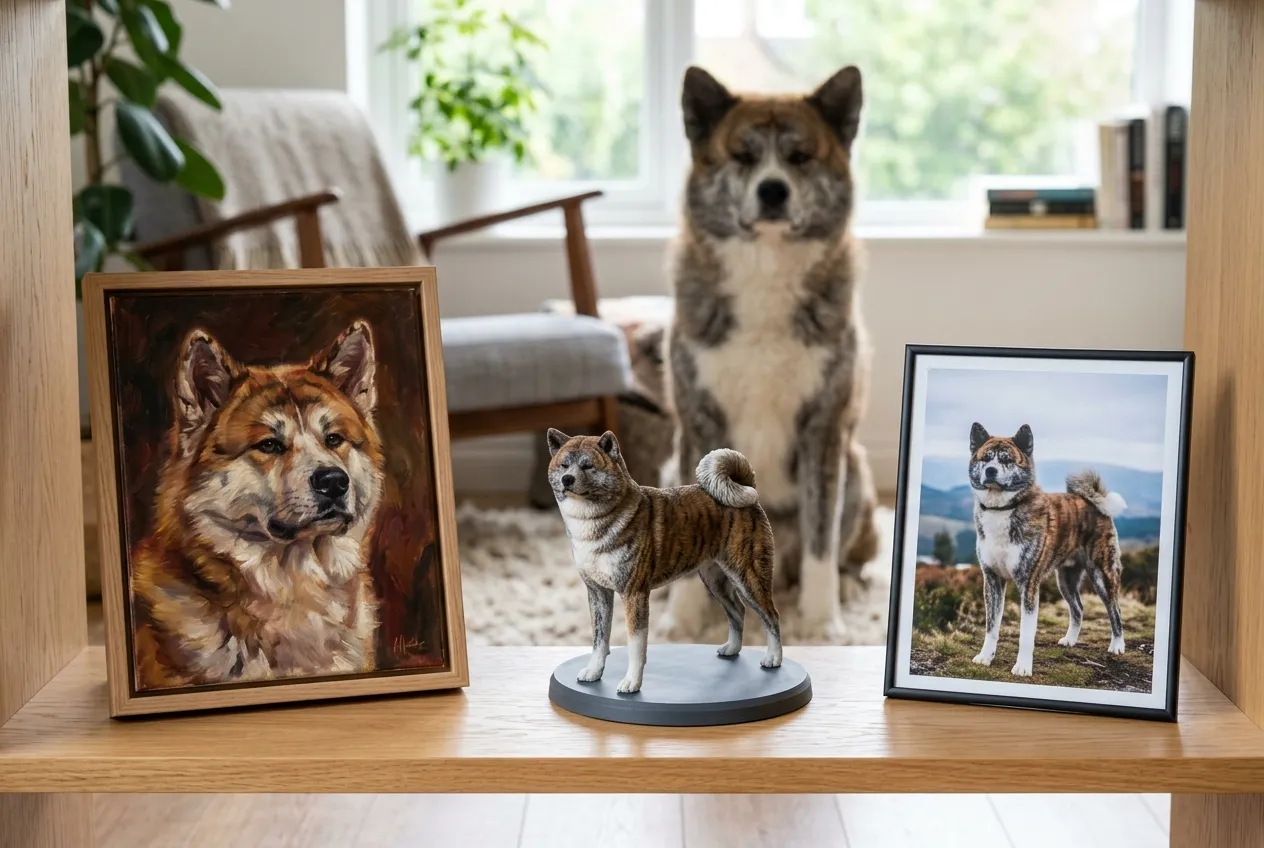
She was scrolling through her phone in the vet's waiting room—thumb brushing past old photos of her Akita mid-yawn, ears pinned back against a snowdrift—when she stopped on a portrait she'd commissioned two years ago and realized she couldn't feel him in it anymore. That flat, framed face on the wall at home had become wallpaper. And that's the thing nobody warns you about when choosing between a custom pet figurine vs portrait: one of them fades into the background.
Quick Takeaways
- Portraits lose emotional charge over time — flat images become "invisible" on walls within 12–18 months
- Three-dimensional objects activate touch memory — holding a figurine re-engages the bond in ways paintings can't
- Full-color 3D printing preserves details paintings simplify — brindle patterns, ear folds, and coat texture are captured voxel by voxel
- The best Akita memorial comparison starts with how you grieve — explore custom pet figurines at PawSculpt to see how dimension changes everything
- Longevity isn't just about materials — it's about whether the object keeps pulling you back to the relationship
Why Flat Memorials Fade: The Habituation Problem
Here's a pattern we've observed across thousands of pet families, and it tracks with what psychologists call habituation—the brain's tendency to stop noticing stimuli that don't change.
A portrait hangs on a wall. For the first few weeks, maybe months, you pause in front of it. You notice the eyes. You remember. But the image never shifts. The light hits it the same way every morning. Your brain, efficient machine that it is, files it under "known environment" and moves on.
This isn't a flaw in the portrait. It's a flaw in flatness.
Three-dimensional objects resist habituation. You pick them up. You rotate them. Light catches a different angle of the ear, the curve of the tail. Your fingers find the texture of the coat. Each interaction is slightly different from the last, and that micro-novelty keeps the emotional circuit alive.
We'll be real—this is the counterintuitive insight most pet memorial guides skip entirely. They compare portraits and figurines on aesthetics, cost, and craftsmanship. They almost never talk about what happens to the memorial six months after you bring it home. That's where the real divergence begins.
| Factor | 2D Portrait/Painting | 3D Custom Figurine |
|---|---|---|
| Initial emotional impact | High | High |
| Impact at 6 months | Declining (habituation) | Sustained (tactile re-engagement) |
| Interaction type | Visual only | Visual + tactile + spatial |
| Placement flexibility | Wall-bound | Desk, shelf, mantle, bedside |
| Sensory triggers | Sight | Sight, touch, weight, texture |
| Novelty over time | Static | Changes with light, angle, handling |
Think about the objects in your life that still stop you. They're almost never flat. They're the worn leather of a wallet, the weight of a ring, the smooth stone from a beach trip. Dimension is how the body remembers.
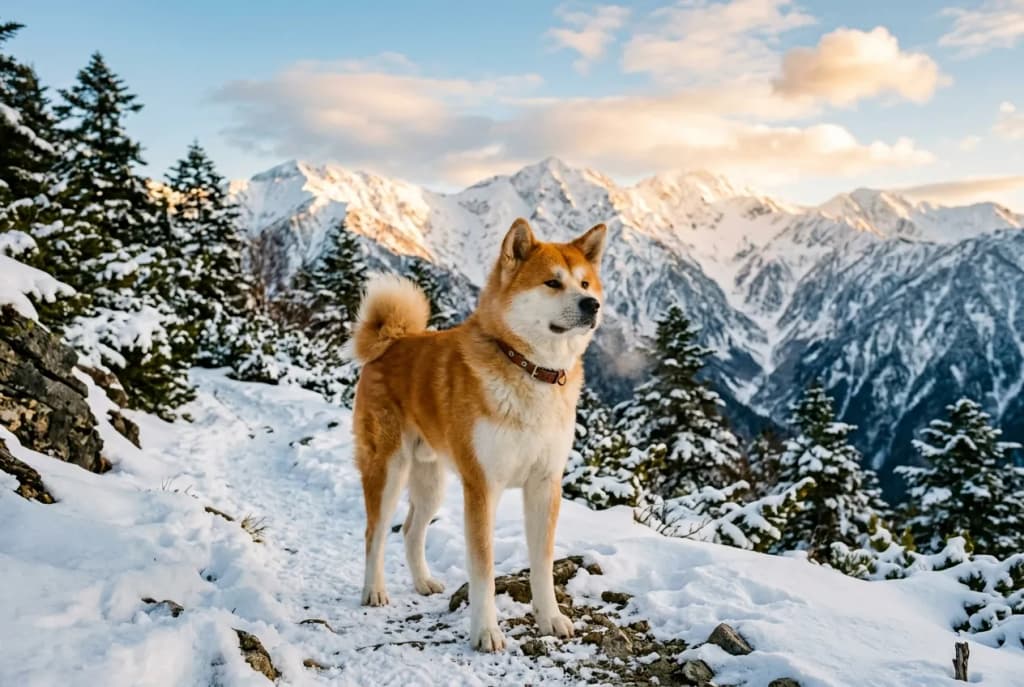
The Akita Problem: Why This Breed Breaks Most 2D Memorials
Akitas are, structurally, one of the hardest breeds to capture in two dimensions. And most portrait artists—talented as they are—simplify what they can't fully render.
Consider what makes an Akita an Akita:
- Double coat with distinct texture layers — the coarse outer guard hairs and the dense, plush undercoat create a visual depth that reads differently from every angle
- Broad, bear-like head with subtle planes — the forehead-to-muzzle transition, the triangular ears with their slight forward tilt, the small deep-set eyes relative to skull width
- Curled tail with variable tightness — some Akitas carry a loose curl, others a tight cinnamon roll; this three-dimensional signature flattens into ambiguity in paintings
- Brindle, pinto, and sesame coat patterns — these aren't simple color blocks; they're gradients that shift across the body's topology
A skilled painter can suggest these features. But suggestion isn't the same as presence.
"We've learned that the breeds people struggle most to memorialize in 2D are the ones with the most three-dimensional character—Akitas, Chows, Samoyeds. Their essence lives in volume."
— The PawSculpt Team
When our digital sculptors work from reference photos of an Akita, they're building in ZBrush or Blender—3D modeling software that lets them rotate the model continuously, checking proportional accuracy from every angle. The curl of the tail isn't a painted curve; it's a geometric form with mass and direction. The coat isn't a texture overlay; it's sculpted flow that follows the actual growth patterns of the fur.
Then that digital model gets printed in full-color resin—the pigments are embedded directly into the material during printing, voxel by voxel (think of a voxel as a 3D pixel). Your Akita's brindle pattern isn't applied on top. It's inside the figurine. That's a fundamentally different kind of permanence.
The Reference Photo Workflow: What Actually Happens
Most people assume you send one photo and get a figurine. The reality is more involved, and that's where the quality lives.
A strong set of reference images for an Akita typically includes:
- Front-facing shot — eyes, ear set, muzzle width, chest markings
- Profile shot (both sides if markings differ) — body proportions, tail curl direction, coat length variation
- Three-quarter angle — this is the money shot; it gives the sculptor depth cues for the skull and shoulder structure
- Detail shots — unique markings, scars, eye color, nose pigmentation, any asymmetry that makes your dog your dog
The sculptor uses these to build a digital armature (skeleton), then layers anatomy, then coat flow. Proportional checks happen throughout—measuring ear-to-eye ratios, leg length relative to body depth, tail position relative to the spine. For Akitas specifically, getting the head-to-body ratio right is critical. They're a substantial breed, and undersizing the head is the most common error in generic figurines.
Personal Aside: Honestly, the Akita head is where we spend the most revision time internally. That broad, flat forehead with the subtle brow ridge—it's deceptively simple-looking. Get it even slightly narrow and the whole figurine reads as a Shiba Inu. Our sculptors have a running joke that Akita heads have their own gravitational field in the revision queue.
The Physics of Grief: Why Touch Matters More Than Sight
Let's talk about something that sounds clinical but lands deeply personal.
Haptic memory—the body's memory of touch—operates on different neural pathways than visual memory. When you look at a photo of your Akita, you're activating the visual cortex. When you hold a figurine that has weight, texture, and dimension, you're activating the somatosensory cortex and the visual cortex simultaneously.
That dual activation matters. It's why holding a loved one's sweater can trigger a grief response that looking at their photo doesn't. The body remembers what the eyes have learned to skim past.
A custom pet figurine sits on your desk. You're working. Your hand drifts to it without thinking—thumb tracing the curve of the back, fingers finding the ridge of the ears. That unconscious touch is a micro-ritual, a moment of connection that doesn't require you to stop, look, and deliberately remember. It just happens.
Portraits don't offer this. Paintings don't offer this. They ask you to look. A figurine lets you feel.
"A memorial you can hold is a memorial that holds you back."
The American Kennel Club's resources on coping with pet loss emphasize the importance of tangible rituals in the grieving process. What they don't say explicitly—but what we've seen play out hundreds of times—is that the form factor of the memorial shapes the ritual. Wall art creates a shrine. A figurine creates a companion object. The emotional geometry is different.
The Weight Question
Here's something portrait-vs-figurine comparisons never mention: weight matters psychologically.
A full-color resin figurine has heft. Not heavy like stone, but present—the kind of weight that registers in your palm and says this is real, this is here. That physical substance creates what psychologists studying object attachment call felt presence—the sensation that the object carries some essence of what it represents.
A canvas is light. A print is lighter. They're surfaces. A figurine is a body. And when you're grieving a body that's no longer warm beside you on the couch, the difference between surface and substance isn't trivial.
Material Longevity: What Survives a Decade on the Mantle
Let's get practical. You're choosing a memorial that needs to last. Here's what actually happens to different formats over time.
Oil Paintings
Good oil paintings, properly varnished and kept out of direct sunlight, can last centuries. That's real. But "properly kept" is doing heavy lifting in that sentence. UV exposure causes yellowing of the varnish layer within 5–10 years. Colors shift. The warm amber tone that develops might look distinguished on a Renaissance portrait, but it changes your Akita's coat color. A white Akita slowly turns cream, then gold. A red Akita deepens toward brown.
Restoration is possible but expensive—often more than the original commission.
Watercolor Portraits
Beautiful but fragile. Fugitive pigments (colors that fade with light exposure) are common in watercolors, especially in the red and violet range. Behind glass helps. But condensation, humidity shifts, and even the acid content of the matting board can degrade the image over 5–15 years.
Digital Prints / Canvas Prints
The most affordable option and the most vulnerable. Inkjet prints, even archival-quality ones, are rated for 25–75 years under ideal conditions. "Ideal" means controlled humidity, no direct light, stable temperature. Your living room isn't a museum archive. Realistically, noticeable fading begins within 5–10 years for most home-displayed prints.
Full-Color Resin 3D Prints
The material is UV-cured photopolymer resin with embedded pigments. The color isn't sitting on the surface waiting to flake or fade—it's distributed through the material itself. A clear coat (the only manual post-processing step) adds UV resistance and a protective shell against handling wear.
| Memorial Type | Typical Lifespan (Home Display) | Main Vulnerability | Maintenance Needed |
|---|---|---|---|
| Oil painting | 50–100+ years | UV yellowing, varnish degradation | Re-varnishing every 10–20 years |
| Watercolor | 15–40 years | Light fading, humidity damage | Framing with UV glass, climate control |
| Canvas/inkjet print | 5–25 years | Ink fading, moisture | Minimal (replacement when faded) |
| Full-color resin figurine | 20–50+ years | Impact damage (drops), prolonged UV | Occasional dusting, keep from direct sun |
The honest tradeoff: resin is more brittle than you'd expect. Drop a figurine on tile and it can chip or crack. Paintings survive falls. But paintings don't survive time the way embedded-color resin does. You're trading impact resistance for color permanence. For a memorial that lives on a shelf or mantle, that's usually the right trade.
A Note on 3D Print Texture
We want to be transparent about something. Full-color 3D printing produces a surface with fine layer lines—a subtle grain that's part of the technology. Layer heights typically fall in the 25–50 micron range (a human hair is about 70 microns for reference). This texture is visible up close and gives the figurine an authentic, tactile quality.
It's not the glass-smooth finish of a porcelain figurine. It's not the brushstroke texture of a painting. It's its own thing—a fine, consistent grain that actually enhances the feel of fur and coat texture. Many families tell us the texture is what makes the figurine feel real under their fingers rather than plastic-perfect.
The Spiritual Dimension: Objects as Anchors for Presence
We're going to step outside the material science for a moment, because the families we work with don't talk about their memorials in terms of UV resistance and pigment stability. They talk about presence.
"It feels like he's still here."
"I talk to it in the morning."
"My daughter holds it when she's sad."
These aren't irrational responses. They're expressions of something deeply human—the need for a sacred object that anchors an ongoing spiritual relationship. Across cultures and centuries, three-dimensional objects have served this role. Statues in temples. Figurines on household altars. Carved totems carried in pockets.
"The objects we hold become vessels for the love we can't put down."
A portrait is a window. You look through it at a memory. A figurine is a presence. It occupies space in your room the way your Akita occupied space in your life—physically, dimensionally, with weight and shadow and a specific place where it belongs.
This isn't mysticism. It's the geometry of grief. Flat memorials create distance (you look at them). Dimensional memorials create proximity (they exist with you). And proximity is what the grieving heart is actually searching for.
Creating a Sacred Space
One pattern we've noticed among families who order memorial pet figurines is the instinct to create a small dedicated space—not a shrine exactly, but a sacred corner. The figurine on a shelf with a collar, a favorite toy, maybe a small candle.
This ritual of arrangement—choosing the spot, adjusting the angle, placing the objects in relationship to each other—is itself a form of continuing the bond. You're still caring for them. Still making space for them. Still deciding where they belong in your home.
Paintings get hung and left. Figurines get tended.
The Full-Color 3D Printing Process: What Makes It Different
Since we're comparing mediums, let's be specific about how a full-color resin figurine actually comes into existence. Not as a sales pitch—as context for understanding why the result differs so fundamentally from a portrait.
Stage 1: Digital Sculpting (The Invisible Craft)
A master 3D artist opens your reference photos in a dual-monitor setup—images on one screen, ZBrush or Blender on the other. They begin with a base mesh (a rough 3D shape) and sculpt it toward your specific Akita.
This is where the real artistry lives. The sculptor is making hundreds of micro-decisions:
- How far do the ears sit from the centerline of the skull?
- What's the exact drape of the coat over the ribcage?
- Does the tail curl clockwise or counter-clockwise when viewed from above?
- Where do the brindle stripes break across the shoulder?
They're checking anatomical accuracy against breed standards while simultaneously capturing the individual deviations that make your dog unique. That slightly crooked ear. The way the fur parts over the left hip. The asymmetry of the facial markings.
This stage typically involves multiple review rounds. You see a digital preview and can request adjustments before anything gets printed. For current details on the preview and revision process, PawSculpt's FAQ page has the latest information.
Stage 2: Print Preparation
Before the model goes to the printer, a technician handles orientation and support strategy—decisions that directly affect the final quality.
Orientation means deciding which direction the model faces relative to the print bed. This matters because:
- Surfaces facing "up" during printing get the cleanest finish
- Surfaces facing "down" need supports (temporary scaffolding) that leave small marks when removed
- The goal is to orient the figurine so that the most visible surfaces—face, chest, top of the back—print cleanly
Hollowing and drain holes are added to reduce material use and prevent suction-cup effects during printing (where trapped resin inside a hollow form creates vacuum forces that can distort thin walls). Drain holes are placed in inconspicuous locations—typically the base or underside.
Layer height is set based on the detail requirements. Finer layers (25–35 microns) for areas with intricate detail like facial features. This is where the "resolution" of the print lives—thinner layers mean smoother gradients and sharper edges.
Stage 3: Full-Color Printing
The model prints in full-color resin. Here's what that actually means: the printer deposits resin in ultra-thin layers, and color information is embedded into each layer as it's built. Think of it like a color inkjet printer, but instead of printing on flat paper, it's printing in three dimensions—each "page" is a cross-section of your figurine, stacked on top of the last.
The result is a figurine where the color goes into the material, not onto it. Your Akita's black mask isn't a coat of paint over white resin. It's black resin, continuous with the structure. This is fundamentally different from traditional figurine-making where a white or gray form gets painted afterward.
Stage 4: Post-Processing
Once the print is complete:
- Washing — uncured resin is removed with solvent baths (typically isopropyl alcohol or specialized cleaning solutions)
- UV curing — the figurine goes under UV light to fully harden the resin and lock in the color (under-curing leaves the surface tacky and prone to yellowing; over-curing can make the resin brittle and shift colors slightly warm)
- Support removal — the temporary scaffolding is carefully clipped and sanded. This is where skill matters—aggressive removal leaves pitting; too-gentle removal leaves nubs. Our team inspects under raking light (light held at a sharp angle to the surface) to catch any remaining imperfections
- Clear coat application — the only truly manual finishing step. A protective clear coat is applied to seal the surface, add UV resistance, and give the figurine its final sheen
Quality control includes dimensional checks (does the figurine match the approved digital model?), symmetry verification, and surface inspection for any print artifacts like bloom (a white haze that can appear on cured resin) or layer shifting.
No painting. No brushes. No acrylics. The color you see is the color that was printed.
The Comparison Nobody Makes: Emotional ROI Over Time
Let's build a framework that actually helps you decide. Not "which is prettier" but which delivers more emotional value per year of ownership.
We're calling this Emotional ROI—a rough but useful way to think about memorial investments.
| Dimension | Portrait/Painting | Custom Figurine |
|---|---|---|
| Year 1 emotional engagement | Very high (novelty + grief intensity) | Very high |
| Year 3 emotional engagement | Moderate (habituation setting in) | High (tactile re-engagement) |
| Year 5 emotional engagement | Low-moderate (becomes background) | Moderate-high (ritual object) |
| Interaction frequency | Passive (glanced at) | Active (held, touched, repositioned) |
| Portability | Low (wall-mounted) | High (moves with you) |
| Conversation starter | Occasionally | Frequently (visitors pick it up) |
| Multi-sensory engagement | Visual only | Visual + tactile + spatial |
| Surviving a move | Risk of damage in transit | Wraps easily, travels in a box |
The pattern is clear: portraits front-load their emotional impact. Figurines distribute it over time.
This doesn't mean portraits are wrong. If your relationship with your Akita was primarily visual—if what you loved most was watching them move through snow, the way light caught their coat—a portrait might capture that specific memory better than any object could.
But if your relationship was physical—if what you miss is the weight of their head on your lap, the texture of their fur under your hand, the solid thereness of them beside you—then a figurine speaks the language your grief actually uses.
The Mistake Most People Make
Most people choose a memorial format based on what looks best in the moment of grief. They're in pain, they want something beautiful, and a gorgeous portrait feels like the right tribute.
But grief changes. The acute phase—that raw, consuming first wave—gives way to something quieter. A low hum of absence that shows up in ordinary moments. Reaching for the leash. Listening for the click of nails on hardwood. Feeling the empty space at the foot of the bed.
In that quieter phase, what you need from a memorial changes too. You don't need something to look at and cry. You need something to hold and feel connected. The best pet memorial keepsake is the one that still works in year three, not just week three.
What Portraits Do Better (Honest Assessment)
We'd be doing you a disservice if we didn't acknowledge where portraits and paintings genuinely excel.
Capturing a specific moment in time. A skilled portrait artist can freeze a single expression—that head tilt, that mid-bark intensity, that sleepy Sunday morning look—with an emotional specificity that a figurine's neutral pose can't match. Figurines capture who your pet was. Portraits can capture a moment your pet lived.
Scale and visual impact. A large oil painting over a fireplace makes a statement that a 6-inch figurine can't. If your memorial needs to fill a room with presence, a painting does that.
Artistic interpretation. Some families want their pet rendered in a specific style—impressionist, watercolor, pop art. That creative reinterpretation is the portrait's domain. A figurine aims for accuracy. A painting can aim for feeling.
Legacy and tradition. Oil portraits carry centuries of cultural weight. There's something about the format itself—canvas, frame, wall—that connects to a long tradition of honoring what matters.
These are real advantages. The right choice depends on what you're actually trying to preserve: a moment, or a presence.
Caring for Your Figurine: Practical Notes
If you go the figurine route, a few things to know:
- Keep it out of sustained direct sunlight. The clear coat provides UV resistance, but no material is immune to years of direct sun exposure. A shelf that gets indirect light is ideal.
- Dust with a soft brush, not a damp cloth. Microfiber works. Avoid anything abrasive.
- Handle the base, not the details. Thin elements (ear tips, tail ends) are the most vulnerable to breakage. Pick it up from the bottom.
- Temperature stability matters. Resin doesn't love rapid temperature swings. Don't put it on a windowsill that bakes in summer and freezes in winter.
- If it chips, don't panic. Small chips can often be touched up with a clear coat reapplication. Reach out to PawSculpt's team for guidance on care and repair.
What to Expect: The General Creative Process
For families considering a custom figurine, here's the broad arc of what happens (visit pawsculpt.com for current specifics on timelines and policies):
- Photo submission — you provide reference images of your Akita from multiple angles
- Digital sculpting — a 3D artist builds your pet's likeness in modeling software
- Preview and feedback — you review the digital model and request any adjustments
- Full-color printing — the approved model is printed in full-color resin
- Post-processing and QC — cleaning, curing, support removal, clear coat, and quality inspection
- Delivery — your finished figurine ships to you, carefully packaged
The process is collaborative. You're not handing off a photo and hoping for the best. You're part of the sculpting conversation.
The Legacy Argument: What You're Really Choosing
Here's where we land after working with thousands of families navigating this exact decision.
A portrait says: Look at who they were.
A figurine says: They're still here.
Both are true. Both are valid. But they serve different spiritual functions in the ongoing relationship between you and your Akita.
The portrait is an elegy—beautiful, fixed, honoring what was. The figurine is a continuing presence—tactile, dimensional, evolving in how you interact with it over years.
The pet portrait vs figurine vs painting debate isn't really about materials or craftsmanship or cost. It's about what kind of relationship you want to maintain with your pet's memory. Do you want to remember them? Or do you want to keep being with them?
That woman in the vet's waiting room—the one scrolling past the portrait that had become wallpaper—she wasn't looking for better art. She was looking for something she could still feel. Something with weight in her hand and texture under her thumb. Something that wouldn't let her forget.
The best Akita memorial isn't the most expensive or the most artistic. It's the one that still stops you in your tracks on an ordinary Tuesday, three years from now, when your hand finds it on the shelf and your breath catches—just for a second—because for that moment, they're right there with you.
That's not a product. That's a sacred object. And sacred objects need dimension.
Frequently Asked Questions
How long does a custom pet figurine last compared to a portrait?
Full-color resin figurines are built to last 20–50+ years with basic care—keep them out of direct sustained sunlight and handle them gently. Oil paintings can technically outlast them, but they require periodic re-varnishing and are vulnerable to UV yellowing. Canvas and inkjet prints, the most common portrait format, show noticeable fading within 5–10 years under normal home display conditions.
What photos work best for creating a custom Akita figurine?
You'll want at least four angles: front-facing, both side profiles (especially if markings differ left to right), and a three-quarter view that shows depth. Add close-ups of anything unique—eye color, nose pigmentation, scars, ear shape, tail curl direction. Sharp focus and natural lighting make the biggest difference. Avoid heavy filters.
Are custom pet figurines hand-painted?
No—and this is a common misconception. PawSculpt figurines are produced through full-color 3D printing, where pigment is embedded directly into the resin material during the printing process. There are no brushes, no acrylics, no paint. The only manual finishing step is applying a protective clear coat for UV resistance and sheen.
Is a pet figurine or portrait better for grief and memorialization?
It depends on how you process grief. Figurines offer multi-sensory engagement—touch, weight, spatial presence—that resists the habituation effect where wall art becomes invisible over time. Portraits excel at capturing a single emotional moment with artistic interpretation. If your grief is physical (you miss the feel of your pet), a figurine tends to serve longer. If it's visual (you miss seeing them), a portrait may resonate more.
Can a 3D printed figurine capture my Akita's brindle coat pattern accurately?
Yes, and this is actually where full-color 3D printing outperforms most portrait mediums. Brindle patterns involve complex color gradients that shift across the body's three-dimensional surface. The printing process reproduces these patterns voxel by voxel—essentially building the color into the form itself—rather than simplifying them into flat brushstrokes.
How do I care for a resin pet figurine long-term?
Dust with a soft microfiber brush (not a damp cloth), handle from the base rather than gripping thin details like ear tips, and keep it away from sustained direct sunlight and rapid temperature swings. If a small chip occurs, a clear coat touch-up can often restore it. The figurine's embedded color won't fade the way surface paint would.
Ready to Honor Your Akita's Spirit?
Your Akita's presence was never flat. It was the weight of a broad head on your knee, the rough-silk texture of a double coat, the solid warmth of a body that took up real space in your life. A custom pet figurine vs portrait isn't just a format choice—it's a decision about how you want to keep feeling that presence.
Visit pawsculpt.com to explore the full process, materials, and current service details