
The 'Digital Ghost' of Your Siamese Cat: 6 Ways to Ground Your Grief in the Physical World
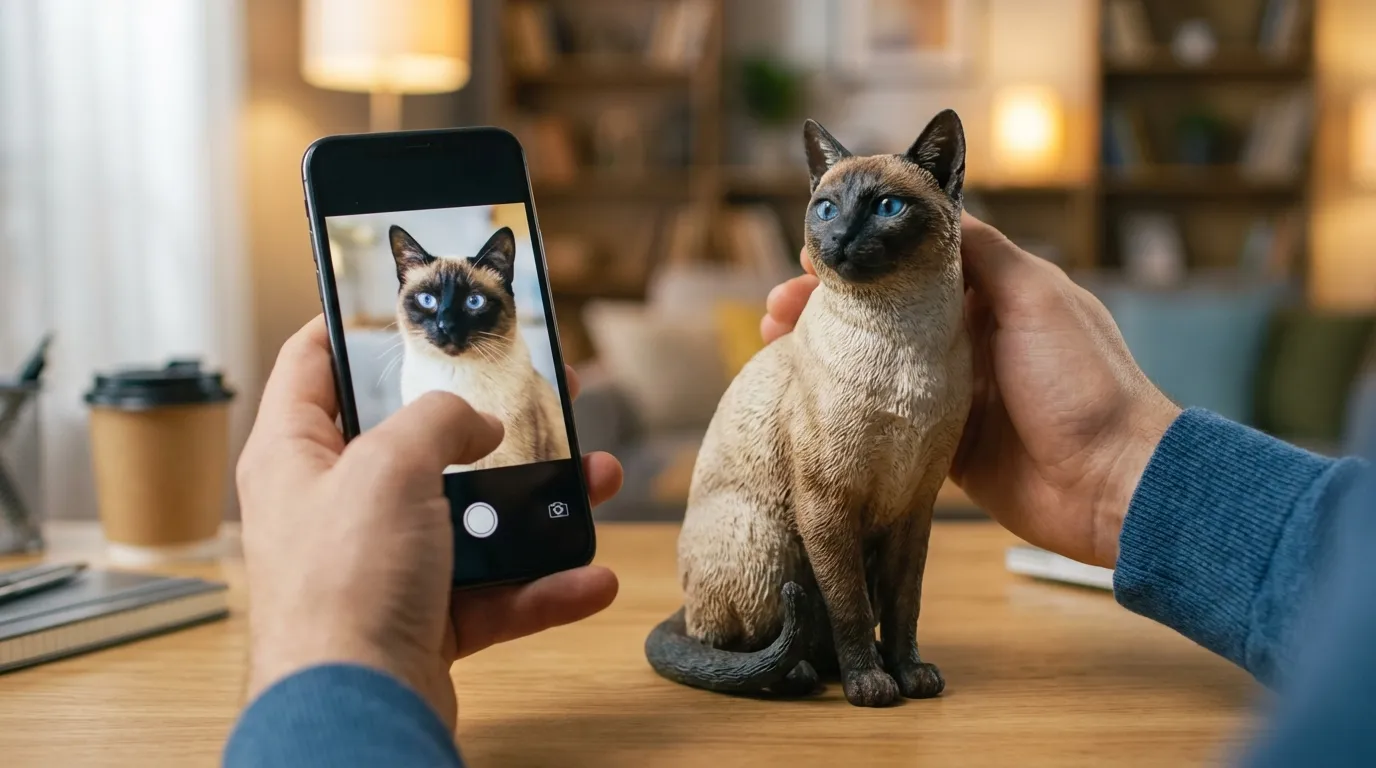
Do you still catch yourself checking your stride on the walking trail, instinctively looking down to ensure you don't trip over the sleek, cream-colored shadow that isn't there anymore? That phantom sensation—the expectation of a warm weight against your calf—is the cruelest neurological trick your brain plays when grieving a cat with the intense, velcro-like presence of a Siamese.
Quick Takeaways
- The "Digital Ghost" — Why thousands of cloud photos can actually amplify the pain of physical absence.
- Auditory hallucinations — Hearing your vocal Siamese is a normal brain response, not a sign of madness.
- Tactile grounding — Your grief needs a physical object to anchor the brain's "seeking" mechanism.
- Tangible memorials — How custom pet figurines bridge the gap between digital memory and physical reality.
- The relief paradox — Why feeling relief after intense caretaking is biological, not a betrayal of love.
The Neuroscience of the "Missing Limb"
We need to talk about the biology of your heartbreak. When you lose a Siamese—a breed known for being vocal, demanding, and physically invasive in the most loving way—you aren't just losing a pet. You are experiencing a neurological event similar to an amputation.
Psychologists often refer to the "seeking system" in the mammalian brain. For years, your neural pathways have been hardwired to expect specific sensory inputs: the raspy demand for breakfast at 6:00 AM, the sapphire-blue gaze following you to the bathroom, the specific heat signature of a body pressed against your side.
When those inputs suddenly stop, your brain goes into a state of cognitive dissonance. It has a map of your life where the cat still exists, but reality is sending back "404 Not Found" errors every time you walk into the living room.
This is why grieving a cat feels so disorienting. It’s not just sadness; it’s a system error in your daily routine.
"Grief is just love looking for a place to land, and panic when it finds nowhere to rest."
The Problem with Digital Immortality
Here is the counterintuitive insight that most grief guides miss: Your smartphone might be making it harder to heal.
We live in an era of the "Digital Ghost." You likely have thousands of photos and videos of your Siamese. You can scroll through them and see their chest rise and fall in a video. You can hear their chirp. To the visual centers of your brain, they look alive.
But your tactile and olfactory senses—the parts of the brain that register touch and smell—know the truth. This mismatch creates a low-level psychological stress. Your eyes say "here," but your hands say "gone." To ground your grief, you must move away from the screen and into the physical world.
The Siamese Paradox: Silence is Loud
If you owned a Siamese, you didn't just have a cat; you had a narrator. They comment on the weather, the empty food bowl, and your choice of TV show.
When a Siamese passes, the silence is heavy. It has a texture.
Auditory Pareidolia is the scientific term for what you’re likely experiencing: hearing their meow in the hum of the refrigerator or the creak of a floorboard. This isn't spiritual (though it can feel that way); it's your brain’s pattern-matching software running on overdrive, desperately trying to find the signal in the noise.
Strategy: The Sound Container
Instead of waiting to be ambushed by the silence, control it.- Don't play videos of their meowing on loop casually—this triggers the "seeking" panic.
- Do create a specific "listening ritual." Set aside 5 minutes. Sit down. Listen to a recording intentionally. Then stop. You are teaching your brain that the sound belongs to the past, not the present environment.
Grounding Grief: The Need for Tactile Anchors
Because the "Digital Ghost" is intangible, the antidote is texture, weight, and form. Your hands remember the weight of your cat. To soothe the anxiety of loss, you need to give your hands something to hold.
This is where tangible pet memorials become vital tools for psychological grounding. It’s not about replacing the pet; it’s about giving that "seeking energy" a physical destination.
The Science of the Totem
Transitional objects aren't just for toddlers. In grief therapy, a physical object that represents the lost loved one can serve as a "container" for emotions that are too big to process internally.This is why we see such a profound reaction when pet parents hold a Siamese cat remembrance figurine for the first time. It engages the tactile senses.
At PawSculpt, we’ve observed this phenomenon repeatedly. We utilize full-color 3D printing technology to create these anchors. Unlike a flat photograph, a 3D printed figure has mass. It casts a shadow.
We don't use paints or brushes. Instead, our advanced printers deposit full-color resin, voxel by voxel, building the image of your cat from the inside out. The result is a piece that captures the specific gradient of your Siamese's points—the way the chocolate fades into cream—locked permanently into a durable, physical form.
"We've seen families heal simply by having something tangible to hold. Grief needs an anchor in the physical world."
— The PawSculpt Team
| Digital Memory (The Ghost) | Physical Memorial (The Anchor) |
|---|---|
| Sense engaged: Sight/Sound only | Sense engaged: Sight, Touch, Spatial presence |
| Brain response: "They are here" (creates dissonance) | Brain response: "This represents them" (creates acceptance) |
| Emotional impact: Often triggers anxiety/longing | Emotional impact: Often triggers grounding/calm |
| Durability: Dependent on servers/batteries | Durability: Permanent physical object |
The Taboo Emotion: Relief (And the Guilt That Follows)
Let’s be honest about something few people admit. Siamese cats are intense. As they age, that intensity often morphs into senility, nighttime howling, or complex medical needs.
When they pass, you might feel a sudden, washing wave of relief. The house is quiet. You can sleep through the night. You don't have to rush home to administer medication.
Then, the guilt hits.
You might think, How can I be relieved? Did I not love them enough?
This is the "Caregiver's Paradox." The relief you feel is not emotional; it is physiological. Your cortisol levels are dropping for the first time in months or years. Your body is finally exhaling. It does not negate your love. In fact, the intensity of your relief is usually a testament to how hard you worked to keep them comfortable.
Reframing the Guilt
When the guilt spikes, try this cognitive reframe:- "I am not relieved that they are gone."
- "I am relieved that they are no longer suffering, and that I no longer have to witness it."
6 Ways to Ground Your Grief Physically
If you are feeling untethered, use these physical actions to interrupt the spiral of digital grief.
1. The "Weight" Transfer
If your Siamese slept on your chest or legs, that physical absence can cause insomnia. Place a weighted blanket or a heavy pillow in that spot. It tricks the proprioceptive nerves into feeling "settled," allowing you to sleep.2. Commission a 3D Replica
Photos are flat. A custom 3D figurine occupies space. We have found that placing a figurine in a "neutral" spot—like a bookshelf or a desk, rather than the cat's old bed—helps the brain transition from "active caretaking" to "memorializing." The precision of full-color 3D printing captures the unique mask and markings of your Siamese, providing a visual touchstone that feels authentic, not like a generic statue.3. The Fur Harvest
If you have a brush full of fur, do not throw it away. But do not leave it in the brush. Transfer it to a small glass vial or a locket. This transforms "debris" into a "relic." The act of transferring it is a ritual of reverence.4. Change the Environment
Siamese cats are territorial. Your home layout was likely dictated by them. Move the furniture. It sounds trivial, but changing the "stage" helps the brain stop running the old "play." If the armchair is in a new spot, your brain won't automatically look for the cat on the headrest.5. Write a Physical Letter
Do not type it. Write it by hand. The fine motor movements required for handwriting engage different parts of the brain than typing. Write a letter thanking them for their companionship. Then, burn it or bury it. This is a "cognitive closing mechanism."6. The "Legacy" Donation
Siamese are intelligent and high-energy. In their honor, donate specific puzzle toys or high-engagement items to a shelter. Don't just give money—buy the physical items and drop them off. Handling the items creates a sense of agency.When the Grief Doesn't Lift
There is a concept in psychology called "Complicated Grief." This is when the natural healing process stalls. Because our society often minimizes pet loss ("it was just a cat"), pet owners are at high risk for this. We isolate ourselves because we fear judgment.
If you are six months out and still unable to function, or if you are experiencing intrusive thoughts about their final moments, please seek a counselor who specializes in pet loss.
However, for most of us, the grief softens. It changes from a sharp, stabbing pain to a dull, familiar ache. It becomes the price of admission for the great love we shared.
Your Siamese was a creature of the physical world—of warmth, of fur, of vibration and sound. Do not trap their memory solely in the cloud. Bring them back into the room with you, in a form you can see and touch, and let your brain find the peace it is seeking.
Frequently Asked Questions
Why does losing a Siamese cat feel harder than other pets?
Siamese cats are exceptionally social and vocal. They don't just coexist with you; they integrate into every activity. The loss of a Siamese creates a "loud silence" because you are losing a constant conversational partner and a shadow, not just a pet.Is it normal to hear my deceased cat meowing?
Absolutely. This is a phenomenon known as auditory pareidolia. Your brain has spent years filtering background noise to prioritize your cat's voice. It takes time for those neural pathways to rewire. You aren't "crazy"; your brain is just adjusting to a new reality.How do I choose between a photo and a 3D figurine for a memorial?
Photos are wonderful for remembering a specific moment in time, but they are flat. A custom figurine is better for recreating a sense of presence. If you find yourself missing the physical form of your cat—the way they looked sitting on a shelf—a 3D printed replica can offer a more tangible comfort.What is the best way to handle feelings of guilt after pet loss?
Guilt is the brain's way of trying to regain control over a situation where you had none. Remind yourself that you made decisions based on love and the information you had at the time. The "relief" you might feel is your body recovering from stress, not a lack of love.How long does the intense grief last for a pet?
Grief is not linear. You might feel fine one week and devastated the next. However, the acute, breathless pain typically begins to soften within a few months. If you find yourself unable to work or care for yourself, please seek professional support.Ready to Celebrate Your Pet?
Every pet has a story worth preserving. Whether you're honoring a beloved companion who's crossed the rainbow bridge or celebrating your furry friend's unique personality, a custom PawSculpt figurine captures those details that make your pet one-of-a-kind.
Free instant AI preview • 3D artist preview within 7 days • 5 free revisions